Artwork
The Church of St. Pierre, Caen
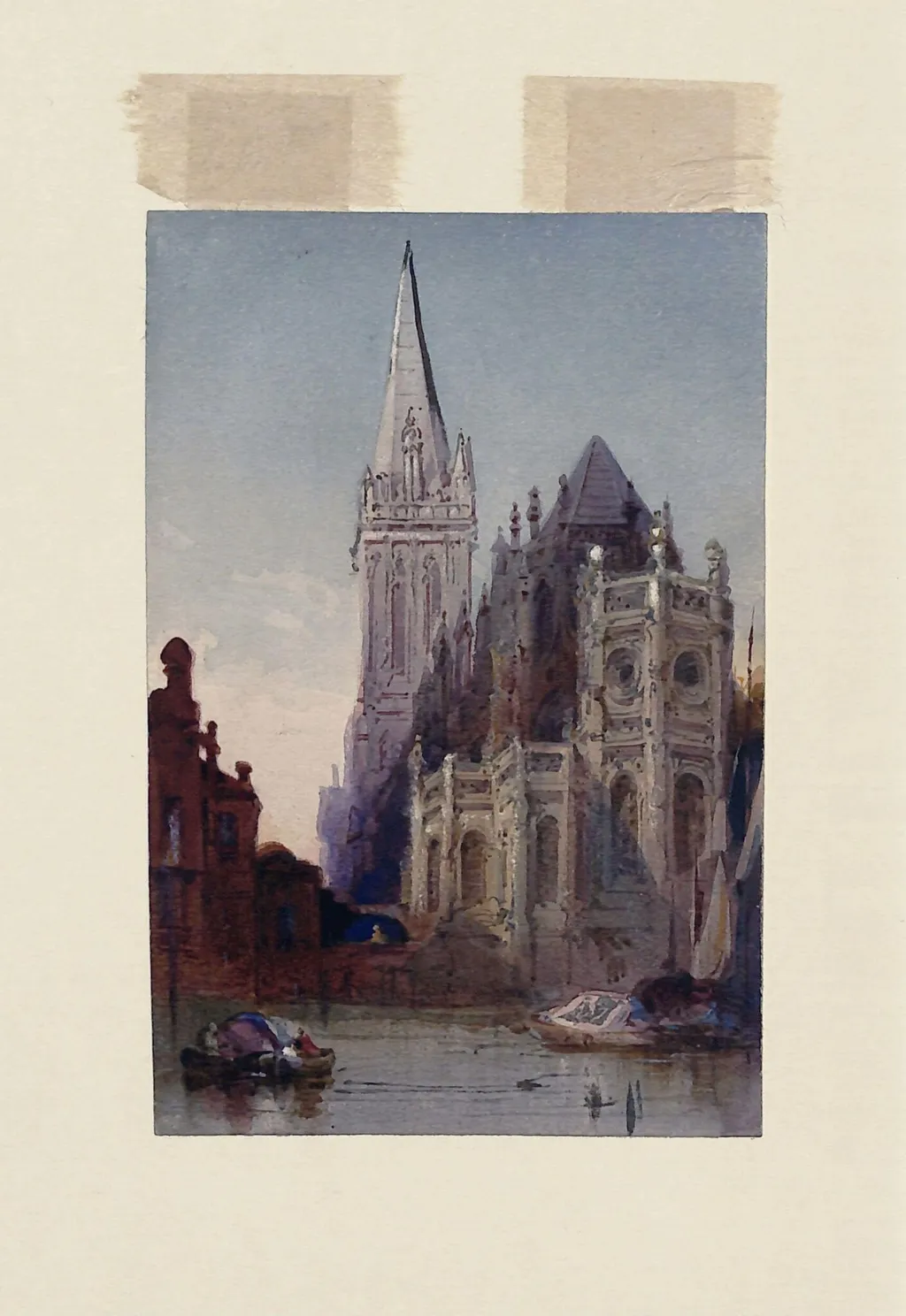
The Church of St. Pierre, Caen is a watercolor work on paper by the British Romanticist artist Edward Webb. It dates from 1842 and is held in the collection of the Victoria and Albert Museum. The watercolour, titled *The Church of St.
About this work
Overview
The watercolour, titled *The Church of St. Pierre, Caen*, portrays a Gothic‑style church with twin spires set against a light sky. A tranquil river runs before the building, bearing a small boat with two figures. The composition balances the monumental architecture with a modest, everyday scene.
Subject & Meaning
The work captures the historic church of Saint‑Pierre in Caen, emphasizing its verticality and the play of light across its stone façades. The inclusion of a modest boat suggests a quiet, quotidian activity along the river, tempering the grandeur of the structure with a sense of daily life.
Technique & Style
Rendered in delicate watercolour washes, the artist employs soft tonal transitions to model light and shadow on the church’s walls and windows. Subtle gradations create a sense of atmospheric depth, while the calm water reflects a muted palette, reinforcing the scene’s serene mood.
History & Provenance
The picture dates to 1842 and is attributed to Edward Webb, though the attribution has not been conclusively confirmed. It appears to be a copy of a drawing by David Roberts, R.A., or possibly derived from an engraving by J. Tingle that appeared in *The Gallery of Modern British Artists* between 1834 and 1836.
Context
During the early nineteenth century, British artists frequently reproduced continental landmarks for an audience eager for travel imagery. The depiction of Saint‑Pierre aligns with this trend, offering a romanticized yet accurate view of a French ecclesiastical landmark.
Artist & collection




 Cathedral Notre-Dame
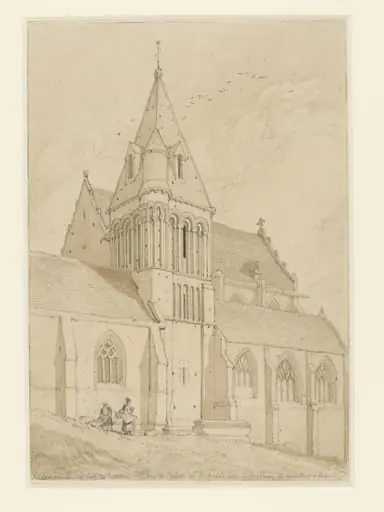 Church of St Michel, Vaucelles, near Bayeux
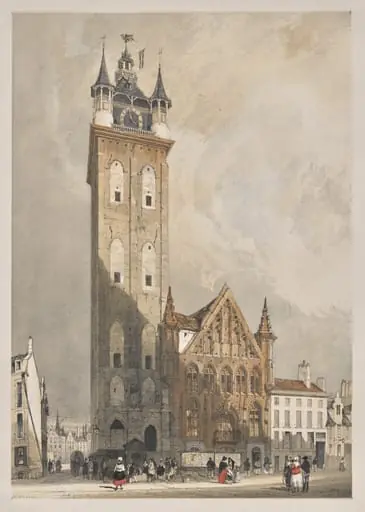 Picturesque Architecture in Paris, Ghent, Antwerp, Rouen: Belfrey, Ghent, Belgium
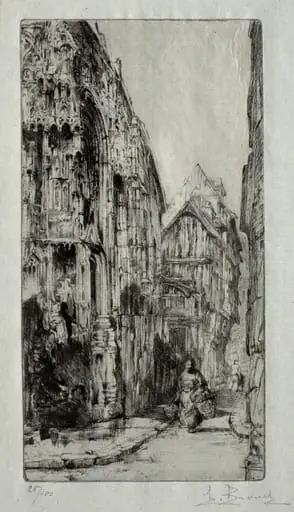 Saint-Etienne des Tonneliers a Rouen
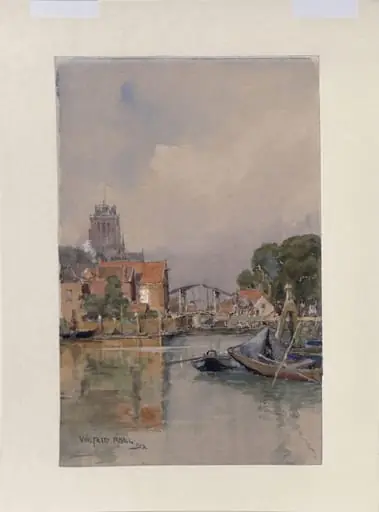 Dordrecht
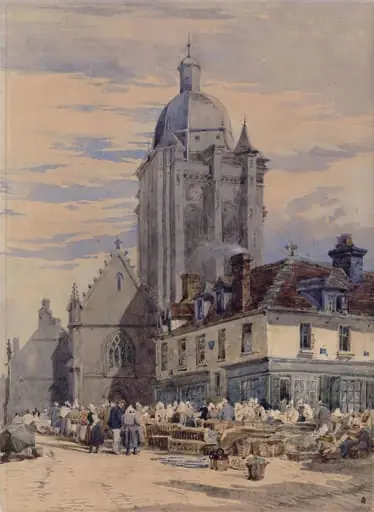 Street View, Mortagne, Normandy
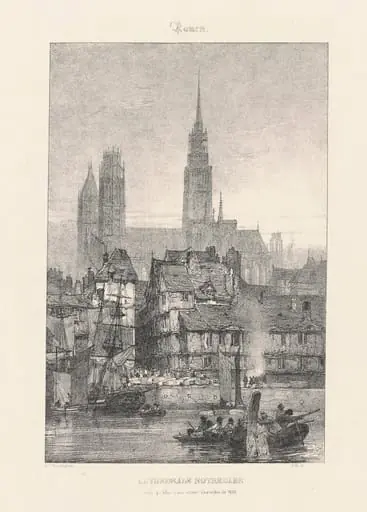
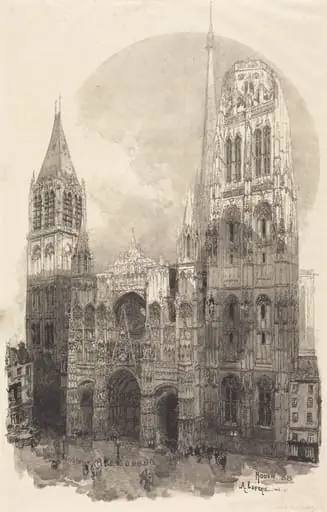 Rouen Cathedral (La Cathedral de Rouen)
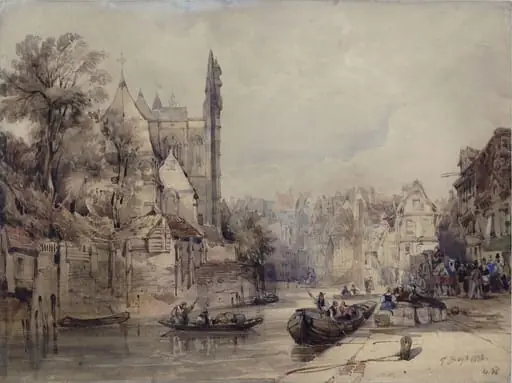 Rue du Rivage, Abbeville
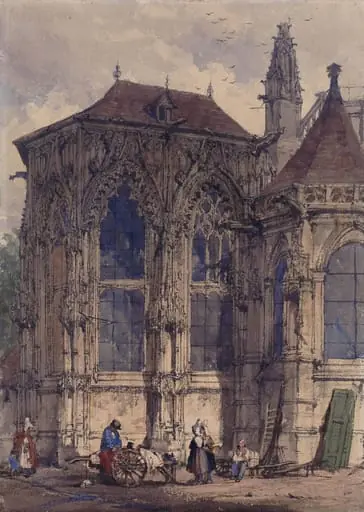 East End of the Church of St. Jacques, Dieppe