Artwork
Saint-Etienne des Tonneliers a Rouen
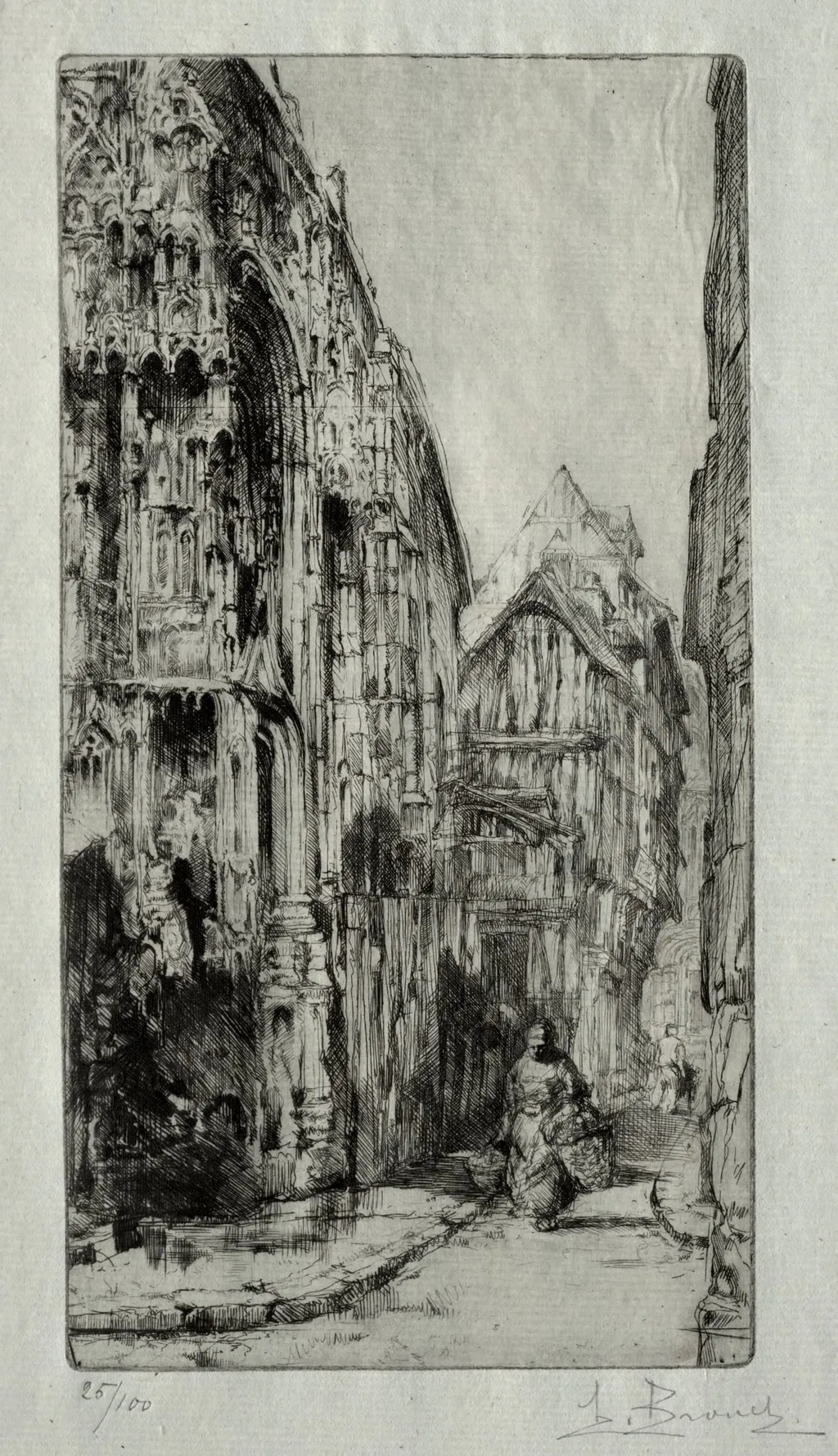
Saint-Etienne des Tonneliers a Rouen is a print by the Impressionist artist Auguste Brouet. It dates from 1925 and is held in the collection of the Cleveland Museum of Art.
About this work
Overview
Created in 1925 by Auguste Brouet, this print depicts a quiet urban lane in Rouen, France. Rendered in monochrome tones, it captures a modest street scene with architectural detail and a solitary figure. The work is part of the collection at The Cleveland Museum of Art, reflecting Brouet’s interest in everyday life in northern French towns during the early 20th century.
Subject & Meaning
Surrounding her are closely packed buildings with Gothic arches and weathered facades, suggesting a long-standing commercial district.
The scene centers on a woman seated on the cobblestone street, possibly engaged in small-scale trade from a basket at her side. Surrounding her are closely packed buildings with Gothic arches and weathered facades, suggesting a long-standing commercial district. The quiet solitude of the figure and the stillness of the street evoke a sense of routine, emphasizing the dignity of ordinary moments in a historic urban setting.
Technique & Style
Brouet employed fine linework and subtle tonal gradations to convey texture and depth. The muted palette of browns, grays, and soft blacks enhances the atmospheric quietude. Light falls unevenly across the buildings and the woman’s garments, accentuating surface details without dramatic contrast. The precision of the etching suggests a printmaker’s attention to architectural accuracy and spatial harmony.
History & Provenance
The print was made in 1925 during a period when Brouet focused on documenting regional French architecture and street life. It entered the Cleveland Museum of Art’s collection through established acquisition channels, likely as part of a broader effort to include European graphic arts from the interwar years. Its provenance remains tied to the artist’s known output and museum records from the mid-20th century.
Context
Brouet worked in the tradition of French printmakers who recorded urban and rural scenes with documentary care. While not aligned with Impressionism, his approach shares an interest in ordinary life, akin to contemporaries like Degas or Daumier. Rouen, a city with deep medieval roots, provided a rich backdrop for such observations, especially as modernization began to reshape its older quarters.
Legacy
Brouet’s prints, including this one, contribute to a body of work that preserves the visual character of French provincial towns before widespread postwar change. Though not widely exhibited today, his etchings remain valued for their quiet observation and technical restraint, offering insight into the overlooked rhythms of early 20th-century French urban life.
Artist & collection

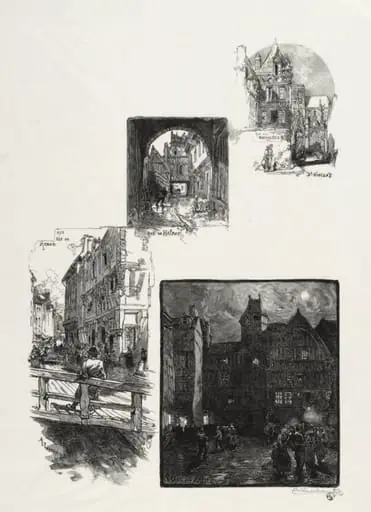 Rouen Illustré: Rue des Charretes; Rue de Halage; Rue Eau de Robec; Place des Arts
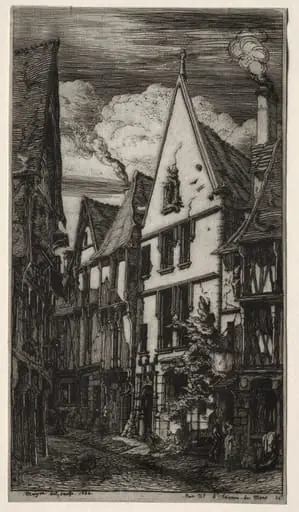 Rue des Toiles, Bourges
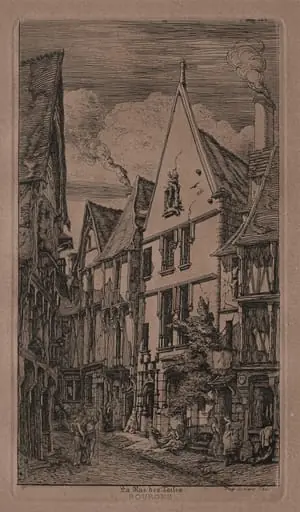 Rue des Toilés, Bourges
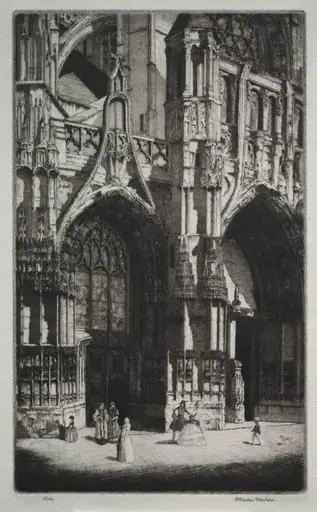 Nôtre Dame de Caudebec, France
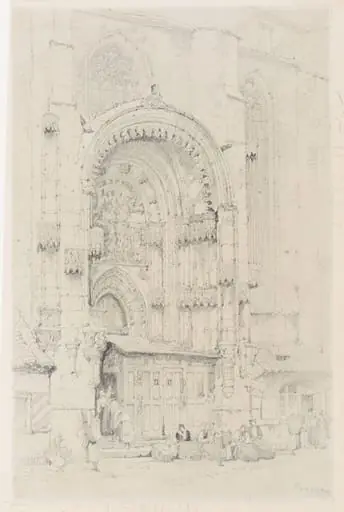 Prague Cathedral
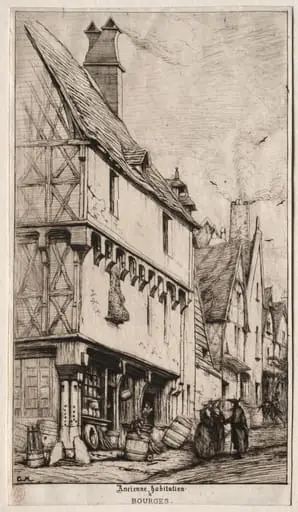 An Old House at Bourges, sometimes called the Musician's House
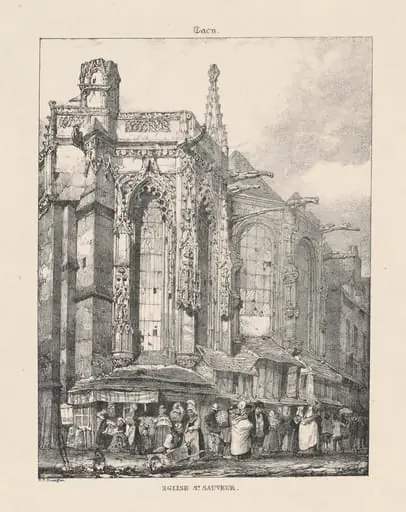 Église St. Sauveur
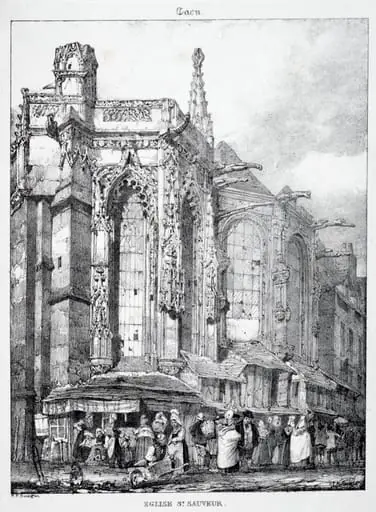 Restes et Fragmens d'Architecture du Moyen Age: Église St. Sauveur, Caën