Artwork
Tonbridge Castle, Kent
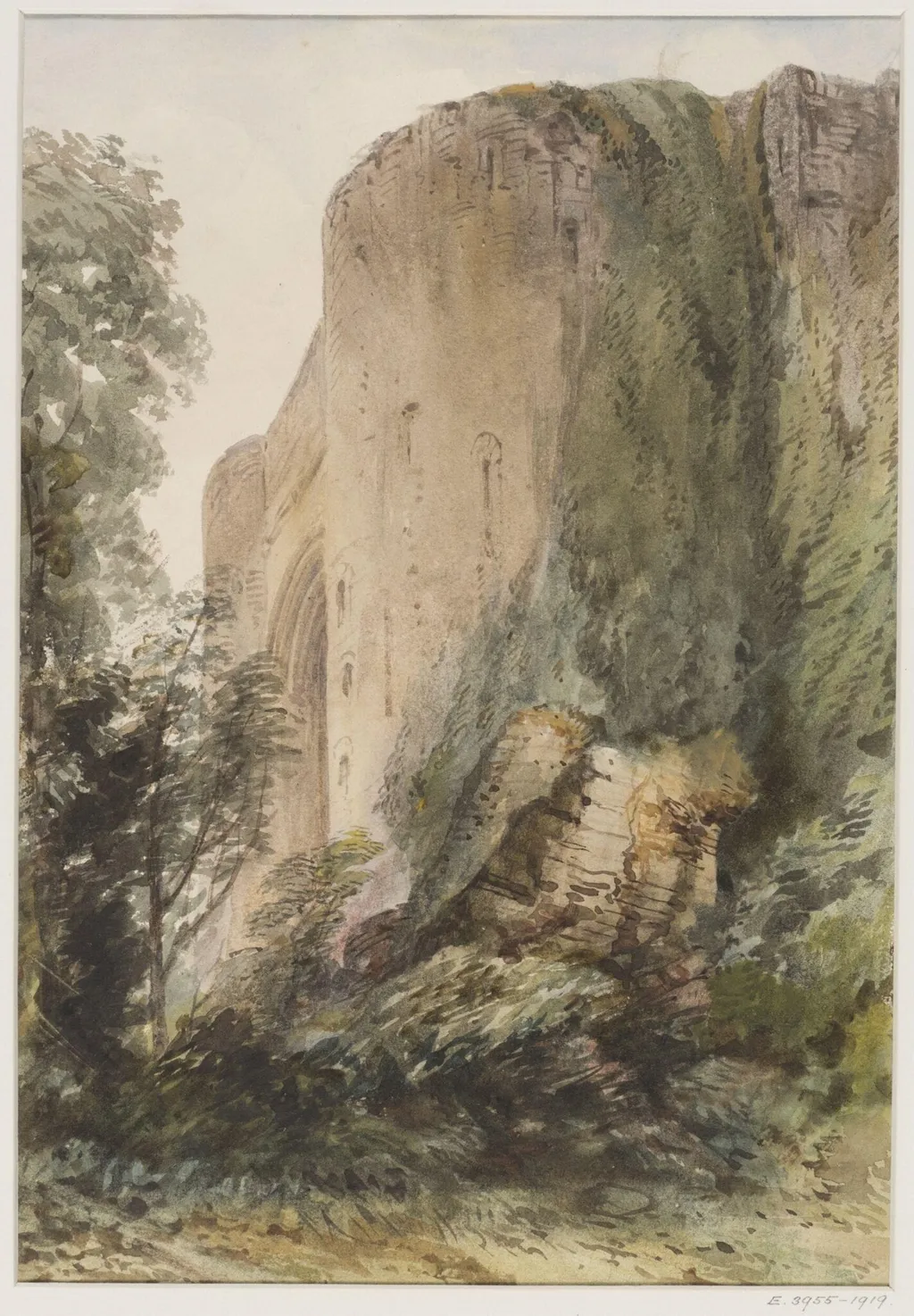
Tonbridge Castle, Kent is a drawing by the Romanticist artist Edward Webb. It dates from 1805 and is held in the collection of the Victoria and Albert Museum.
About this work
Overview
Edward Webb’s 1805 drawing of Tonbridge Castle in Kent records the medieval fortress’s imposing stone wall, highlighted by a broad arched window. The composition includes modest vegetation climbing the masonry and a stand of trees positioned to the left, framing the structure within a natural setting.
Subject & Meaning
The work focuses on the architectural solidity of the castle, emphasizing its defensive character while integrating surrounding foliage to suggest a harmonious relationship between built and natural environments. The arched window serves as a visual focal point, inviting contemplation of the interior space concealed behind the stone façade.
Technique & Style
Executed in a realistic manner, Webb renders the stonework with precise line work and varied shading, achieving a tactile sense of texture. A restrained palette of earth tones and muted greens creates atmospheric depth, while subtle gradations convey the play of light across the wall and nearby trees.
History & Provenance
Created in the early nineteenth century, the drawing entered the collection of the Victoria and Albert Museum, where it remains part of the institution’s holdings of British architectural drawings. Its acquisition reflects the museum’s broader interest in documenting historic structures through graphic media.
Context
The piece aligns with the early Romantic interest in medieval architecture and the picturesque landscape, a trend that encouraged artists to depict historic sites within evocative natural settings. Webb’s attention to detail and mood mirrors contemporary efforts to record and celebrate England’s heritage.
Artist & collection

 Study of Butterbur (Petasites vulgaris, Desf.) the largest leaf of any English plant
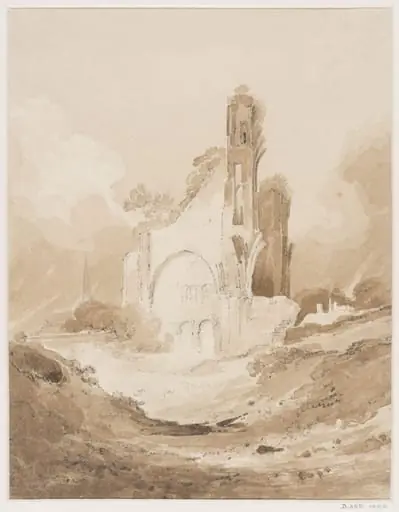 Wenlock Priory, Salop
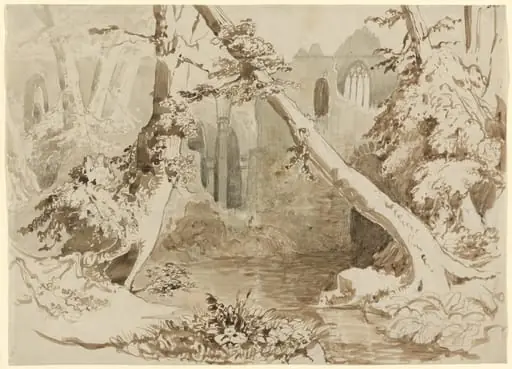 A Ruined Church in the Forest
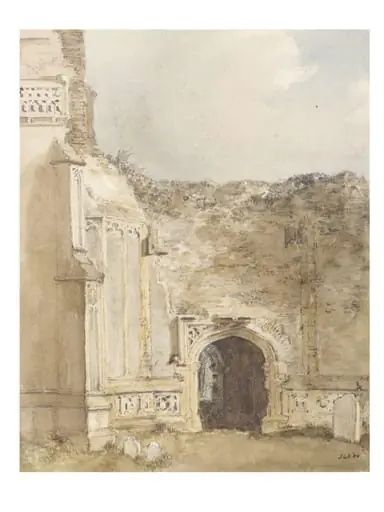 East Bergholt Church: north archway of the ruined tower
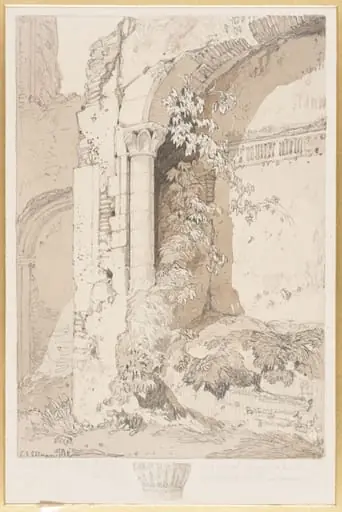 Ruins of the Abbey, Thetford, Norfolk
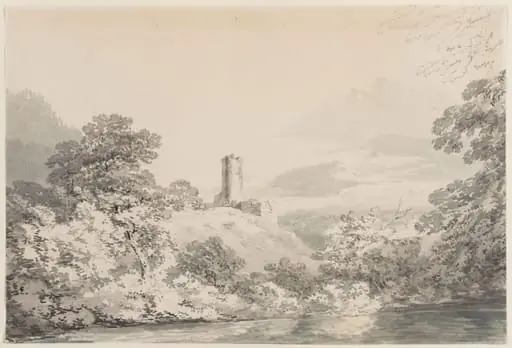 Landscape with tower on a rock
 Tintern Abbey
 Ruins of a Fortified Tower among Wooded Hills
 A Ruined Castle
 Untitled
 Dans un parc
 Pembroke Castle