Artwork
Untitled
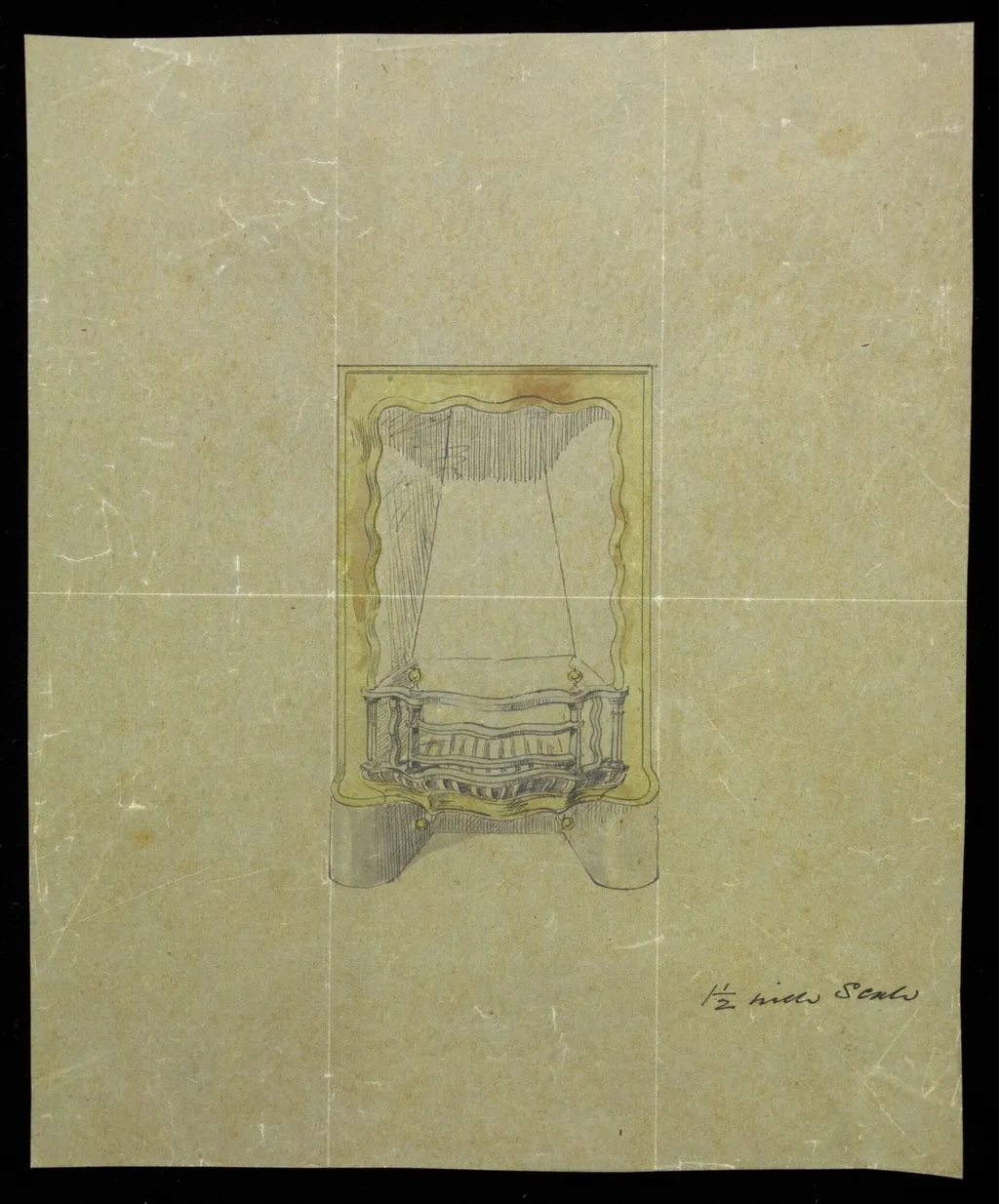
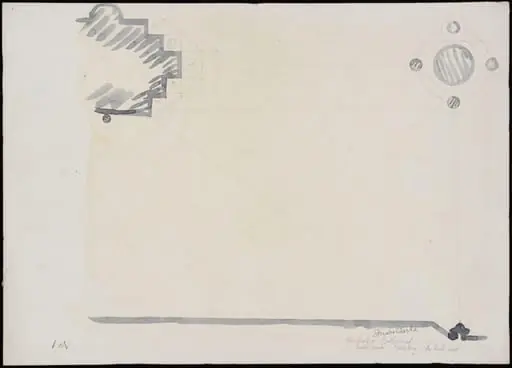
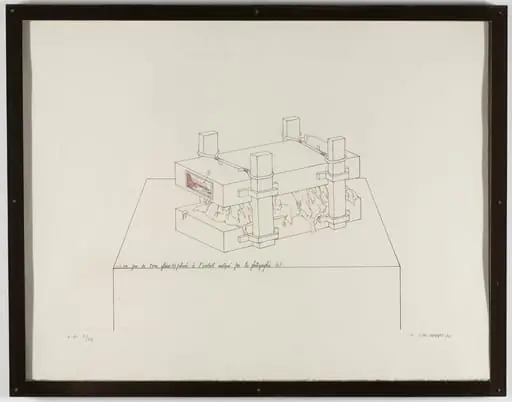
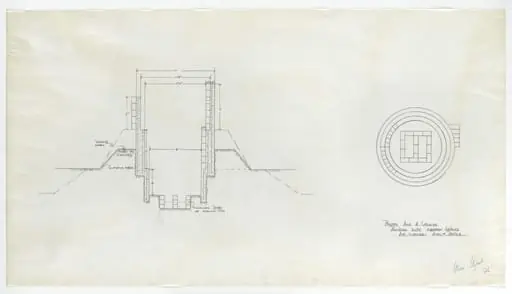
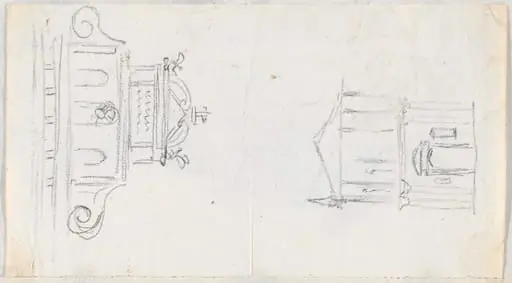
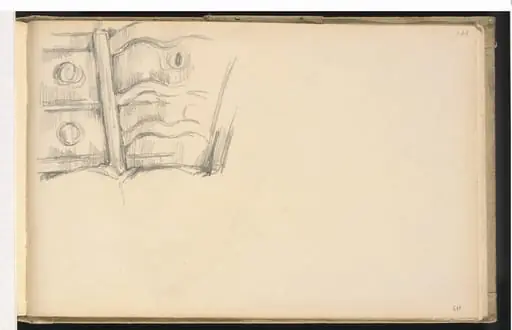
Untitled is a drawing by Philip Speakman Webb. It is held in the collection of the Victoria and Albert Museum. A delicate ink and wash drawing on tracing paper, this work depicts a fireplace with a gracefully curved grate.
About this work
Overview
A handwritten note in the lower right corner specifies a scale of one and a half inches to the foot, indicating its function as a technical study.
A delicate ink and wash drawing on tracing paper, this work depicts a fireplace with a gracefully curved grate. The exterior surfaces are tinted with a yellow-orange wash, suggesting copper patination. A handwritten note in the lower right corner specifies a scale of one and a half inches to the foot, indicating its function as a technical study. The precision and modest scale point to its use in architectural planning rather than display.
Subject & Meaning
The subject is a domestic fireplace, a central feature in 19th-century British homes. Its sinuous grate reflects an emphasis on both function and aesthetic harmony, aligning with Arts and Crafts ideals. The choice to render the metalwork in warm washes suggests attention to material authenticity. The drawing’s scale notation reveals its role as a working document, bridging design intent and physical construction.
Technique & Style
Executed in fine ink lines with translucent washes, the drawing demonstrates Webb’s mastery of light and material representation. Tracing paper allowed for layering and revision, common in architectural drafts of the period. The restrained palette and controlled brushwork reflect a disciplined approach, prioritizing clarity over ornament. This technique mirrors the broader Arts and Crafts preference for honest, handcrafted expression over industrial mimicry.
History & Provenance
Created by Philip Webb, the drawing likely dates to the 1860s–1880s, a period of intense collaboration with William Morris and others. It may have been produced for Red House or another domestic commission. While its exact provenance is undocumented, its style and materials align with Webb’s known working methods. The drawing survives as part of a broader archive of his architectural studies, held in institutional collections such as the Victoria and Albert Museum.
Context
Webb’s work emerged during a time when architects sought to revive handcraftsmanship in response to industrialization. His drawings, like this one, were integral to the collaborative output of Morris & Co., where architecture, furniture, and decorative arts were conceived as unified wholes. This piece reflects the period’s shift toward designing interiors with attention to material truth and human scale, influencing later modernist principles of functional clarity.
Legacy
Though modest in size, this drawing exemplifies Webb’s enduring influence on architectural practice. His insistence on detailed, scaled studies informed generations of designers committed to craftsmanship. The integration of technical precision with aesthetic sensitivity became a hallmark of the Arts and Crafts movement and resonated in 20th-century modernism. His drawings remain studied for their quiet rigor and material honesty.
Artist & collection
Artist
Philip Webb had a habit of sketching birds while riding the train—tiny, precise pencil marks tucked into the corners of his notepads.