Artwork
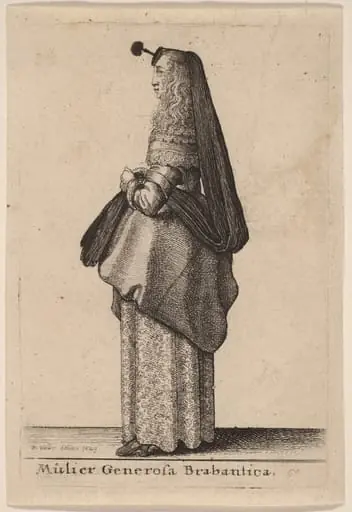
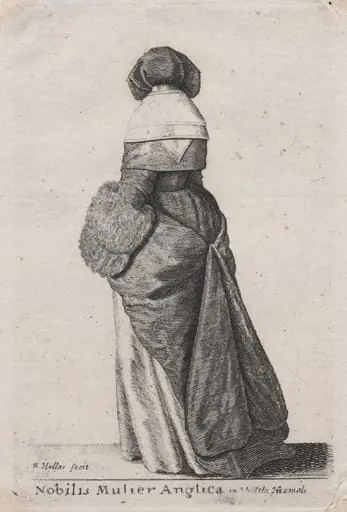
The Several Habits of English Women, from the Nobility to the Country Women as they are in these times: The Woman with a Fan and Mirror
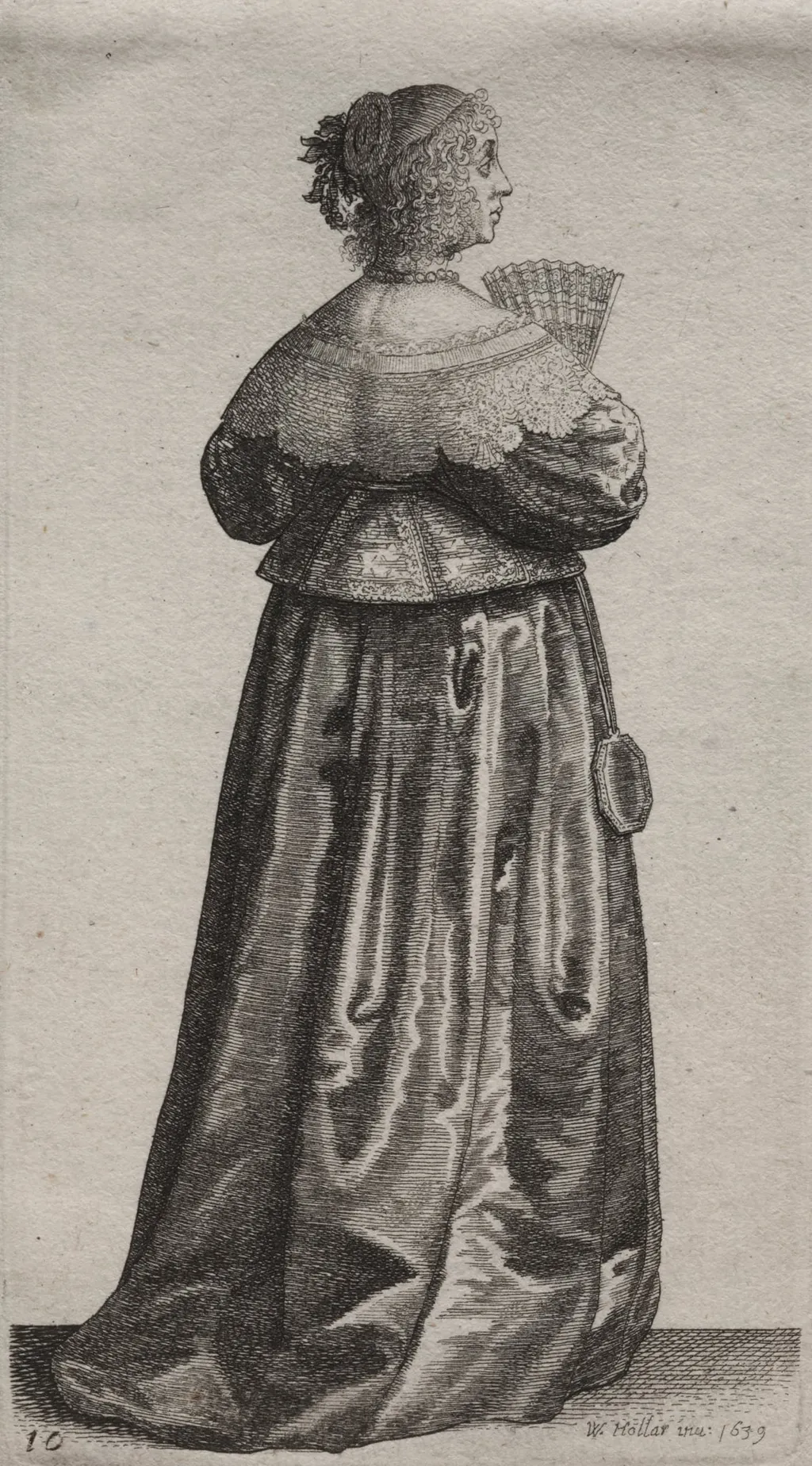
The Several Habits of English Women, from the Nobility to the Country Women as they are in these times: The Woman with a Fan and Mirror is a print by the Baroque artist Wenceslaus Hollar. It dates from 1639 and is held in the collection of the Cleveland Museum of Art.
About this work
Overview
Rendered in monochrome, the image captures a woman viewed from behind, engaged with a fan and mirror—objects suggesting personal adornment and self-awareness.
Created in 1639 by Wenceslaus Hollar, a Bohemian artist based in England, this etching is one of a series documenting the attire and daily presence of English women across social classes. Rendered in monochrome, the image captures a woman viewed from behind, engaged with a fan and mirror—objects suggesting personal adornment and self-awareness. Hollar’s precision in depicting fabric and posture reflects his broader interest in costume as social documentation.
Subject & Meaning
The figure represents a middle- or upper-class woman of the early 17th century, neither aristocrat nor laborer, but someone of modest means yet attentive to fashion. The fan and mirror imply ritualized self-presentation, common in domestic or social settings. The composition avoids narrative drama, instead emphasizing quiet routine, reinforcing the series’ aim to catalog rather than idealize.
Technique & Style
Hollar employed fine, controlled etching lines to convey the texture and fall of fabric, particularly the vertical folds of the skirt and the stiffness of the high collar. Light is suggested through subtle tonal variations, not shading, in keeping with Baroque draftsmanship. The absence of facial features shifts focus entirely to costume and posture, aligning with the series’ ethnographic intent.
History & Provenance
Hollar, who settled in England after leaving Prague, produced this work during his early years in London, where he gained patronage for his topographical and costume studies. The print was likely issued as part of a portfolio intended for collectors and foreign audiences curious about English society. Its survival in multiple institutional collections attests to its early circulation and perceived value as social record.
Context
In the 1630s, England saw growing interest in visual records of daily life, fueled by rising literacy and print culture. Hollar’s series responded to this trend, offering a visual taxonomy of female dress that paralleled contemporary textual descriptions of manners and class. Unlike court portraiture, these images avoided glorification, instead presenting dress as a marker of social position.
Legacy
The work contributes to a broader archive of early modern costume studies, influencing later illustrators and historians seeking to reconstruct everyday life. Hollar’s method—detailed, unembellished, and systematic—became a model for documenting social diversity through dress. Though not widely exhibited today, it remains a key reference in studies of 17th-century English material culture.
Artist & collection
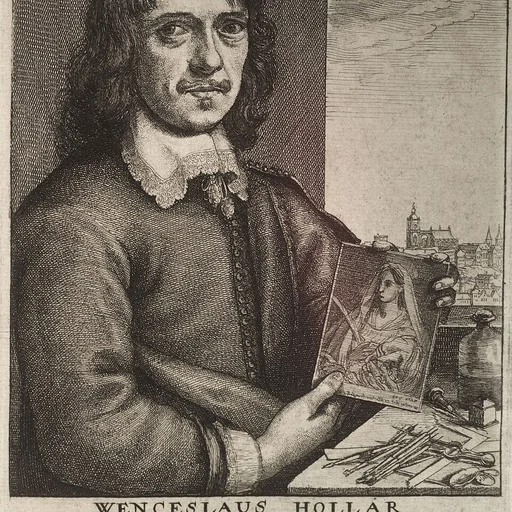
Artist
Wenceslaus Hollar (Czech: Václav Hollar (Czech pronunciation: ), German: Wenzel Hollar; 23 July 1607 – 25 March 1677) was a Czech engraver, etcher and painter.