Artwork
The Mosque of Omar, Jerusalem
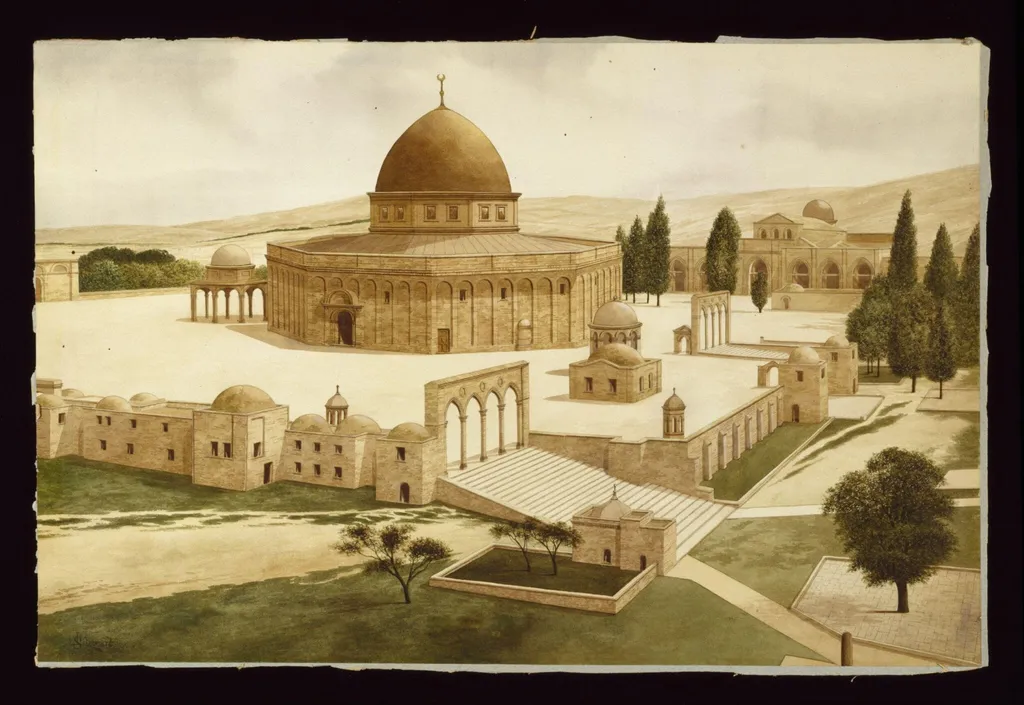
The Mosque of Omar, Jerusalem is a watercolor work on paper by the Impressionist artist James Lawson Stewart. It dates from 1885 and is held in the collection of the Victoria and Albert Museum.
About this work
Overview
The work is part of the Bishopsgate Institute’s collection in London, acquired through a 1971 auction purchase documented by art historian Rodney Searight.
Painted in 1885 by James Lawson Stewart, this watercolour depicts the site traditionally associated with the Mosque of Omar in Jerusalem. Though the artist likely worked from secondary sources rather than on-site observation, the composition reflects a deliberate attempt to reconstruct the architectural character of the location. The work is part of the Bishopsgate Institute’s collection in London, acquired through a 1971 auction purchase documented by art historian Rodney Searight.
Subject & Meaning
The scene centers on a cluster of domed structures set within a quiet, enclosed courtyard. The largest dome, positioned centrally, suggests the religious significance of the site, while surrounding arches and smaller domes imply a complex of ancillary buildings. The absence of human figures and the stillness of the composition evoke a sense of contemplative solitude, aligning with 19th-century Western interpretations of sacred Eastern spaces as serene and timeless.
Technique & Style
Stewart employed transparent watercolour washes to render the stone architecture with subtle gradations of light and shadow. The muted earth tones—ochres, browns, and soft greens—create a restrained palette that enhances the impression of aged materials. Delicate linework defines stonework details, while the lack of sharp contrasts and the soft edges of forms contribute to a hazy, almost archival quality, reminiscent of early photographic impressions.
History & Provenance
The painting entered the Bishopsgate Institute’s collection following its acquisition at a Phillips auction in November 1971 for £20. Its inclusion in the 1970 publication *The London of Dickens: Paintings by J.L. Stewart* confirms its recognition within the artist’s oeuvre. Though Stewart is primarily known for London scenes, this work reflects his broader interest in architectural subjects from the Levant, likely informed by contemporary travel literature and illustrated accounts.
Context
Created during a period of heightened European interest in the Holy Land, the painting aligns with a broader trend of topographical watercolours produced by amateur and professional artists who never visited the sites they depicted. These works often blended factual detail with romanticized reconstructions, shaped by religious sentiment and colonial-era curiosity. Stewart’s approach mirrors this hybrid tradition, prioritizing architectural accuracy over lived experience.
Legacy
Though not widely exhibited, the painting remains a documented example of late 19th-century British watercolour practice applied to non-European subjects. Its presence in institutional archives underscores its role as a historical record of how Western artists interpreted sacred Islamic architecture during a time of limited direct access. It continues to serve as a reference for studies on visual representation of the Middle East in Victorian art.
Artist & collection
Artist
James Lawson Stewart painted delicate watercolors of buildings he saw in the late 1800s.

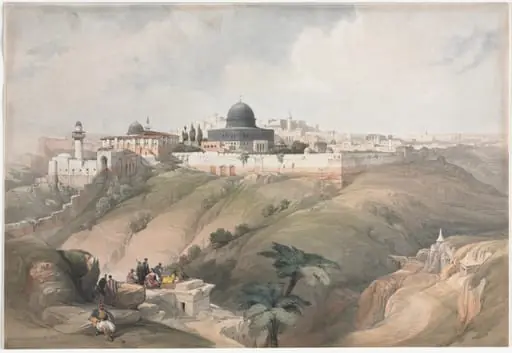
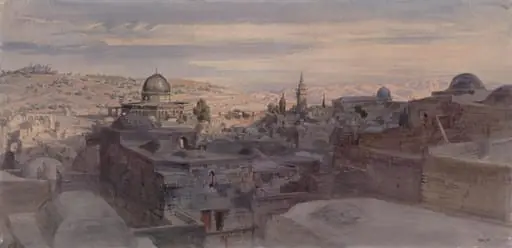
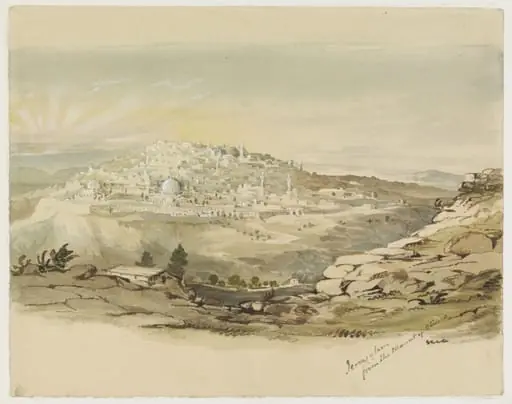
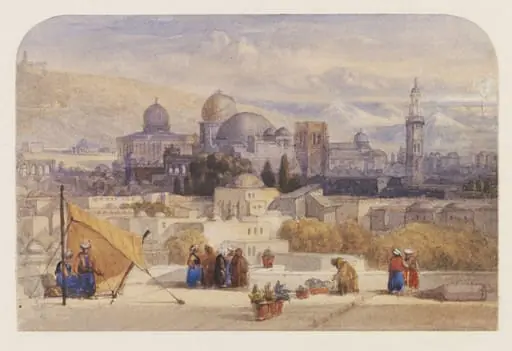 Jerusalem from the Terrace of the Latin Convent
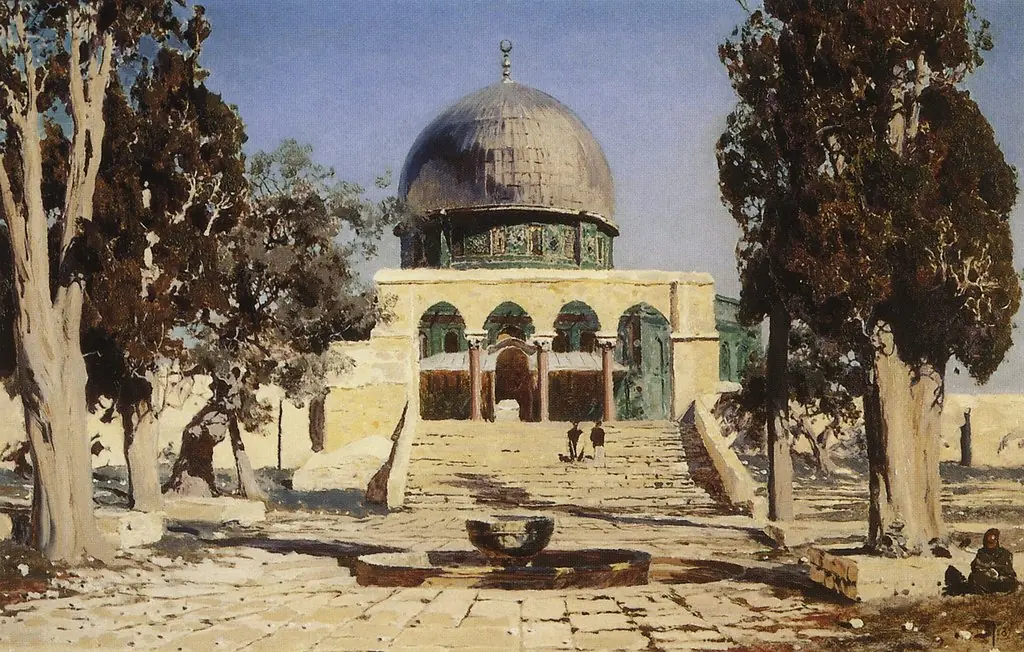 Haram al-Sherif
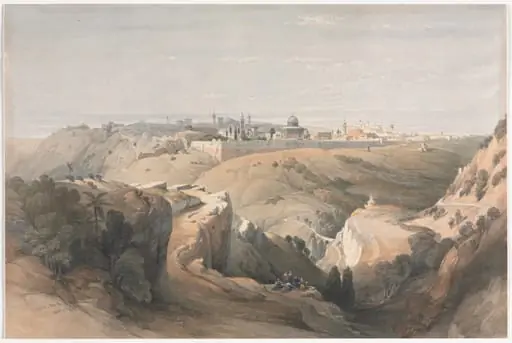
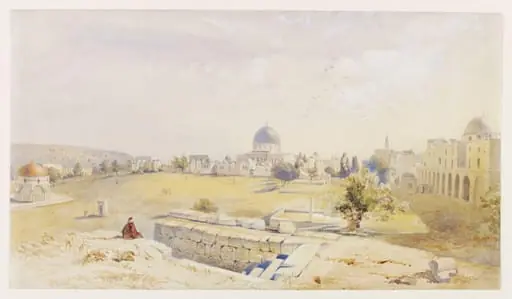 Jerusalem. Mount Moriah The Site Of The Temple now occupied by the Mosque of Omar
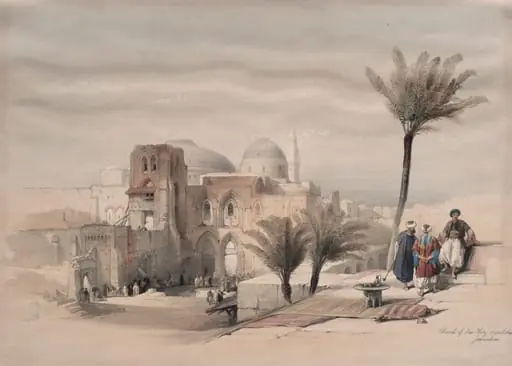 Church of the Holy Sepulchre, Jerusalem
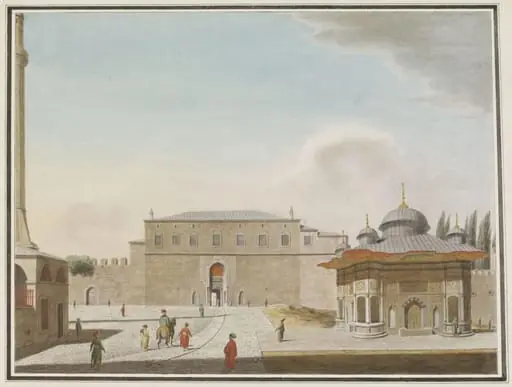 Bab-i-Hümayün (Imperial Gate) to Topkapi Sarayi, with the Fountain of Sultan Ahmet III
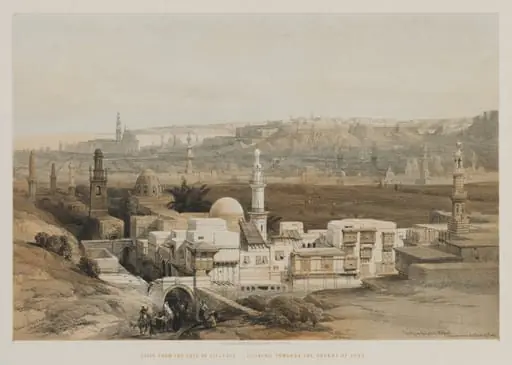 Egypt and Nubia, Volume III: Cairo from the Gate of Citzenib, Looking towards the Desert of Suez
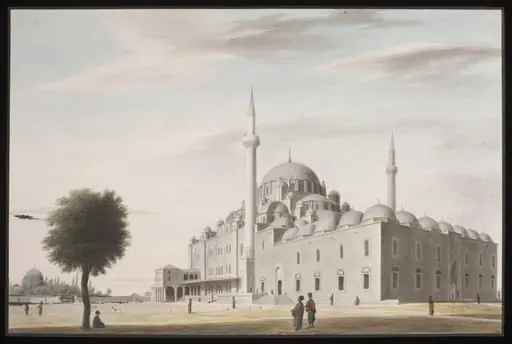 View of the Fatih Mehmet Camii
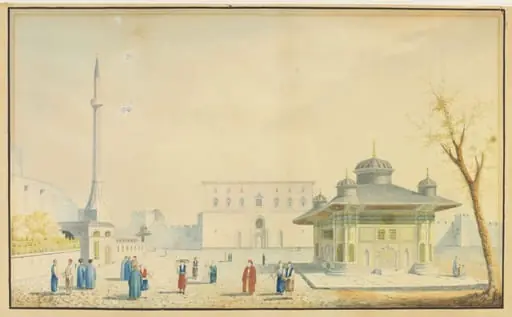 The Bab-i Hümayün or Imperial Gate of Topkapi Sarayi, with the Fountain of Sultan Ahmet III
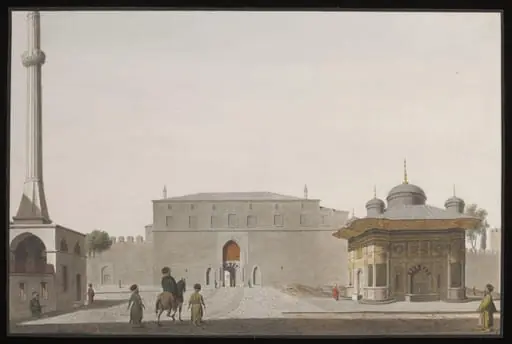 Bab-i-Hümayün (Imperial Gate) to Topkapi Sarayi, with the Fountain of Sultan Ahmet III