Artwork
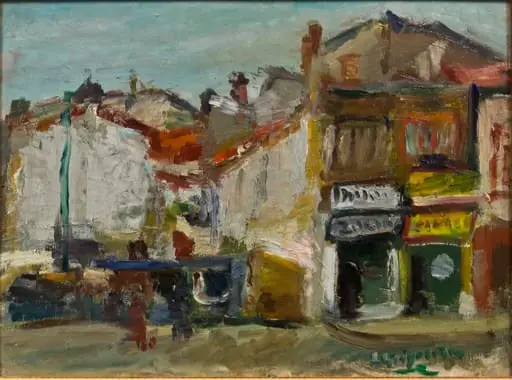
Târg în Bretonia (Douarnenez)
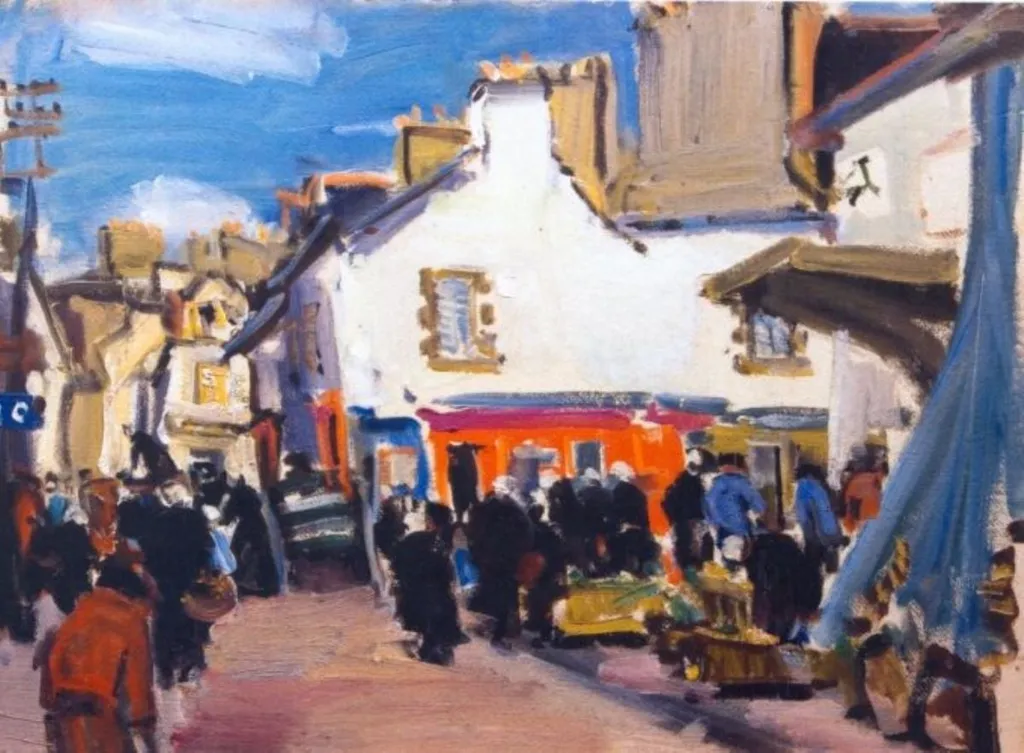
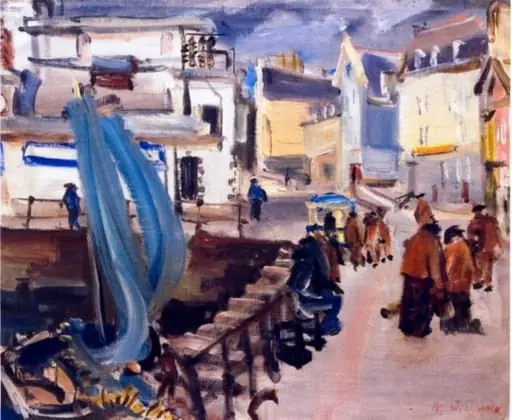
Târg în Bretonia (Douarnenez) is an unspecified painting by Arnold Max Wexler. It is held in the collection of the National Museum of Art of Romania.
About this work
Overview
Figures are scattered across the foreground and midground, while architectural forms recede into simplified, almost abstract shapes in the distance.
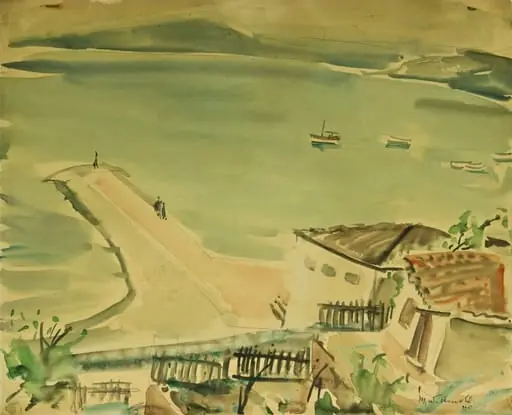
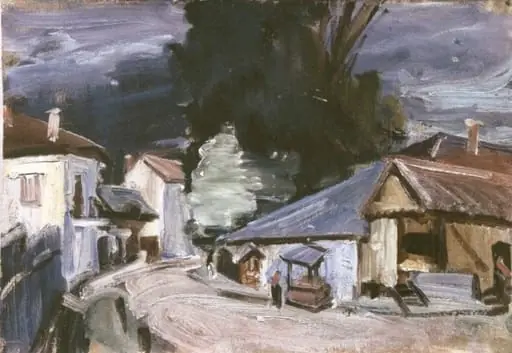
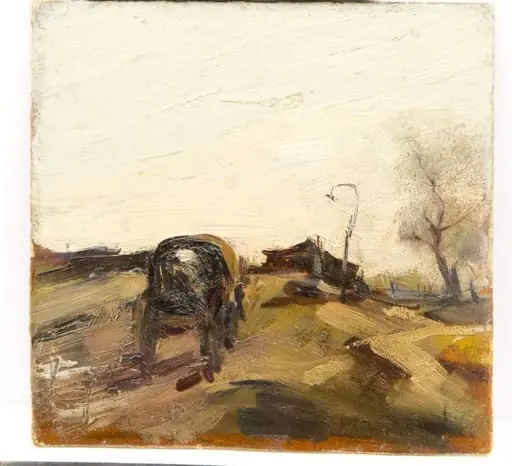
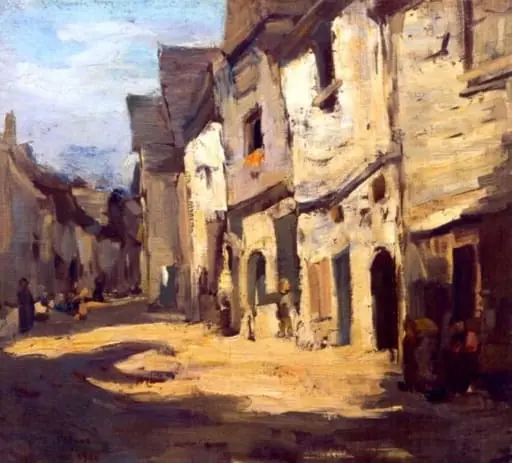
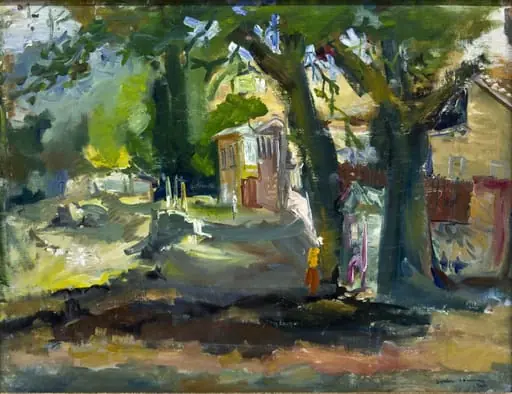
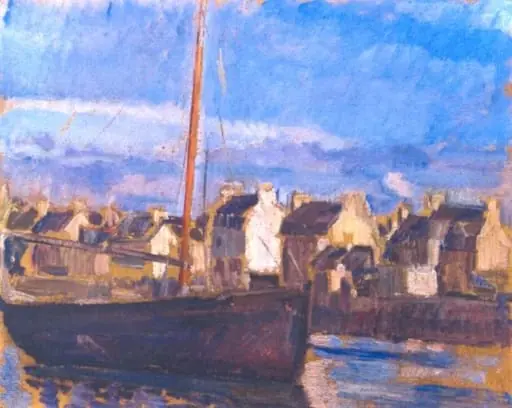
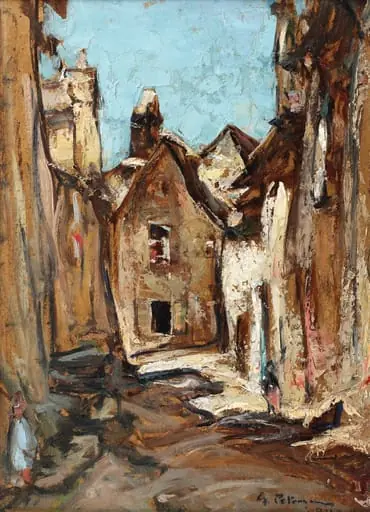
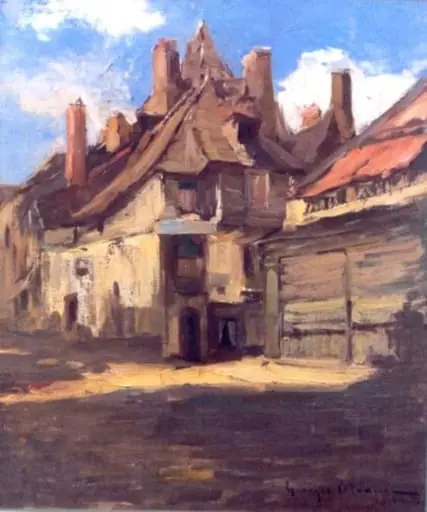
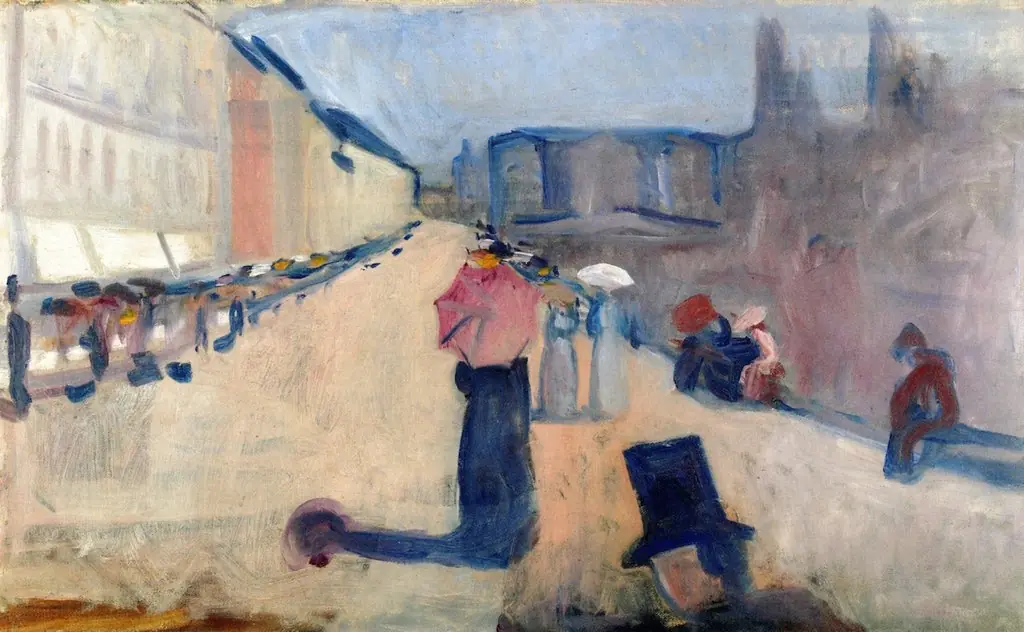
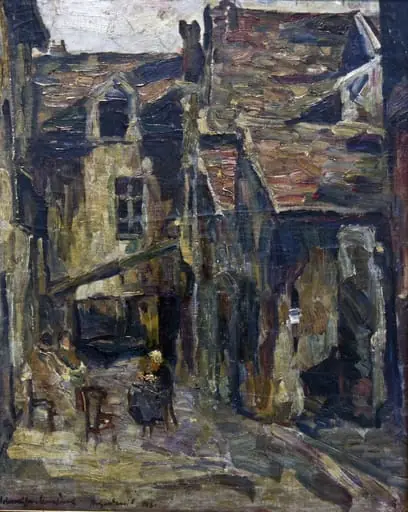
Târg în Bretonia (Douarnenez) captures a lively street market in the Breton town of Douarnenez. Rendered with energetic brushwork and vivid hues, the scene conveys motion and daily rhythm. Figures are scattered across the foreground and midground, while architectural forms recede into simplified, almost abstract shapes in the distance. The composition emphasizes atmosphere over detail, aligning with impressionist tendencies.
Subject & Meaning
The painting portrays ordinary life in a coastal Breton town, focusing on the informal commerce and pedestrian activity of a market day. No single narrative dominates; instead, the work suggests the quiet rhythm of communal routines. The absence of dramatic events invites contemplation of everyday social textures, grounding the scene in local authenticity rather than idealized spectacle.
Technique & Style
Loose, expressive brushstrokes define forms without precise outlining. Color is applied boldly, with contrasts enhancing spatial depth and light effects. Buildings are reduced to geometric planes, and figures are suggested rather than fully modeled. This approach prioritizes sensory impression over realism, echoing the visual language of late 19th-century impressionism while retaining a distinctive, personal rhythm.
History & Provenance
The painting is attributed to Arnold Max Wexler, an artist active in the early 20th century with ties to Breton subjects. Its origin traces to a period when Wexler traveled in Brittany, sketching and painting local scenes. The work remained in private collections until its inclusion in institutional archives, though its exhibition history remains limited and largely regional.
Context
Created during a time when European artists increasingly turned to rural and coastal communities for authentic subject matter, the painting reflects broader interest in regional identity. Brittany’s distinct culture and visual character attracted many painters seeking alternatives to urban modernity. Wexler’s depiction aligns with this trend, emphasizing place over personal narrative.
Legacy
Though not widely reproduced or critically prominent, the work contributes to a modest but persistent body of early 20th-century impressionist-inspired scenes from Brittany. It stands as an example of how lesser-known artists engaged with regional life through modernist techniques, preserving visual records of communities often overlooked in mainstream art history.
Artist & collection
Artist
Arnold Max Wexler made drawings and paintings of everyday scenes and landscapes around the 1930s–40s.