Artwork
The Lime-Burner
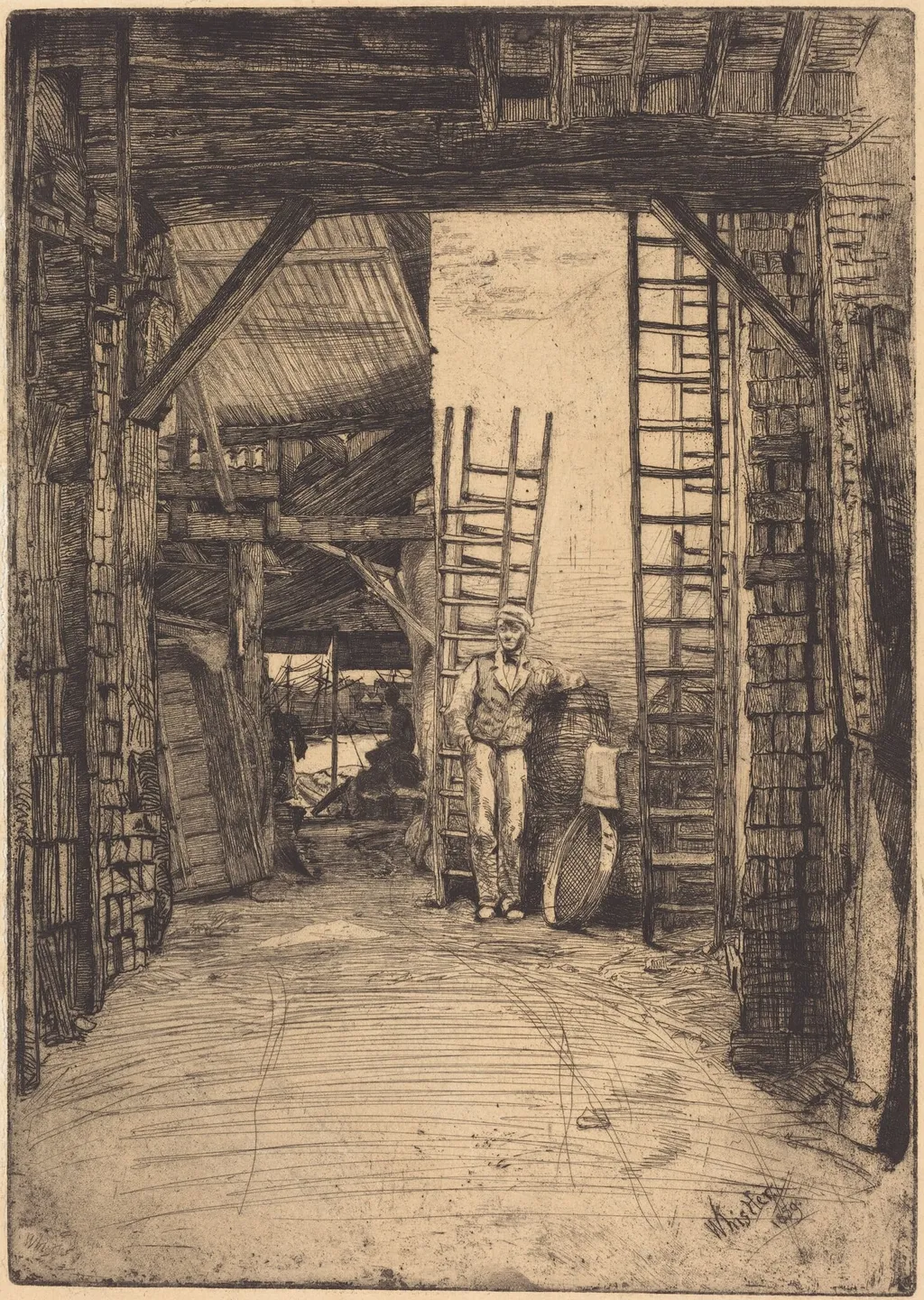
The Lime-Burner is an ink print by the Impressionist artist James McNeill Whistler. It dates from 1859 and is held in the collection of the National Gallery of Art.
About this work
Overview
Created in 1859, *The Lime-Burner* is an etching and drypoint on wove paper by James McNeill Whistler, produced during his formative years as a printmaker.
Created in 1859, *The Lime-Burner* is an etching and drypoint on wove paper by James McNeill Whistler, produced during his formative years as a printmaker. The work captures a quiet moment of manual labor, executed with precision and restraint. Whistler, an American living in Britain, used the medium to explore everyday subjects, distancing himself from academic conventions. The piece reflects his growing mastery of tonal contrast and line, laying groundwork for his later aesthetic philosophy.
Subject & Meaning
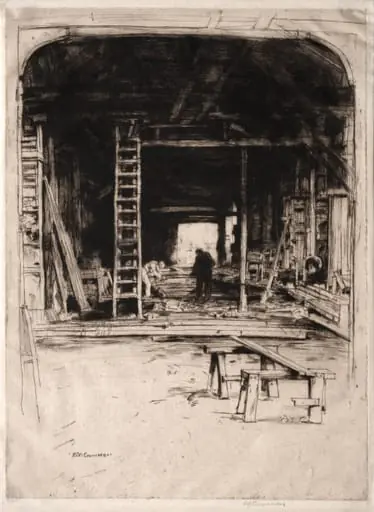
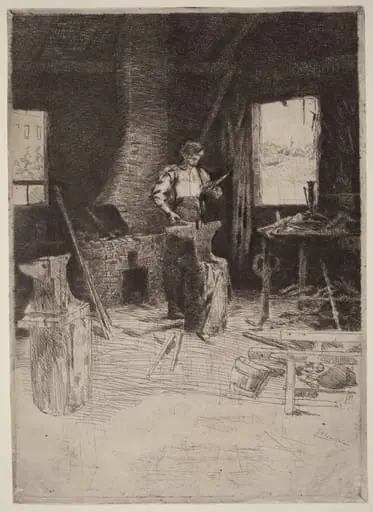
The print depicts a solitary laborer in a dim, wooden shed, leaning against a ladder with a sack in hand and a basket at his feet. No narrative or moralizing is offered; the figure is presented without drama or idealization. Whistler’s focus on the worker’s environment—rough planks, crisscrossed beams, and a single shaft of light—elevates the ordinary into a study of form and atmosphere. The scene resists sentiment, aligning with his belief that art should exist for its own visual qualities rather than to convey a message.
Technique & Style
Whistler employed etching and drypoint to achieve fine, incised lines that render texture with remarkable clarity—each nail, plank, and tool is rendered with deliberate precision. The drypoint’s rich, velvety burr enhances the shadows, while the etched lines define structural elements with sharpness. Light enters through a narrow window, creating a stark contrast that models the space without artificial illumination. The composition is tightly controlled, emphasizing spatial depth through linear perspective and tonal gradation.
History & Provenance
Made during Whistler’s early period in London, *The Lime-Burner* belongs to a series of prints documenting working-class life in the city’s outskirts. It was not widely exhibited at the time but circulated among collectors and fellow artists. The work remained in private hands for decades before entering institutional collections. Its survival reflects its quiet significance within Whistler’s printmaking oeuvre, valued more for technical insight than public acclaim.
Context
In the late 1850s, Whistler was part of a generation of artists rejecting historical and sentimental themes in favor of observed reality. His focus on laborers and urban edges aligned with emerging realist tendencies, though he avoided social commentary. The print coincides with his broader interest in Japanese prints and tonal harmony, both of which influenced his compositional economy. As an expatriate, he navigated transatlantic artistic networks, absorbing European techniques while maintaining an American perspective.
Legacy
Though less famous than his later portraits or nocturnes, *The Lime-Burner* exemplifies Whistler’s early commitment to printmaking as a serious art form. Its restrained aesthetic and technical rigor influenced subsequent generations of printmakers who valued subtlety over spectacle. The work also prefigures his signature butterfly monogram, which would become a symbol of his artistic identity. It stands as a quiet testament to his belief that beauty resides in observation, not embellishment.
Artist & collection
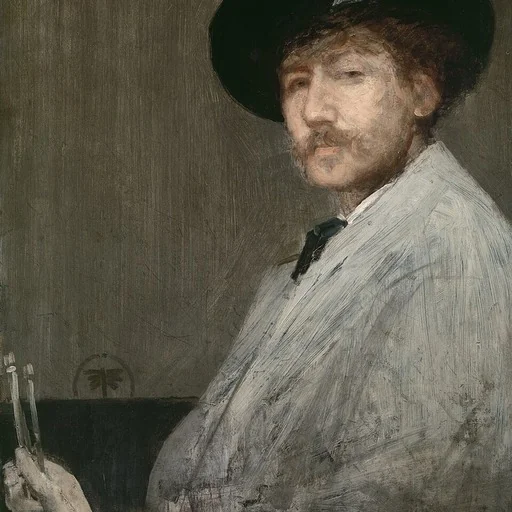
Artist
James Abbott McNeill Whistler was an American painter in oils and watercolor, and printmaker, active during the American Gilded Age and based primarily in the United Kingdom.

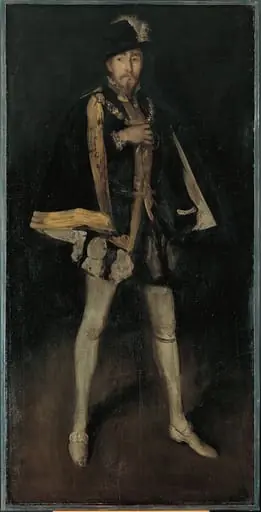 Arrangement in Black, No. 3: Sir Henry Irving as Philip II of Spain
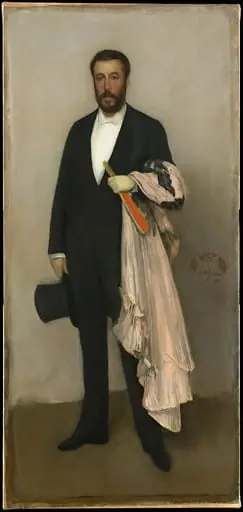 Arrangement in Flesh Colour and Black: Portrait of Theodore Duret
 Gold and Brown: Self-Portrait
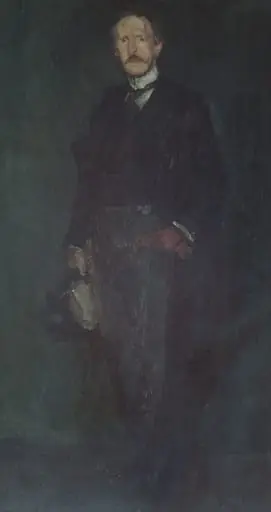 Edward Guthrie Kennedy
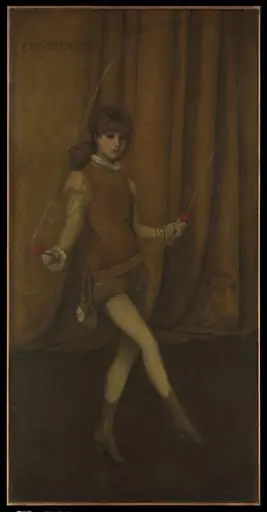 Harmony in Yellow and Gold: The Gold Girl—Connie Gilchrist
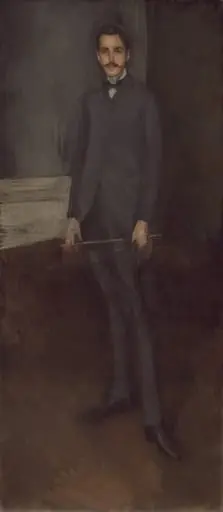 George W. Vanderbilt
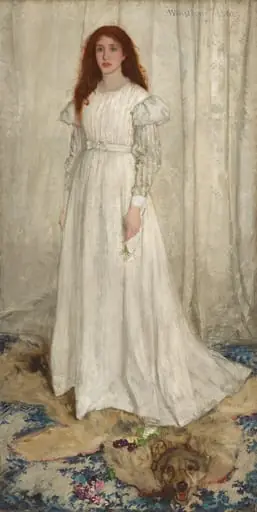 Symphony in White, No. 1: The White Girl
 Henry Irving as Philip II of Spain