Artwork
The Miser
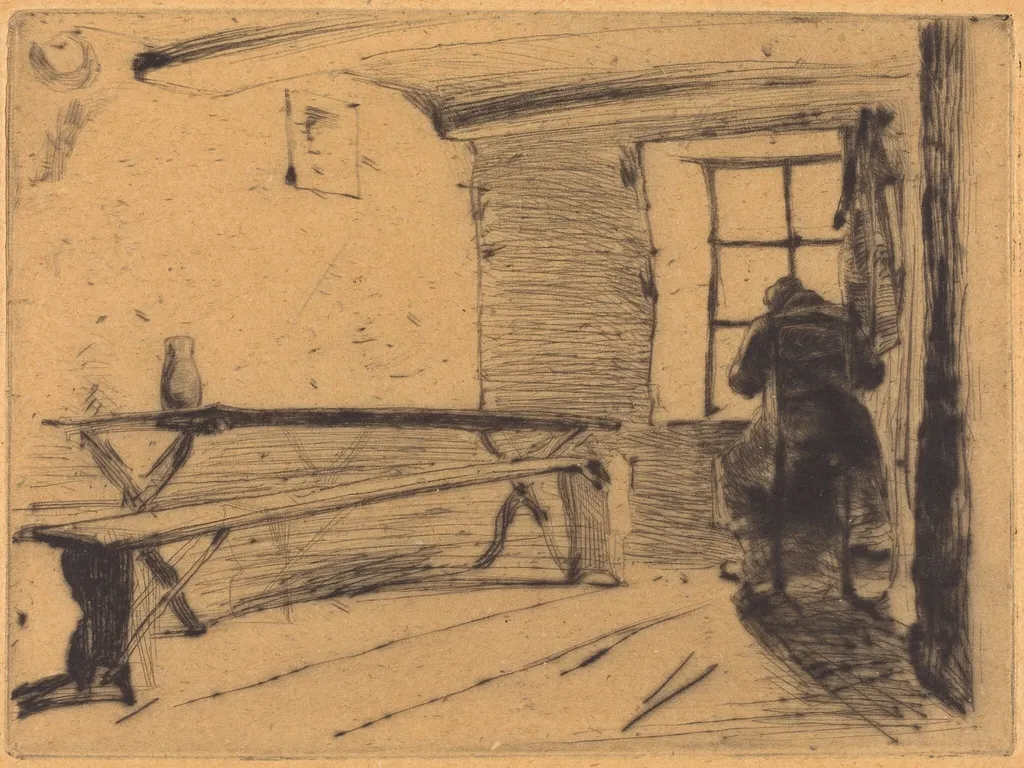
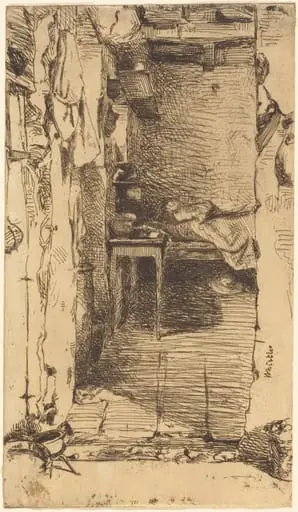
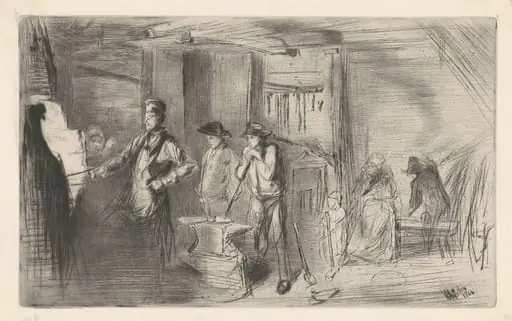
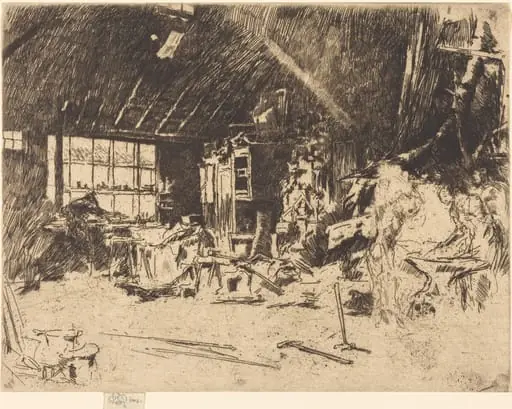
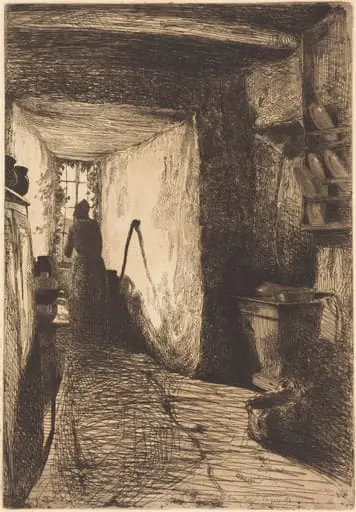
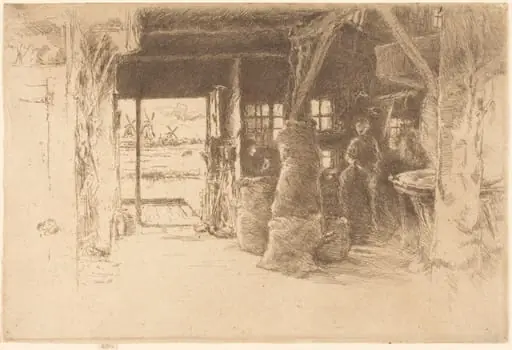
The Miser is an ink print by the Impressionist artist James McNeill Whistler. It dates from 1861 and is held in the collection of the National Gallery of Art.
About this work
Overview
The Miser, a drypoint print on wove tissue, was created by James McNeill Whistler around 1861. It exemplifies his dedication to printmaking within his artistic practice, characterized by a focus on aesthetic effect.
Subject & Meaning
The print depicts a solitary, hunched figure in a dimly lit, cluttered room, conveying tension and emptiness through pose and environment. The subject aligns with Whistler’s interest in character studies, eschewing sentimentality for a nuanced portrayal.
Technique & Style
Executed in drypoint, the work features quick, sketchy lines that capture the figure’s tension and the room’s desolation. Whistler’s distinctive stylized butterfly signature and delicate linework are also present, reflecting the aesthetic principles of 'art for art's sake'.
History & Provenance
Created circa 1861, The Miser is part of Whistler’s early explorations in drypoint, a technique that allowed for expressive, intimate prints. The work’s provenance is not detailed here, but its creation period situates it within Whistler’s formative printmaking years.
Context
The Miser reflects the broader artistic movement of 'art for art's sake,' prioritizing aesthetic appeal over moral or narrative content. Its style, with sketchy lines, was common in contemporary etchings, yet Whistler’s approach added a unique character study dimension.
Legacy
As a characteristic example of Whistler’s printmaking, The Miser contributes to the understanding of his artistic philosophy and technical skill in drypoint, influencing subsequent character studies in printmaking.
Artist & collection
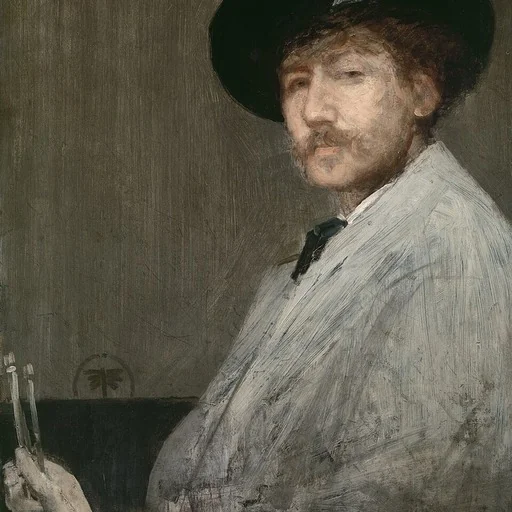
Artist
James Abbott McNeill Whistler was an American painter in oils and watercolor, and printmaker, active during the American Gilded Age and based primarily in the United Kingdom.

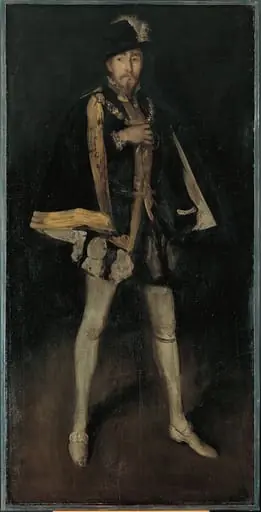 Arrangement in Black, No. 3: Sir Henry Irving as Philip II of Spain
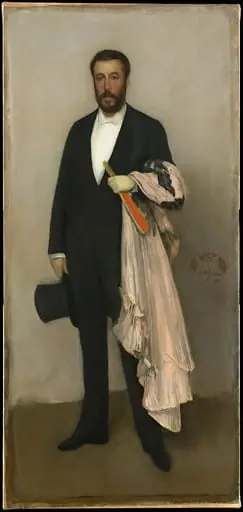 Arrangement in Flesh Colour and Black: Portrait of Theodore Duret
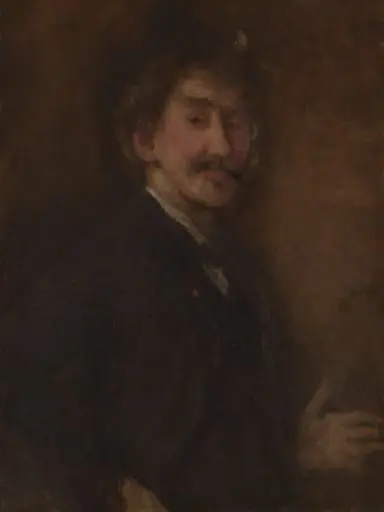 Gold and Brown: Self-Portrait
 Edward Guthrie Kennedy
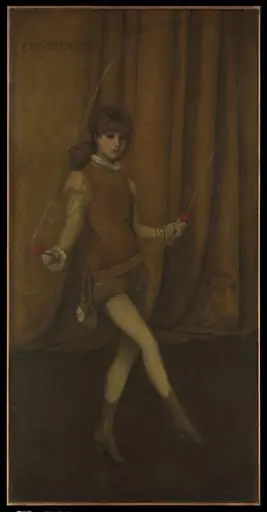 Harmony in Yellow and Gold: The Gold Girl—Connie Gilchrist
 George W. Vanderbilt
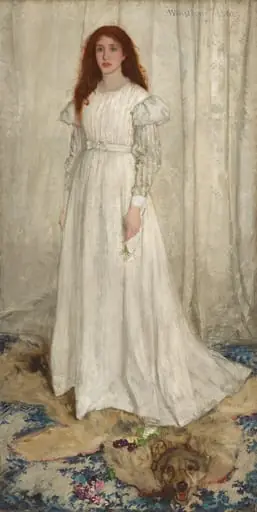 Symphony in White, No. 1: The White Girl
 Henry Irving as Philip II of Spain