Artwork
John Souter, Merchant at Exeter
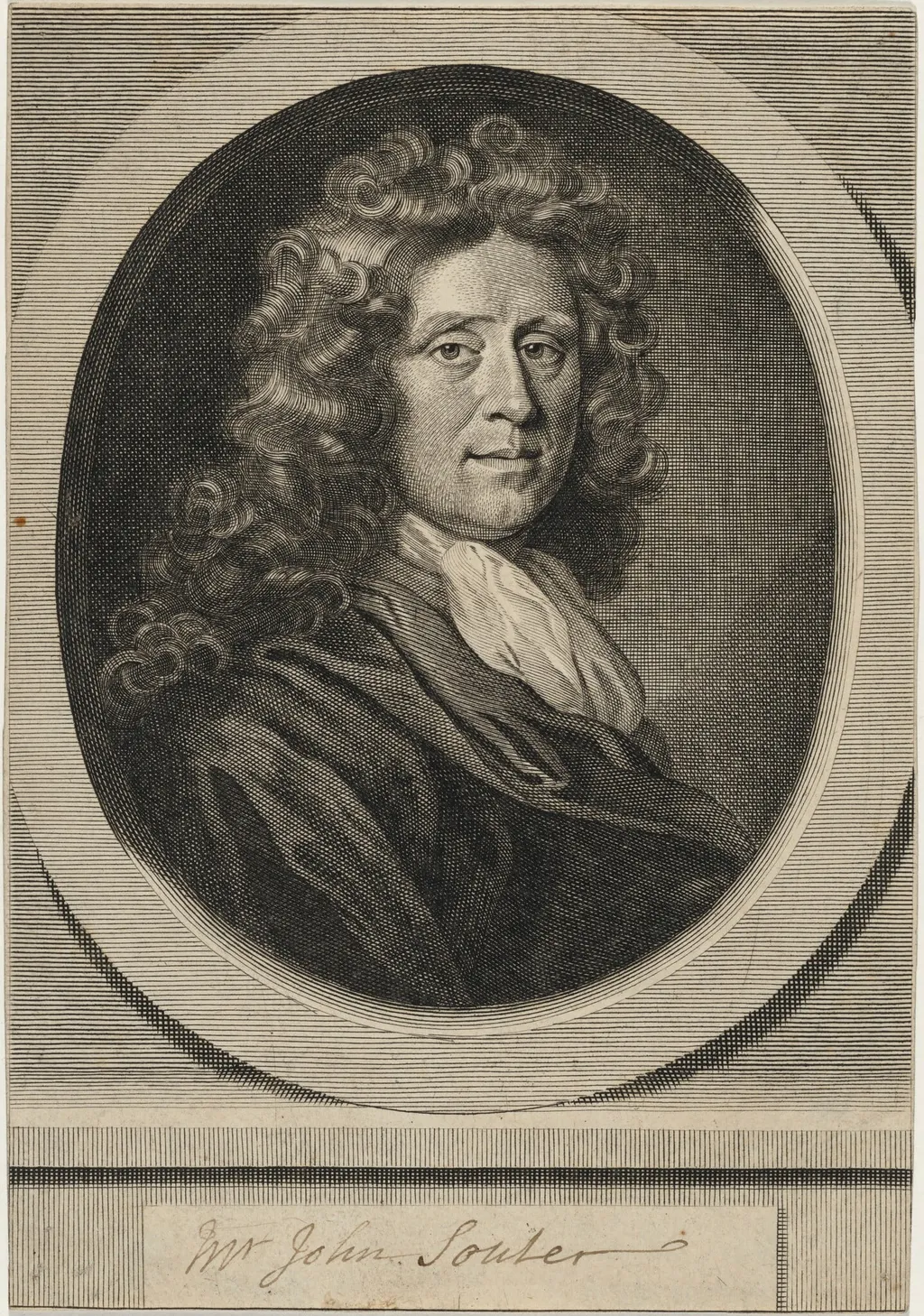
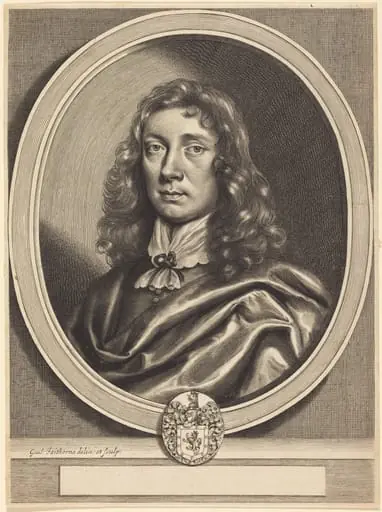
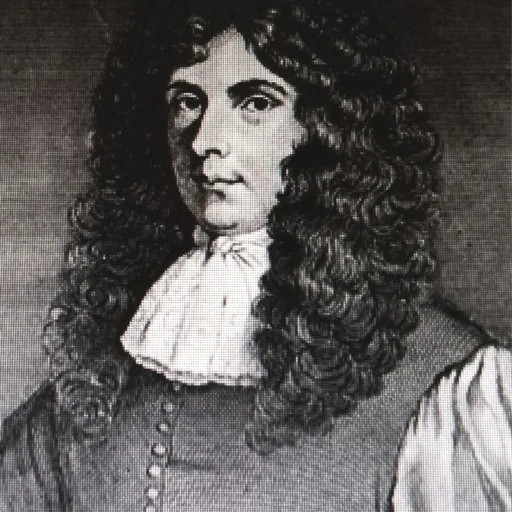
John Souter, Merchant at Exeter is an ink print by the Baroque artist Robert White. It dates from 1674 and is held in the collection of the National Gallery of Art.
About this work
Overview
The composition is contained within a rounded border, emphasizing the sitter’s presence against a neutral background.
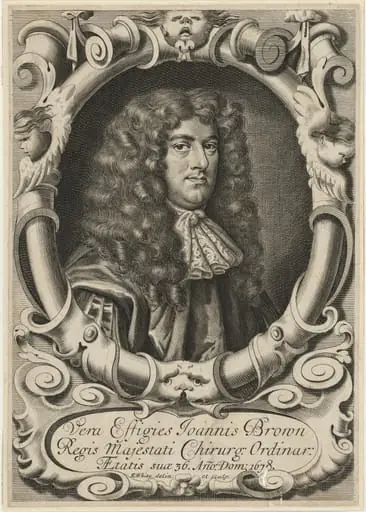
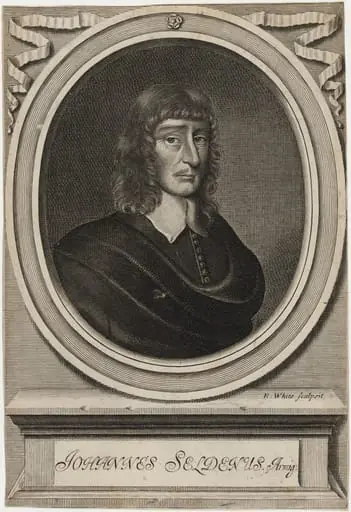
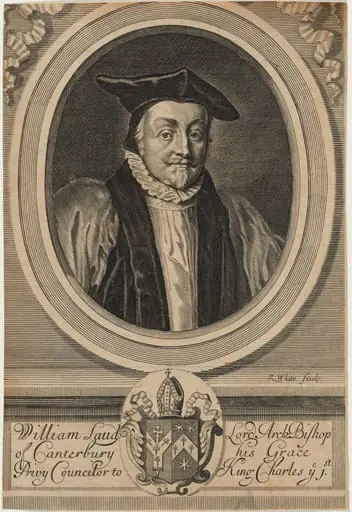
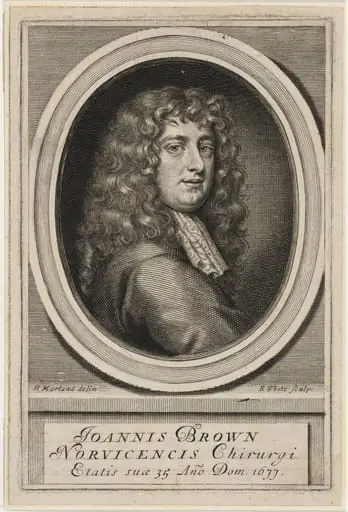
This 1674 engraving by Robert White presents John Souter, a merchant from Exeter, in a formal portrait format. Executed in black ink on paper, the image relies entirely on fine linear techniques to define form and expression. The composition is contained within a rounded border, emphasizing the sitter’s presence against a neutral background. As a print, it was likely produced in multiple copies for distribution among family or professional associates.
Subject & Meaning
John Souter is depicted as a prosperous merchant of late 17th-century Exeter, his attire and composed demeanor signaling social standing. The ruffled collar and neatly groomed facial hair reflect contemporary middle-class male fashion, while his serious expression conveys dignity and restraint. The portrait functions less as emotional revelation and more as a visual record of identity and status, typical of civic elites of the period.
Technique & Style
Robert White employed meticulous cross-hatching to model the sitter’s face and clothing, creating depth and texture without color. His lines are precise and controlled, demonstrating training under David Loggan and adherence to the English portrait engraving tradition. The absence of background detail focuses attention on the figure, while the rounded frame suggests a connection to miniature portraiture, bridging the intimacy of drawings with the reproducibility of print.
History & Provenance
Created during White’s active years in London, the engraving reflects his specialization in portraiture for private patrons. Though little is documented about Souter’s life, the existence of this print implies he was a figure of local significance, likely commissioning the work to affirm his social position. White’s reputation as a leading engraver ensured such portraits circulated among networks of merchants and professionals in provincial and metropolitan England.
Context
In the 1670s, engraved portraits were a common medium for recording individual likenesses among the non-noble elite, especially in cities like Exeter and London. With photography still centuries away, such prints served as durable, affordable alternatives to painted portraits. White’s work fits within a broader trend of civic portraiture that valued clarity, precision, and restrained elegance over ornamentation.
Legacy
Robert White’s engravings, including this one, represent a transitional phase in British portraiture—where hand-drawn precision met the emerging potential of print reproduction. Though largely forgotten today, his technique influenced later generations of engravers who sought to capture individual character through line alone. This work remains a quiet testament to the visual culture of provincial commerce in Restoration England.
Artist & collection
Artist
Robert White (1645 – 1703) was an English draughtsman and engraver. A Londoner, he was a pupil of David Loggan, and became a leading portrait engraver. White was celebrated for his original portraits, drawn in pencil on…