Artwork
An Old Water Mill
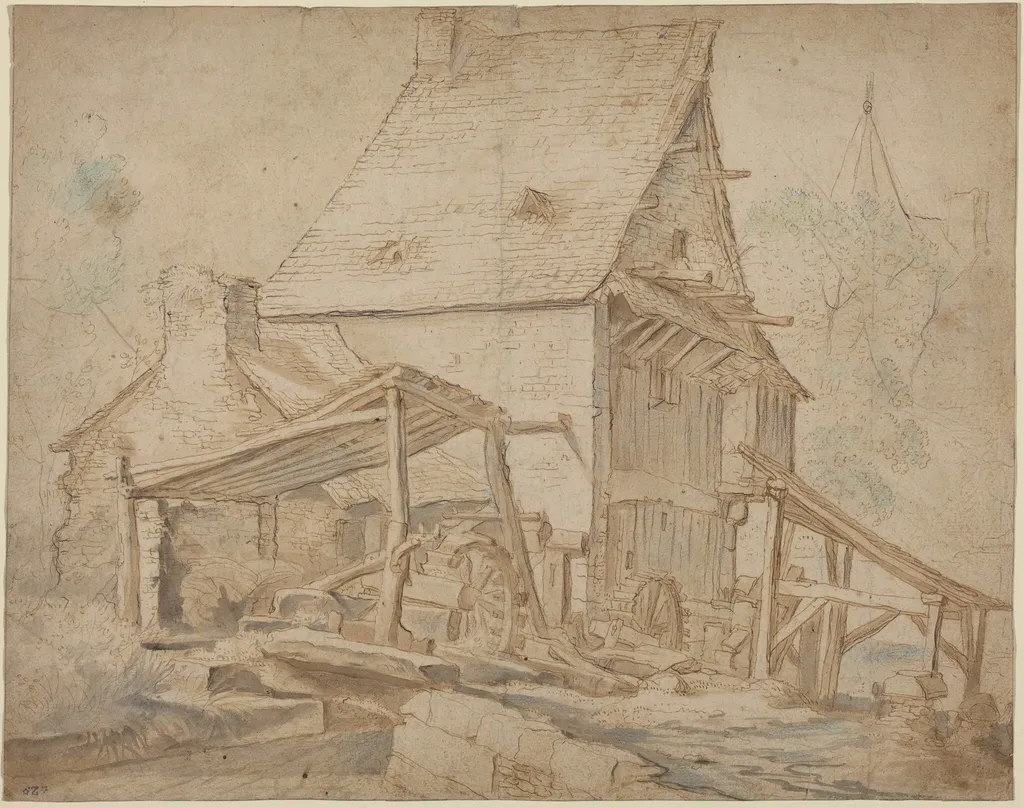
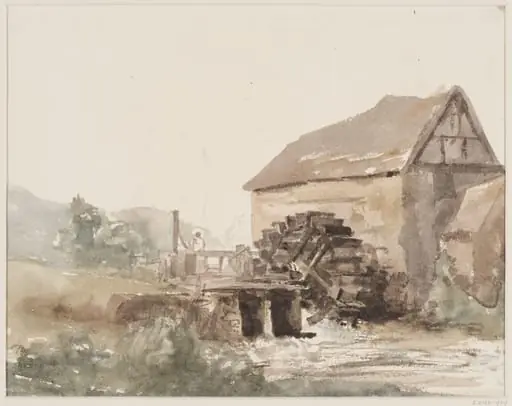
An Old Water Mill is an ink drawing by the Baroque artist Cornelis Willaerts. It dates from 1634 and is held in the collection of the National Gallery of Art.
About this work
Overview
Created in 1634 by Cornelis Willaerts, this drawing captures a rural water mill in quiet detail. Executed in pen and ink with washes and colored chalks over graphite, it reflects the Dutch tradition of topographical observation. The work is rendered on laid paper, a common support for detailed studies of architecture and landscape during the early 17th century.
Subject & Meaning
The subject is a functioning water mill, likely used for grinding grain, set within a modest natural environment. The structure’s aged stonework and functional elements suggest utility over ornamentation. The inclusion of a wooden waterwheel or bridge implies the mill’s integration with local hydrology, emphasizing the harmony between human labor and the natural landscape.
Technique & Style
Willaerts employed layered pen strokes, brown and gray washes, and subtle blue and green chalk to model form and suggest atmosphere. Cross-hatching defines the stone surfaces, while washes create depth in shadows and water. The use of colored chalk adds restrained tonal variation, enhancing the sense of weathered materials without overwhelming the monochromatic base.
History & Provenance
The drawing is dated and signed by the artist, indicating it was likely a preparatory study or independent record rather than a commissioned piece. Its survival in good condition suggests careful preservation, possibly within a collector’s album of Dutch topographical drawings. No documented ownership before the 19th century is known.
Context
In 1630s the Netherlands, detailed drawings of mills and rural infrastructure were common among artists documenting regional industry. Willaerts, active in Utrecht, contributed to a tradition that valued precision and quiet observation. These works served both artistic and documentary purposes, reflecting a broader cultural interest in the built environment.
Legacy
This drawing exemplifies the Dutch penchant for unembellished observation of everyday structures. Though not widely exhibited, it remains a representative example of 17th-century Dutch draftsmanship. Its technical restraint and attention to materiality influenced later topographical artists and continue to inform studies of historical landscape representation.
Artist & collection


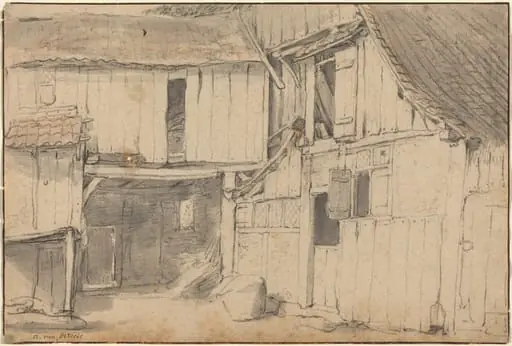 Interior of a Courtyard
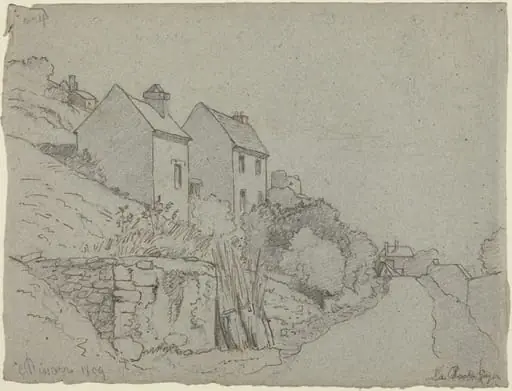 Houses by a Road
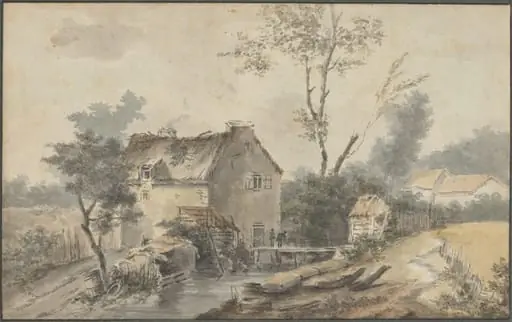 Mill with Bridge and Figures
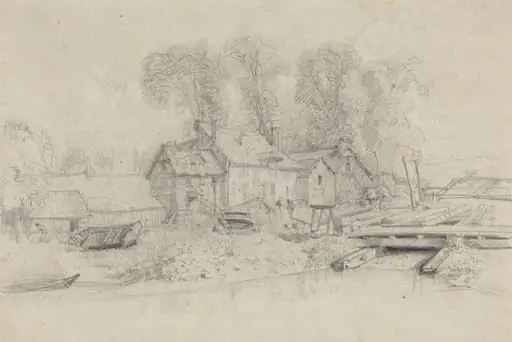 River Landscape with Buildings, Boats, and Figures
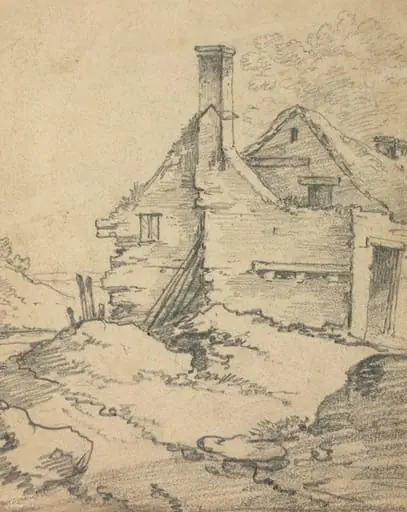 Houses in a Landscape
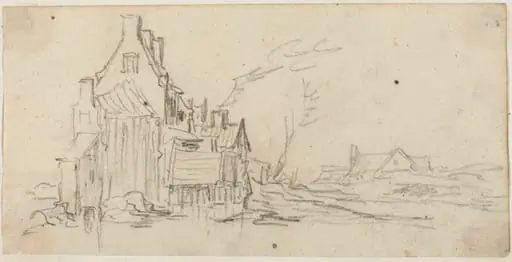 Houses by a Road
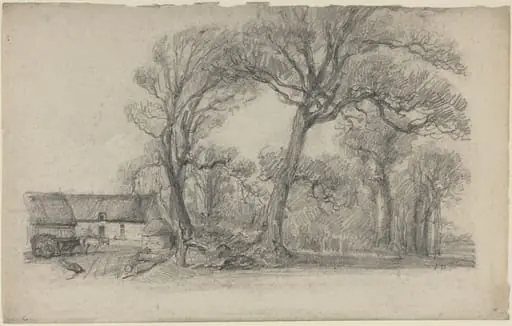 Landscape with Trees, Cottage, and Farm Wagon
 A village street
 Landscape with a Hay Barn and a Flock of Sheep
 Cottage among trees, with a pond in front.
 Cottages and Barn beside a Road
 View of a water-mill near Ridware