Artwork
De Wittefrouwenpoort in Utrecht
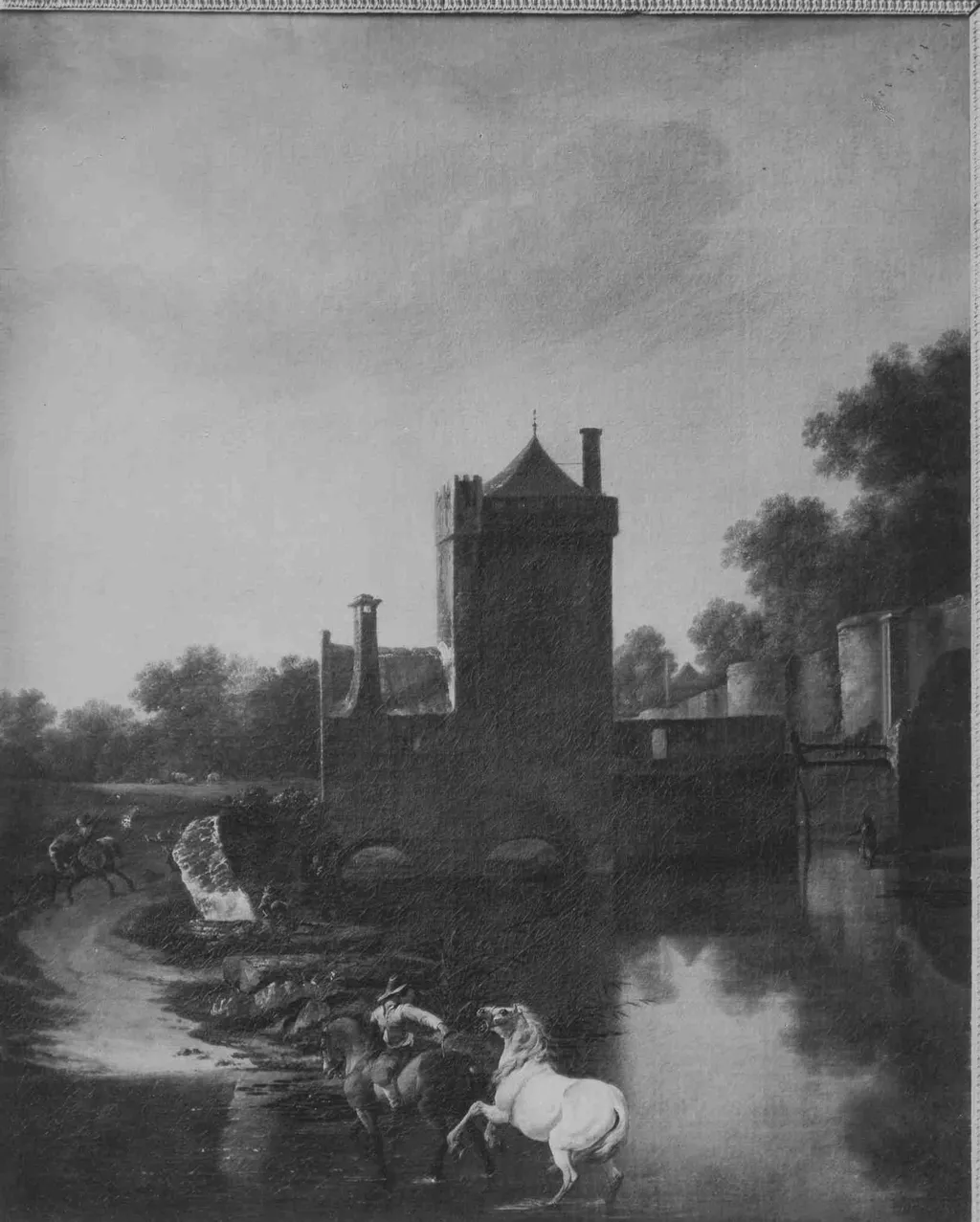
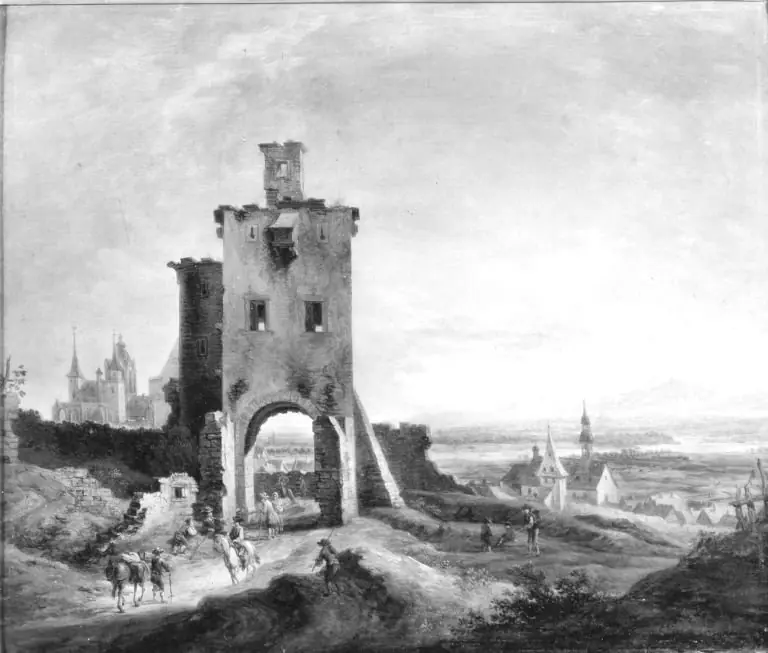
De Wittefrouwenpoort in Utrecht is an oil painting by the Dutch Golden Age artist Willem van Drielenburg. It dates from 1655 and is held in the collection of the Bavarian State Painting Collections.
About this work
Overview
The composition emphasizes stillness and subtle atmospheric depth, rendered with restrained tones and careful attention to natural light.
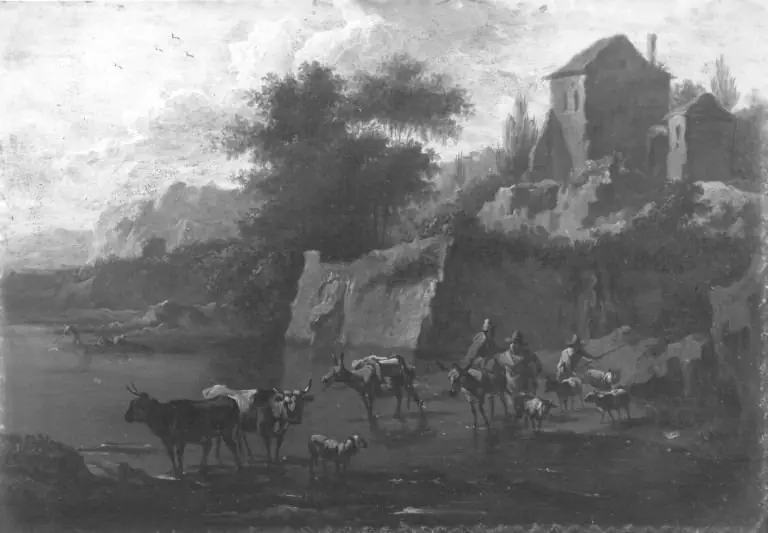
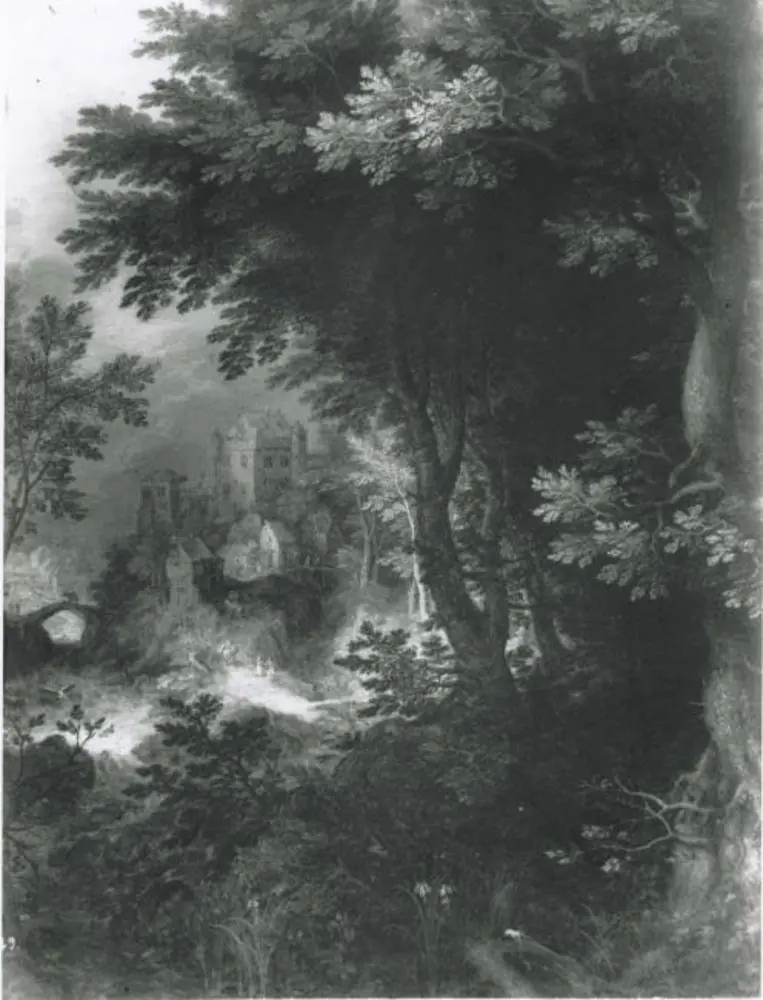
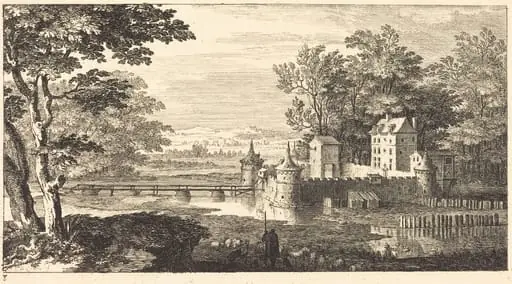
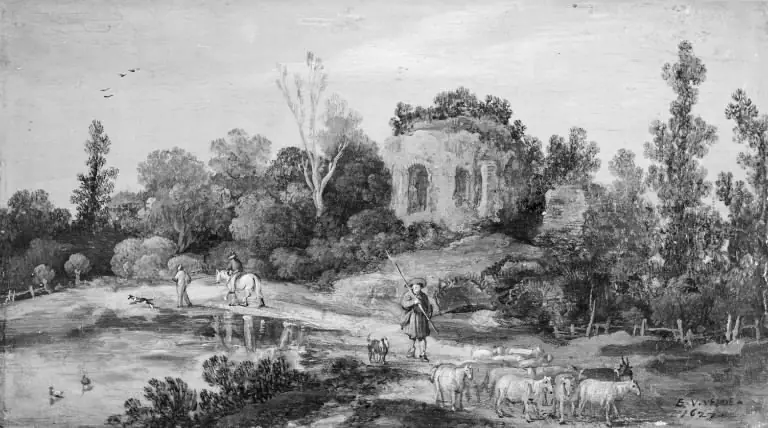
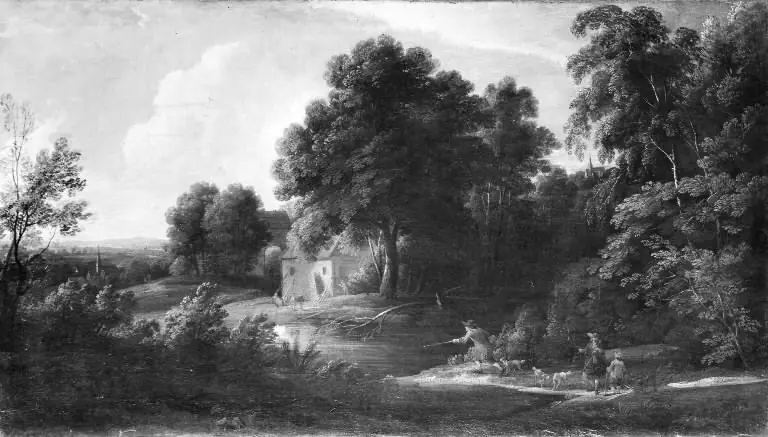
Painted in 1655 by Willem van Drielenburg, this oil on canvas depicts a tranquil rural landscape near Utrecht. The scene centers on a narrow river where two riders cross on horseback, one mid-step into the water. A tall stone tower rises behind them, flanked by scattered trees and modest structures. The composition emphasizes stillness and subtle atmospheric depth, rendered with restrained tones and careful attention to natural light.
Subject & Meaning
The painting captures an ordinary moment of travel through the Dutch countryside, devoid of narrative drama or symbolic flourish. The riders, small in scale, suggest quiet passage rather than purposeful arrival. The tower, likely a relic of medieval fortification, anchors the scene in place and time, evoking the quiet persistence of local landmarks amid daily life. No religious or political allusions are evident—focus remains on the quiet rhythm of the land.
Technique & Style
Van Drielenburg employs a muted palette of grays, browns, and soft greens to convey a subdued, overcast day. Light falls diffusely, modeling the horses’ forms and the tower’s stonework with gentle chiaroscuro. Brushwork is precise yet unobtrusive, allowing texture to emerge through tone rather than detail. The sky, heavy and low, unifies the composition and enhances the sense of calm, almost introspective atmosphere.
History & Provenance
Created in 1655, the painting entered the collection of the Alte Pinakothek in Munich, where it remains today. Its journey from Utrecht to Bavaria is undocumented, but its preservation suggests early recognition of its quiet craftsmanship. Unlike grander historical or mythological works of the period, this piece was likely valued for its observational fidelity and serene mood rather than its subject matter.
Context
In mid-17th-century Holland, landscape painting flourished as a genre independent of religious or aristocratic patronage. Artists like van Drielenburg focused on local topography and weather, reflecting a cultural shift toward valuing the everyday. This work aligns with a broader trend of intimate, non-idealized views of the Dutch countryside, where nature and human presence coexist without grandeur.
Legacy
Though not widely exhibited or studied, the painting exemplifies the quiet precision of Dutch regional landscape painting. Its endurance in a major European collection attests to its technical competence and atmospheric coherence. It stands as a modest but enduring record of how ordinary scenes were rendered with care, contributing to the broader legacy of Dutch observational art.
Artist & collection