Artwork
The Pass of Glencoe
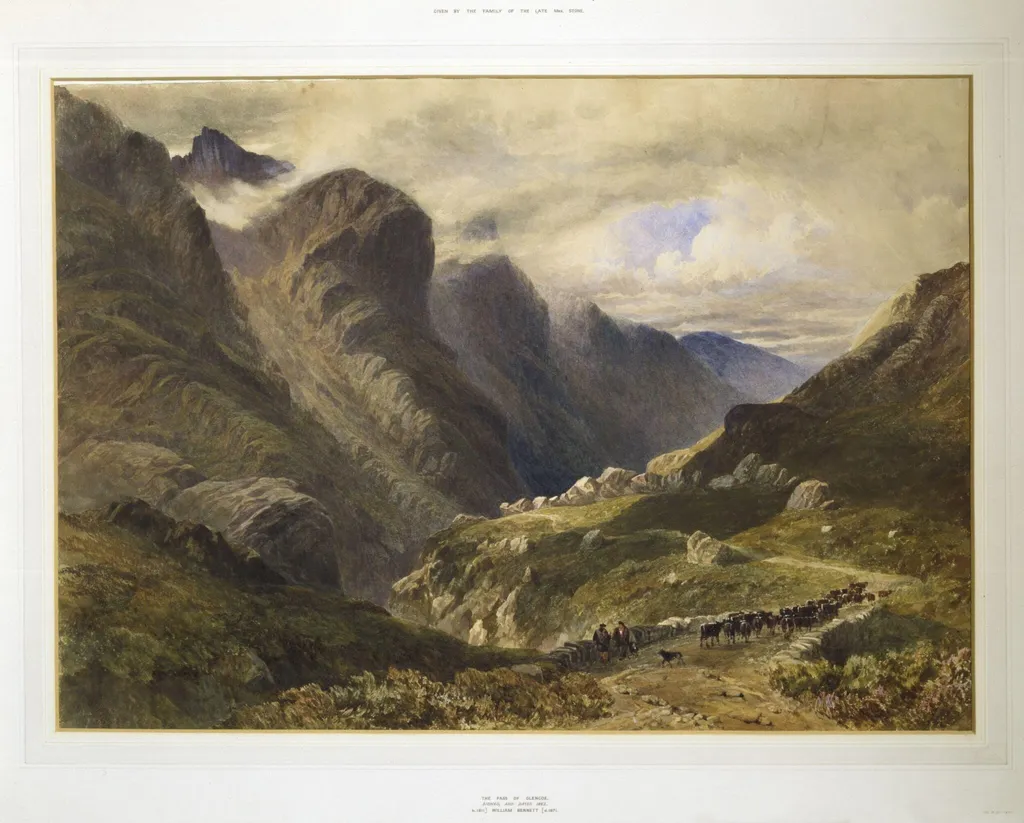
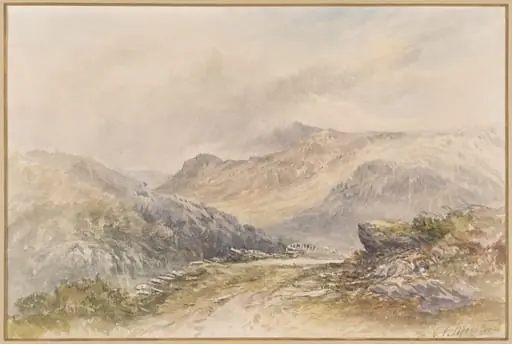
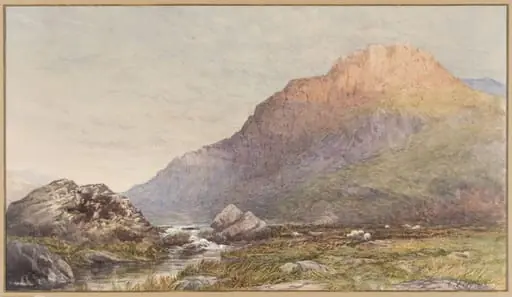
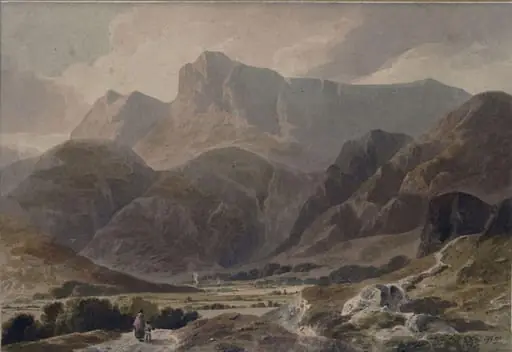
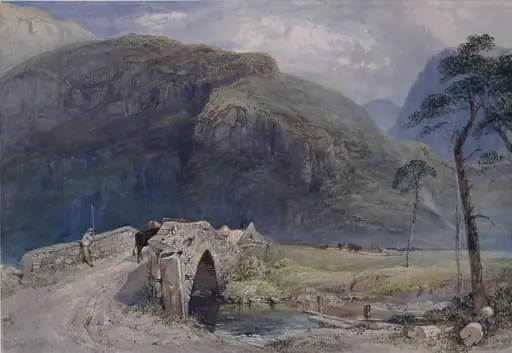
The Pass of Glencoe is a watercolor work on paper by the British Romanticist artist William Bennett. It dates from 1852 and is held in the collection of the Victoria and Albert Museum.
About this work
Overview
The Pass of Glencoe is a watercolour by William Bennett, signed and dated 1852, capturing a dramatic Scottish Highland landscape.
Subject & Meaning
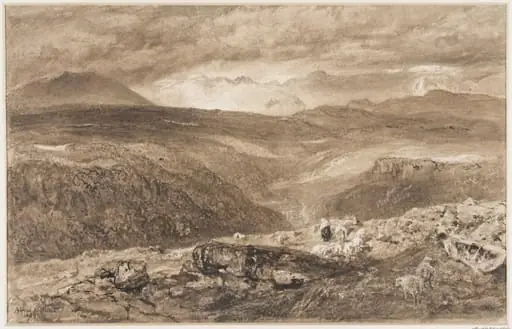
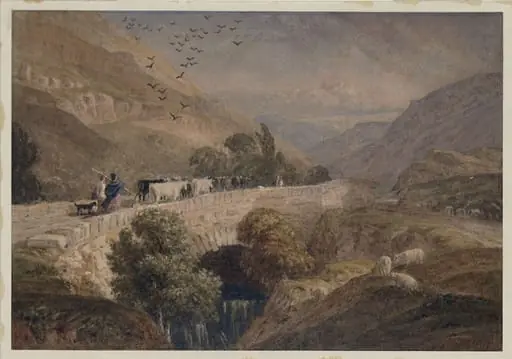
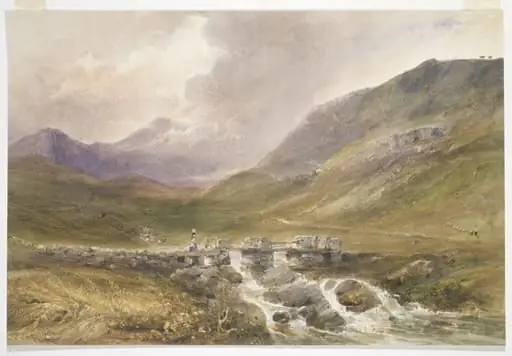
The artwork depicts a steep mountain valley with a winding path, traversed by a group of people and likely sheep, set against a partly cloudy sky with soft, muted lighting. The scene conveys a sense of natural grandeur and the human scale within it.
Technique & Style
Bennett employed loose, sketchy brushstrokes to evoke the texture of rocky cliffs and the dynamism of clouds, achieving a balanced level of detail that captures the essence of the natural world without excessive precision.
History & Provenance
Created in 1852, the watercolour reflects the artistic practices of its time, particularly in its approach to capturing nature. Provenance details are not provided.
Context
The piece aligns with the Realist movement's emphasis on depicting the world in a truthful, unromanticized manner, though its muted palette and suggestive brushwork also hint at a softer, more impressionistic observation of nature.
Legacy
While specific legacy or impact of *The Pass of Glencoe* on subsequent art movements or popularity over time is not detailed, it remains a representative example of mid-19th-century watercolour landscape painting focused on the British wilderness.
Own this work as a print
Artist & collection
Artist
William Bennett painted rugged Welsh and Scottish landscapes in watercolor during the 1840s and 50s.