Artwork
Beatrice Addressing Dante from the Car
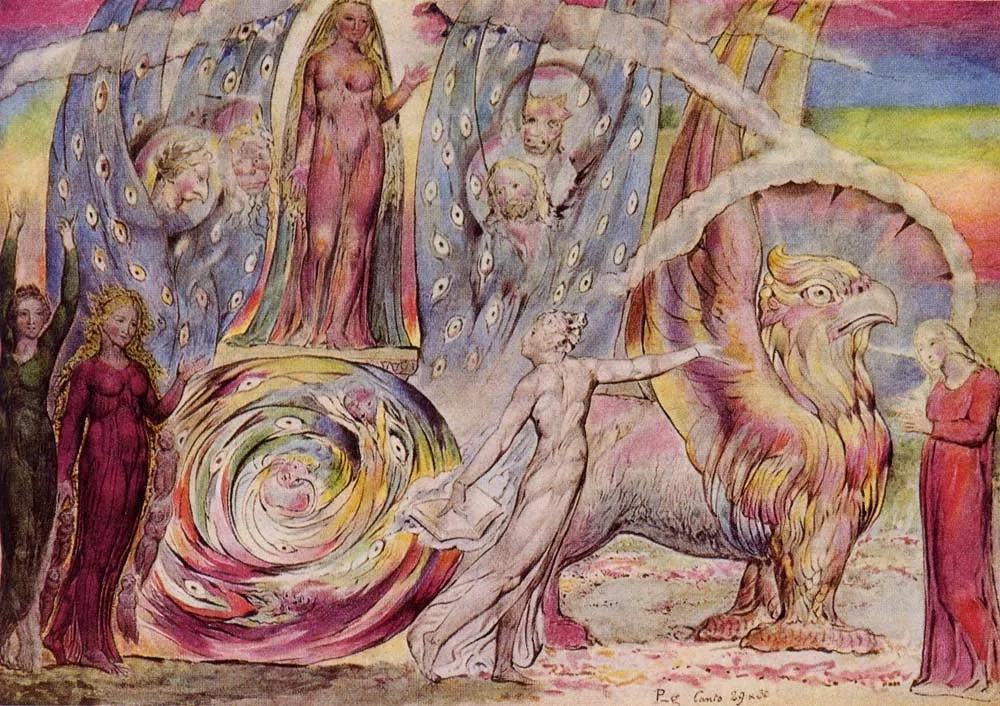
Beatrice Addressing Dante from the Car is an unspecified painting by William Blake. It dates from 1820 and is held in the collection of the National Gallery.
About this work
Overview
Beatrice Addressing Dante from the Car (1820) is a print by William Blake, depicting a scene inspired by Dante’s Divine Comedy. The work features symbolic and imaginative elements characteristic of Blake’s Romantic-era style.
Subject & Meaning
The print shows Beatrice standing in a chariot, addressing a naked Dante, with a griffin-like creature behind him. Symbolic details include Beatrice’s eye-decorated dress and the peacock-designed chariot, conveying themes rooted in Dante’s text and Blake’s interpretive vision.
Technique & Style
Blake’s print showcases his distinctive Romantic style, blending vivid colors (blues, pinks, yellows) with intricate symbolic design. The contrast between Beatrice’s draped, ornate figure and Dante’s muscular, nude form highlights Blake’s expressive use of the human figure.
History & Provenance
Created in 1820, the print remained largely unrecognized during Blake’s lifetime. It is now part of the Tate Britain collection, reflecting its later recognition as part of Blake’s influential oeuvre.
Context
Part of Blake’s broader engagement with literary themes, this work situates itself within the Romantic movement’s emphasis on imagination and symbolism, drawing on Dante’s revered literary legacy.
Legacy
Though overlooked in his time, Blake’s innovative style and thematic depth in works like Beatrice Addressing Dante from the Car have significantly influenced subsequent Romantic visual and literary traditions.
Artist & collection
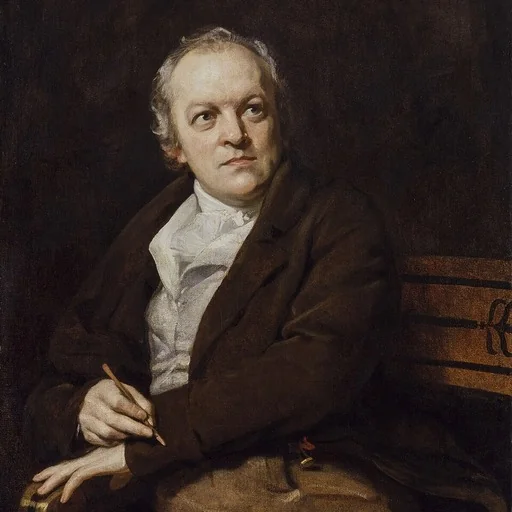
Artist
William Blake (28 November 1757 – 12 August 1827) was an English poet, painter and printmaker.

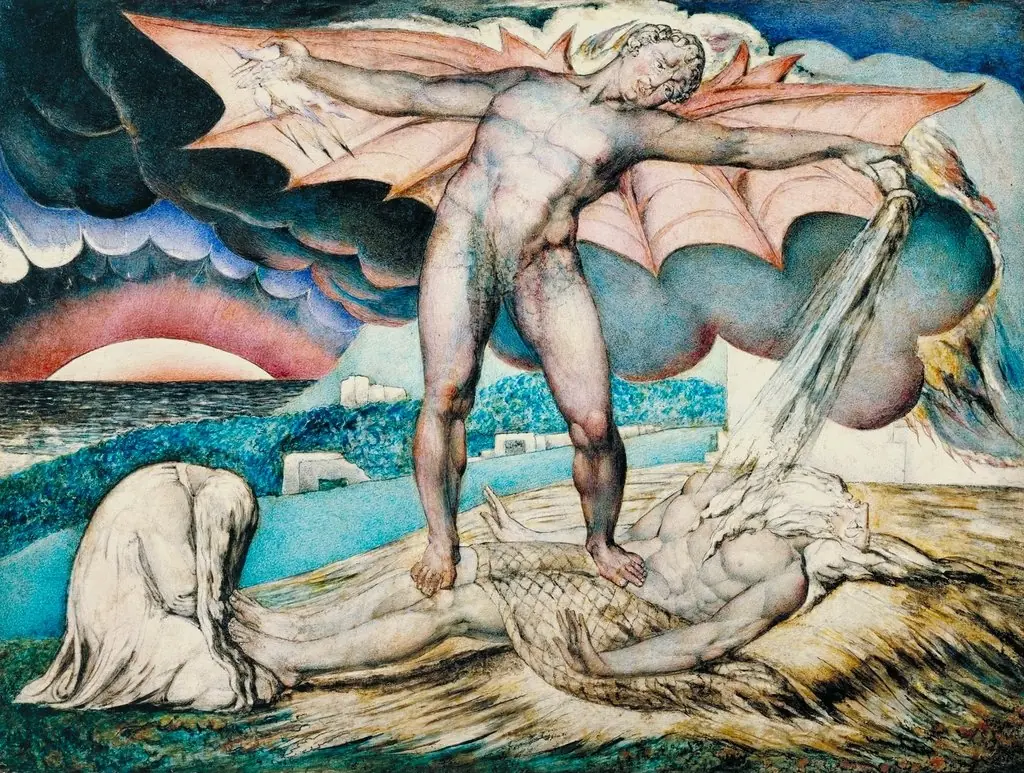 Satan Smiting Job with Sore Boils
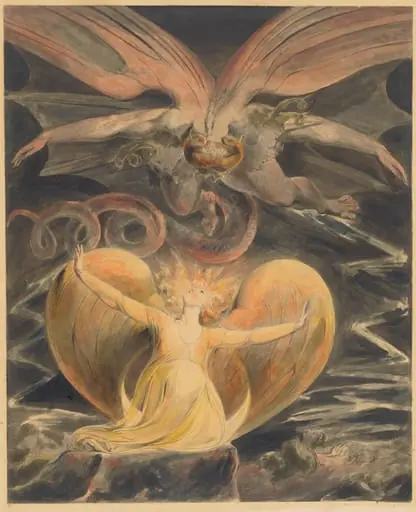 The Great Red Dragon and the Woman Clothed with the Sun
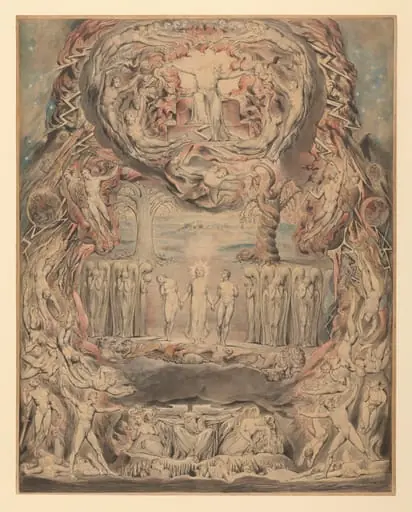 The Fall of Man
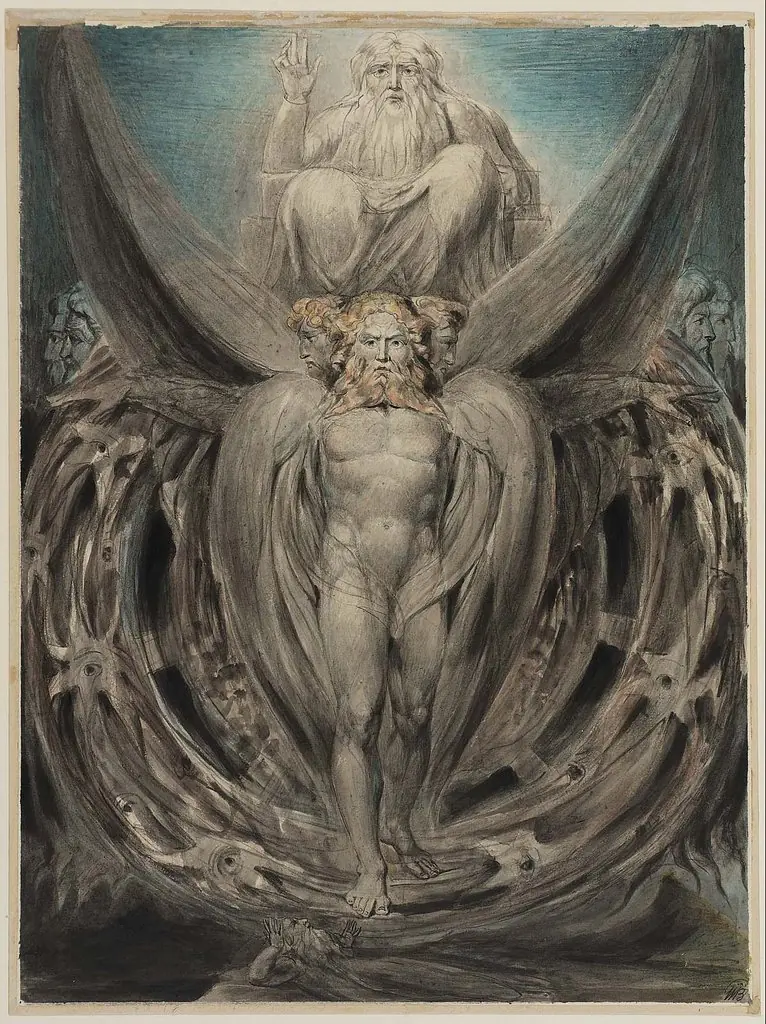 Ezekiel's Wheels
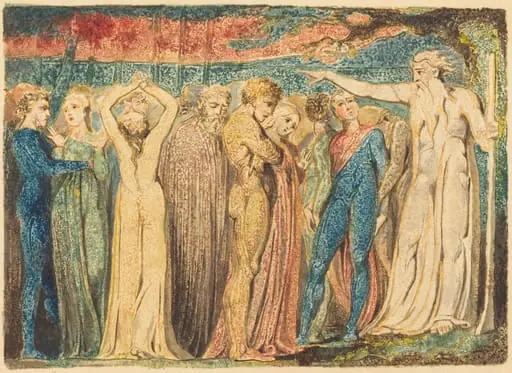 Joseph of Arimathea Preaching to the Britons
![Dream of Thiralatha [from "America," cancelled plate d], by William Blake](https://artifactworldgallery.com/img/william-blake--dream-of-thiralatha-from-america-cancelled-plate-d--5757b22438efa26a-w320.webp) Dream of Thiralatha [from "America," cancelled plate d]
Dream of Thiralatha [from "America," cancelled plate d]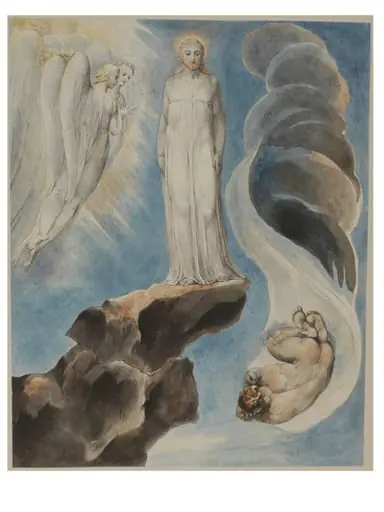 The Third Temptation
 Moses and the Burning Bush
 The Resurrection: The angel rolling away the stone from the sepulchre
 The Circle of the Lustful: Paolo and Francesca
 The Circle of the Lustful: Paolo and Francesca