Artwork
Barnstaple, Devon
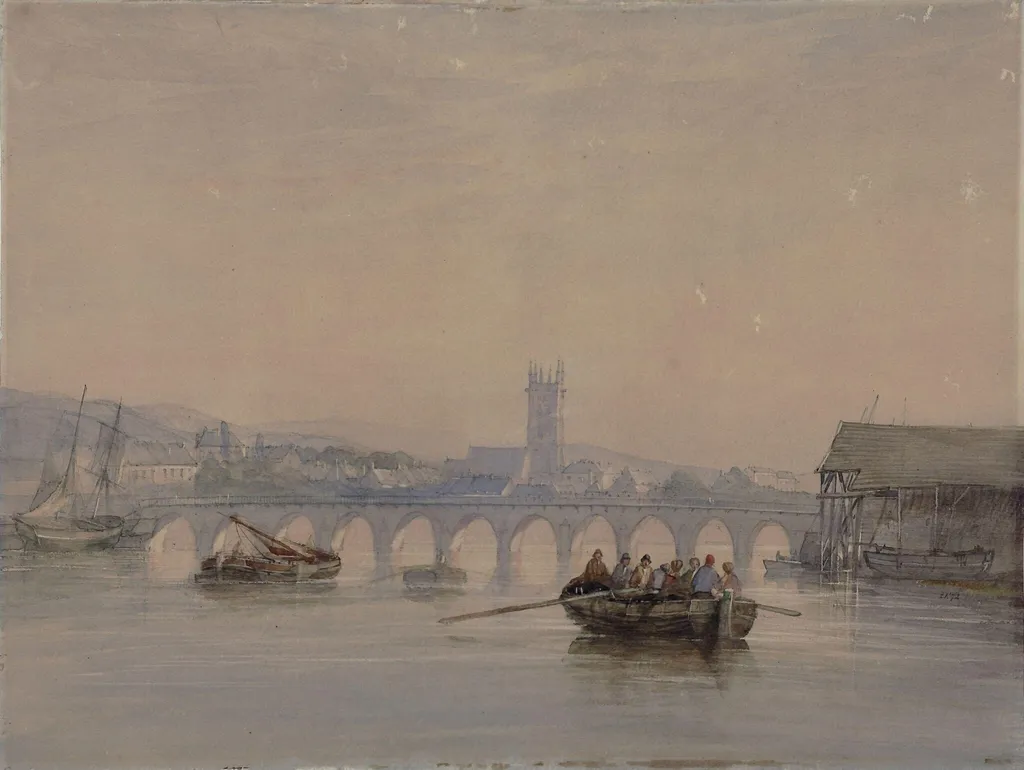
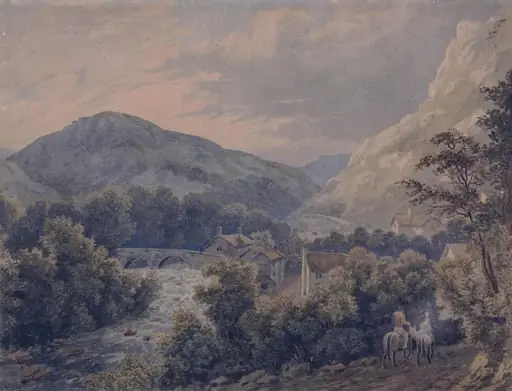
Barnstaple, Devon is a watercolor work on paper by the British Romanticist artist Alfred John Herbert. It dates from 1855 and is held in the collection of the Victoria and Albert Museum.
About this work
Overview
Painted in 1855 by Alfred John Herbert, this watercolour depicts the town of Barnstaple in Devon. The composition centers on a quiet stretch of the River Taw, with a small rowboat near the foreground and a stone bridge spanning the distance. The palette is restrained, dominated by soft greys and earth tones, reinforcing a subdued, contemplative atmosphere.
Subject & Meaning
The scene captures everyday life along the river: figures in the boat suggest local activity, perhaps fishing or transport. The bridge and tower in the background mark key landmarks of the town, grounding the image in a specific place. The stillness of the water and the absence of dramatic action convey a quiet reverence for the ordinary rhythms of rural English life.
Technique & Style
Herbert employed delicate washes of watercolour to suggest texture and light without sharp definition. The muted tones and soft edges reflect a pre-Impressionist sensitivity to atmosphere, prioritizing mood over detail. The brushwork is controlled, with minimal contrast, allowing the natural gradations of the medium to evoke depth and calm.
History & Provenance
Created in 1855, the work is part of a broader tradition of topographical watercolours popular in mid-19th-century Britain. It likely served as a personal record or commissioned view of a regional town. Its survival suggests it remained in private hands, possibly within the local community, rather than entering major institutional collections.
Context
During the 1850s, watercolour was widely used for landscape documentation, especially in England, where artists recorded regional scenery with precision and restraint. Herbert’s approach aligns with contemporaries who favored quiet observation over romantic drama, reflecting a cultural preference for understated naturalism before the rise of plein air painting.
Legacy
Though not widely exhibited or reproduced, the painting contributes to a modest but enduring body of regional watercolours that document English towns before industrialization transformed their landscapes. It remains a quiet testament to the aesthetic value placed on local scenes by amateur and professional artists alike in the Victorian era.
Artist & collection
Artist
Alfred John Herbert’s small watercolours capture everyday places in mid-1800s Britain.

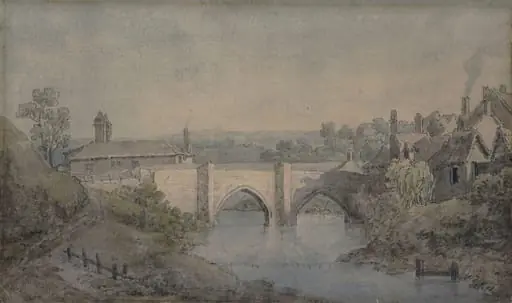 Bishop Gate Bridge, Norwich
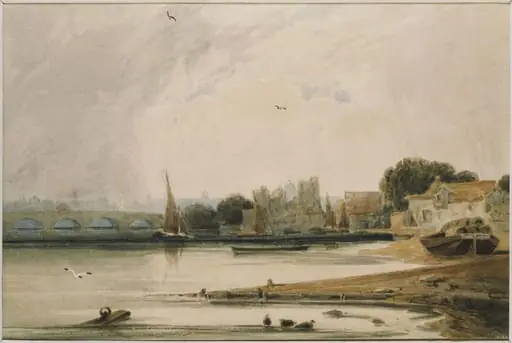 Lambeth Palace and Westminster Bridge
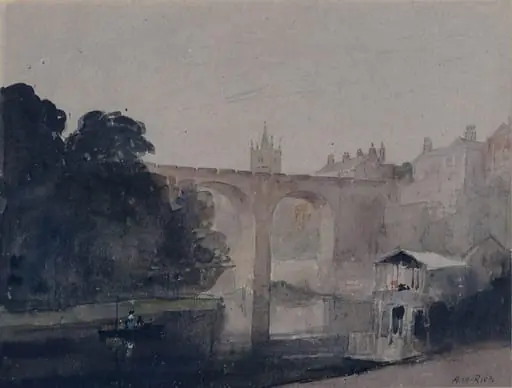 Knaresborough
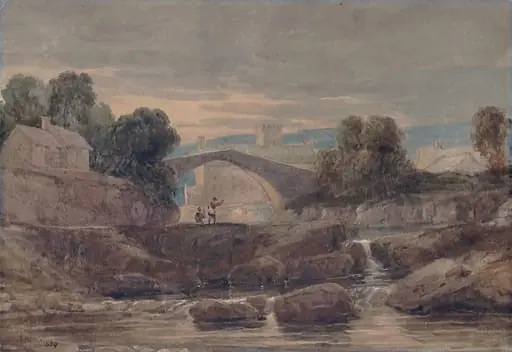 Landscape with Bridge
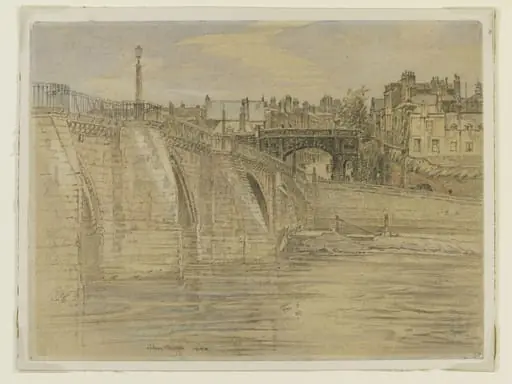 South Bridge Gate and Old Dee Bridge, Chester
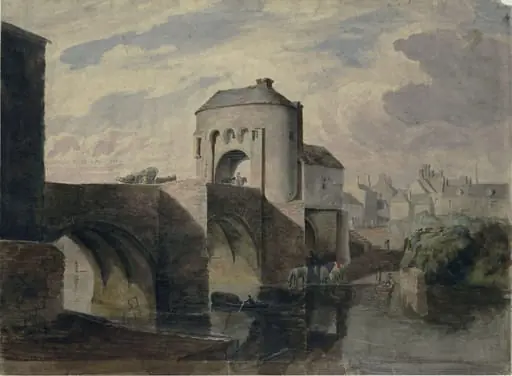 Bridge over the River Monmow, Monmouth
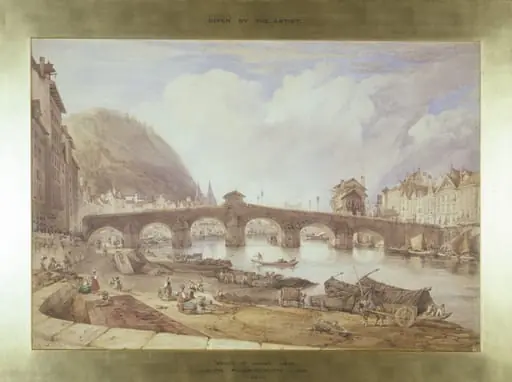 Liege: the Bridge of Arches
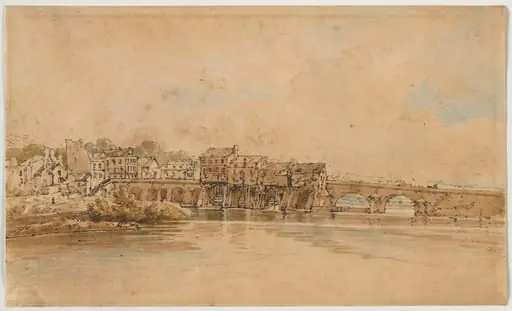 A Selection of Twenty of the Most Picturesque Views in Paris: On the Banks of the Marne below the Bridge at Charenton
 Lynmouth, Devon