Artwork
The Sevres China, from the Imperial Manufactory in the French Court
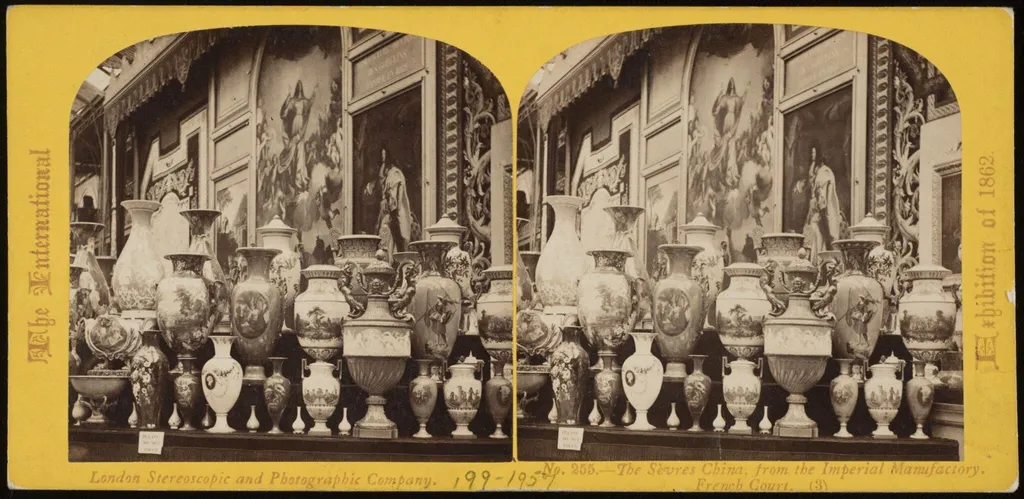
The Sevres China, from the Imperial Manufactory in the French Court is a photographic photography by the Impressionist artist William England. It dates from 1862 and is held in the collection of the Victoria and Albert Museum.
About this work
Each piece has detailed designs, like flowers or figures, painted in soft tones.
This photo shows rows of fancy vases and jars packed tightly on shelves. Each piece has detailed designs, like flowers or figures, painted in soft tones. The background has tall windows and carved decorations on the walls.
The photo was taken at a big event called the International Exhibition of 1862. It looks like a mix of old and new styles, showing off luxury items.
Check out the Victoria and Albert Museum to see more objects like these.
Overview
A stereoscopic photograph by William England captures a display of Sèvres porcelain at the 1862 International Exhibition in London. The image, taken within the French Court of the Crystal Palace, documents a dense arrangement of finely painted vases and jars, each labeled with a numerical identifier. The composition emphasizes the orderly presentation of luxury ceramics amid the industrial architecture of the exhibition hall.
Subject & Meaning
The porcelain pieces on view represent the pinnacle of French imperial craftsmanship, produced at the Sèvres manufactory under royal patronage. Their intricate floral and figural motifs reflect 18th-century decorative traditions, while their inclusion in a global exhibition signaled France’s cultural prestige and industrial continuity. The display served as both artistic homage and diplomatic statement, asserting national identity through material elegance.
Technique & Style
The vases feature hand-painted enamel decorations in muted pastels, characteristic of Sèvres’ signature aesthetic. Details such as gilded accents and delicate brushwork reveal meticulous artisanal labor. The photograph’s stereo format enhances the perception of depth, allowing viewers to appreciate the three-dimensional form and surface texture of the ceramics, despite the flatness of the medium.
History & Provenance
The photograph was taken during the International Exhibition of 1862, a major world fair held in London to showcase global industry and design. The Sèvres collection on display likely originated from French state collections or private patrons, selected to represent the nation’s artistic heritage. The image now resides in the Victoria and Albert Museum’s photographic archive, alongside other records of 19th-century exhibitions.
Context
The 1862 Exhibition was part of a broader 19th-century trend of using international fairs to display national achievements. The French Court juxtaposed historic Sèvres porcelain with contemporary industrial goods, reflecting tensions between tradition and modernity. The display’s placement within the Crystal Palace—a symbol of engineering progress—underscored the enduring value of handcrafted luxury amid mechanization.
Legacy
England’s photograph preserves a moment when European ceramics were curated as cultural artifacts for public consumption. It contributed to the growing interest in decorative arts as subjects of scholarly and institutional attention, influencing later museum practices. The image remains a key visual record of how 19th-century audiences encountered and interpreted historical craftsmanship.
Artist & collection
Artist
William England liked to take pictures of things that were already beautiful, like sculptures and fancy buildings.

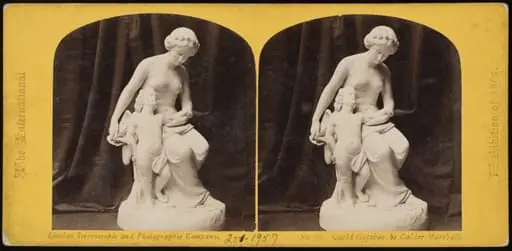 Stereograph of 'Cupid Captive', a sculpture by Calder Marshall
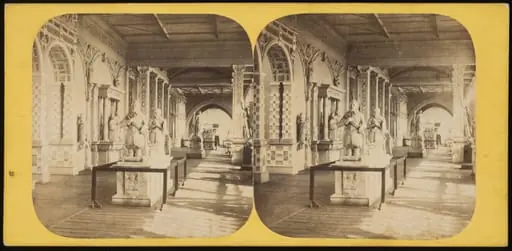 Crystal Palace: the Garden Gallery
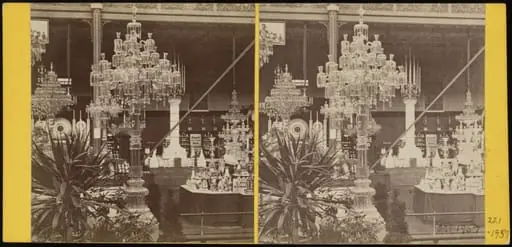 Untitled
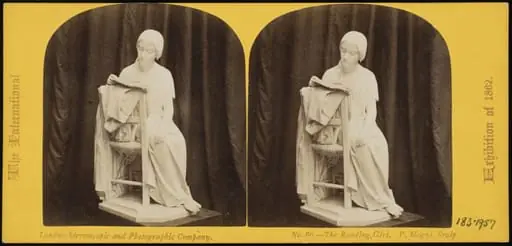 'The Reading Girl', a statue by Pietro Magni at Crystal Palace
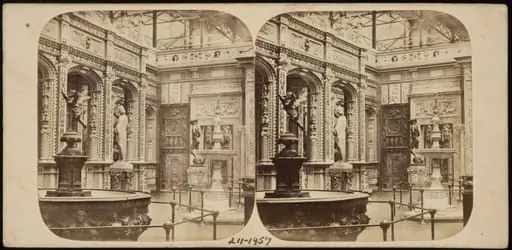 Crystal Palace: View in the Renasissance Court
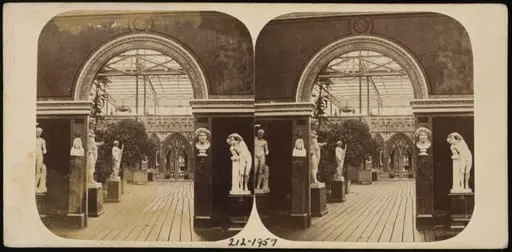 Crystal Palace: View from the Roman Court'
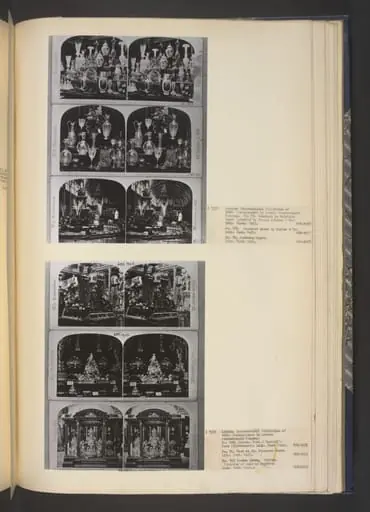 Stereoscopic photograph (No. 70) of the Austrian Court at the International Exhibition of 1862
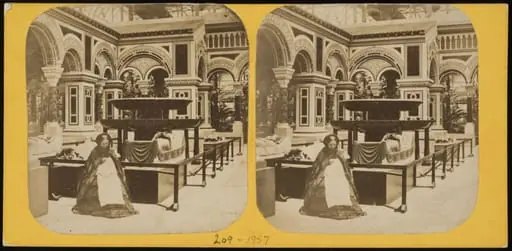 Crystal Palace: the Byzantine Court
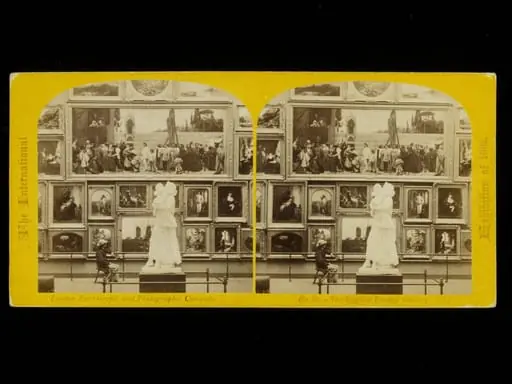 The International Exhibition of 1862: No. 27 - The English Picture Gallery (1)
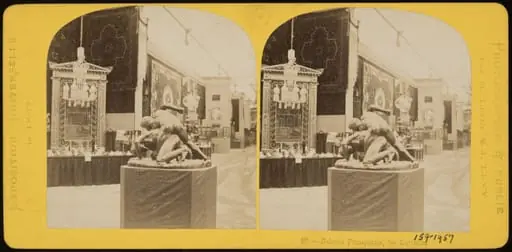 The Wrestlers
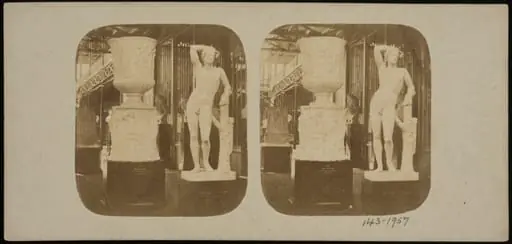 Untitled
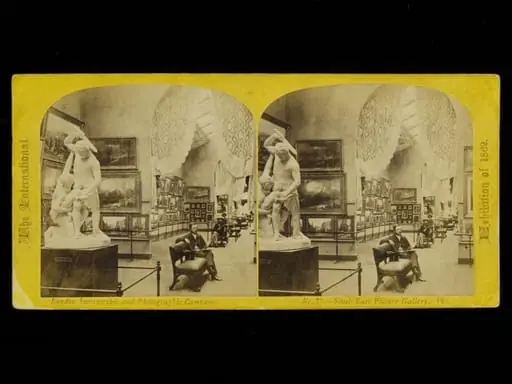 Stereoscopic photograph of the 1862 International Exhibition
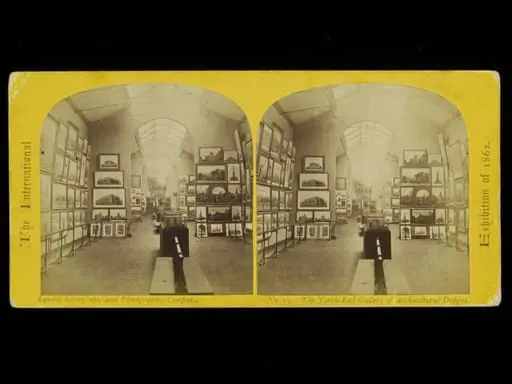 The International Exhibition of 1862: No. 39 - The North-East Gallery of Architectural Designs
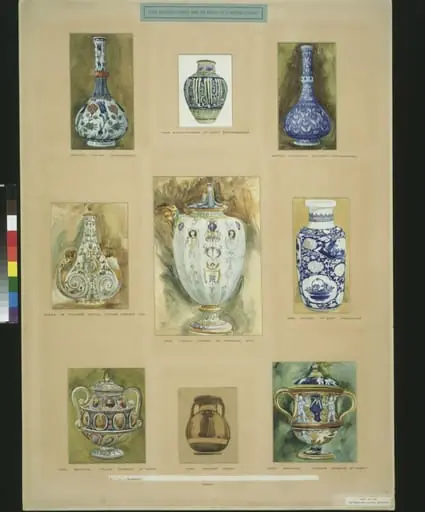 Untitled
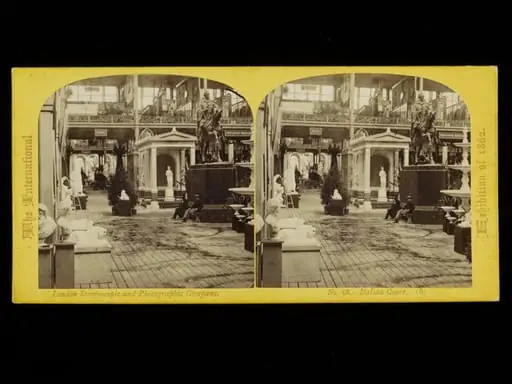 The International Exhibition of 1862: No. 42 - Italian Court (3)
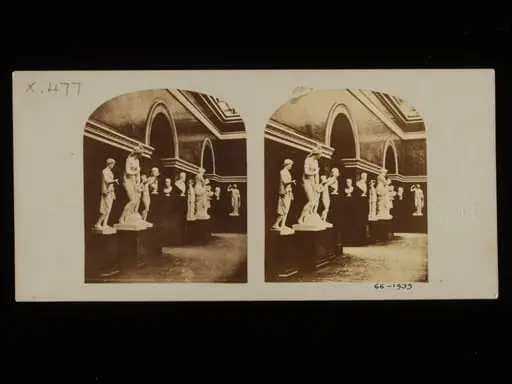 The Gallery of Greek Sculpture at Crystal Palace