Artwork
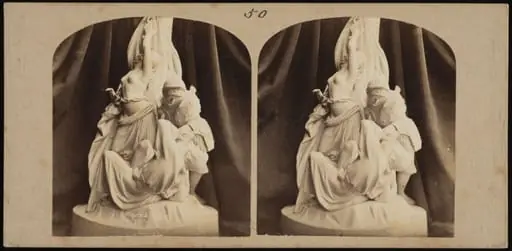
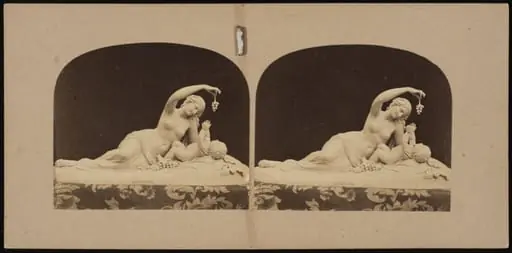
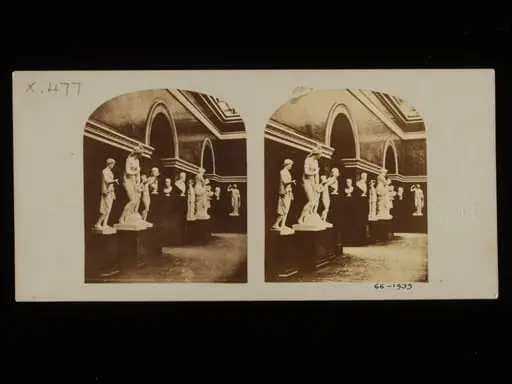
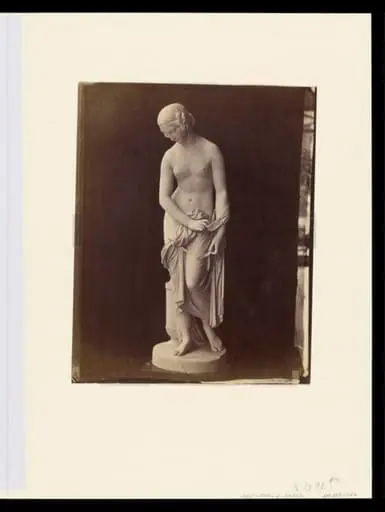
Stereograph of 'Cupid Captive', a sculpture by Calder Marshall
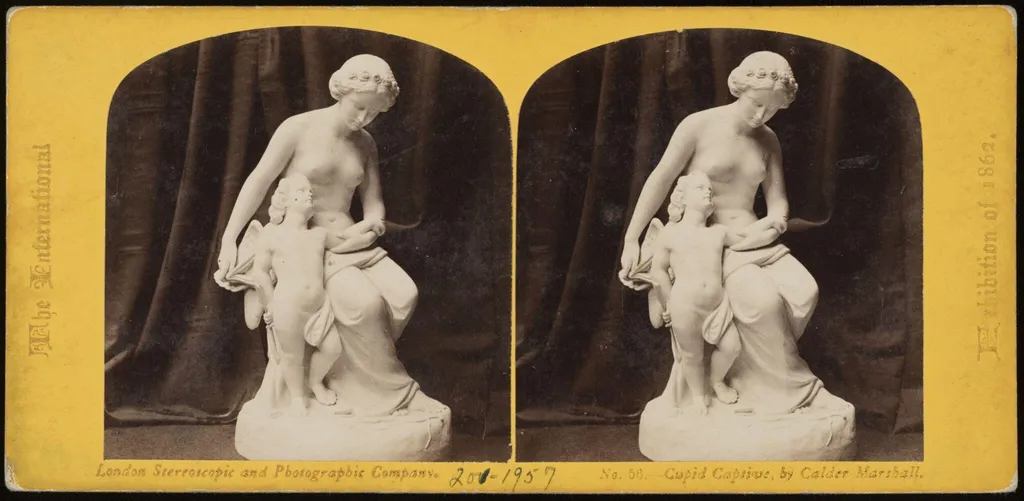
Stereograph of 'Cupid Captive', a sculpture by Calder Marshall is a photographic photography by the Impressionist artist William England. It dates from 1862 and is held in the collection of the Victoria and Albert Museum.
About this work
Overview
Created as a pair of nearly identical images for three-dimensional viewing, the photograph was taken by William England, a noted photographer of the era.
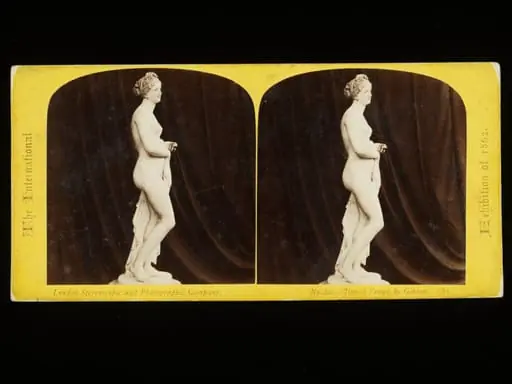
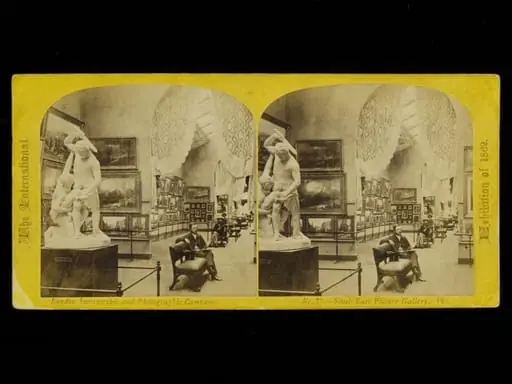
This stereograph captures a marble sculpture titled *Cupid Captive* by Calder Marshall, exhibited at the 1862 International Exhibition in London. Created as a pair of nearly identical images for three-dimensional viewing, the photograph was taken by William England, a noted photographer of the era. Though the sculpture is the subject, the photograph itself is a documentary record, preserving the work’s form and presentation for wider public access beyond the exhibition grounds.
Subject & Meaning
The sculpture depicts a seated female figure holding a small child closely, one arm around the child’s torso and the other resting gently on the shoulder. The child gazes upward with a serene expression. Though titled *Cupid Captive*, the imagery evokes maternal tenderness rather than mythological narrative, suggesting a reinterpretation of classical themes through domestic sentiment. The title may imply emotional or symbolic restraint, though the visual language leans toward quiet intimacy.
Technique & Style
Marshall’s sculpture is rendered in smooth, polished marble with flowing drapery that suggests movement and softness. The composition emphasizes naturalistic detail and emotional stillness, characteristic of mid-19th-century neoclassical revival. The photograph, taken by William England, employs the stereoscopic method to enhance depth perception, allowing viewers to experience the sculpture’s volume and spatial presence through specialized viewers, a common practice for disseminating art in the era.
History & Provenance
The sculpture was exhibited at the 1862 International Exhibition in London, where it was cataloged as item number 56. William England, a commercial photographer, documented the exhibition’s artworks for sale as stereographs. The original marble sculpture’s current location is unconfirmed, but the photograph survives in institutional collections, including the Victoria and Albert Museum, which holds a significant archive of 19th-century photographic records of sculpture.
Context
In the 1860s, stereographs were widely used to bring art and architecture into middle-class homes, serving as both educational tools and decorative objects. The International Exhibition showcased global industrial and artistic achievements, and photographs like this helped democratize access to sculptural works. Marshall’s piece, though not among the most famous of the exhibition, reflects a broader trend of blending classical forms with emotionally resonant, domestic subjects.
Legacy
While Calder Marshall’s sculpture has faded from public memory, the stereograph endures as a historical artifact of how art was experienced and distributed in the Victorian era. William England’s photographs remain valuable for scholars studying the intersection of sculpture, photography, and public display. The image preserves not only the form of a now-lost work but also the cultural practices through which art was consumed beyond the exhibition hall.
Artist & collection
Artist
William England liked to take pictures of things that were already beautiful, like sculptures and fancy buildings.

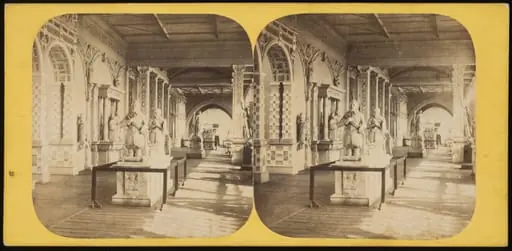 Crystal Palace: the Garden Gallery
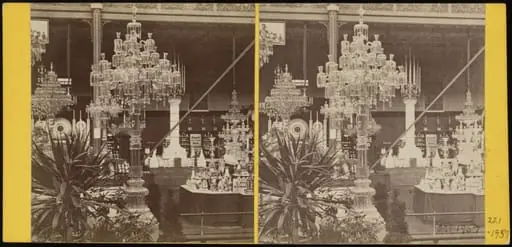 Untitled
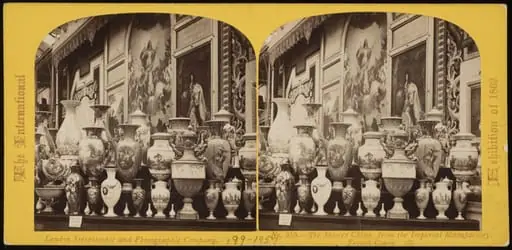 The Sevres China, from the Imperial Manufactory in the French Court
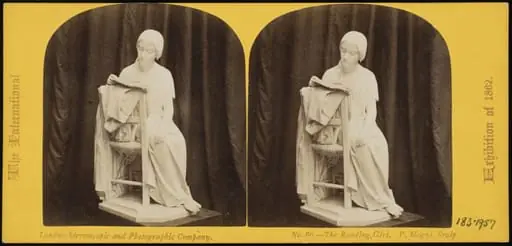 'The Reading Girl', a statue by Pietro Magni at Crystal Palace
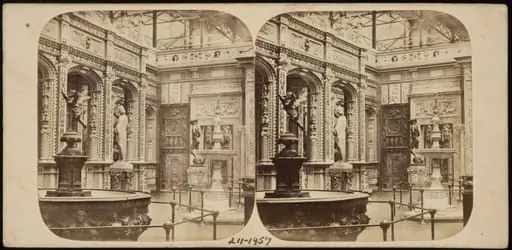 Crystal Palace: View in the Renasissance Court
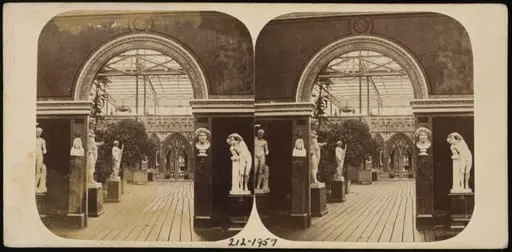 Crystal Palace: View from the Roman Court'
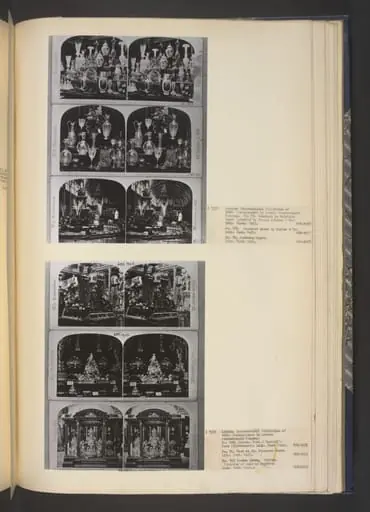 Stereoscopic photograph (No. 70) of the Austrian Court at the International Exhibition of 1862
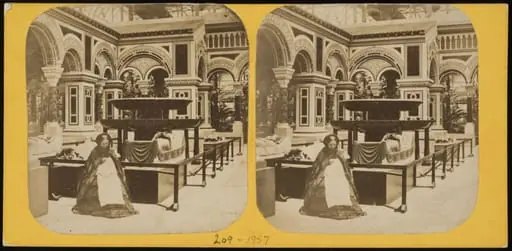 Crystal Palace: the Byzantine Court