Artwork
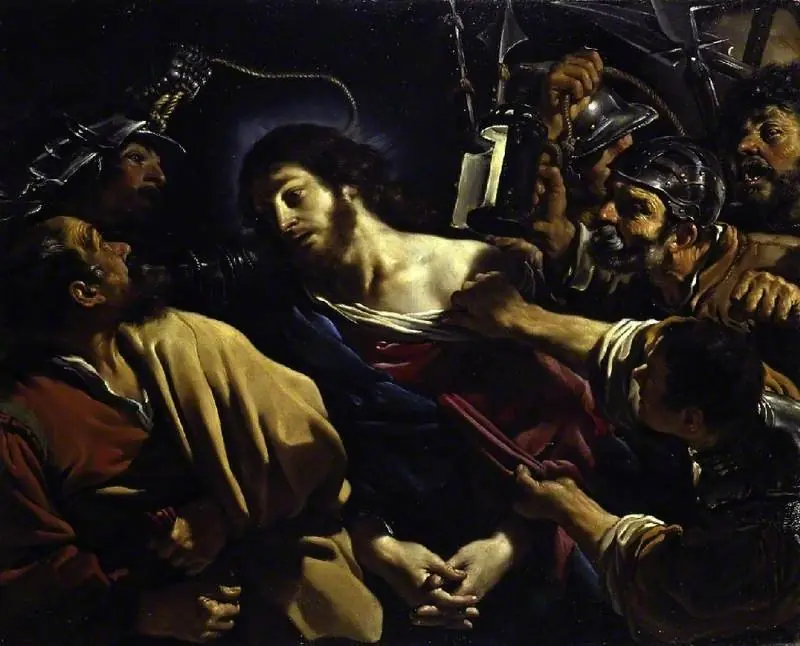
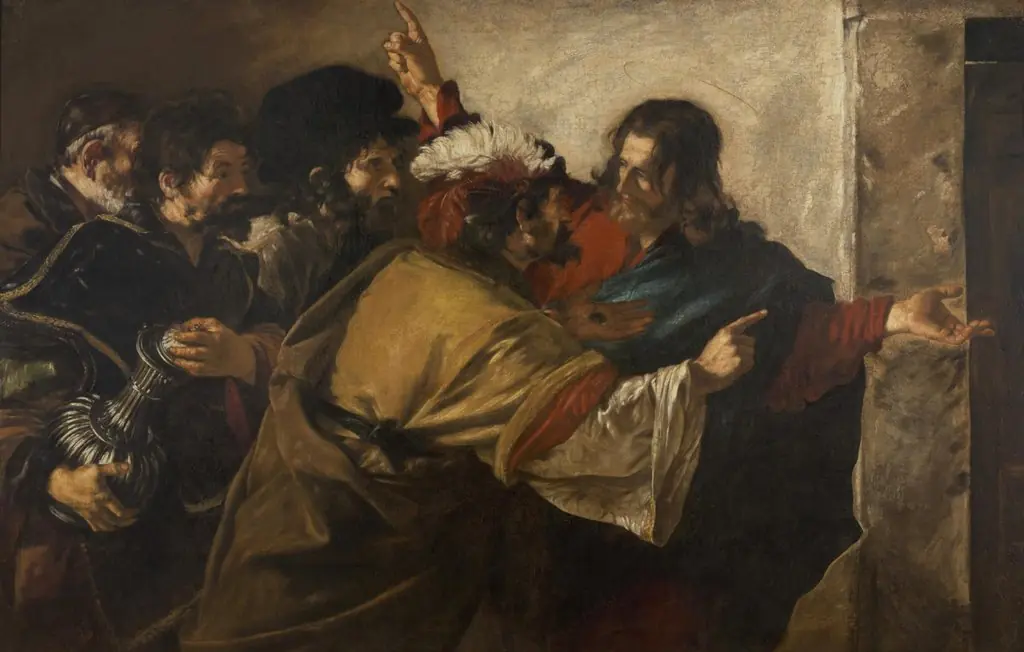
Copy of Guercino's 'Taking of Christ'
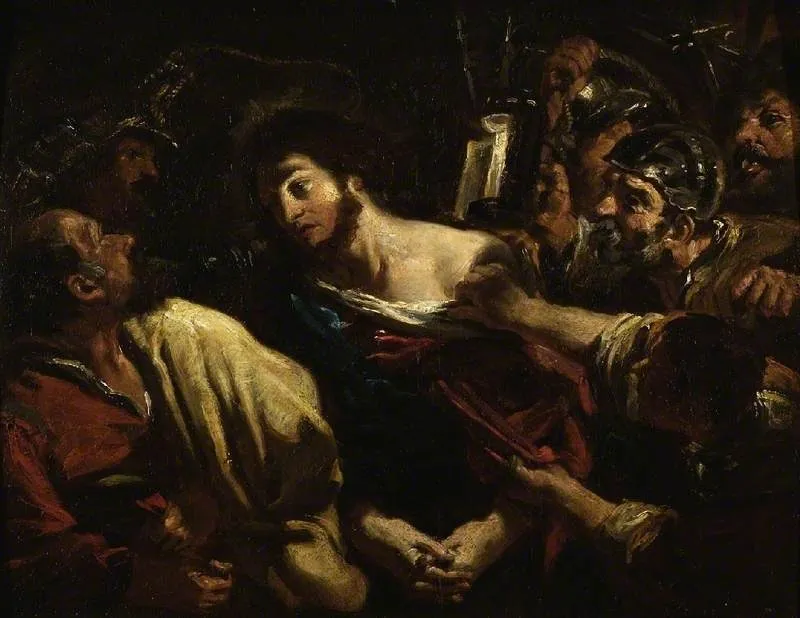
Copy of Guercino's 'Taking of Christ' is an oil painting by William Etty. It dates from 1828 and is held in the collection of the Fitzwilliam Museum.
About this work
Overview
This oil painting, created around 1828 by William Etty, is a copy of Guercino's *Taking of Christ*. It belongs to the religious genre and is characterized by a muted color palette, visible brushstrokes, and the use of chiaroscuro to create depth.
Subject & Meaning
The painting depicts a dramatic scene of the Taking of Christ, with multiple figures in helmets and armor surrounding a central figure being led away. The emotional responses of the onlookers are conveyed through their gestures.
Technique & Style
Etty's technique in this work features visible brushstrokes, contributing to a textured appearance. The dominant use of browns and tans, set against a dark, possibly nocturnal background, enhances the dramatic effect through chiaroscuro, emphasizing contrasts between light and dark.
History & Provenance
William Etty, a pioneering British artist known for his historical and nude subjects, trained at the Royal Academy Schools under Thomas Lawrence. This painting is part of the Fitzwilliam Museum's collection.
Context
As a copy of Guercino's work, Etty's painting reflects his engagement with established artistic themes while showcasing his individual approach to color and texture. It also highlights his role as a British artist exploring religious subjects with a focus on figure composition.
Legacy
While primarily a copy, the work demonstrates Etty's technical skill and his contribution to British art's exploration of historical and religious themes, particularly in his handling of light and shadow.
Artist & collection
Artist
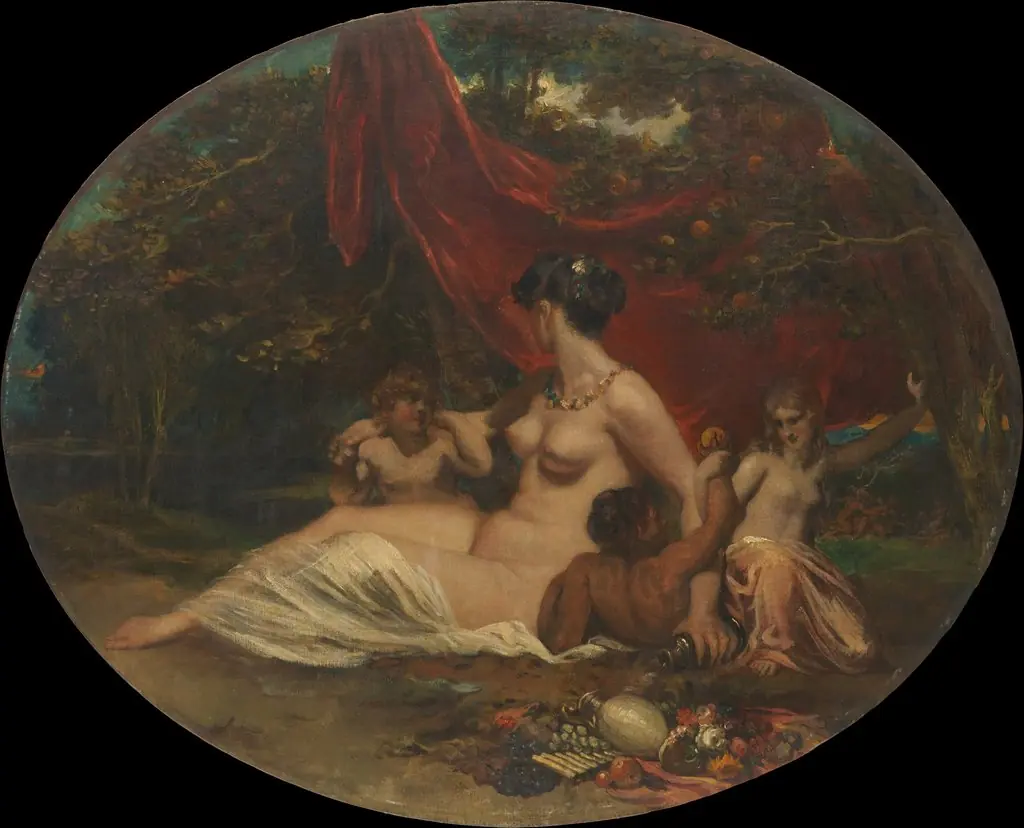
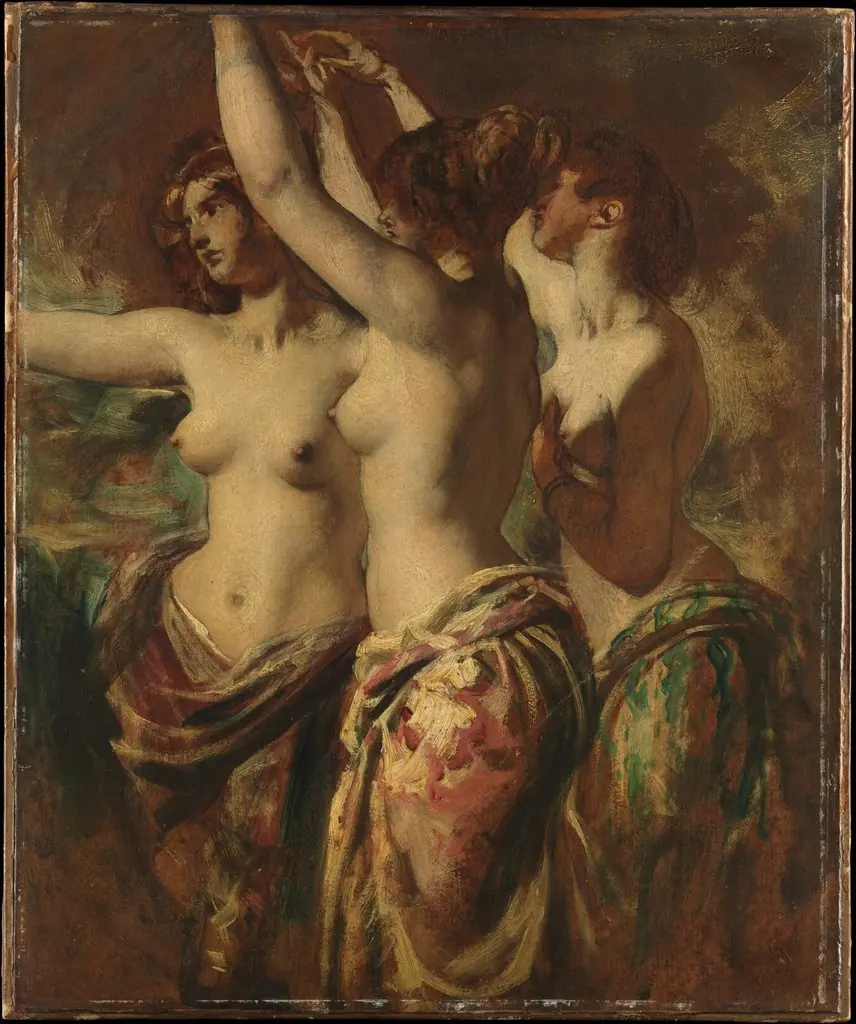
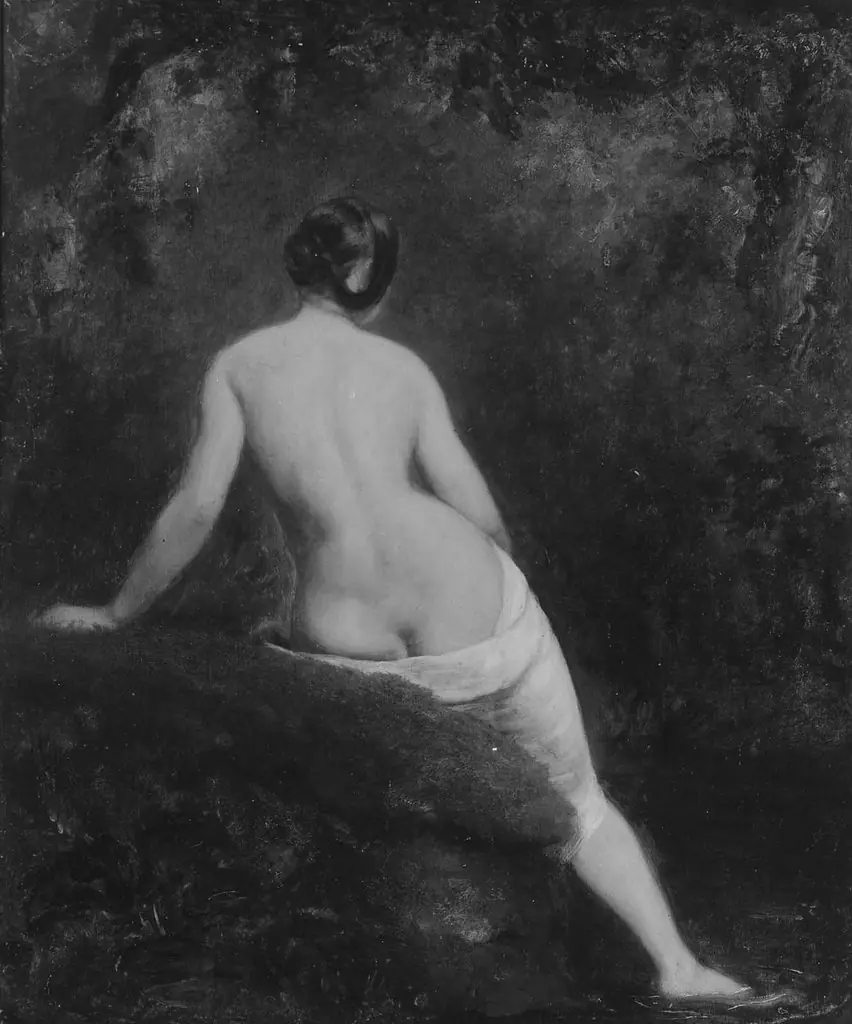
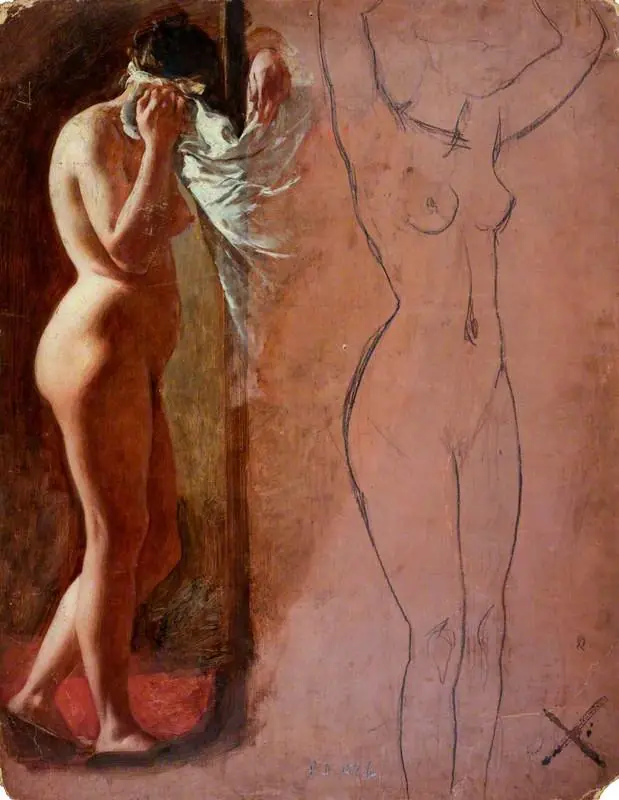
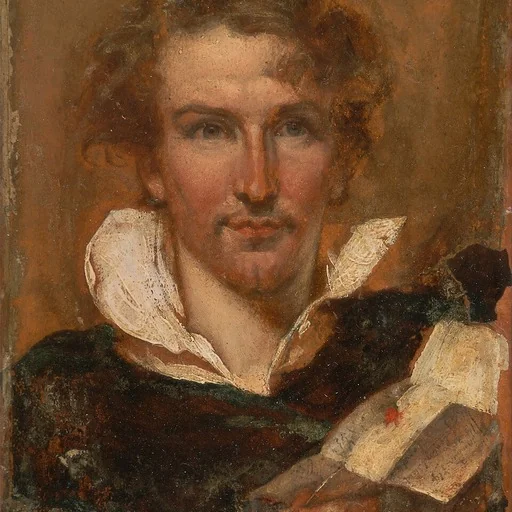
William Etty (10 March 1787 – 13 November 1849) was an English artist best known for his historical paintings containing nude figures.