Artwork
Hemlock Forest, Lehigh Valley Railroad
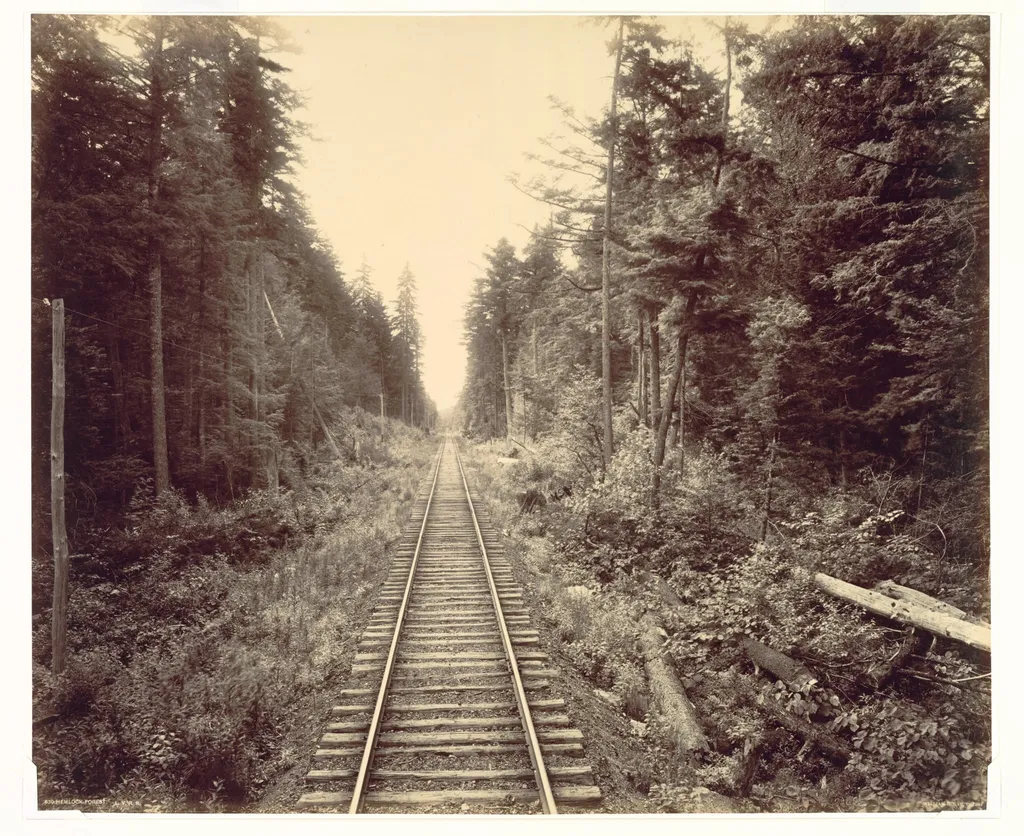
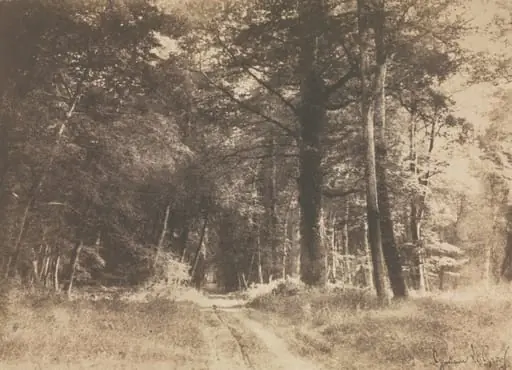
Hemlock Forest, Lehigh Valley Railroad is a photography by the Impressionist artist William H. Rau. It dates from 1895 and is held in the collection of the Cleveland Museum of Art.
About this work
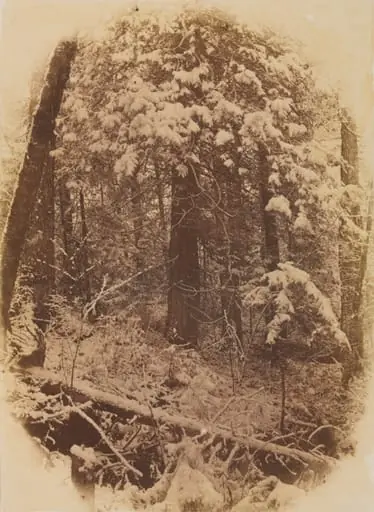
This photo shows tall hemlock trees and a train track curving into the woods.
This photo shows tall hemlock trees and a train track curving into the woods. Dark shadows fall between the trunks. Light filters through the pine needles.
Rau shot this for the Lehigh Valley Railroad. They used these images to sell trips between New York and Niagara Falls. His big glass-plate camera needed a darkroom on wheels.
The trees feel almost real. For more like this, look up William H. Rau (American, 1855–1920).
Overview
Hemlock Forest, Lehigh Valley Railroad is a photograph by William H. Rau, created for the Lehigh Valley Railroad to promote their new rail line between New York and Niagara Falls.
Subject & Meaning
The image captures a dense forest with a train track curving into it, conveying a sense of mystery and depth. The composition highlights the contrast between the natural landscape and the railroad's presence.
Technique & Style
Rau used a large-format camera with mammoth plate and panoramic negatives, processed in a mobile darkroom. The resulting image showcases his skill in capturing the interplay of light and shadow among the trees.
History & Provenance
Commissioned by the Lehigh Valley Railroad in the mid-1890s, the photograph was part of a series intended to advertise the scenic views available on their new rail line.
Context
The image reflects the railroad's efforts to balance the impact of their infrastructure on the natural landscape with the goal of making it more accessible to a wider audience.
Artist & collection