Artwork
Florimell leaves the Witches Hut and Disappoint <i>(sic.)</i> the Monster
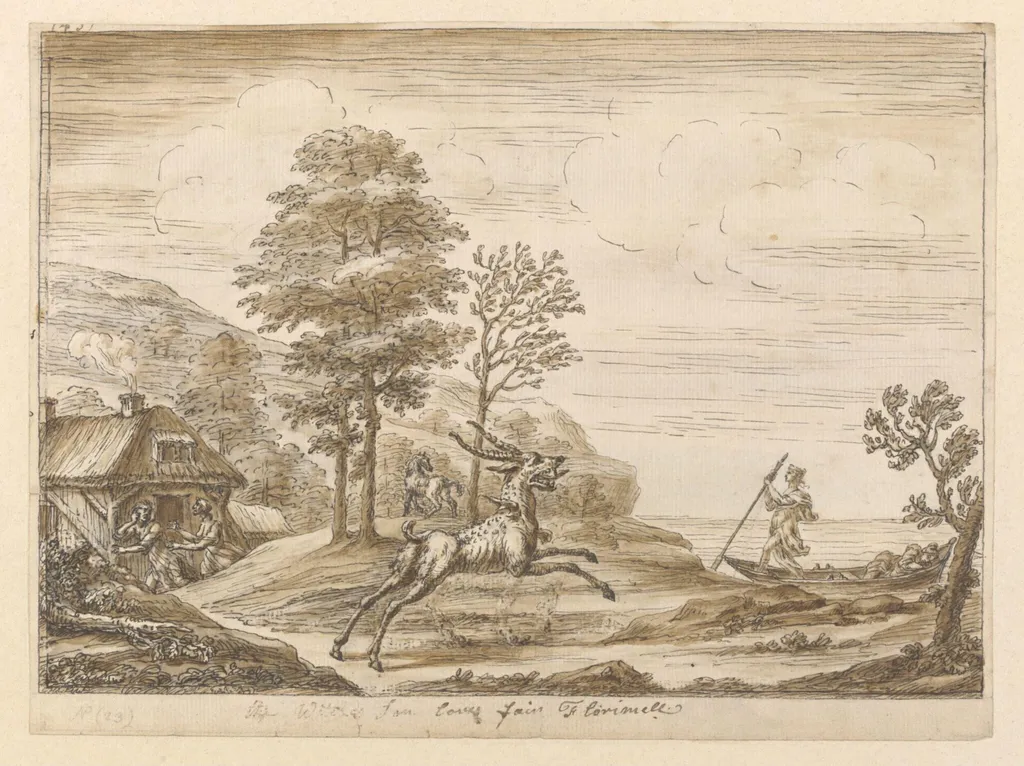
Florimell leaves the Witches Hut and Disappoint <i>(sic.)</i> the Monster is a drawing by the Baroque artist William Kent. It dates from 1740 and is held in the collection of the Victoria and Albert Museum.
About this work
The title tells us a woman named Florimell leaves a witch’s hut and avoids a monster.
This drawing shows a scene from Edmund Spenser’s poem *The Faerie Queene*. Artist William Kent made it around the 1730s–40s as part of 32 book illustrations. The title tells us a woman named Florimell leaves a witch’s hut and avoids a monster.
Kent worked on these designs early in his London career. They were published in 1751, though some once thought the set was unfinished.
Look up the Victoria and Albert Museum.
Overview
William Kent, active in early‑18th‑century London, produced a series of thirty‑two drawings to illustrate Edmund Spenser’s *The Faerie Queene*. This particular sheet, titled *Florimell leaves the Witches Hut and Disappoint the Monster*, depicts the heroine Florimell exiting a sorceress’s dwelling and confronting a lurking creature. The image forms part of the set published in the 1751 edition of the poem by Stephen Wright and John Brindley.
Subject & Meaning
The composition captures a moment from Spenser’s allegorical narrative in which Florimell, a symbol of chastity, escapes the enchantments of a witch’s hut only to be met by a threatening monster. The scene illustrates the poem’s themes of virtue confronting danger and the triumph of moral resolve over deceptive forces.
Technique & Style
Kent’s drawing employs a brisk, energetic line that reflects his background in decorative design. The figures are rendered with a directness that emphasizes movement, while the surrounding architecture and creature are sketched with a relatively loose hand, characteristic of his illustrative work rather than fine‑art painting.
History & Provenance
Created in the 1730s–40s, the illustration was included in the 1751 printed edition of *The Faerie Queene* produced by Wright and Brindley. The drawings are numbered sequentially in ink, a detail that suggests Kent intended only these thirty‑two images for publication, countering earlier speculation that the series remained incomplete at his death.
Legacy
Contemporary critic Horace Walpole dismissed the *Faerie Queene* illustrations as among Kent’s weaker efforts, contrasting them with his more successful decorative commissions. Nonetheless, the drawings demonstrate Kent’s vigorous imagination and contribute to the visual tradition of 18th‑century literary illustration, preserving his reputation as a prolific designer.
Artist & collection
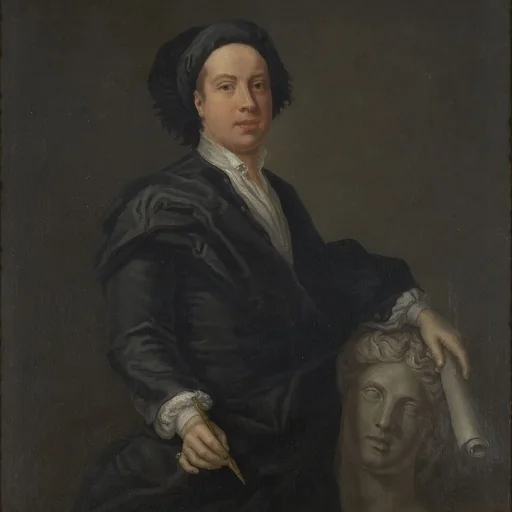
Artist
William Kent (c. 1685 – 12 April 1748) was an English architect, landscape architect, painter and furniture designer of the early 18th century. He began his career as a painter, and became Principal Painter in Ordinary…

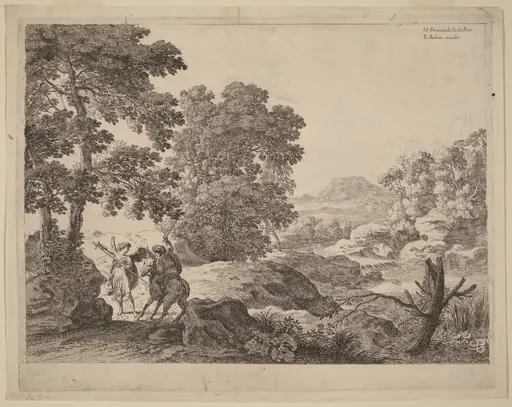 Balaam and the Ass
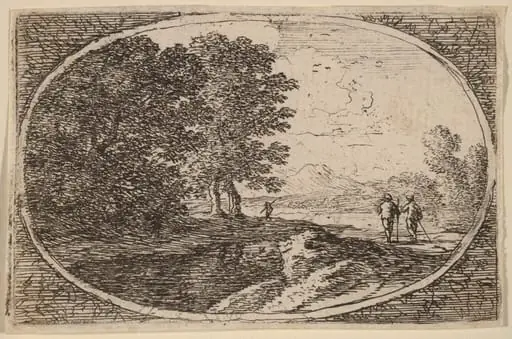 Three Men Carrying Staffs
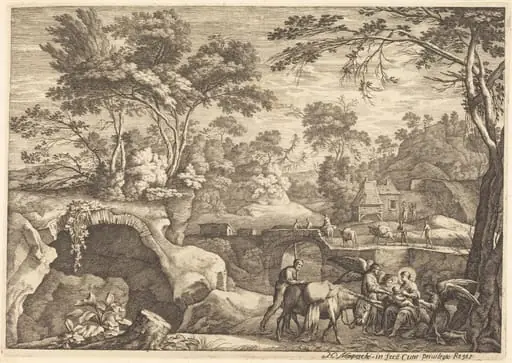 The Flight into Egypt
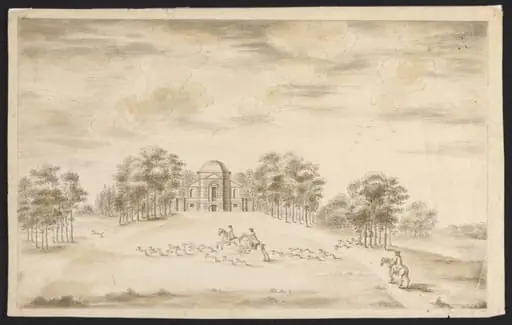
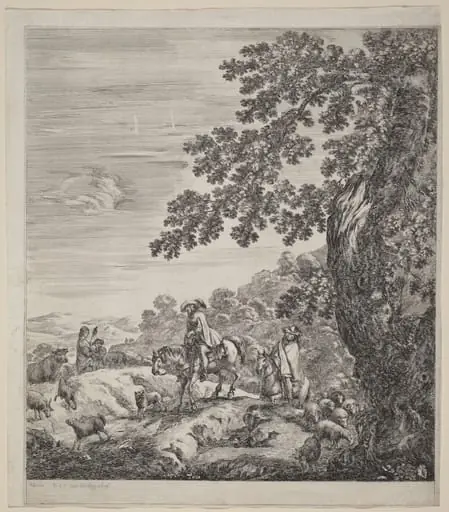 Two Riders Passing Near a Herd of Animals
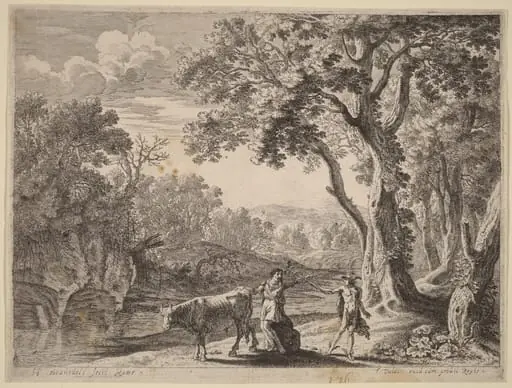 Battus Transformed into Stone
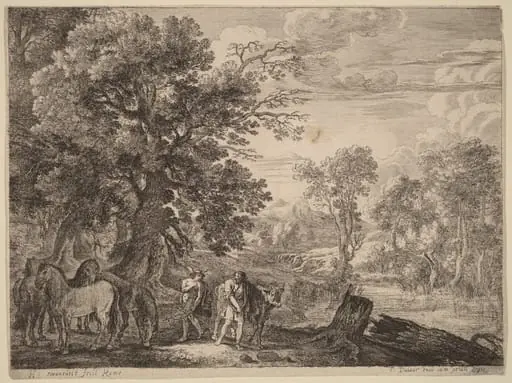 Mercury Silencing Battus
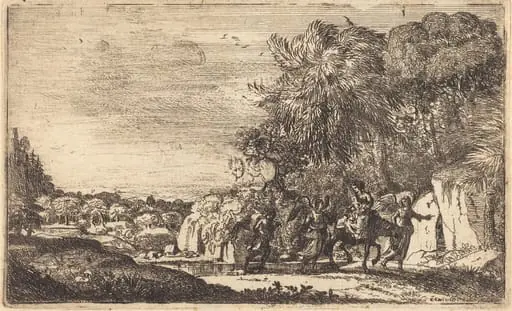 The Flight into Egypt (La fuite en Egypte)
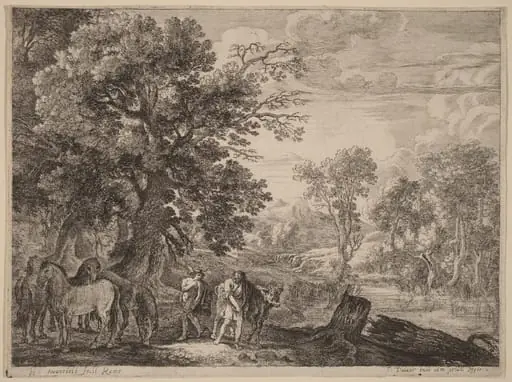 Mercury Silencing Battus
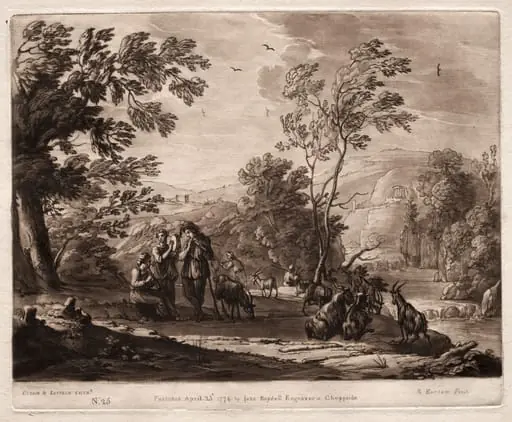 Liber Veritatis: No. 25, A Mountainous and Wooded Landscape with Shepherds Playing and Goats Browsing
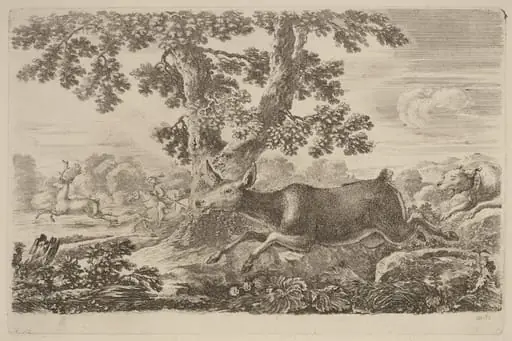 Deer Chased by a Dog to the Right
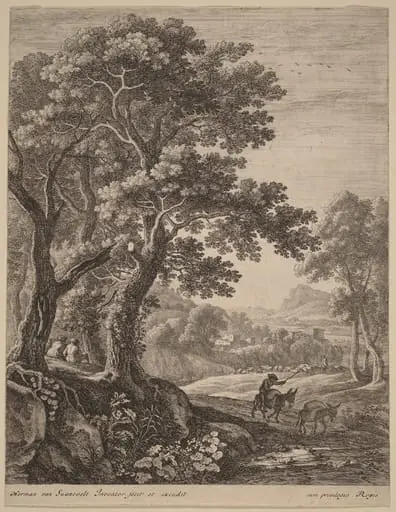 The Mule Driver
 Discovery of the Criminal Soldiers