Artwork
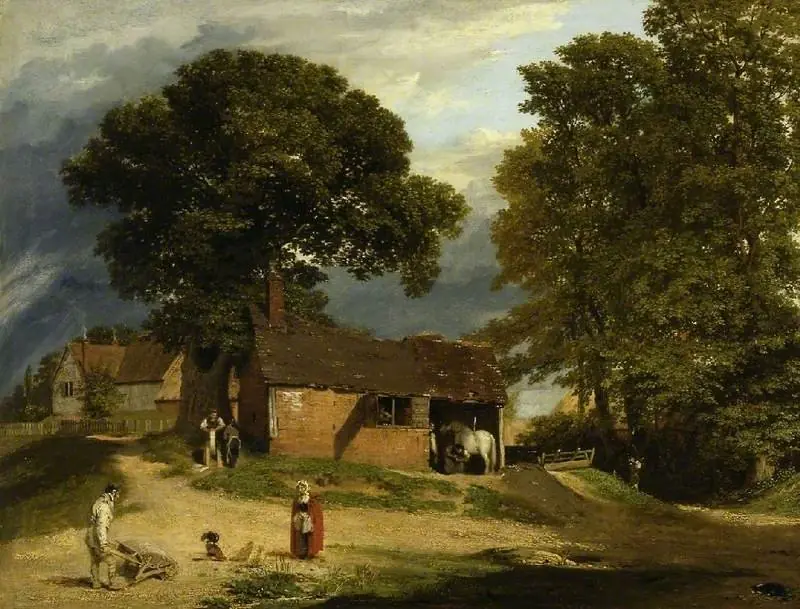
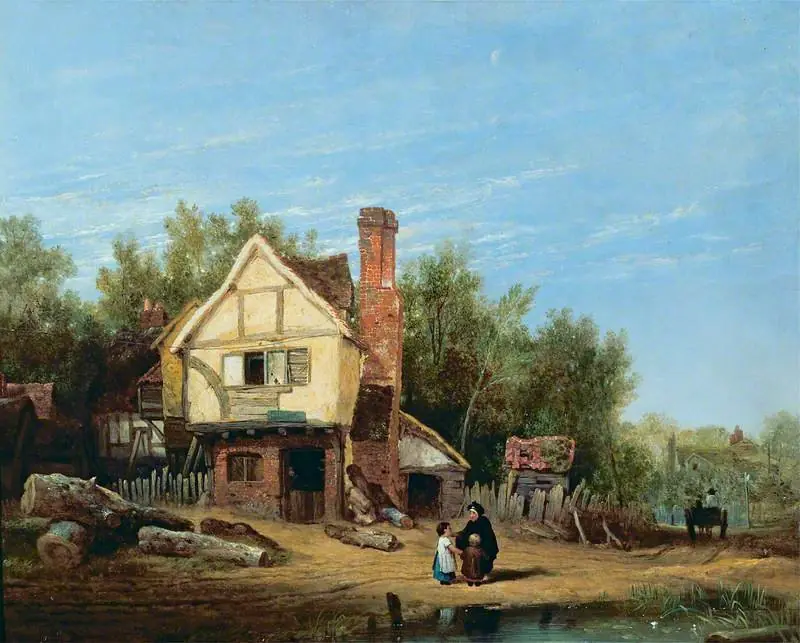
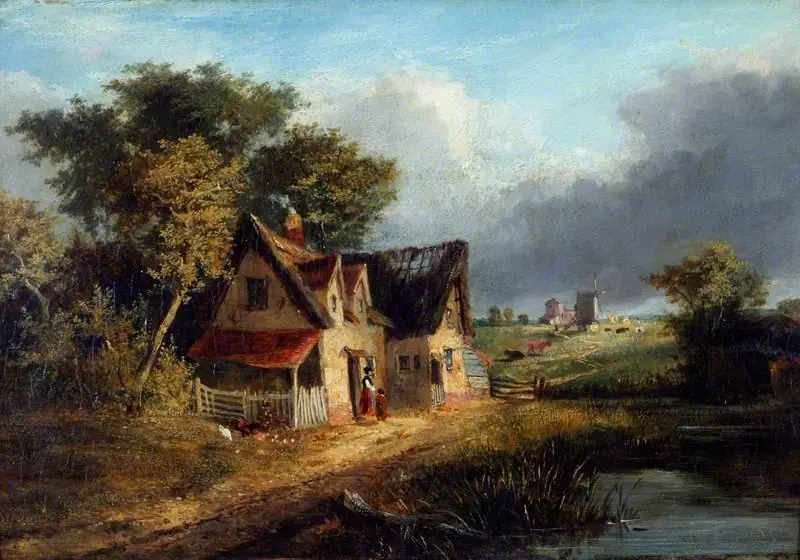
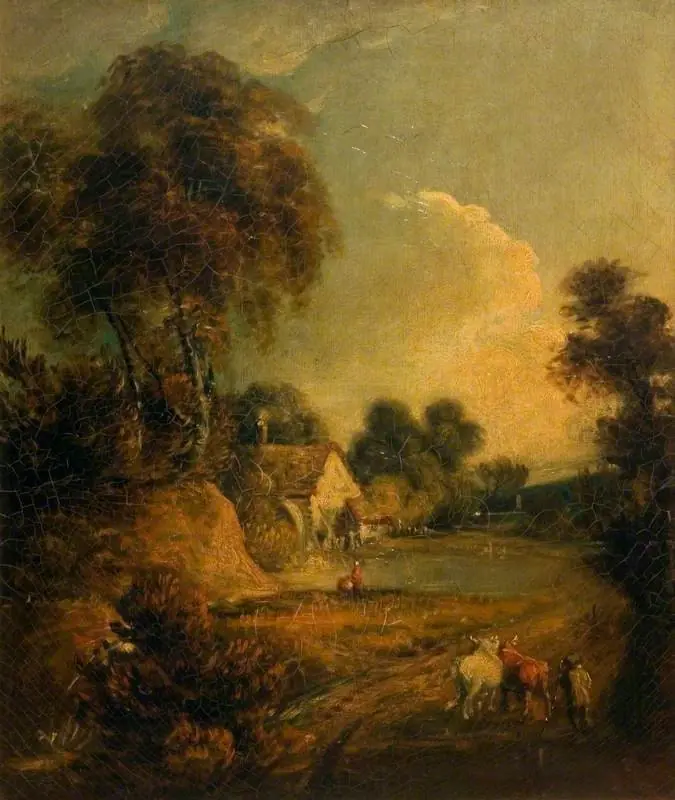
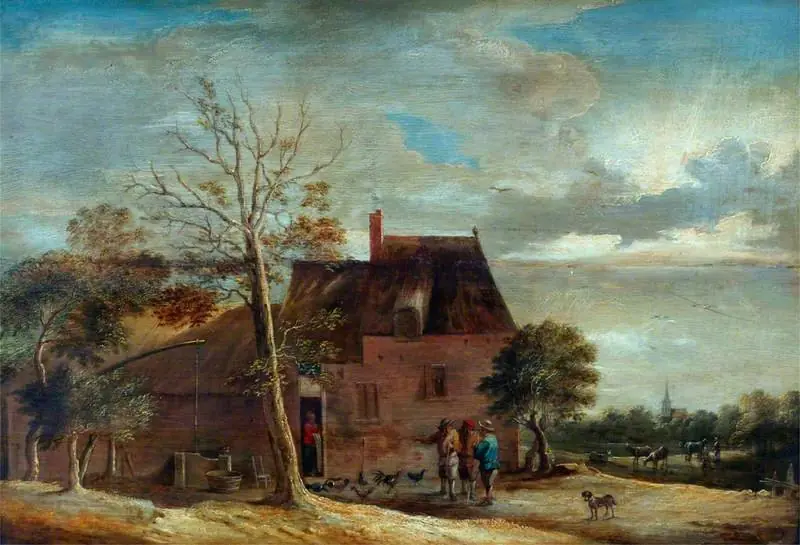
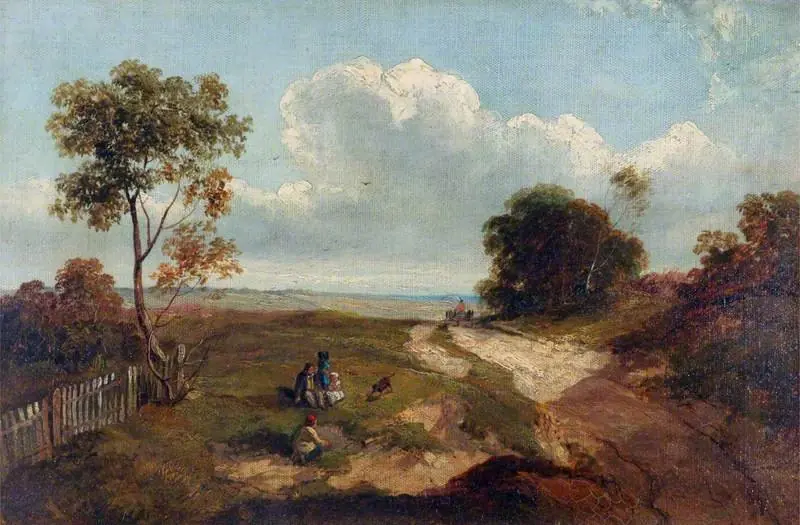
Landscape: A Cottage with Trees and Two Children
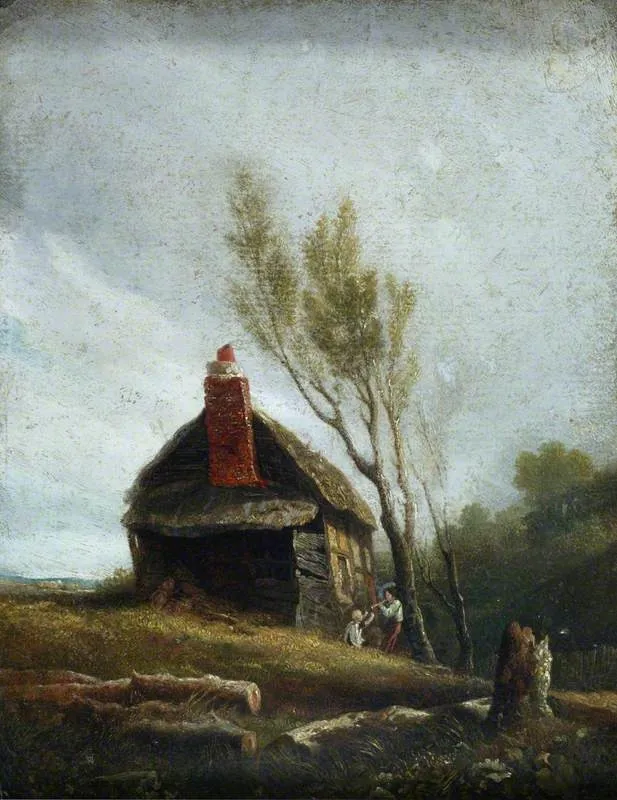
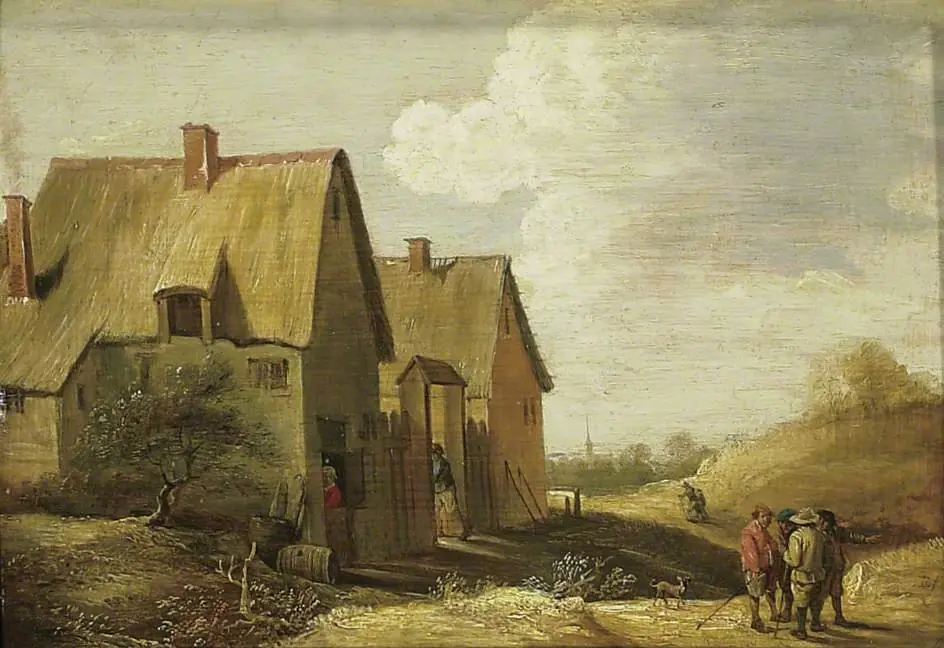
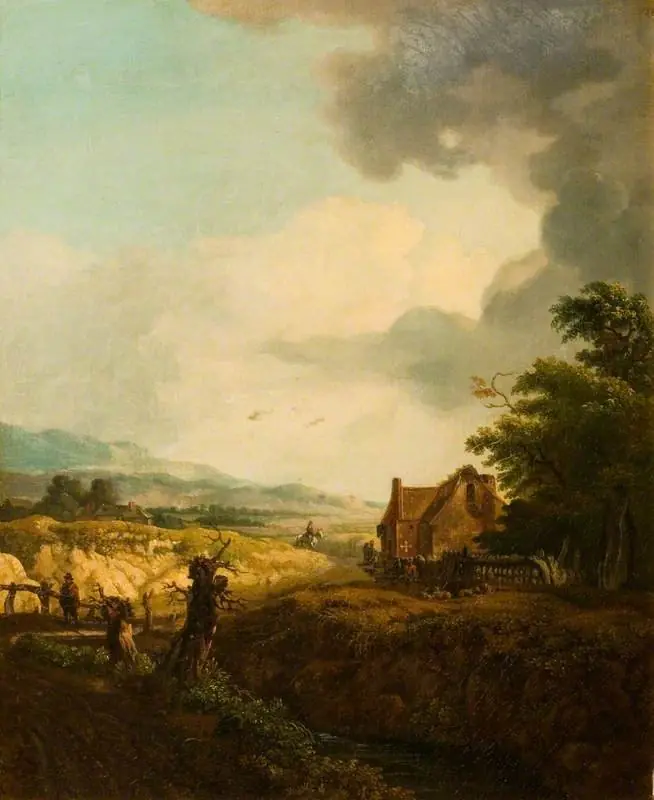
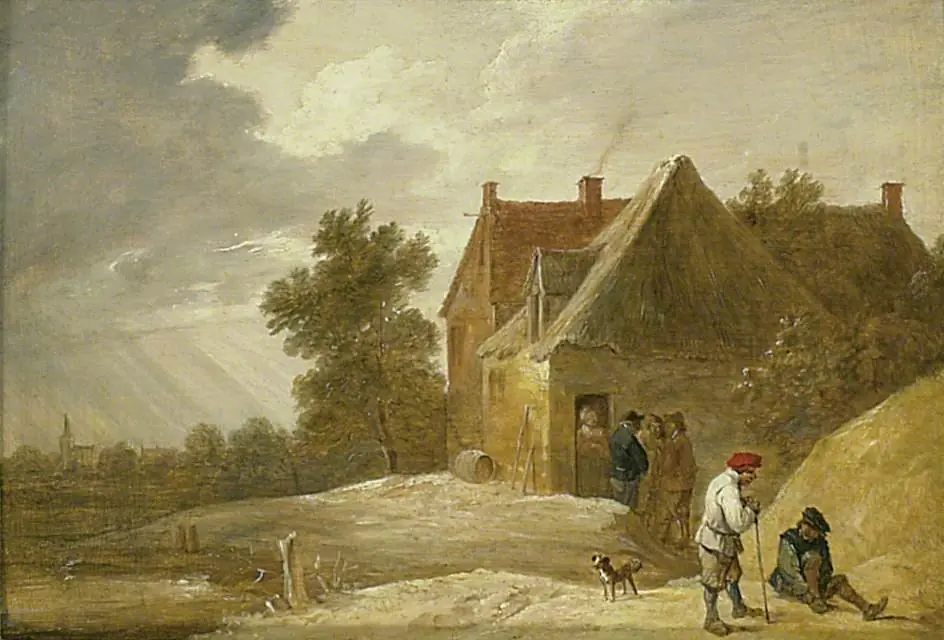
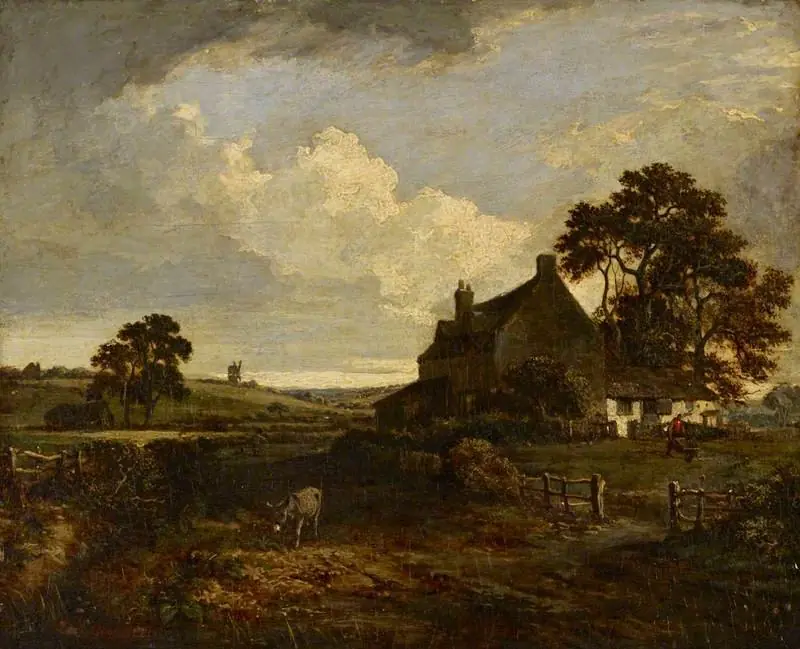
Landscape: A Cottage with Trees and Two Children is an unspecified painting by William Mulready. It dates from 1834 and is held in the collection of the Victoria and Albert Museum.
About this work
Overview
Painted around 1834, this work by William Mulready presents a quiet rural scene centered on a modest cottage surrounded by trees.
Painted around 1834, this work by William Mulready presents a quiet rural scene centered on a modest cottage surrounded by trees. Two children stand near the entrance, their presence adding a subtle narrative to the landscape. The composition emphasizes harmony between human habitation and nature, rendered with careful attention to atmospheric detail. It resides in the Victoria and Albert Museum, where it exemplifies 19th-century British genre painting.
Subject & Meaning
The cottage and its two children suggest domestic serenity and rural innocence. Their simple attire and still posture evoke a sense of everyday life, unembellished by drama. The scene avoids idealization, instead capturing a moment of quiet observation. The placement of figures near the dwelling implies a connection between childhood and home, reinforcing themes of stability and continuity in an agrarian setting.
Technique & Style
Mulready employs soft, naturalistic brushwork to render textures—the rough thatch of the roof, the folds of the children’s clothing, the foliage of surrounding trees. Light is gently modulated to suggest late afternoon, casting warm tones across the scene without harsh contrasts. The palette is restrained, favoring earthy greens, browns, and muted reds, enhancing the painting’s calm, intimate mood.
History & Provenance
Created in the early 1830s, the painting entered the Victoria and Albert Museum’s collection as part of its broader effort to document British artistic output during the Industrial Revolution. It was likely acquired in the 19th century, reflecting contemporary interest in domestic and pastoral subjects. Its preservation underscores its value as a record of rural life in pre-industrial England.
Context
Mulready worked during a period when British art increasingly turned to everyday scenes over grand historical or mythological themes. This painting aligns with the rise of genre painting and the Romantic fascination with rural simplicity. Urbanization was accelerating, making such depictions of country life both nostalgic and culturally significant to middle-class audiences.
Legacy
Though not widely known today, the work contributes to the understanding of Mulready’s role in shaping British landscape and genre painting. It reflects a broader trend of artists documenting ordinary life with empathy and precision. Its presence in a major museum ensures its continued study as an example of 19th-century visual storytelling rooted in observation rather than sentiment.
Artist & collection
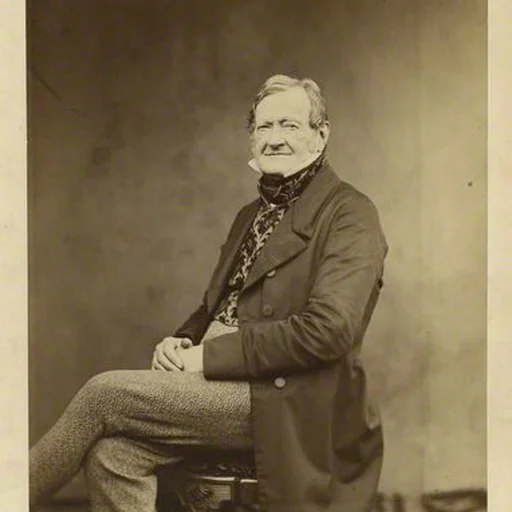
Artist
William Mulready was an Irish genre painter living in London. He is best known for his romanticising depictions of rural scenes, and for creating Mulready stationery letter sheets, issued at the same time as the Penny Black postage stamp.