Artwork
Zonnebeke
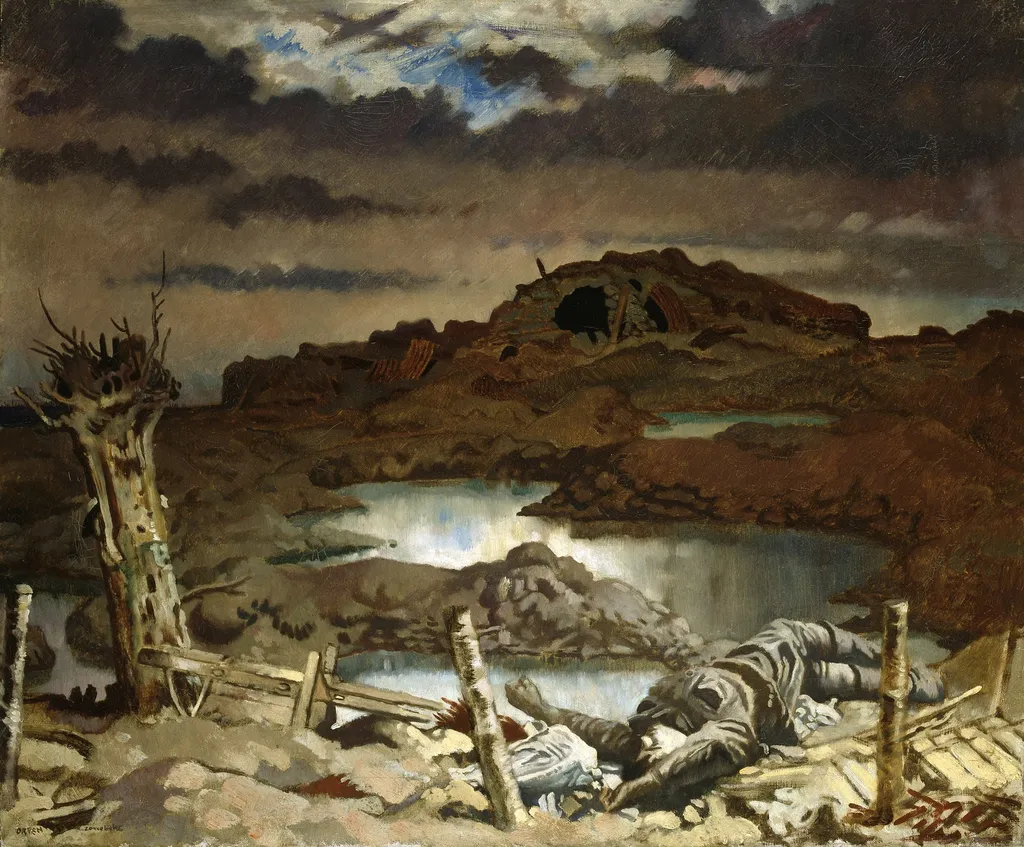
Zonnebeke is an oil painting by the Impressionist artist William Orpen. It dates from 1918 and is held in the collection of the Tate.
About this work
Overview
"Zonnebeke" is an oil painting on canvas executed in 1918 by Irish artist William Orpen. The work forms part of the body of images he produced while serving as an official war artist for the British government during the First World War. It is presently held in the collection of the Tate Gallery in London.
Subject & Meaning
The canvas depicts the landscape of Zonnebeke, a village in the Ypres Salient that was heavily scarred by trench warfare. Orpen’s rendering captures the desolation of the battlefield, conveying the aftermath of combat through a muted palette and stark composition.
Technique & Style
Orpen employed a traditional oil medium, applying paint in a controlled manner that balances detail with broader tonal washes. The work reflects his academic training, yet the subdued colour scheme and loose brushwork convey the bleak atmosphere of a war‑torn terrain.
History & Provenance
Created in the final year of the conflict, the painting was among a series Orpen completed for the British War Office. After the war, the piece entered the public domain through acquisition by the Tate, where it has remained on display as part of the museum’s modern British collection.
Context
Zonnebeke was the site of intense fighting during the 1917 battles around Ypres, making it a focal point for war artists seeking to document the Western Front’s devastation. Orpen’s assignment placed him alongside other official artists tasked with recording the visual record of the war for posterity.
Own this work as a print
Artist & collection

Artist
Major Sir William Newenham Montague Orpen (27 November 1878 – 29 September 1931) was an Irish artist who mainly worked in London.


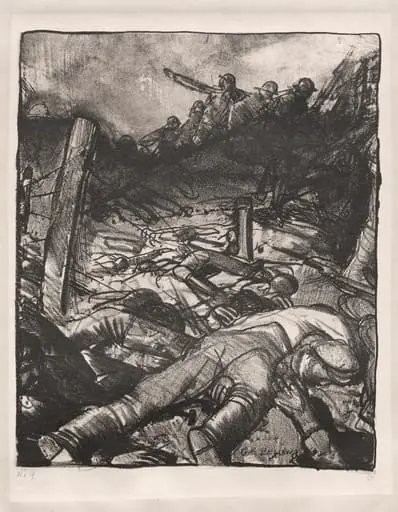 War Series: The Charge, Left Detail
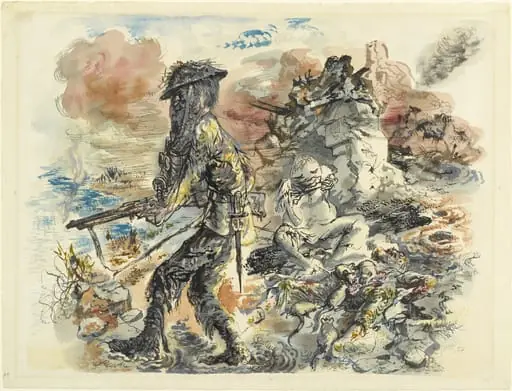 Untitled
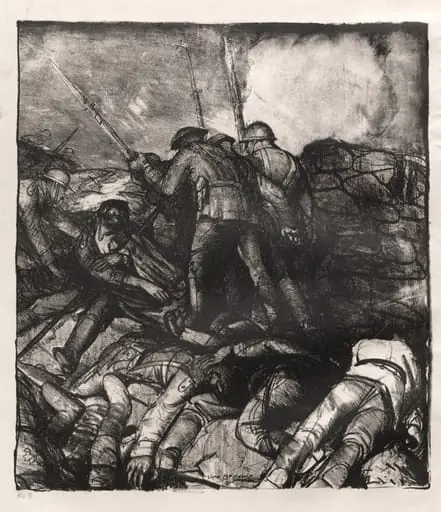 War Series: The Charge, Right Detail, first state
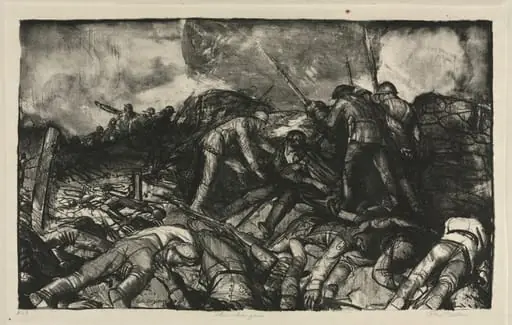 War Series: The Charge
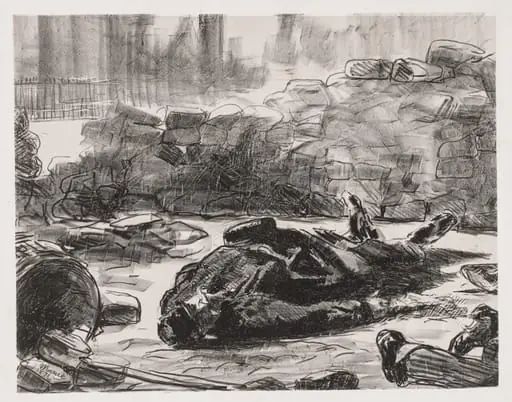 Civil War (Scene of the Commune of Paris)
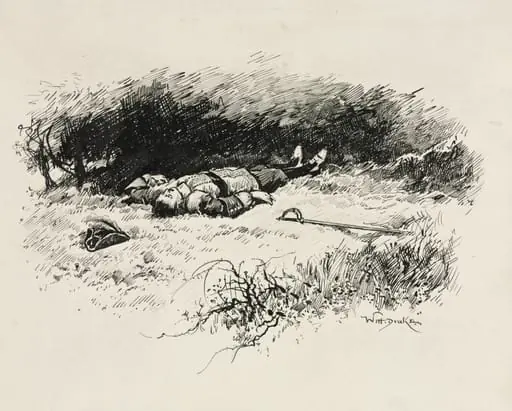 Tail Piece for Chapter XXI from "Lorna Doone"
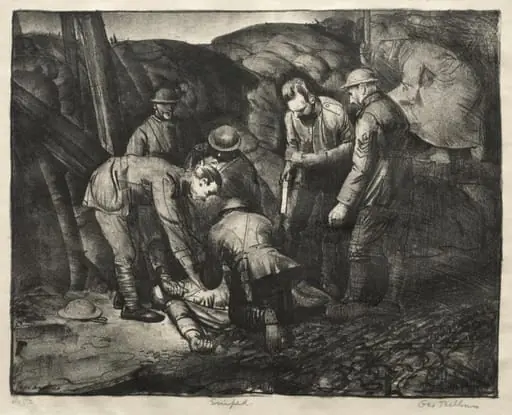 War Series: Sniped
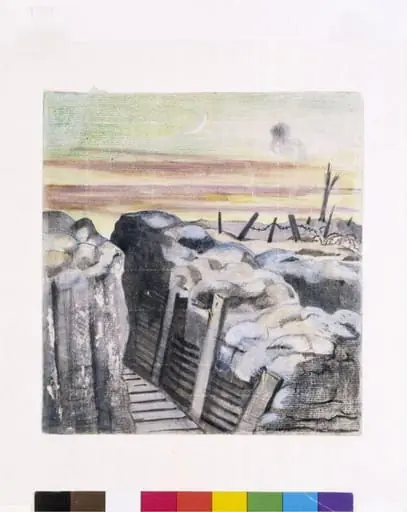 The Old Front Line, St Eloi, Ypres Salient
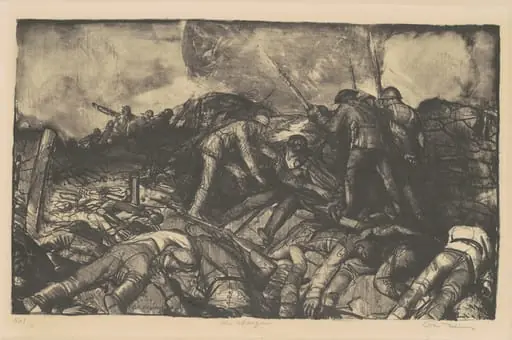 The Charge
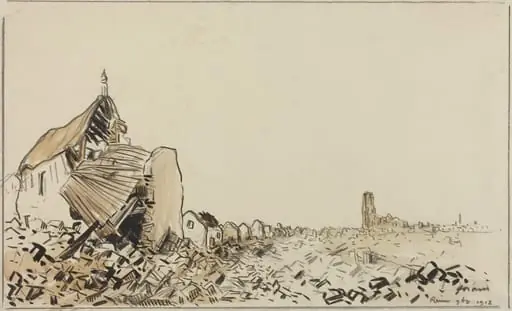 Reims 9bre 1918
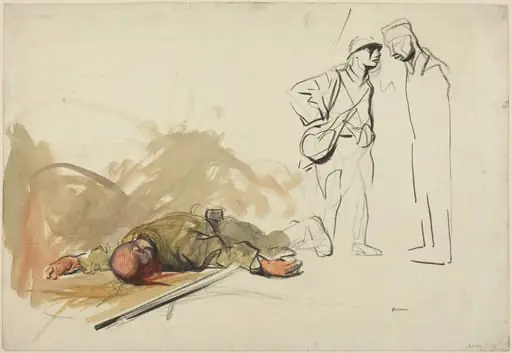 a) Dead German Soldier (recto); b) Head of a Soldier (verso)
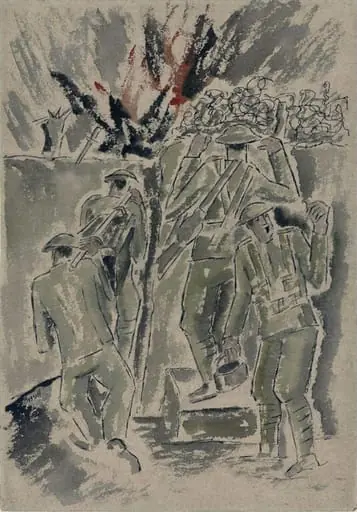 A Salient Under Fire