Artwork
Reginald Barratt
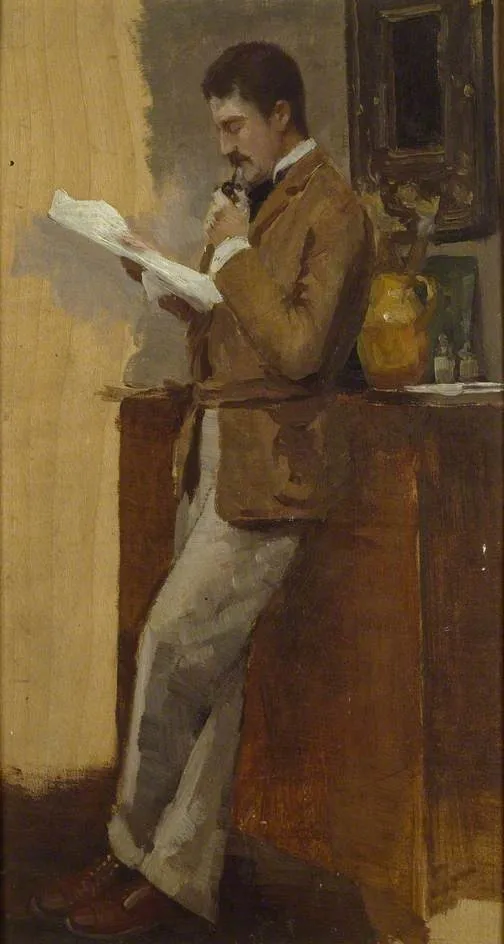
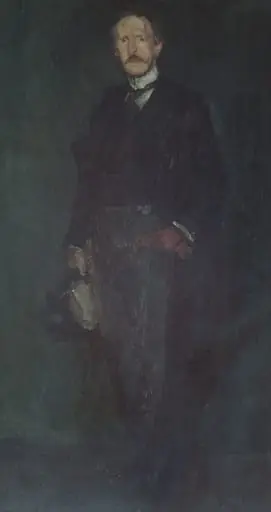
Reginald Barratt is an oil painting by William Stokes Hulton. It dates from 1896 and is held in the collection of the Ashmolean Museum.
About this work
Overview
Created circa 1896, this oil portrait by British painter William Stokes Hulton presents a seated figure named Reginald Barratt. The work is part of the Ashmolean Museum’s collection and exemplifies Hulton’s late‑19th‑century approach to portraiture, combining a domestic setting with a focus on the sitter’s engagement with everyday objects.
Subject & Meaning
Reginald Barrey is shown standing before a modest wooden table, absorbed in a newspaper held in his left hand while a pipe rests in his right. The composition captures a moment of quiet concentration, suggesting an interest in current affairs or personal reflection within a familiar interior.
Technique & Style
Hulton employs a restrained palette of earth tones—browns, ochres and muted whites—to generate a warm, intimate atmosphere. The brushwork is smooth, rendering the fabrics of the brown jacket and white trousers with subtle modelling, while the reflective surface of the wall‑mounted mirror adds depth to the limited space.
History & Provenance
Born in 1852, Hulton moved in artistic circles that included John Singer Sargent and Walter Sickert, with whom he traveled to Italy. The portrait of Barratt, likely a member of Hulton’s social network, entered the Ashmolean Museum’s holdings at an unspecified date, where it remains on display.
Artist & collection
Artist
William Stokes Hulton (23 October 1852 – 1921) was a British artist. William Stokes Hulton was born in 1852, the son of Rev. Campbell Basset Arthur Grey Hulton (1813–1878) and Sarah Stokes Fletcher. He was friends with…

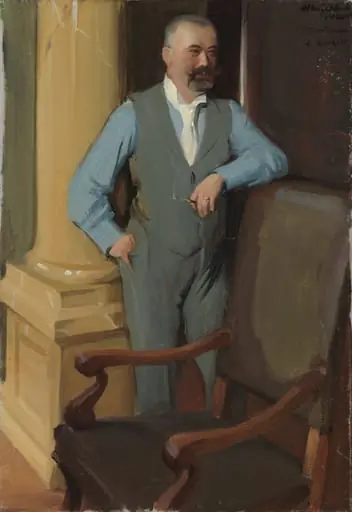 Ruukinpatruuna A.N:son Keirkner, muotokuvaharjoitelma
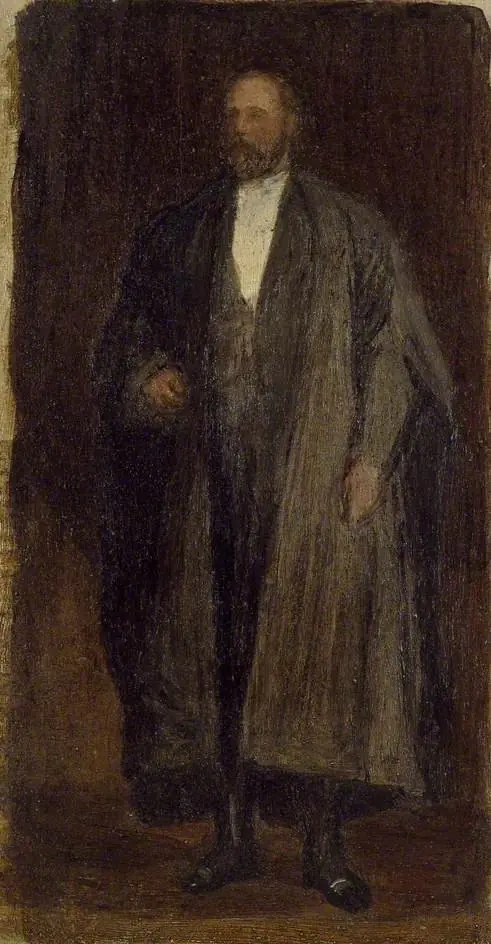 Edward VII as Prince of Wales
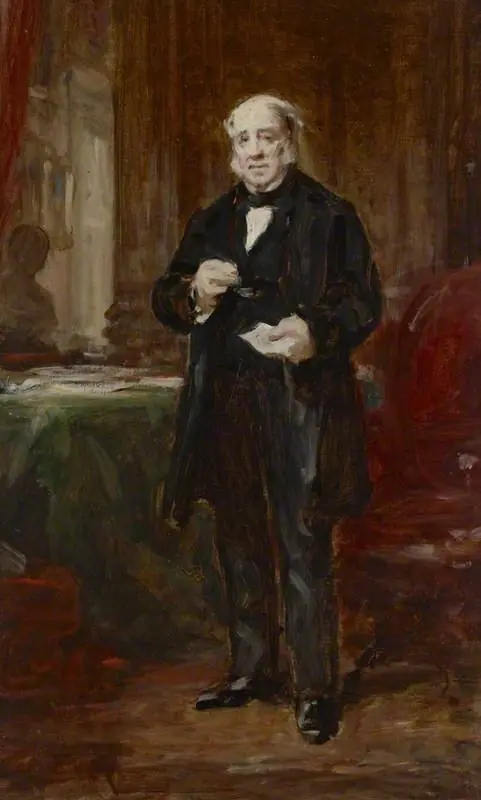 A Portrait Study of a Gentleman Standing in an Interior
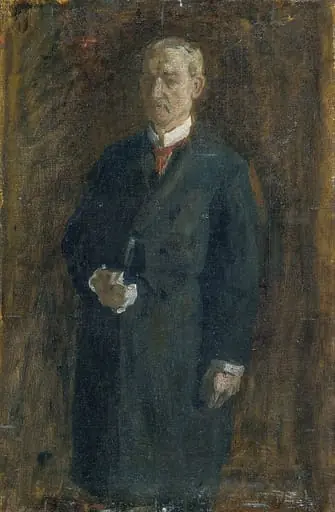 James MacAlister (Sketch)
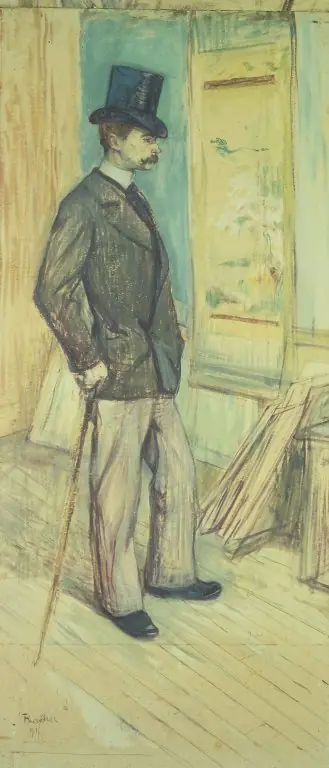 Portrait of M. Paul Sescau (Portrait de M. Paul Sescau)
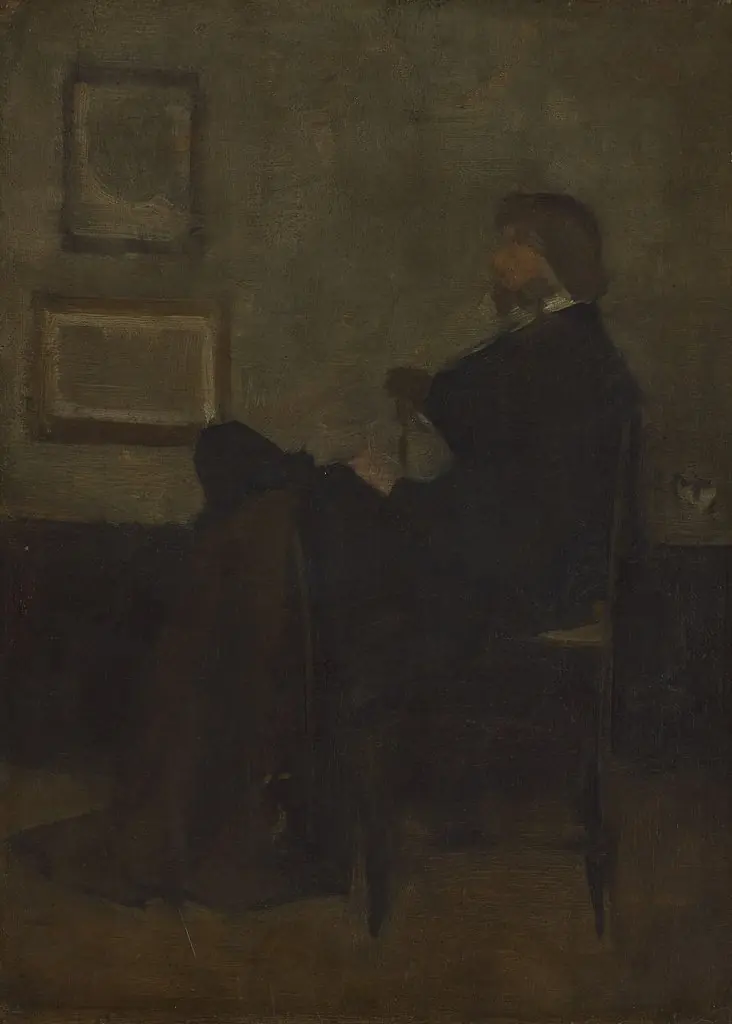 Study for "Arrangement in Grey and Black, No. 2: Thomas Carlyle"
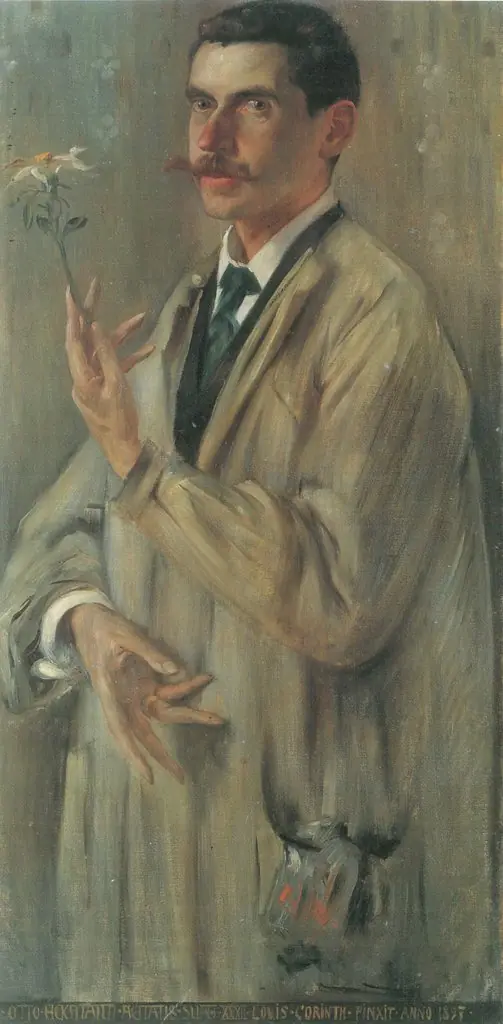 Portrait of Otto Eckmann
 Study: Joseph Pennell
 Krakovian Peasant
 Alexander Arnold Hannay
 Two Seated Men (study for 'The Covenanters' Baptism')
 Edward Guthrie Kennedy