Artwork
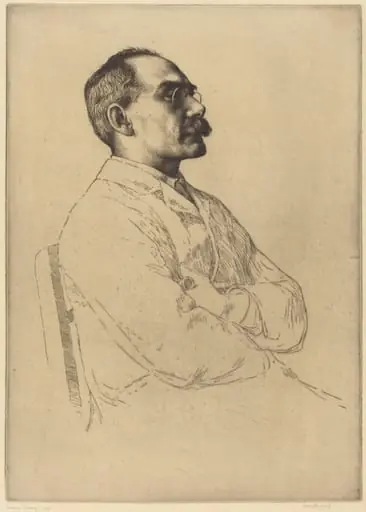
Sir Rudyard Kipling
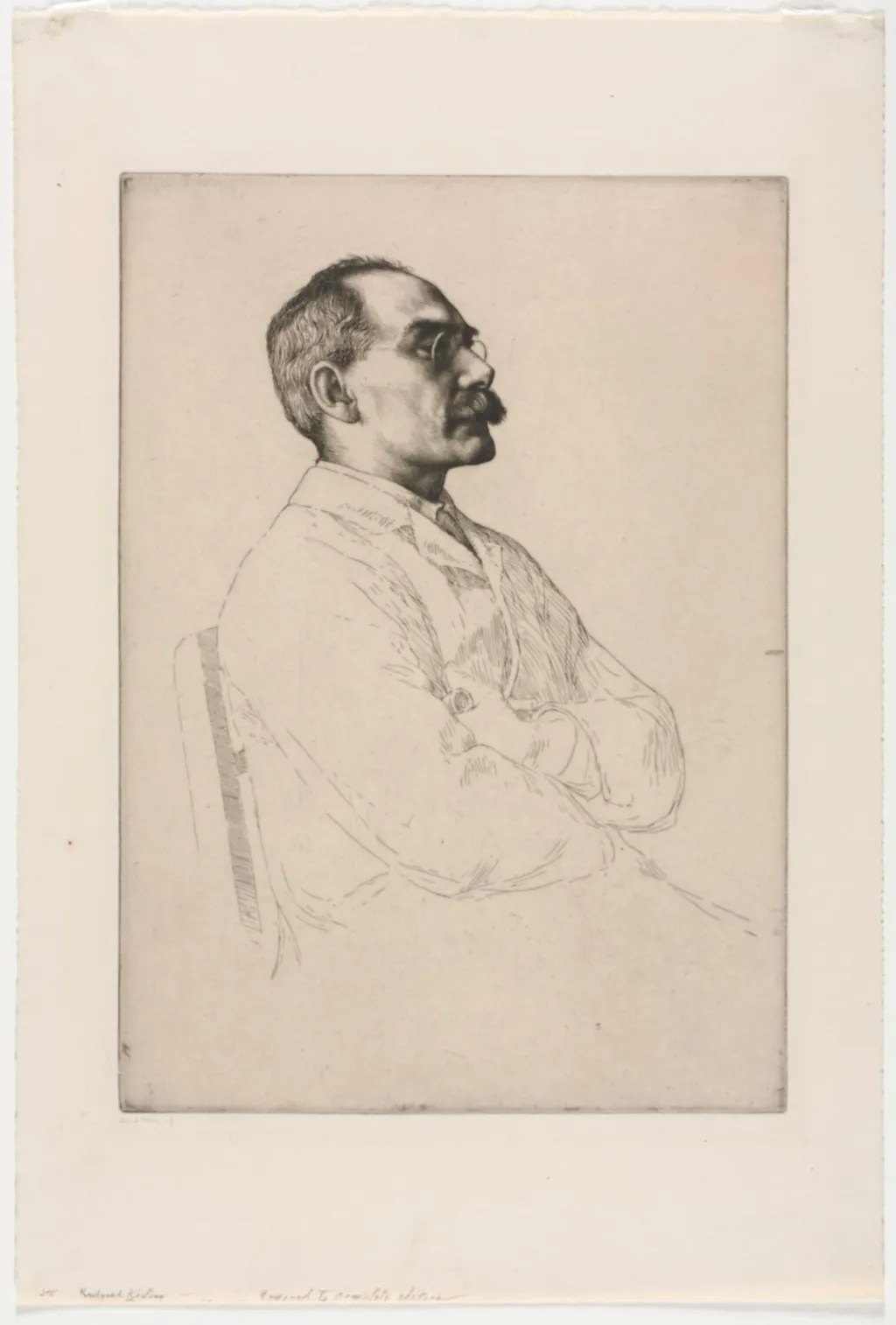
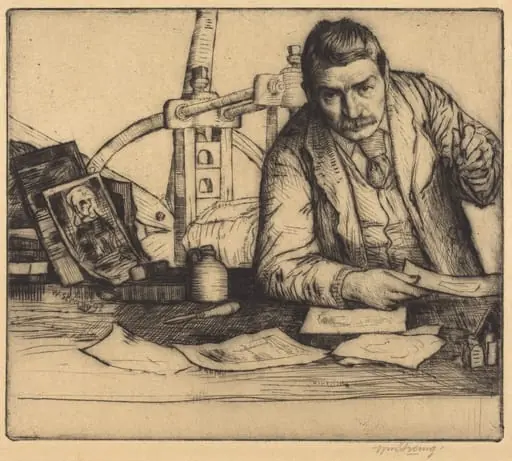
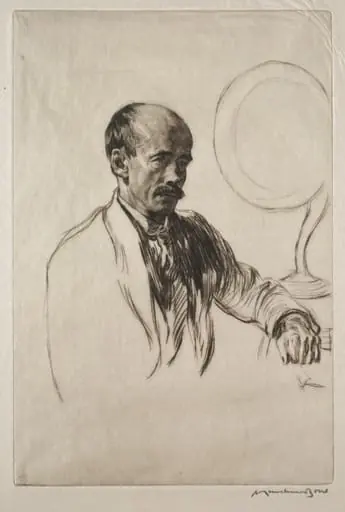
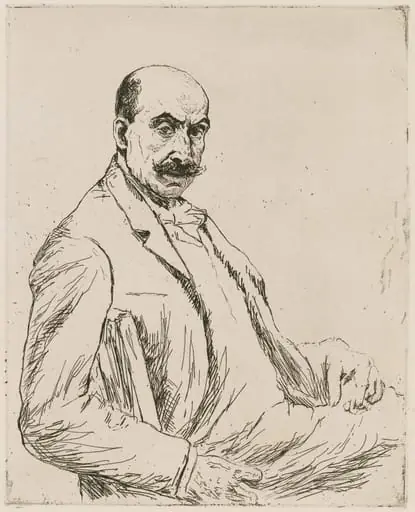
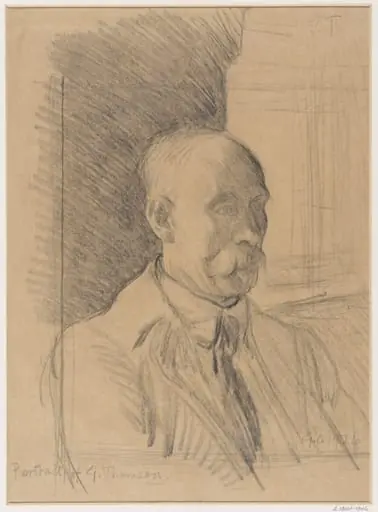
Sir Rudyard Kipling is a print by the Impressionist artist William Strang. It dates from 1898 and is held in the collection of the Cleveland Museum of Art.
About this work
Overview
This 1898 portrait by William Strang depicts the British writer Sir Rudyard Kipling in profile, seated and arms crossed. Executed in a realistic manner, the work captures Kipling with quiet intensity, rendered in oil on canvas. The painting is part of the collection at The Cleveland Museum of Art, where it remains a quiet example of late 19th-century British portraiture.
Subject & Meaning
Rudyard Kipling, then at the height of his literary fame, is portrayed not as a public figure but as a contemplative individual. His crossed arms and profile stance suggest introspection rather than performance. Strang avoids overt symbolism, focusing instead on the psychological presence of the writer, reflecting the era’s interest in character over spectacle.
Technique & Style
Strang employs chiaroscuro to model Kipling’s face and clothing with subtle gradations of light and shadow, lending volume and realism. The brushwork is precise yet restrained, emphasizing texture in the shirt and the softness of facial hair. The neutral background isolates the figure, directing attention to the sitter’s expression and posture without distraction.
History & Provenance
Commissioned during Kipling’s peak years, the portrait was completed in 1898 and remained in private hands before entering The Cleveland Museum of Art’s collection. Its provenance reflects the cultural value placed on literary figures in the late Victorian period, though the painting’s journey to Cleveland remains undocumented in public records.
Context
Strang was known for his etchings and portraits of prominent literary and artistic figures. This work aligns with a broader trend in British art of the 1890s, where writers were increasingly depicted with psychological depth rather than ceremonial grandeur. The portrait reflects a shift toward intimate, unadorned representation in an age of imperial confidence.
Legacy
Though not among Strang’s most widely reproduced works, the portrait endures as a thoughtful record of Kipling’s public persona. It contributes to the visual archive of late Victorian intellectual life, offering a restrained counterpoint to more flamboyant portrayals of the era’s literary figures.
Artist & collection

Artist
William Strang (13 February 1859 – 12 April 1921) was a Scottish painter and printmaker, notable for illustrating the works of Bunyan, Cervantes, Coleridge, Kipling, and others.