Artwork
George IV, King of England, Entering Dublin
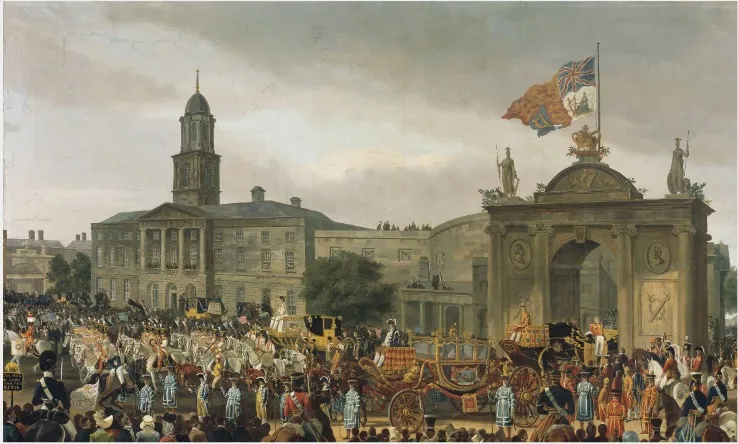
George IV, King of England, Entering Dublin is an oil painting by the British Romanticist artist William Turner. It dates from 1821 and is held in the collection of the National Gallery of Ireland.
About this work
Overview
George IV, King of England, Entering Dublin is an 1821 oil painting by William Turner, depicting a ceremonial scene in Dublin. The work is part of the collection at the National Gallery of Ireland.
Subject & Meaning
The painting captures the moment of King George IV's arrival in Dublin, highlighting the pomp of the royal visit. Central to the composition is the king's ornate, gold and red carriage, set amidst a diverse crowd gathered before a grand, columned building with a dome.
Technique & Style
While reminiscent of Turner's signature dramatic style, this work focuses on figurative detail and architectural rendering, with a muted, cloudy sky providing a subdued backdrop to the vibrant, colorful procession.
History & Provenance
Created in 1821, the painting is a historical record of King George IV's visit to Dublin. It has been in the collection of the National Gallery of Ireland, ensuring its preservation and public accessibility.
Context
The painting reflects the political and social significance of royal visits during the early 19th century, capturing the intersection of monarchy, public spectacle, and urban landscape.
Legacy
As a depiction of a specific historical event by a renowned artist, the painting contributes to the visual history of British monarchy and Irish urban development, offering insights into the era's pageantry and architecture.
Artist & collection

Artist
William Turner was a British painter who specialised in watercolour landscapes. He is often known as William Turner of Oxford or just Turner of Oxford to distinguish him from his contemporary, J. M. W. Turner. Many of…

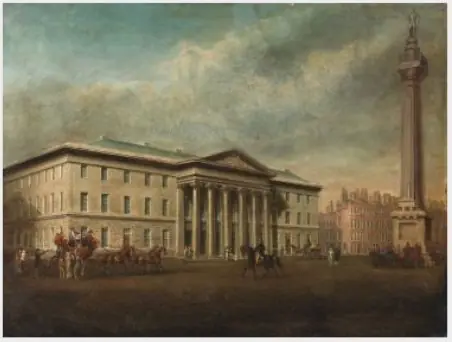 The General Post Office, Dublin
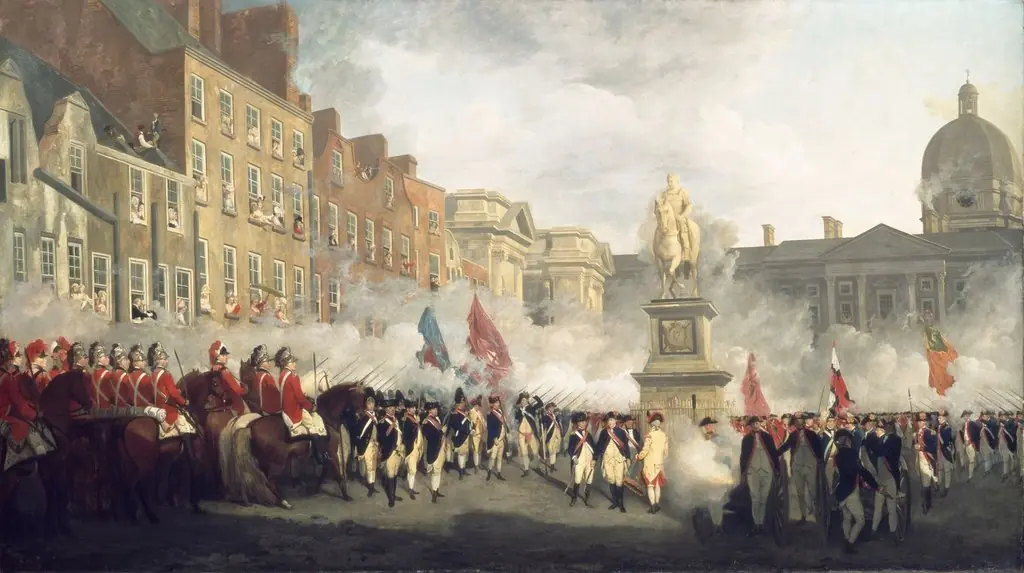 The Dublin Volunteers on College Green, 4th November 1779
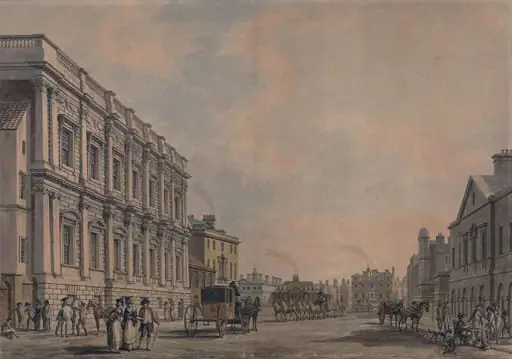 Whitehall, with the Banqueting House
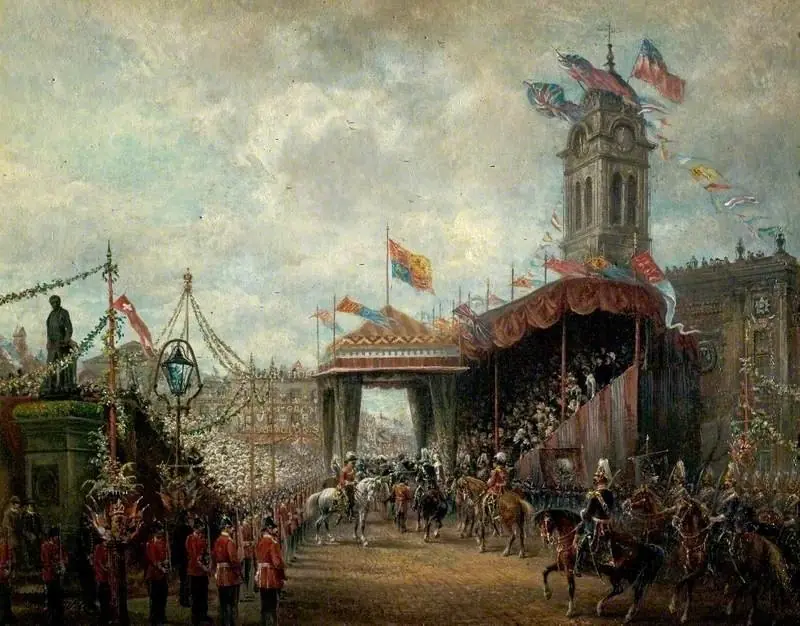 Market Place (The Royal Visit, Derby, 21 May 1891)
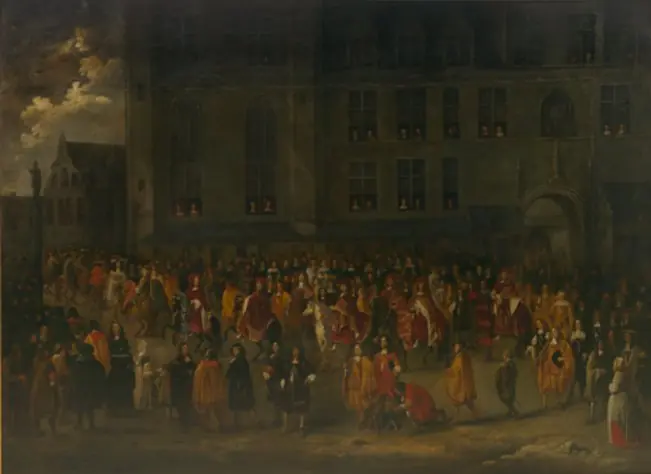 Cavalcade of the Knights of the Golden Fleece leaving the Palace of Brussels
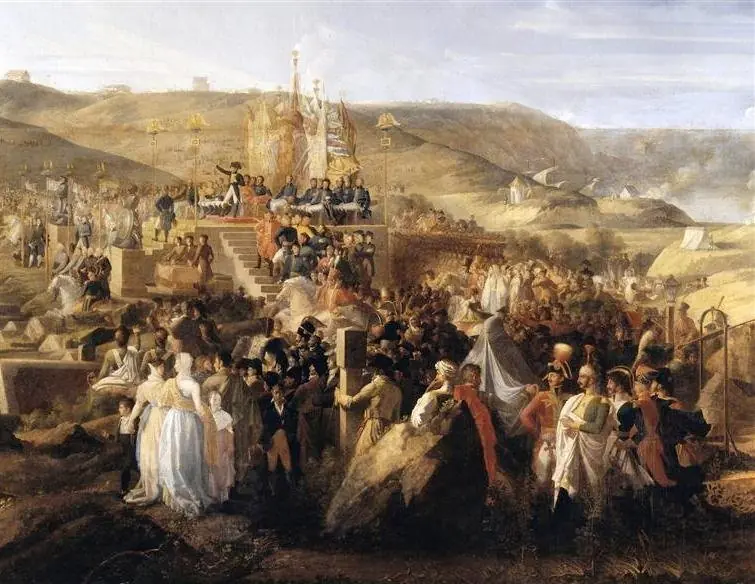 Napoleon I, at the Boulogne camp, distributes the crosses of the Legion of Honor, August 16, 1804
 Attentat de Fieschi. Revue de la Garde nationale, 28 juillet 1835
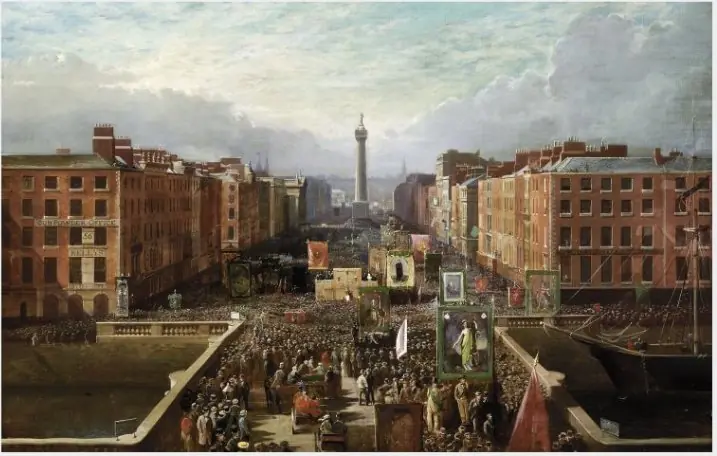 The O'Connell Centenary Celebrations
 Trongate, Glasgow, Looking West from Glasgow Cross (after the Foulis Academy)
 The coronation procession of Joseph II at the Römerberg in Frankfurt am Main
 The Drinking Customs of Society or Worship of Bacchus
 Unveiling of the Monument to Emperor Franz I of Austria on Vienna's Franzensplatz on 19 June 1846