Artwork
Autumn
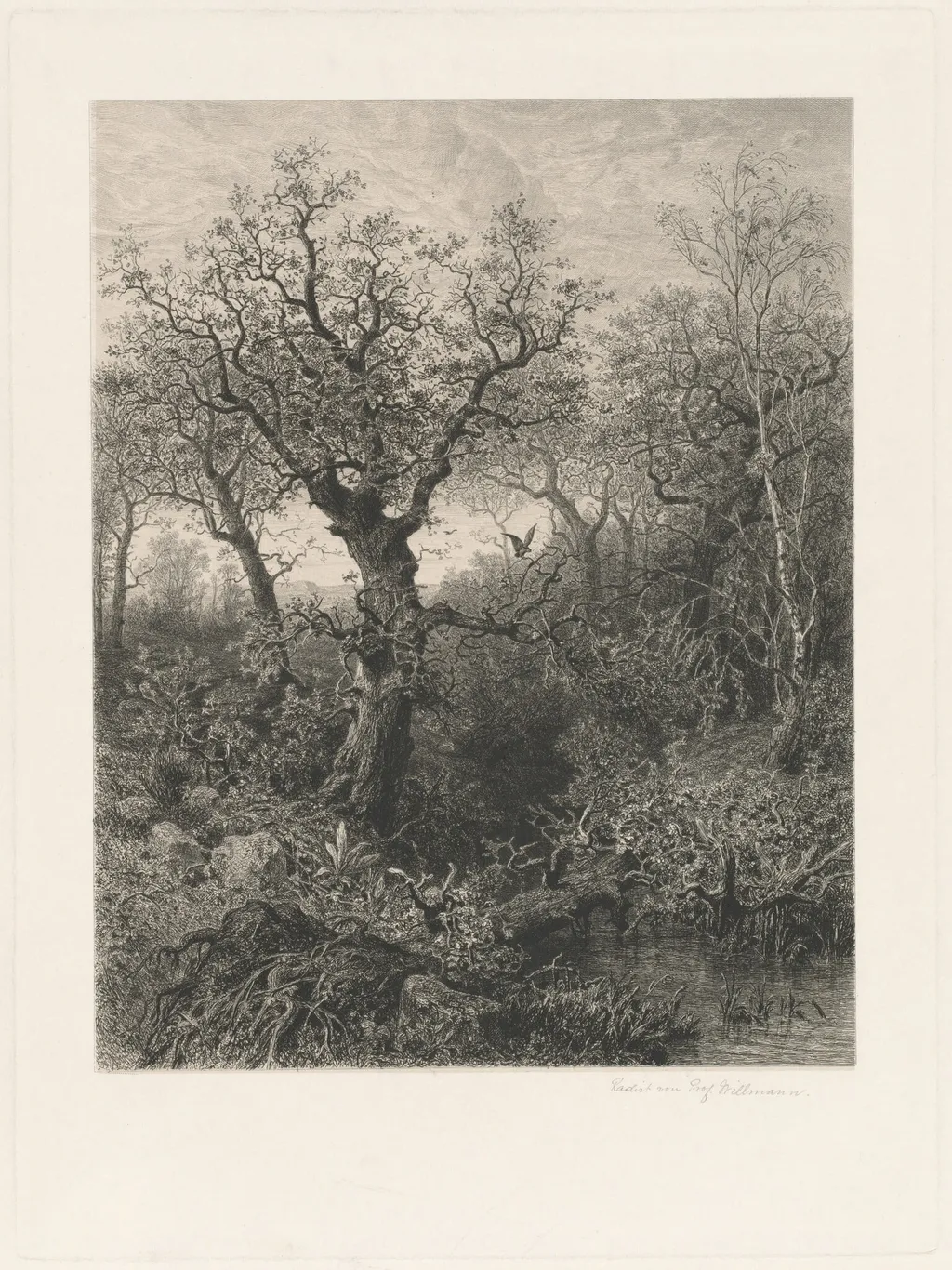
Autumn is an ink print by the Impressionist artist Eduard Willmann. It dates from 1871 and is held in the collection of the National Gallery of Art.
About this work
Overview
Eduard Willmann’s 1871 print titled *Autumn* is an etching executed on chine collé. The work presents a stark, monochrome woodland scene where gnarled trunks and skeletal branches dominate the composition, their roots entwined with stones and a narrow watercourse. A hazy sky recedes behind a line of distant trees, giving the image a sense of depth and atmospheric quiet.
Subject & Meaning
The image captures a forest in late season, emphasizing the bareness of the trees and the tangled undergrowth. By focusing on the tactile qualities of bark and root, the print evokes the transitional character of autumn, suggesting both decay and the lingering vitality of the natural world as it prepares for winter.
Technique & Style
Willmann employed traditional etching methods, incising lines into a metal plate before printing onto a thin paper adhered to a backing sheet—a process known as chine collé. The careful modulation of hatching and cross‑hatching creates a rich tonal range, rendering the bark’s roughness and the misty background with a realistic yet graphic sensibility.
History & Provenance
Created in 1871, the work reflects the artist’s engagement with 19th‑century printmaking trends that favored detailed natural studies. While specific ownership records are limited, the print has been catalogued among Willmann’s oeuvre of landscape etchings, illustrating his interest in seasonal motifs and the technical possibilities of chine collé.
Own this work as a print
Artist & collection


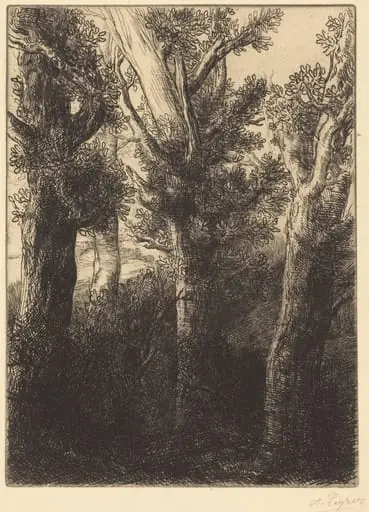 German Forest, Downley
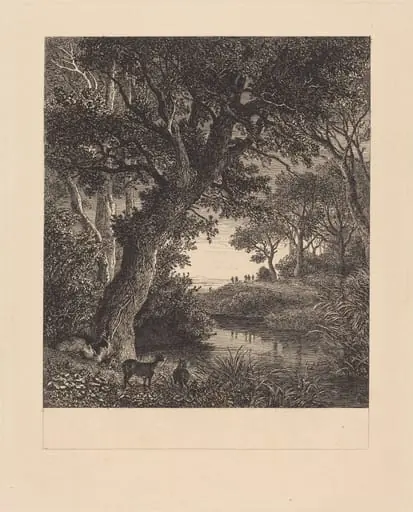 Hunters Leaving a Forest
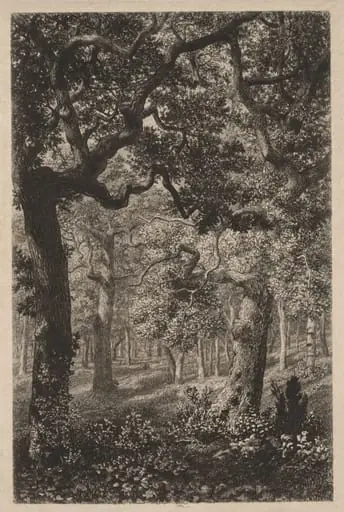 In the Woods
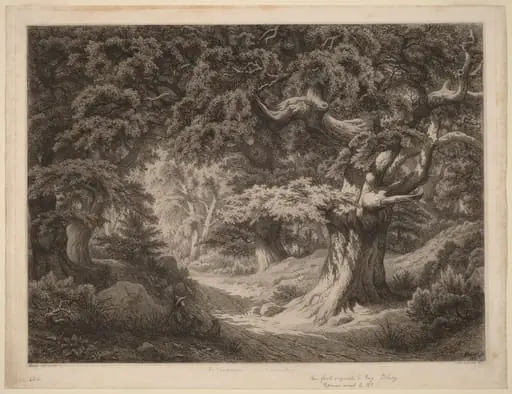 Le Charlemagne (forêt de fontainebleau)
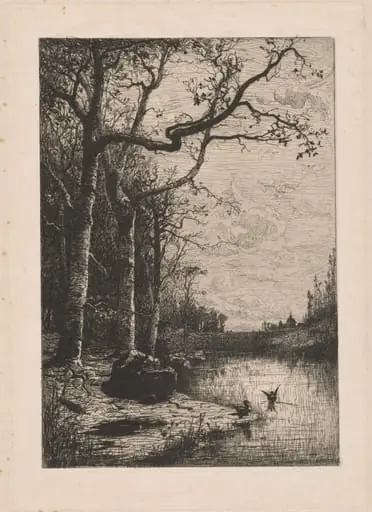 The Marshes of Burbanche (Marais de la Burbanche)
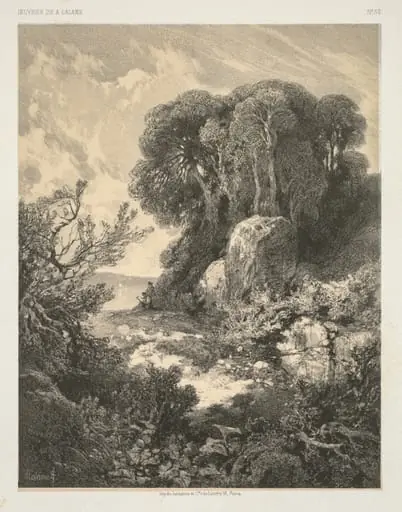 Oeuvres de A. Calame: No. 52
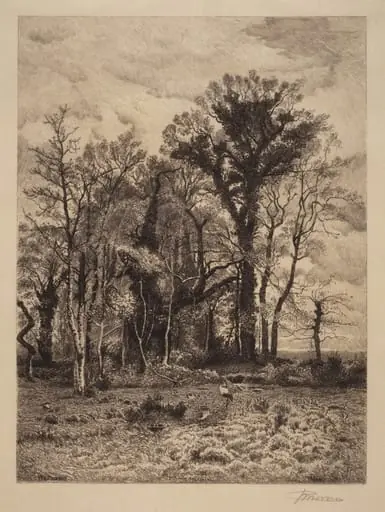 The Edge of the Swamp
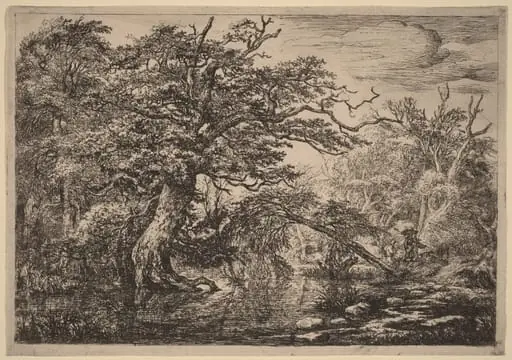 A Forest Marsh with Travelers on a Bank (The Travelers)
 Intérieur de Forêt
 In the Forest (Lisiere de foret)