Artwork
At the Shore
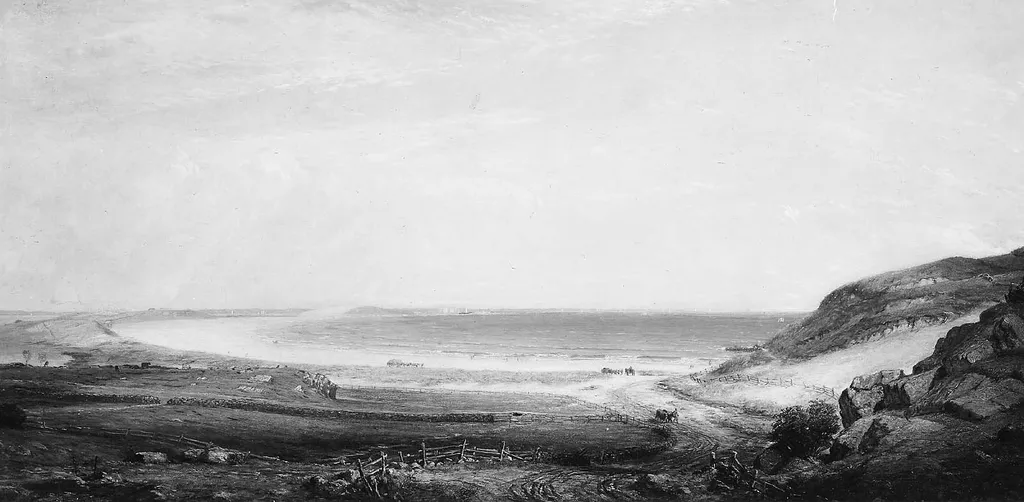
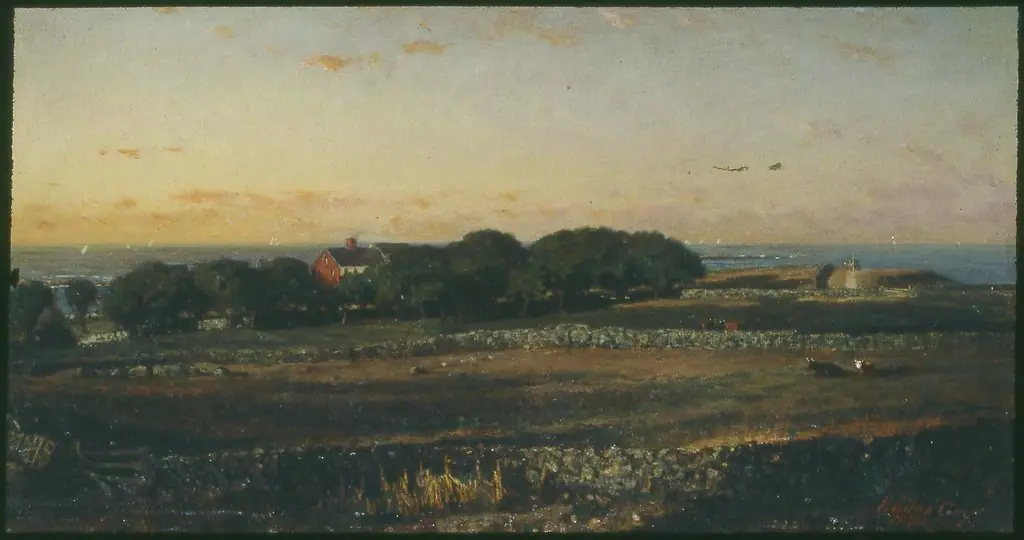
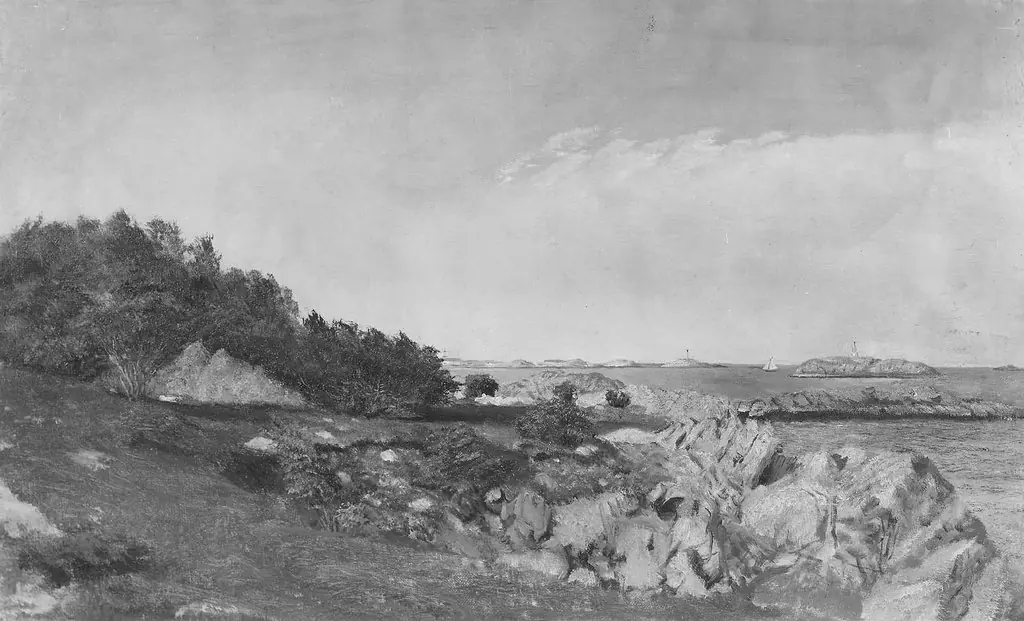
At the Shore is an oil painting by the Hudson River School artist Winckworth Allan Gay. It dates from 1860 and is held in the collection of the Museum of Fine Arts Boston.
About this work
Overview
Painted in 1860 by Winckworth Allan Gay, *At the Shore* is an oil-on-canvas landscape that reflects the quiet realism of mid-19th-century American art.
Painted in 1860 by Winckworth Allan Gay, *At the Shore* is an oil-on-canvas landscape that reflects the quiet realism of mid-19th-century American art. Though associated with the Hudson River School, Gay’s approach shows the influence of European naturalism, particularly the Barbizon school, which emphasized direct observation of nature over idealized grandeur. The work captures a tranquil coastal scene with restrained detail and muted tones.
Subject & Meaning
The painting presents a calm shoreline where land meets water, framed by distant hills and dense trees. Foreground elements—a low stone wall and scattered rocks—anchor the viewer’s gaze without disrupting the scene’s stillness. There is no human presence, suggesting an emphasis on nature’s quiet endurance. The composition invites contemplation rather than narrative, aligning with the period’s growing reverence for untouched landscapes.
Technique & Style
Gay employed soft brushwork and a restrained palette to evoke atmospheric depth, avoiding dramatic contrasts in favor of subtle gradations of light and color. The horizon is low, allowing the sky and water to dominate, while the foreground’s textured rocks and foliage are rendered with careful observation. His technique reflects a synthesis of American topographical precision and European tonal harmony, characteristic of artists bridging the Hudson River School and Barbizon traditions.
History & Provenance
Created during Gay’s return to the United States after years of study in France and travel in the Far East, *At the Shore* emerged from a period of intense artistic exchange. The painting entered the collection of the Museum of Fine Arts, Boston, where it remains today. Its preservation reflects early institutional interest in works that documented American naturalism through a cosmopolitan lens.
Context
In the 1860s, American artists increasingly sought to define a national visual identity through landscape. While the Hudson River School often celebrated sublime wilderness, Gay’s work, like that of his contemporaries influenced by France, favored intimate, unembellished scenes. *At the Shore* exemplifies this shift toward quietude, mirroring broader cultural interests in nature as a space for reflection rather than conquest.
Legacy
Though less widely known than his peers, Gay contributed to the evolution of American landscape painting by integrating European naturalist methods into domestic subjects. *At the Shore* stands as a quiet testament to this synthesis, influencing later generations who prioritized mood and observation over spectacle. Its presence in a major museum underscores its role in documenting a nuanced chapter of American art history.
Artist & collection
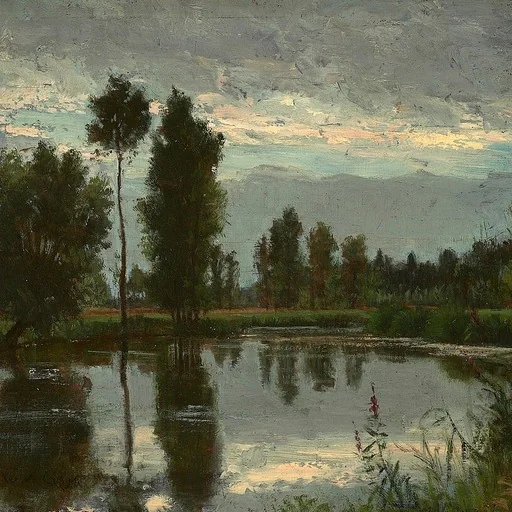
Artist
Winckworth Allan Gay (August 18, 1821 – February 23, 1910) was an American landscape artist and was one of the first American artists to promote the Barbizon style of pastoral landscape painting.

 Udsigt over Skanderborg fra Edelsborgmark
 Seascape with Clouds (The Sound Coast?)
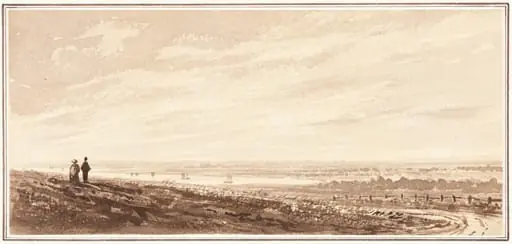 A Couple Admiring a View of the River Ouse(?), Lincolnshire
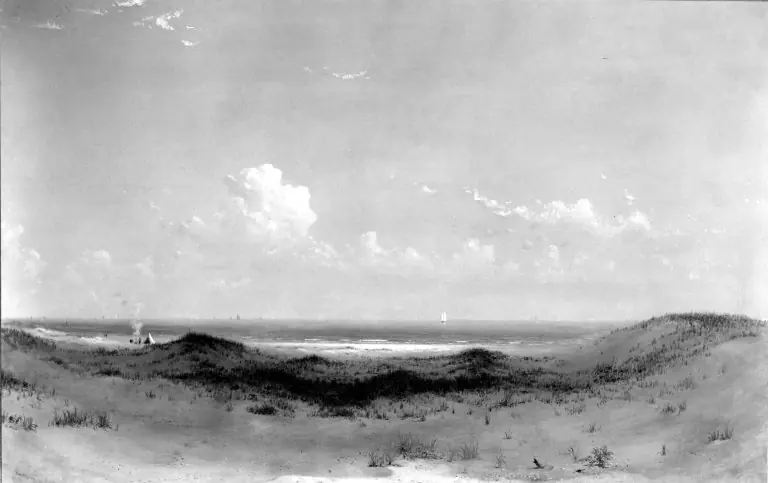 A Glimpse of the Sea
 Vejle Eng. Eftermiddag
 Vejle Eng. Eftermiddag
 Italianate Landscape
 Mondscheinlandschaft (Art des)
 On the Coast of France
 Flodlandskab
 Bakket landskab med bønderhuse. I baggrunden en sø
 Rocky Coast with Light House