Artwork
In the Fields
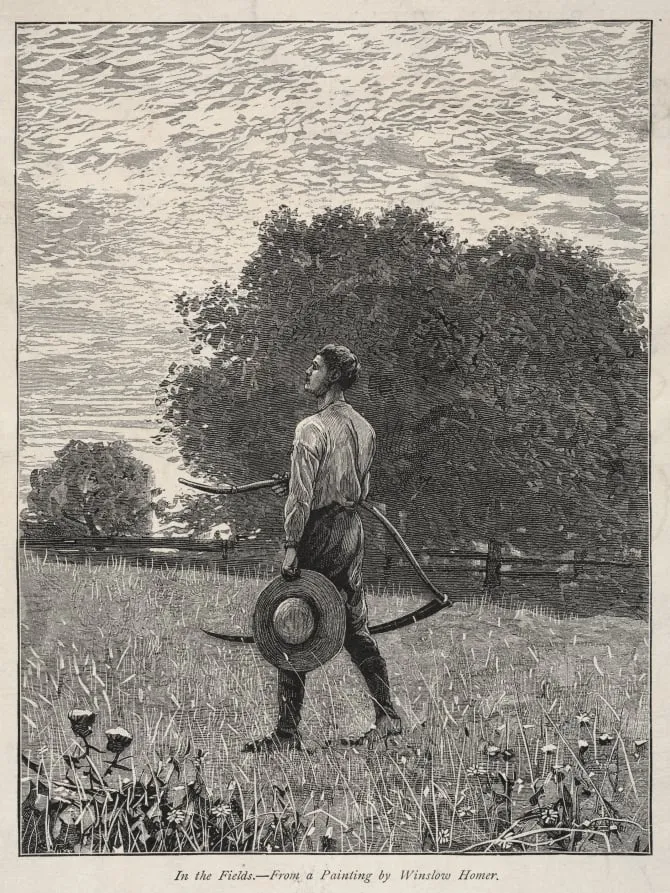
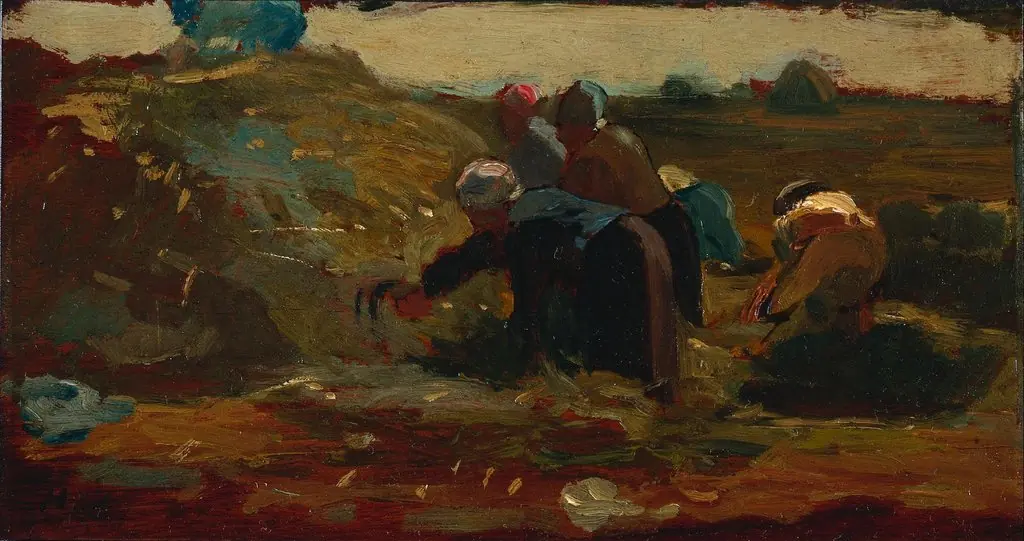
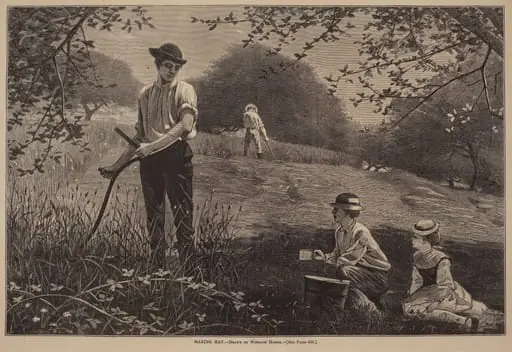
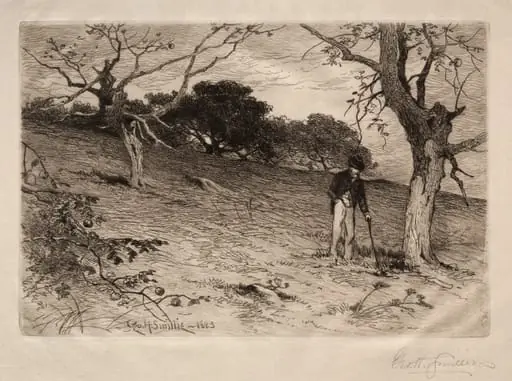
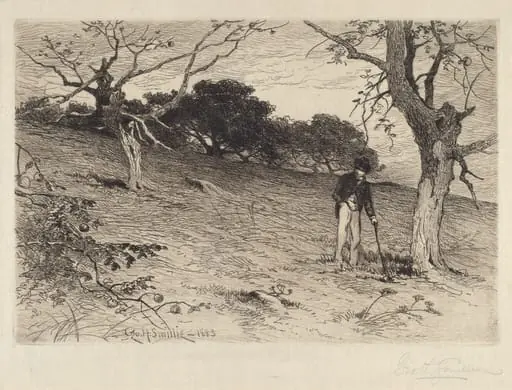
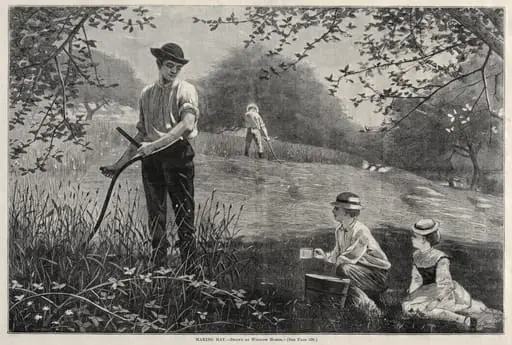
In the Fields is a print by the Impressionist artist Winslow Homer. It dates from 1879 and is held in the collection of the Cleveland Museum of Art.
About this work
Overview
Unlike his earlier illustrations for periodicals, this work reflects his deepening focus on quiet, unidealized moments in American rural life.
Created around 1879, *In the Fields* is a watercolor by Winslow Homer that captures a solitary laborer moving through a rural landscape. Unlike his earlier illustrations for periodicals, this work reflects his deepening focus on quiet, unidealized moments in American rural life. The scene avoids dramatic narrative, instead emphasizing presence and atmosphere through careful observation of light and terrain.
Subject & Meaning
The figure, a farmworker carrying a scythe and hat, moves alone through tall grass under a cloudy sky. His posture suggests routine labor rather than heroic effort, aligning with Homer’s interest in the dignity of everyday work. The absence of other figures or signs of harvest implies solitude and continuity, reinforcing themes of endurance and the quiet rhythm of agricultural life in post-Civil War America.
Technique & Style
Homer employed watercolor with deliberate, fluid brushwork to convey texture and movement. The grass is rendered in layered washes of green and ochre, while the sky’s diffuse light is suggested through pale grays and soft edges. Visible strokes give the surface energy without sacrificing realism. The muted palette—dominated by earth tones and cool grays—enhances the painting’s subdued, contemplative mood.
History & Provenance
Painted during Homer’s period of retreat to rural New England, *In the Fields* emerged from his growing detachment from urban illustration work. It was likely created in Prout’s Neck, Maine, where he spent summers observing local laborers. The work entered a public collection in the early 20th century and has since been recognized as part of his significant watercolor output from the 1870s and 1880s.
Context
In the late 1870s, American art increasingly turned toward scenes of ordinary life, influenced by realism and emerging impressionist tendencies. Homer’s work aligned with this shift but remained distinct in its restraint. Unlike European Impressionists, he avoided bright color and loose brushwork for effect, instead using watercolor’s transparency to evoke atmosphere and the physical weight of labor.
Legacy
Though not widely exhibited in his lifetime, *In the Fields* exemplifies Homer’s mature approach to watercolor as a serious medium. It influenced later American realists who valued emotional restraint and observational precision. Today, it stands as a quiet testament to his ability to transform mundane rural moments into enduring visual studies of human presence within nature.
Artist & collection
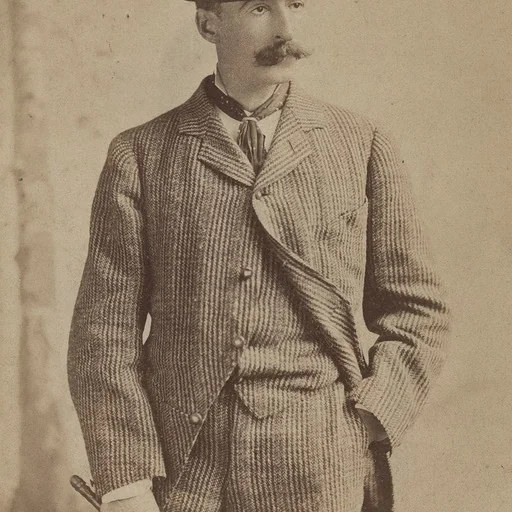
Artist
Winslow Homer (February 24, 1836 – September 29, 1910) was an American landscape painter and illustrator, best known for his marine subjects.