Artwork
Summer Day
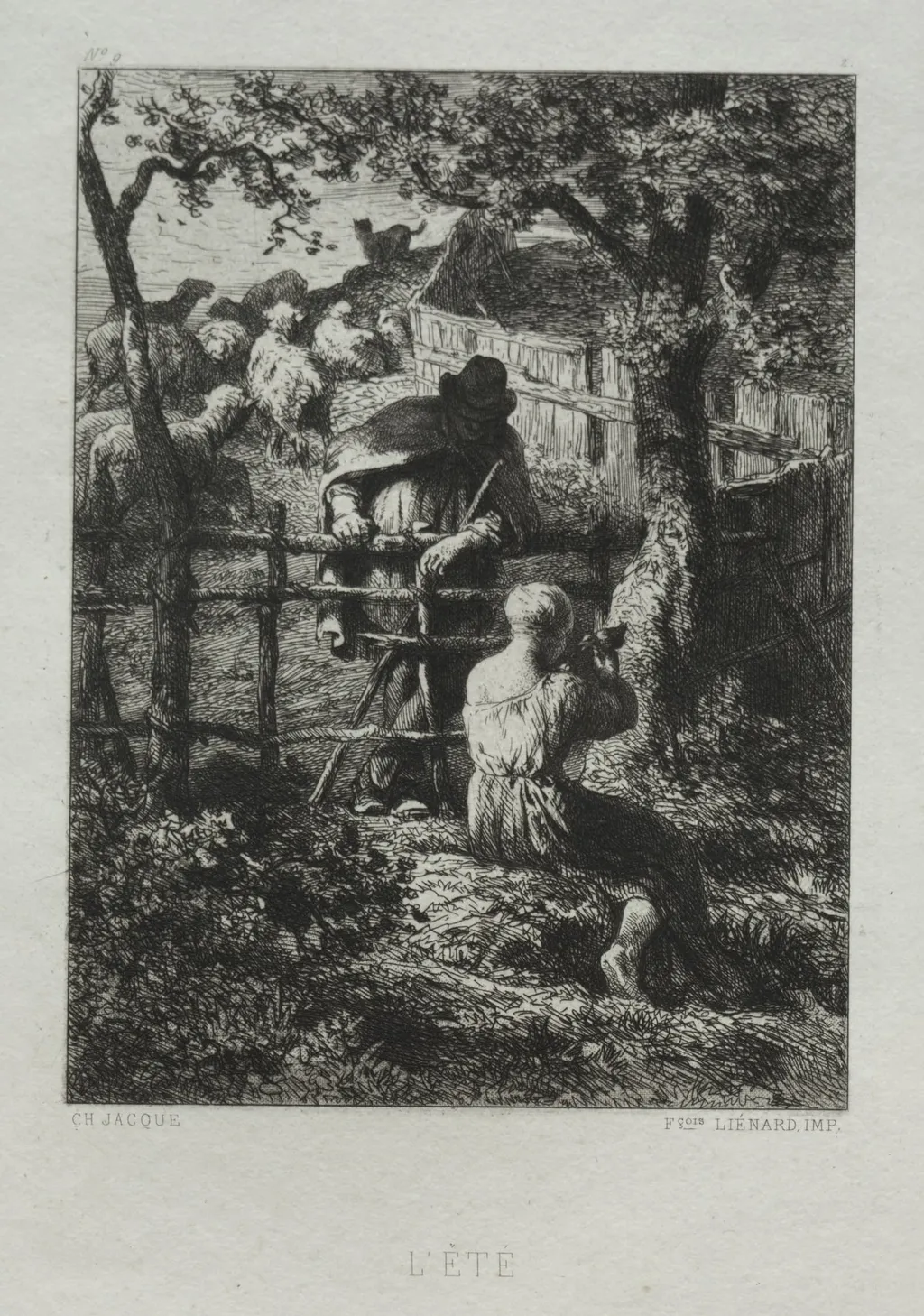
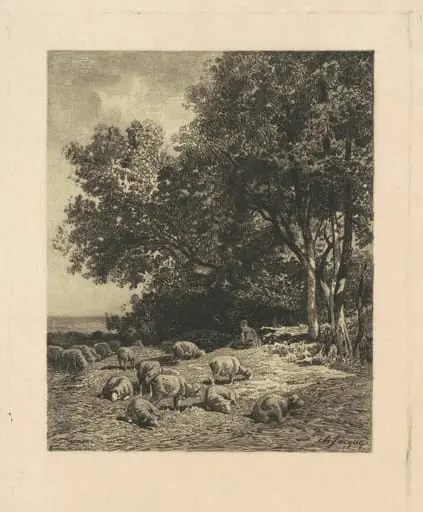
Summer Day is a print by the Impressionist artist Charles Jacque. It dates from 1864 and is held in the collection of the Cleveland Museum of Art.
About this work
Overview
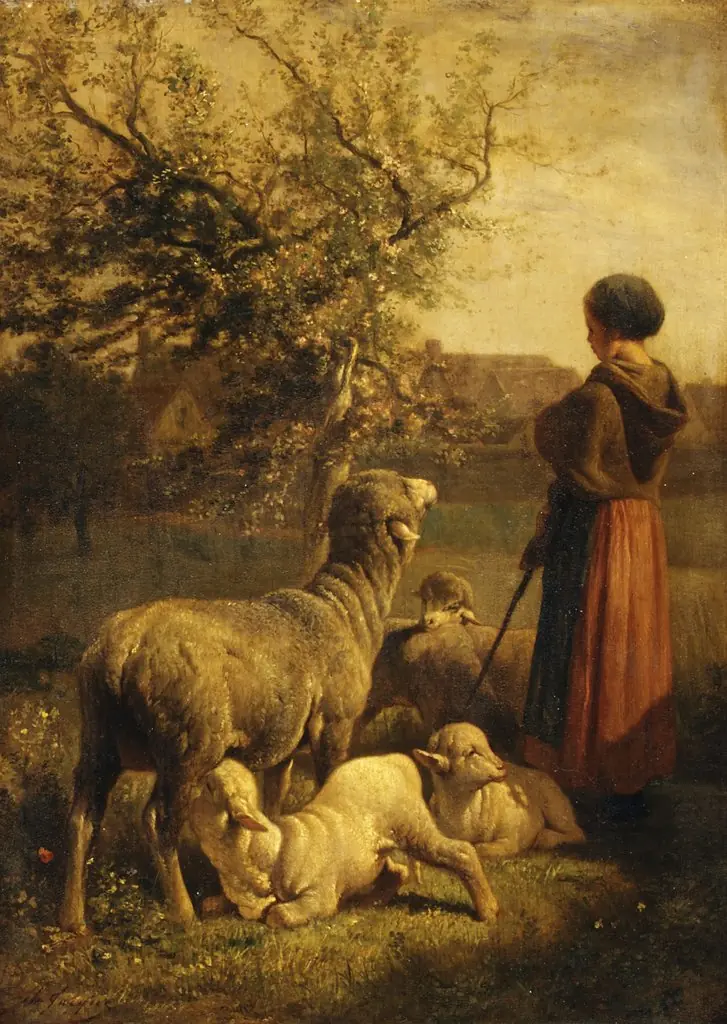
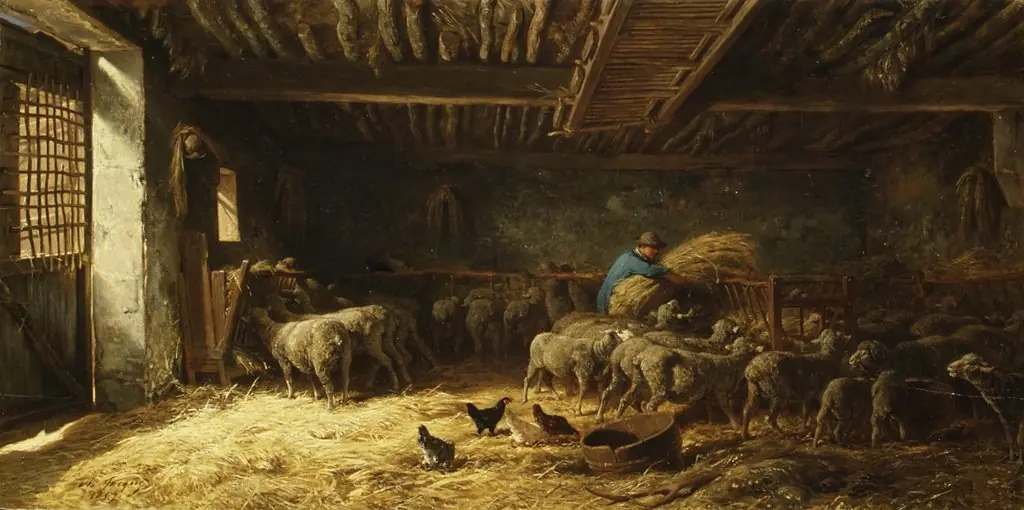
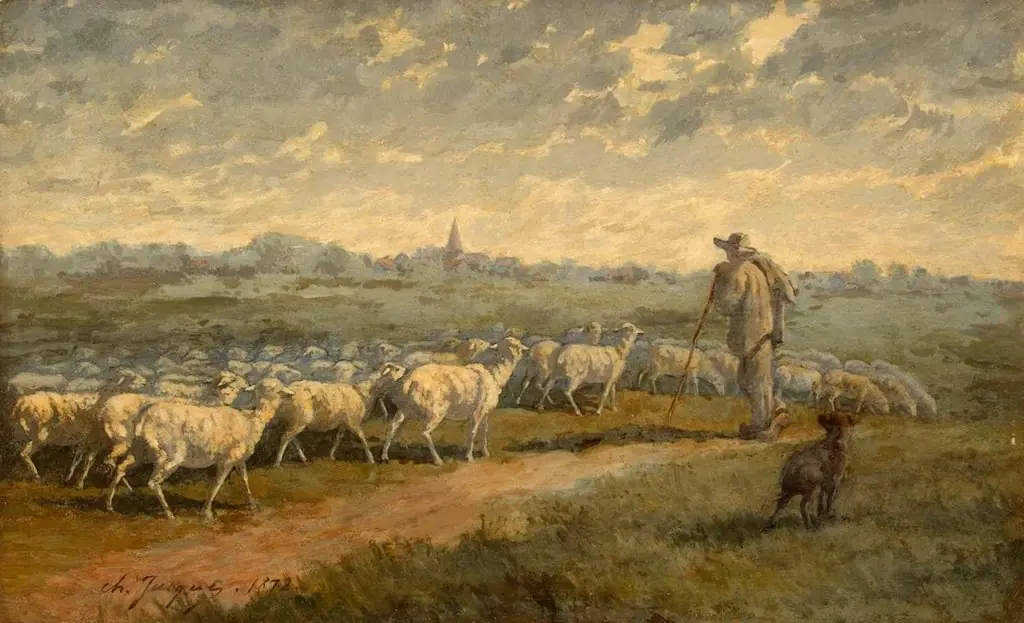
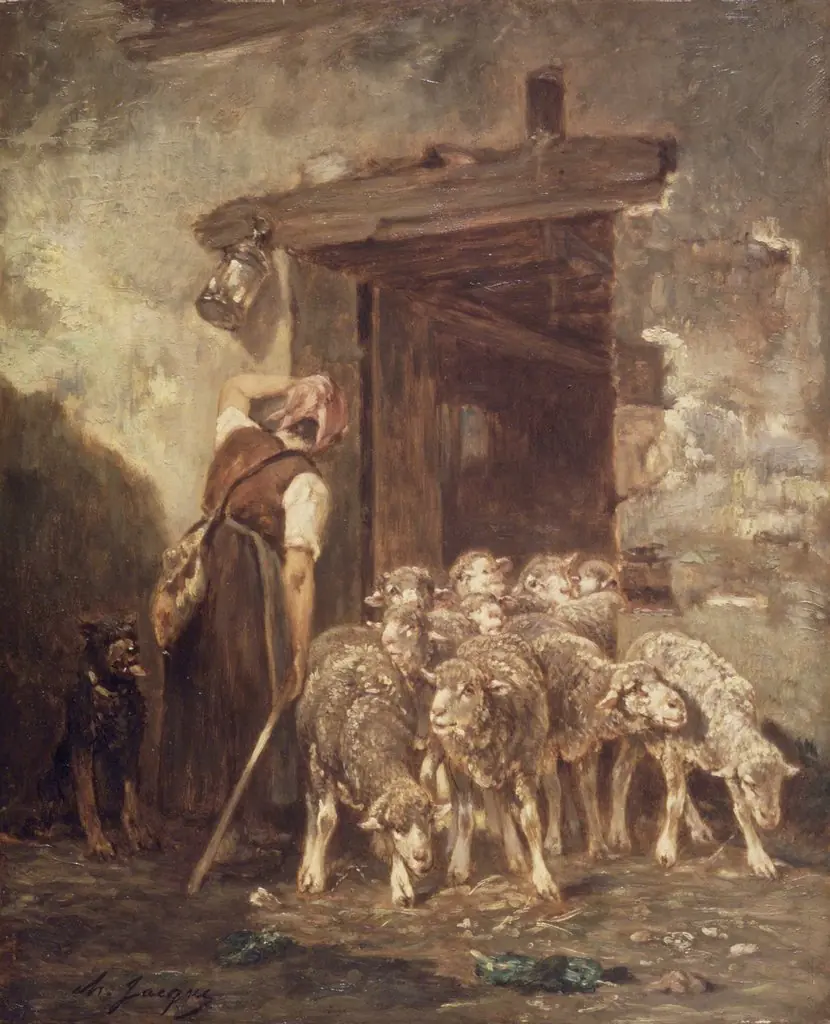
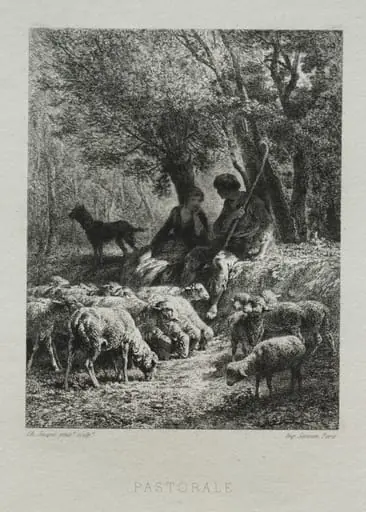
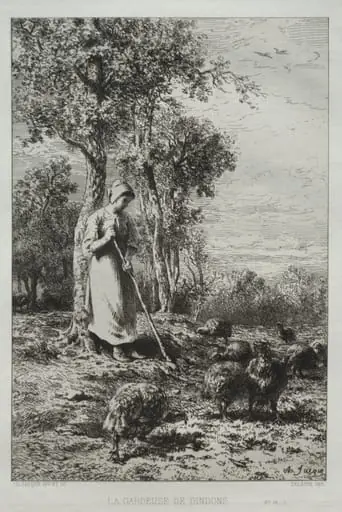
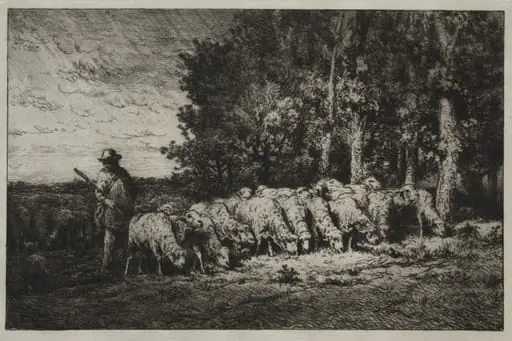
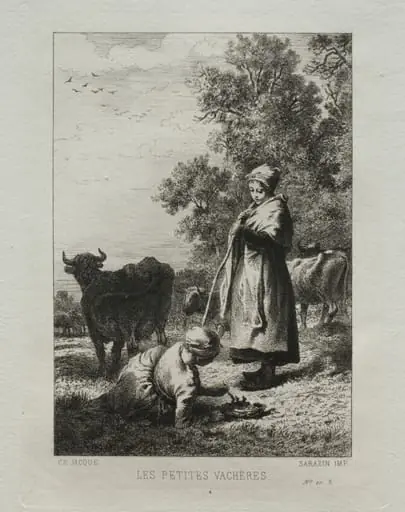
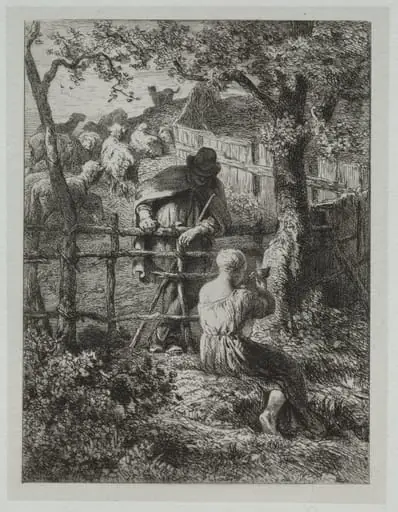
Created in 1864, *Summer Day* is a print by French artist Charles‑Émile Jacque, a figure linked to the Barbizon School. The work presents a quiet countryside tableau, emphasizing the everyday rhythm of rural life through a simple composition that centers on a man seated on a fence amid grazing sheep.
Subject & Meaning
The image captures a moment of repose: a solitary figure rests on a wooden fence while a flock of sheep spreads across a verdant field. The scene conveys a sense of calm and the harmonious relationship between humans, animals, and the landscape, reflecting the Barbizon interest in portraying authentic, unidealized rural existence.
Technique & Style
Jacque employs a restrained palette of muted earth tones for the figure and warm, sun‑lit hues for the surrounding meadow. Delicate gradations of light and shadow model the forms, while the texture of the fence and the varied tones of the sheep’s wool demonstrate careful attention to surface detail, characteristic of his printmaking approach.
History & Provenance
The print emerged during Jacque’s collaboration with contemporaries such as Jean‑François Millet, a period when the Barbizon group sought to document the French countryside. Though specific ownership records are limited, the work remains representative of Jacque’s mid‑nineteenth‑century output, illustrating his commitment to pastoral subjects within the movement’s aesthetic.
Artist & collection
Artist
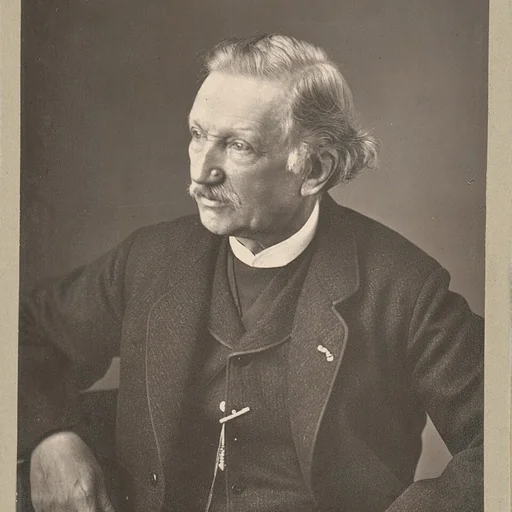
Charles-Émile Jacque (23 May 1813 – 7 May 1894) was a French painter of Pastoralism and engraver who was, with Jean-François Millet, part of the Barbizon School. He first learned to engrave maps when he spent seven years in the French Army.