Artwork
Untitled
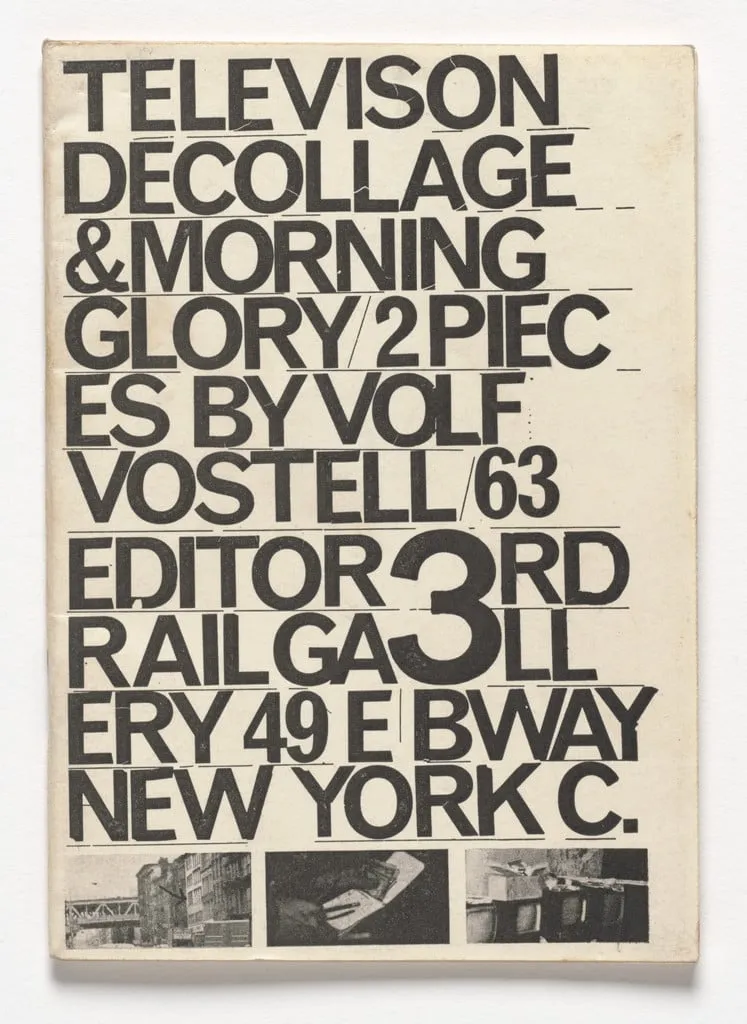
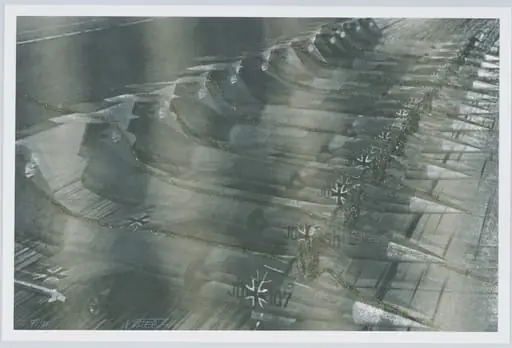
Untitled is a print by Wolf Vostell. It dates from 1963 and is held in the collection of the Museum of Modern Art.
About this work
You’re holding a small book with torn TV screens glued to its pages. The paper is yellowed, the edges rough.
Vostell called this an “artist’s book,” but it’s really a protest. In 1963, TV was taking over homes. He ripped the screens apart to show how the news could be torn, too. The glue is still sticky under the plastic.
Look up the technique called *impasto*—thick paint you can almost feel.
Overview
Created in 1963 by German avant‑garde artist Wolf Vostell, this untitled work takes the form of a modestly sized artist’s book.
Created in 1963 by German avant‑garde artist Wolf Vostell, this untitled work takes the form of a modestly sized artist’s book. The object is part of the permanent collection of the Museum of Modern Art in New York. Its physicality is striking: yellowed paper pages with uneven, torn edges are interspersed with fragments of cathode‑ray television screens that have been glued directly onto the sheets.
Subject & Meaning
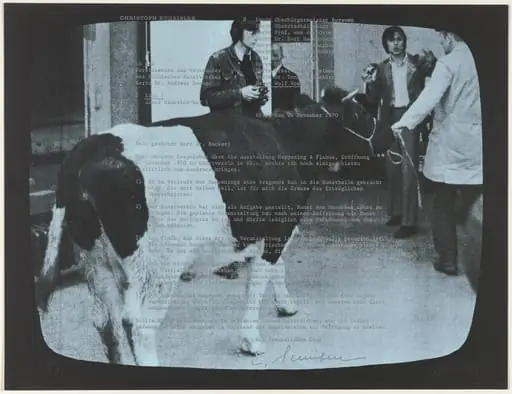
Vostell presented the book as a protest against the growing dominance of television in domestic life during the early 1960s. By literally ripping apart TV screens and embedding them in the pages, he suggested that the mediated news and images transmitted by broadcast could be dissected, questioned, and even destroyed, urging viewers to consider the medium’s influence on perception.
Technique & Style
The work combines collage and assemblage, employing a tactile, almost impasto‑like quality where the glued plastic remains tacky beneath a thin protective layer. The rough, irregular paper edges and the three‑dimensional screen fragments give the book a sculptural presence, blurring the line between print, object, and performance.
History & Provenance
First produced in Vostell’s studio in 1963, the piece entered the Museum of Modern Art’s collection as part of its acquisition of post‑war European experimental art. It has remained in the museum’s holdings, occasionally displayed in exhibitions that explore the intersection of media, technology, and conceptual art.
Context
The early 1960s saw television become a ubiquitous fixture in Western households, reshaping news consumption and cultural discourse. Vostell’s book reflects the Fluxus‑inspired critique of mass media prevalent among contemporary artists, aligning with broader concerns about the passive reception of televised content and the erosion of critical engagement.
Artist & collection

Artist
Wolf Vostell was a German painter and sculptor, considered one of the early adopters of video art, street art and installation art and pioneer of Happenings and Fluxus.