Artwork
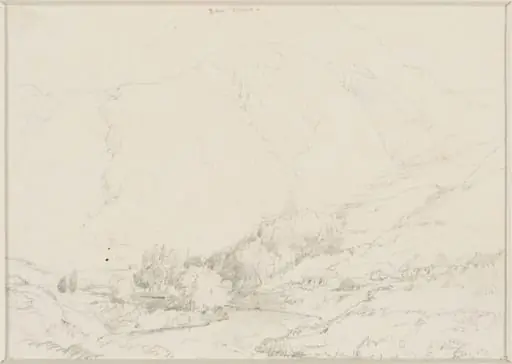
Tally Llyn from Llyn Trigrain
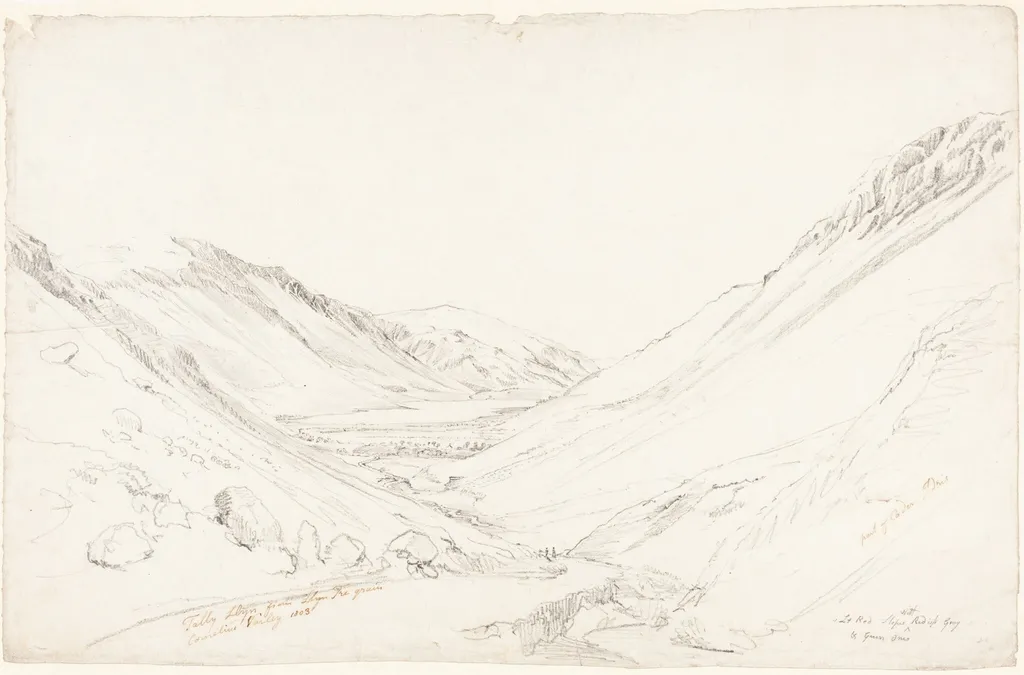
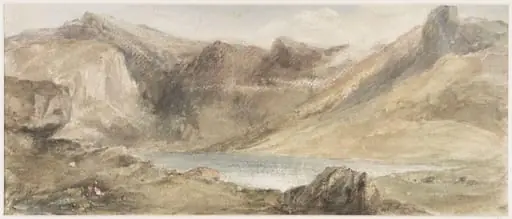
Tally Llyn from Llyn Trigrain is a graphite drawing by the Romanticist artist Cornelius Varley. It dates from 1803 and is held in the collection of the National Gallery of Art.
About this work
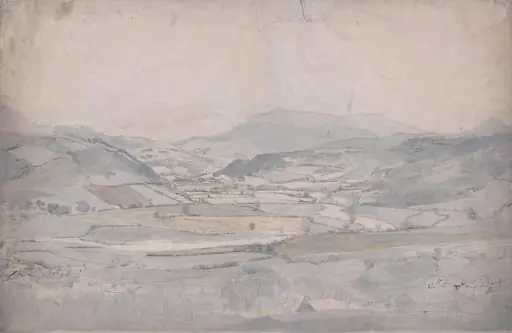
A tiny village sits in the valley, barely visible, and the mountains rise steeply in the background.
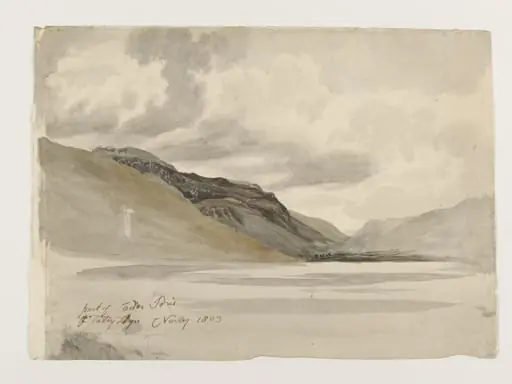
This sketch shows rolling hills and valleys drawn in soft, light pencil lines. The paper is mostly blank, with just a few darker strokes to mark shadows and distant trees. A tiny village sits in the valley, barely visible, and the mountains rise steeply in the background.
The artist signed it in the corner—Cornelius Varley—and dated it 1803. The loose, quick lines suggest they were working fast, maybe outdoors.
Look up Romanticism next to see how artists like this used nature to express big emotions.
Overview
Tally Llyn from Llyn Trigrain is a graphite drawing on wove paper created by Cornelius Varley in 1803. The artist was a British watercolorist, printmaker, and inventor of optical instruments.
Technique & Style
The drawing features soft, light pencil lines capturing rolling hills and valleys. Darker strokes indicate shadows and distant trees, while a tiny village is subtly rendered in the valley. The loose, quick lines suggest the artist worked rapidly, possibly outdoors.
Subject & Meaning
The scene depicts a landscape with mountains rising steeply in the background. The emphasis on topography and the use of subtle shading convey a sense of depth and observation.
History & Provenance
The drawing is signed and dated by the artist in the corner, confirming its creation in 1803.
Artist & collection

Artist
Cornelius Varley, FRSA (21 November 1781 – 2 October 1873) was a British painter, mostly in watercolour, printmaker and optical instrument-maker. He invented the graphic telescope and the graphic microscope.

 Ben Nevis
 Killarney
 Mt. Sinai
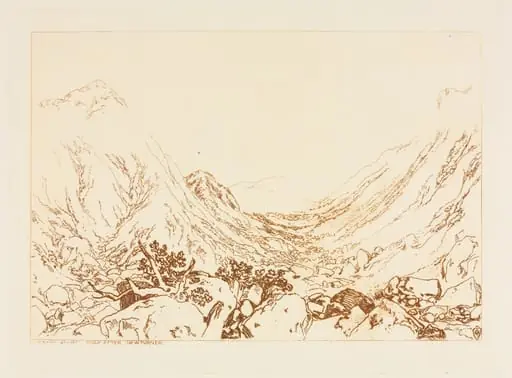 Ben Arthur, Scotland
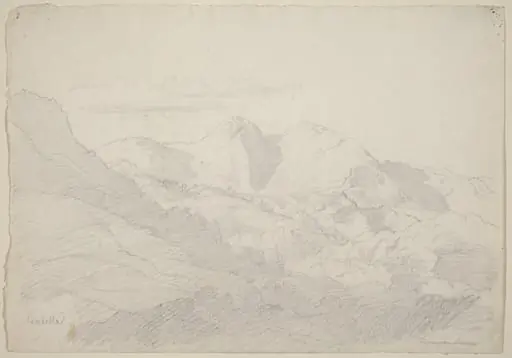 The Sabine Hills and Rocca Santo Stefano Seen from Civitella
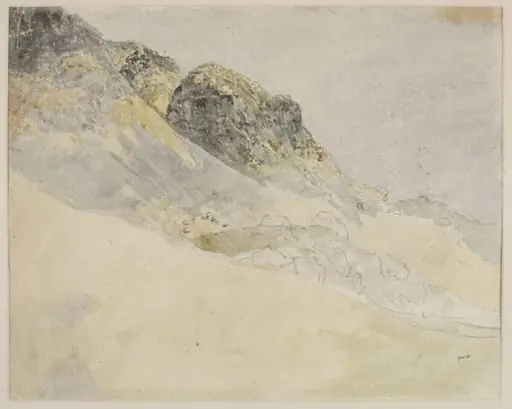 Untitled
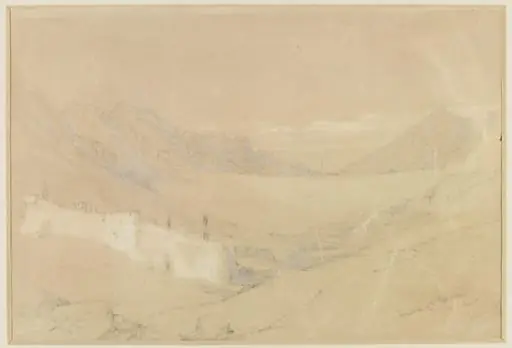 Convent of St. Katherine, Mount Sinai
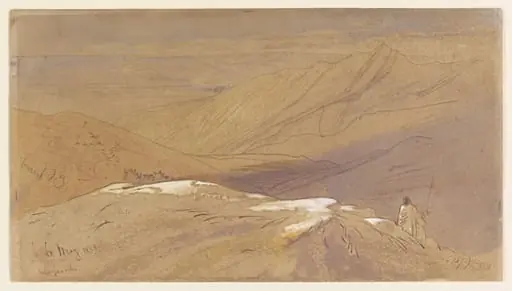 Near Jericho
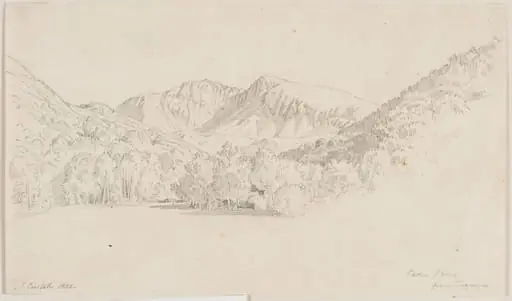 View of Cader Idris, Merioneth
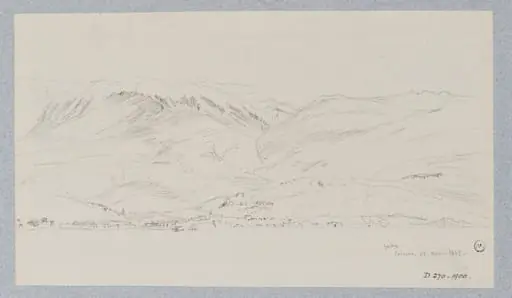 Sketches made during the Campaign of 1854-55 in the Crimea, Circassia and Constantinople
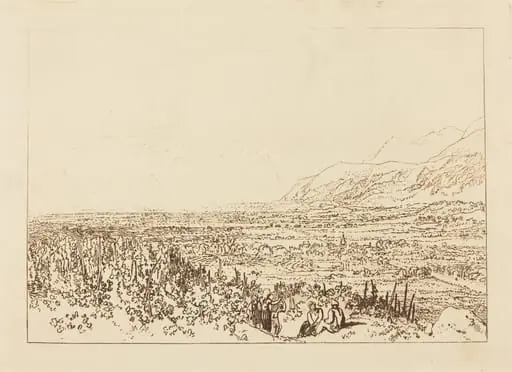 Chain of Alps from Grenoble to Chamberi
 Llyn Idwal, North Wales