Artwork
World Fliers, Portsmouth
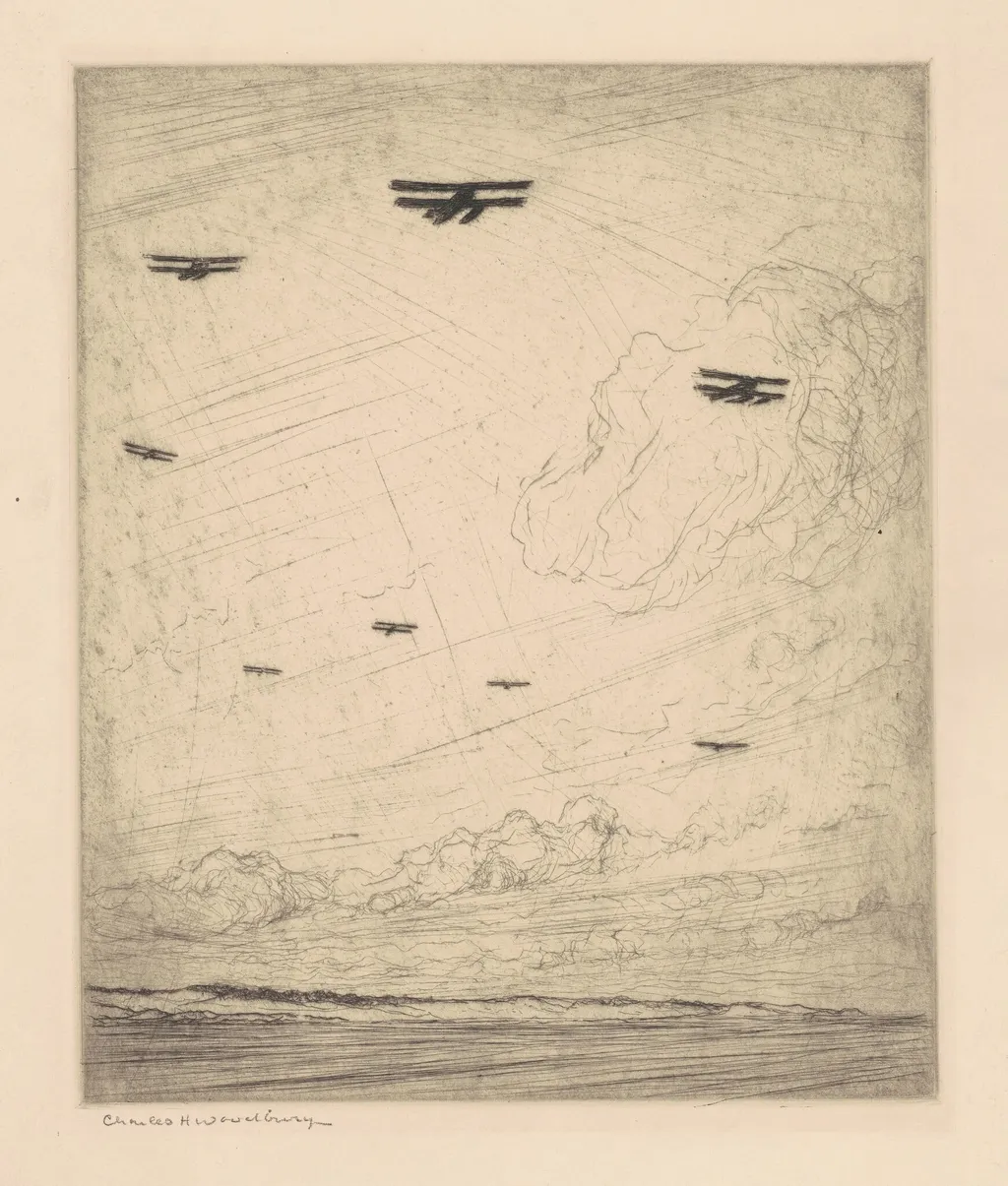
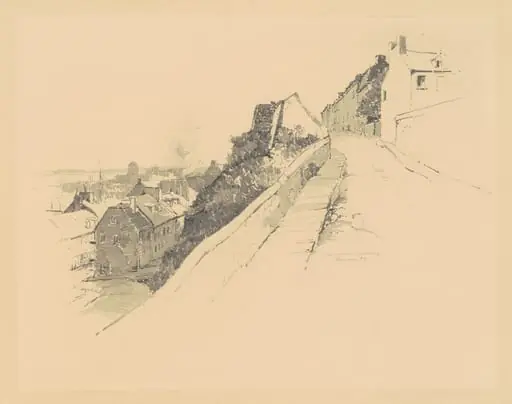
World Fliers, Portsmouth is an ink print by Charles H. Woodbury. It dates from 1924 and is held in the collection of the National Gallery of Art.
About this work
The lines are sharp and crisp, like a sketch you might make with a pen.
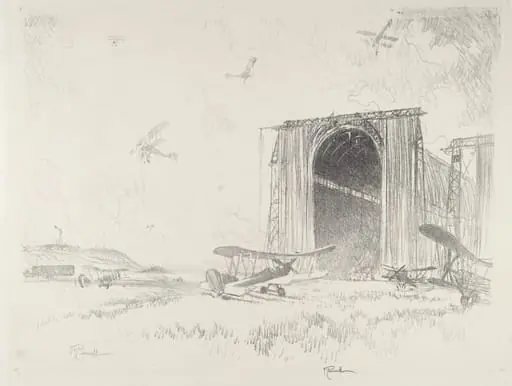
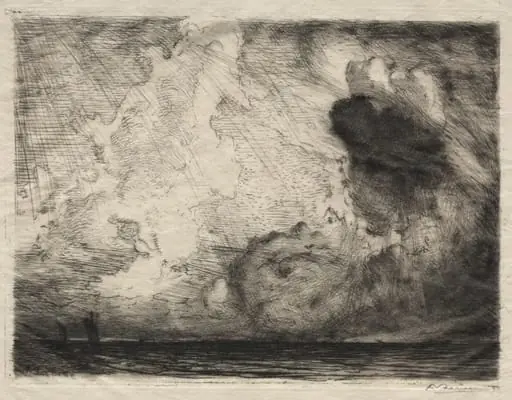
This etching shows planes flying over a busy harbor. The planes are small dots against the water and docks below. The lines are sharp and crisp, like a sketch you might make with a pen.
It’s from 1924, when flying was still new and exciting. The artist used two printmaking tools: etching and drypoint. Etching eats lines into metal with acid. Drypoint scratches lines freehand for a rougher look.
Want to see more? Look up Woodbury, Charles H.
Overview
World Fliers, Portsmouth is a black-and-white print produced in 1924 by American artist Charles H. Woodbury. Executed on laid paper, the work combines etching and dry‑point processes to render a bustling harbor scene under the passage of aircraft. The composition balances the industrial activity of the docks with the emerging presence of aerial travel, reflecting a moment of technological transition.
Subject & Meaning
The image depicts several airplanes traced as diminutive specks soaring above a crowded Portsmouth harbor. Vessels, piers, and waterfront structures occupy the lower plane, while the sky is occupied by the fleeting silhouettes of the aircraft. The juxtaposition underscores the encroachment of modern aviation upon traditional maritime commerce, suggesting both the dynamism of the era and the coexistence of old and new modes of transport.
Technique & Style
Woodbury employed a dual printmaking approach: acid‑etched lines were incised into a metal plate, producing precise, clean edges, while dry‑point was used to manually scratch additional marks, yielding a slightly rougher, velvety texture. The resulting lines are sharp and crisp, reminiscent of a pen sketch, allowing fine detail in the water and dock while preserving the fleeting quality of the aircraft.
Context
Created in 1924, the work emerges at a time when powered flight was still a novelty and public fascination with aircraft was high. Portsmouth, a significant naval port, would have been a logical backdrop for illustrating the intersection of maritime and aerial technologies, capturing the optimism and curiosity that surrounded early twentieth‑century aviation.
History & Provenance
The print is catalogued as a work by Charles H. Woodbury, known for his marine subjects and printmaking expertise. While specific ownership history is not detailed, the piece is recognized within collections that document American printmaking of the 1920s, reflecting Woodbury’s continued interest in depicting contemporary industrial scenes.
Artist & collection