Artwork
Painting of proposed conversion of Bromsgrove House to motor car showroom 1962
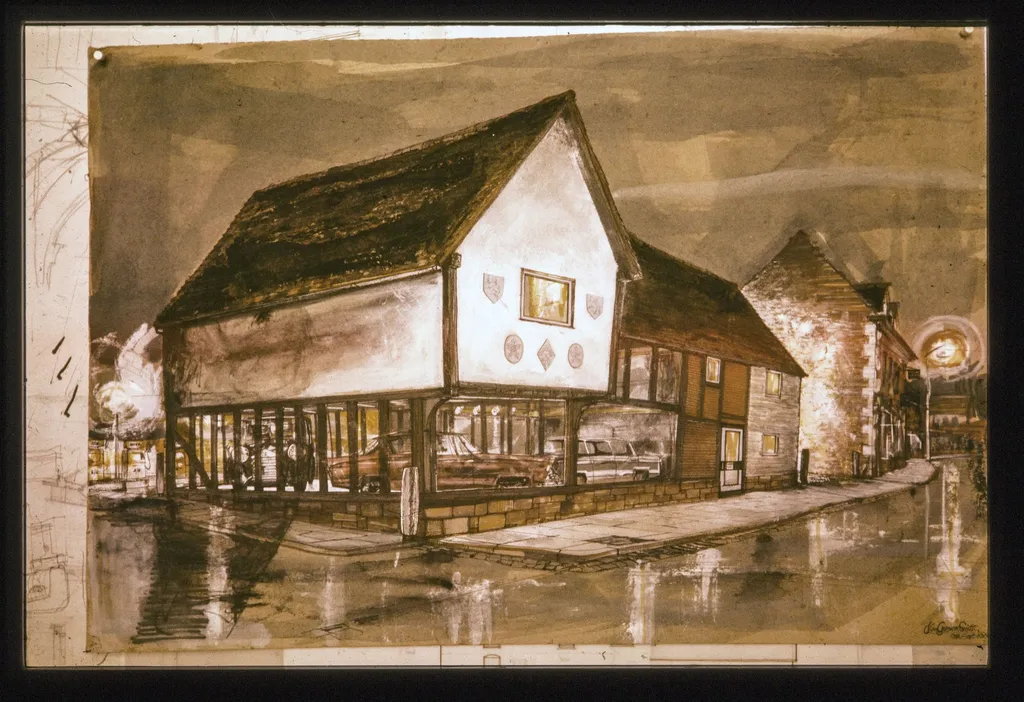
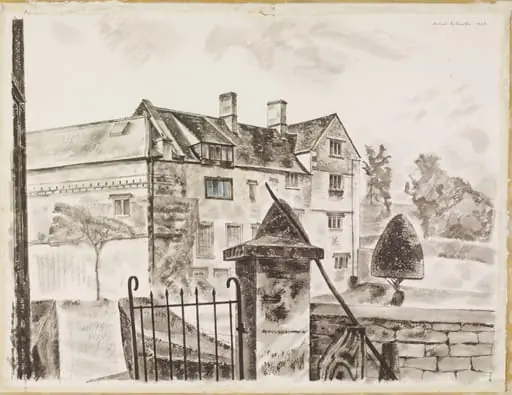
Painting of proposed conversion of Bromsgrove House to motor car showroom 1962 is an unspecified painting by Worcestershire Archive and Archaeology Service. It is held in the collection of the Archaeology Data Service. The image depicts a modest two‑storey structure with a pitched roof, its façade marked by a shallow porch supported by columns.
About this work
Overview
The image depicts a modest two‑storey structure with a pitched roof, its façade marked by a shallow porch supported by columns. Beneath the roof, a row of automobiles is parked, suggesting a commercial use. The surrounding street appears empty, its wet pavement catching the reflected glow of the building’s illuminated windows.
Subject & Meaning
The composition presents an architectural proposal: an existing residence, referred to as Bromsgrove House, reimagined as a motor‑car showroom. By placing vehicles within the interior space, the work visualises the adaptive reuse of domestic architecture for mid‑century commercial purposes, highlighting the tension between historic form and modern function.
Technique & Style
The artist employs chiaroscuro, contrasting the warm, diffused light spilling from the windows with the deep shadows of the night street. This lighting scheme accentuates the building’s simple geometry and creates a reflective surface on the wet pavement, enhancing the sense of atmosphere and depth.
Context
Created in 1962, the painting reflects a period when automobile culture was expanding rapidly in Britain, prompting many older structures to be repurposed for retail and service functions. The proposal illustrates contemporary attitudes toward modernization and the practical conversion of heritage buildings to meet new economic demands.
Legacy
While the work itself remains an illustrative study rather than a finished commission, it serves as a visual record of mid‑twentieth‑century urban planning ideas. It offers insight into how designers and artists of the era envisioned the integration of automotive commerce within existing architectural fabrics.
Artist & collection
Artist
Worcestershire Archive and Archaeology Service
This is a painting of Bromsgrove House from 1962, back when the plan was to turn it into a shiny new car showroom.