Artwork
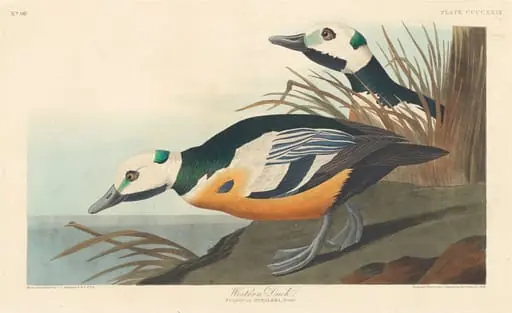
Steller's Eider, Male
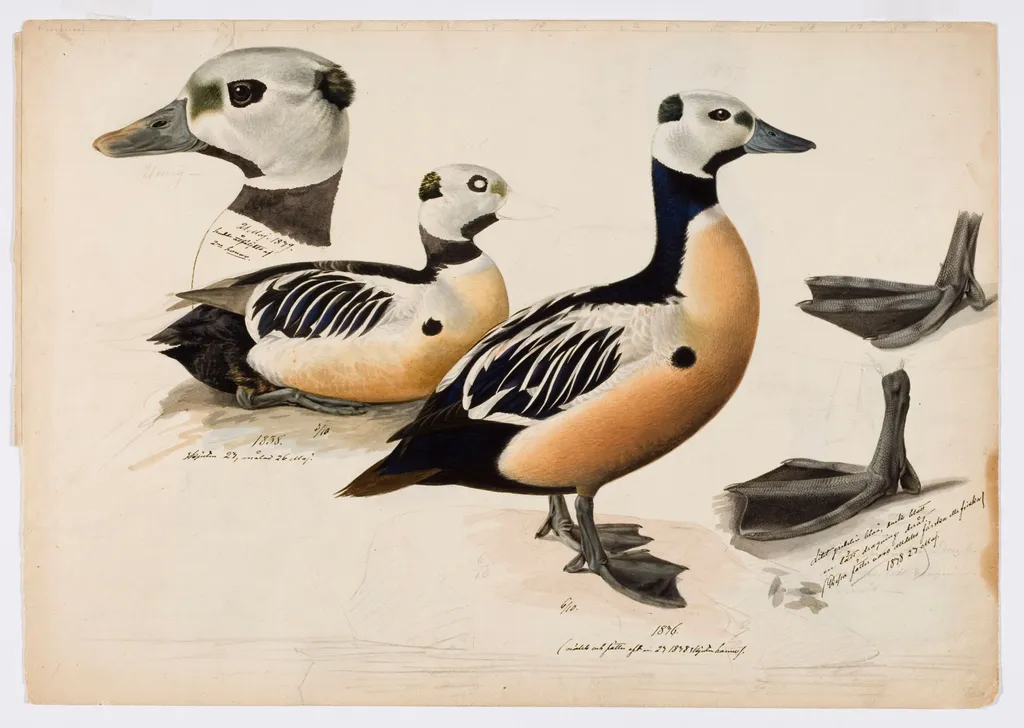
Steller's Eider, Male is an unspecified painting by Magnus von Wright. It dates from 1837 and is held in the collection of the Finnish National Gallery.
About this work
Overview
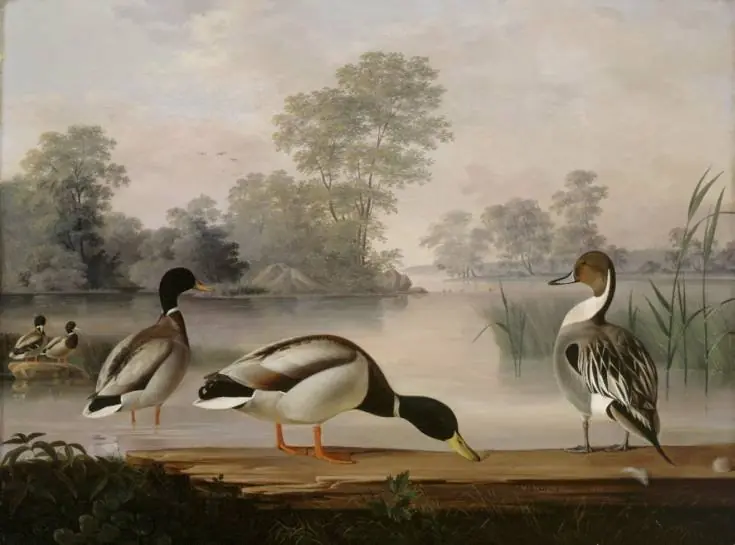
Painted in 1837 by Finnish artist Magnus von Wright, this work depicts a male Steller's eider in a naturalistic setting.
Painted in 1837 by Finnish artist Magnus von Wright, this work depicts a male Steller's eider in a naturalistic setting. Von Wright, part of a family known for scientific illustration, focused on precise depictions of avian life. The painting is part of the Ateneum Art Museum’s collection, reflecting its significance in Nordic natural history art. Its composition and detail align with 19th-century efforts to document wildlife with accuracy.
Subject & Meaning
The painting portrays a single male Steller's eider, a sea duck native to Arctic regions, rendered with anatomical precision. Though three birds are visible, only the foreground male is the primary subject, distinguished by its white head, black neck, and mottled tan body. The background figures serve as contextual elements, reinforcing the species’ social behavior. The work functions as a scientific record rather than a symbolic narrative.
Technique & Style
Von Wright employed fine brushwork to capture individual feather textures, beak structure, and subtle gradations in plumage color. The background is muted and neutral, directing focus to the bird’s form. Lighting is even, avoiding dramatic contrast, which supports the observational intent. The composition’s clarity and lack of embellishment reflect the conventions of naturalist illustration prevalent in scientific circles of the time.
History & Provenance
Created in 1837, the painting emerged during Magnus von Wright’s early career, before his later collaborations on ornithological publications. It remained in private or institutional hands until entering the Ateneum collection, where it is preserved as part of Finland’s artistic and scientific heritage. Its survival reflects the growing institutional interest in natural history art during the 19th century.
Context
In the 1830s, European naturalists increasingly relied on visual documentation to classify species. Von Wright’s work aligned with this movement, contributing to a broader effort to systematize knowledge of Arctic fauna. His training and family background in illustration positioned him as a bridge between art and science, a role common among Nordic artists of the period.
Legacy
Though not widely exhibited outside Finland, the painting exemplifies the quiet rigor of 19th-century naturalist art. It remains a reference for ornithologists and art historians studying the intersection of scientific accuracy and visual representation. Von Wright’s contributions helped establish a tradition of Finnish wildlife illustration that influenced later generations of natural history artists.
Artist & collection
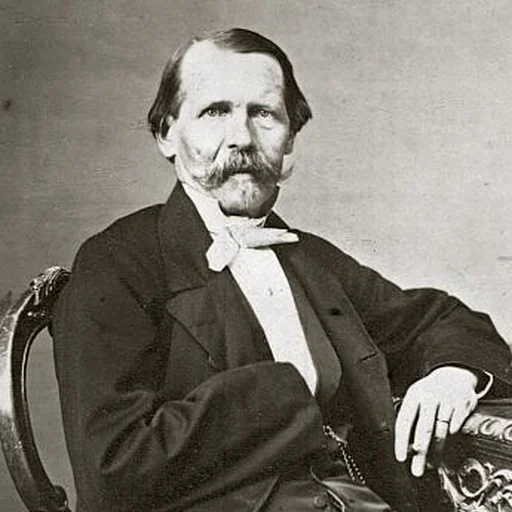
Artist
Magnus von Wright (13 June 1805 – 5 July 1868) was a Finnish painter and educator. In addition to bird illustrations, he was also known for his landscapes. He was one of the four sibling von Wright artists.