Artwork
The Cathedral, Siena
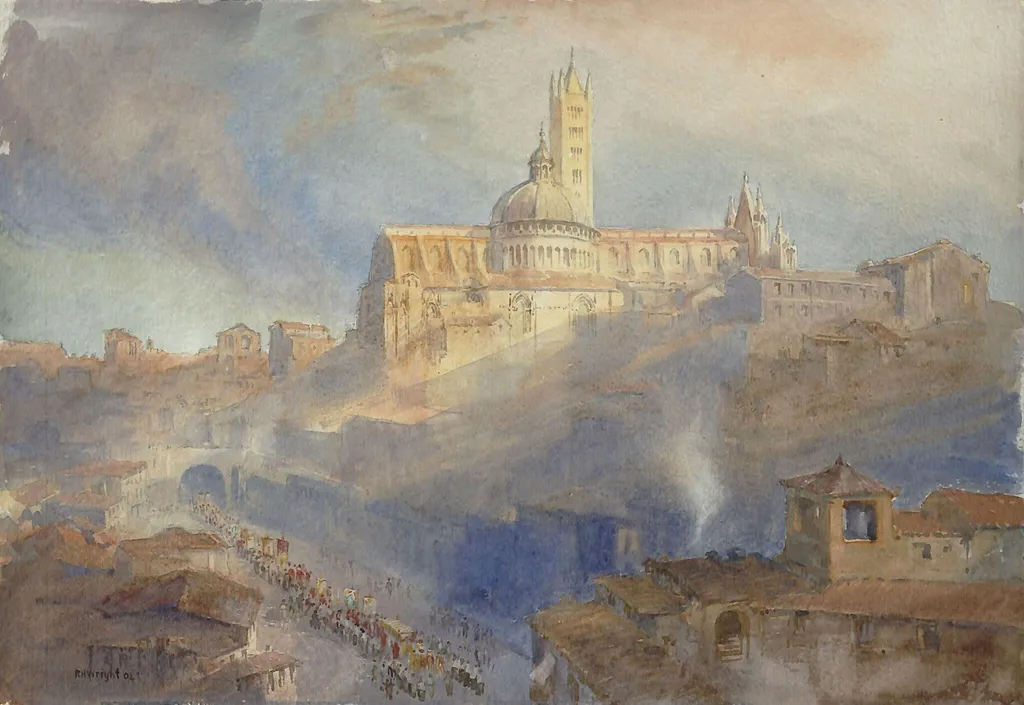
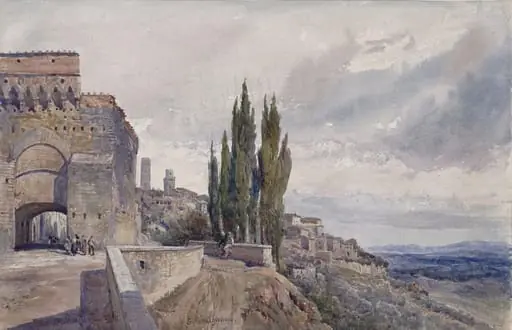
The Cathedral, Siena is a watercolor work on paper by the Impressionist artist Richard Henry Wright. It dates from 1902 and is held in the collection of the Victoria and Albert Museum.
About this work
Overview
The artist’s choice of medium lends the scene a quiet, ephemeral quality, distinguishing it from more rigid architectural studies of the period.
Created in 1902, this watercolour captures the Cathedral of Siena as seen from a distance, rendered on paper with delicate, translucent washes. The composition emphasizes the building’s scale against the surrounding landscape, with soft tonal transitions suggesting atmospheric haze. The artist’s choice of medium lends the scene a quiet, ephemeral quality, distinguishing it from more rigid architectural studies of the period.
Subject & Meaning
The painting centers on Siena’s cathedral, a symbol of religious and civic identity, framed by a bustling crowd moving toward its entrance. The figures, rendered in minimal detail, underscore the building’s dominance in both physical and spiritual terms. Their small scale relative to the architecture implies a sense of awe, reflecting the cathedral’s role as a focal point of communal life in early 20th-century Siena.
Technique & Style
The artist employed loose, fluid brushwork to build form through layered washes of watercolour, avoiding sharp outlines. Warm earth tones define the stone façade, while pale blues and muted greens suggest sky and distant hills. The hazy effect is achieved through wet-on-wet techniques, allowing pigments to bleed subtly—creating depth and a sense of atmospheric perspective without detailed rendering.
History & Provenance
The watercolour was produced during a period of renewed interest in Italian architectural subjects among British artists. It entered the collection of the Victoria and Albert Museum in the early 20th century, likely acquired through a private donation or exhibition purchase. Its preservation reflects its value as a representative example of topographical watercolour from the period.
Context
In the early 1900s, watercolour was widely used for travel sketches and topographical records, particularly among British artists visiting Italy. This work aligns with a tradition of documenting historic sites with sensitivity to light and mood, rather than strict architectural accuracy. The emphasis on atmosphere over detail reflects broader artistic trends favoring impressionistic interpretation over documentary precision.
Legacy
Though not widely exhibited beyond institutional collections, the painting remains a quiet example of early 20th-century watercolour practice in Britain. Its preservation in the Victoria and Albert Museum ensures its continued availability for study, offering insight into how artists of the time engaged with Italian heritage through subtle, evocative means rather than grandiose representation.
Artist & collection
Artist
Richard Henry Wright painted delicate watercolours of Italian architecture in the early 1900s.

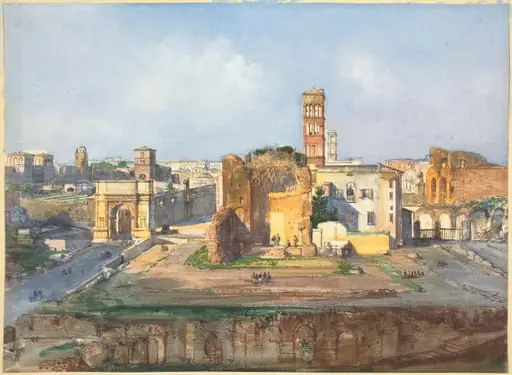 The Arch of Titus and the Temple of Venus and Rome near the Roman Forum
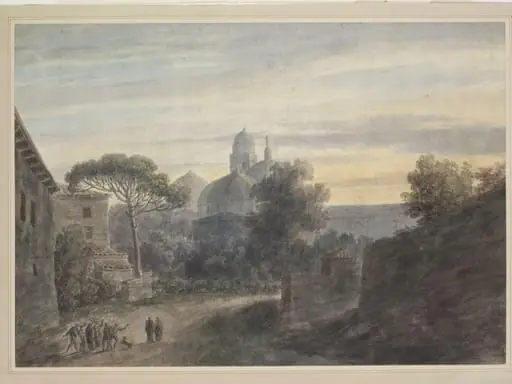 Sta. Giustina at Padua
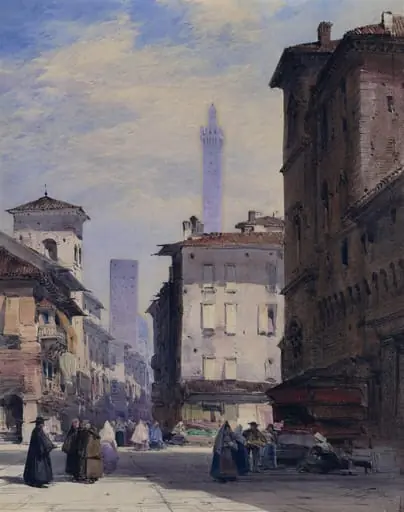 The leaning tower of Bologna
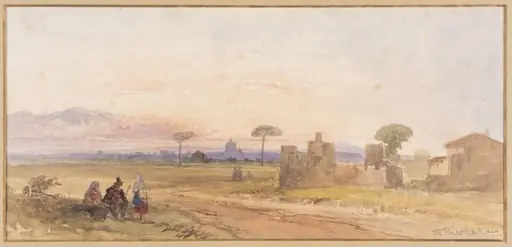 Rome, From the Campagna
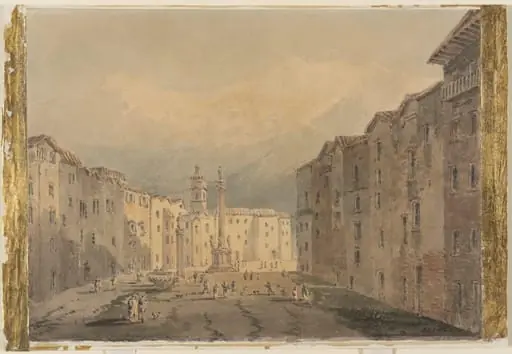 View at Innsbruck
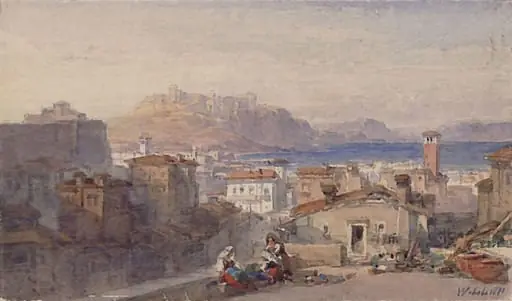 Naples
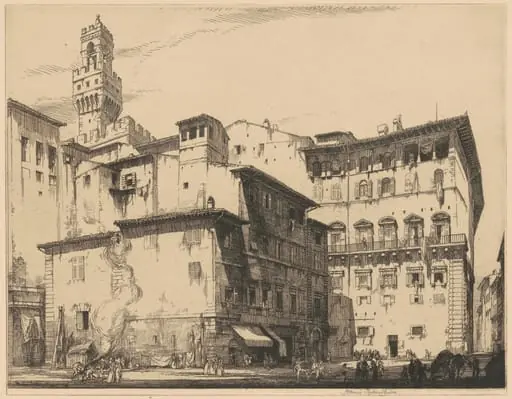 The Municipio, Florence
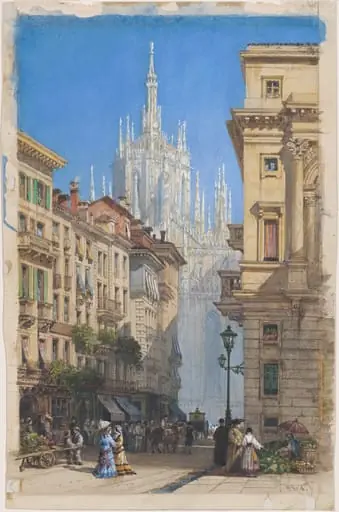 The Duomo in Milan from a Side Street
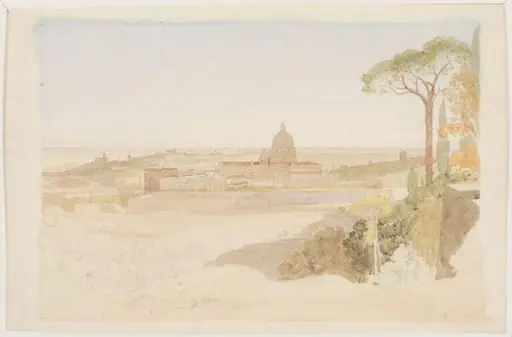 Untitled
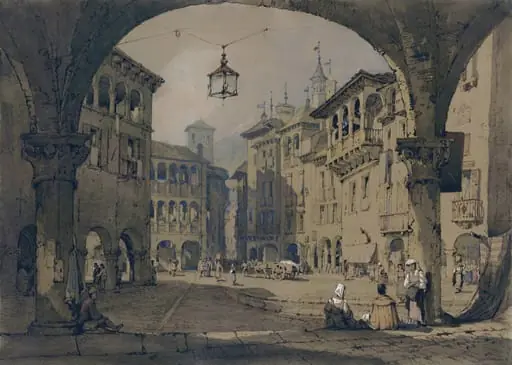 Domo d'Ossola, Piedmont
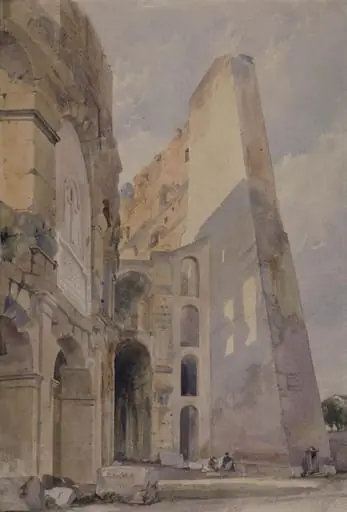 Walls of the Colosseum in Rome
 San Gimignano, Near Siena, Italy