Artwork
View of the Janiculum Hill Seen from the Tiber (recto)
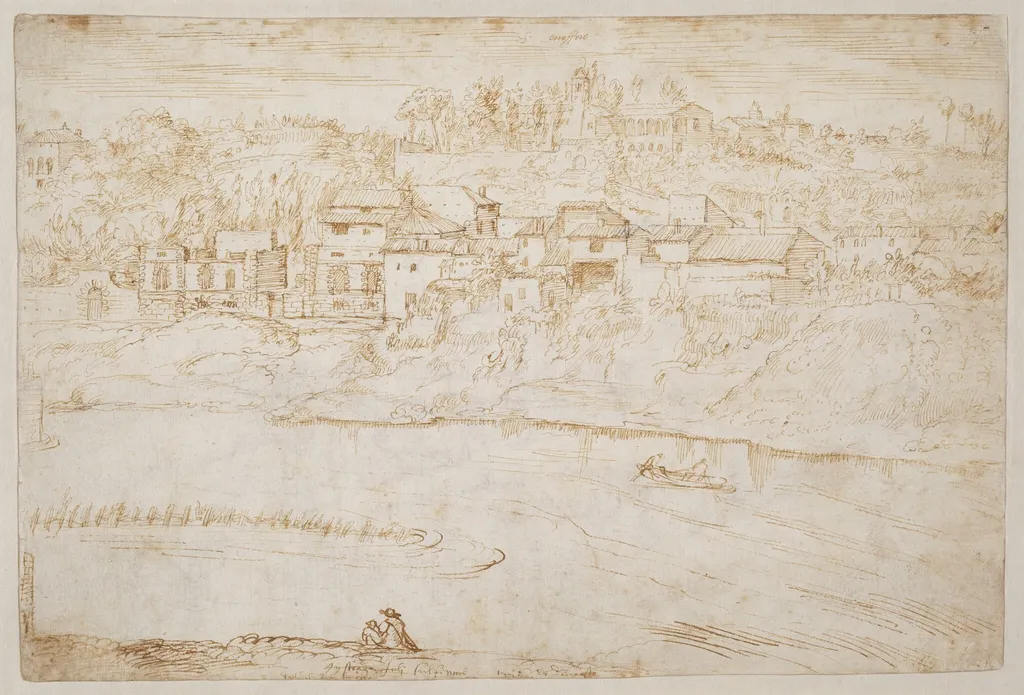
View of the Janiculum Hill Seen from the Tiber (recto) is a chalk drawing by the Renaissance artist Antonie van den Wyngaerde. It dates from 1553 and is held in the collection of the National Gallery of Art.
About this work
Overview
Antonie van den Wyngaerde’s 1553 drawing presents a panoramic view of Rome’s Janiculum Hill as observed from the banks of the Tiber River. Executed on laid paper with a foundation of black chalk, the composition is rendered in brown ink, delivering a precise yet atmospheric cityscape that reflects the artist’s meticulous observation of urban topography.
Subject & Meaning
The work captures the gentle rise of the Janiculum, dotted with modest structures and interspersed with foliage, while the river in the foreground undulates toward the horizon. By positioning the viewer on the riverbank, van den Wyngaerde emphasizes the relationship between natural landscape and the built environment, offering a visual narrative of Rome’s layered geography.
Technique & Style
Van den Wyngaerde employs fine cross‑hatching to model volume and surface texture, allowing the brown ink to convey depth across the hills, trees, and architectural forms. The underlying black chalk provides a tonal base that enhances contrast, while the laid paper’s subtle grain contributes to the drawing’s overall tactile quality, characteristic of mid‑16th‑century Northern European draftsmanship.
Context
Created during the High Renaissance, the drawing reflects the period’s heightened interest in accurate representation and topographical study. Van den Wyngaerde, known for his detailed city views, applied the era’s scientific curiosity to his depiction of Rome, merging artistic skill with a documentary impulse that catered to patrons seeking realistic records of urban spaces.
Legacy
The piece stands as an early example of urban landscape drawing that bridges artistic expression and cartographic precision. Its careful rendering of architectural and natural elements informed later generations of draughtsmen who pursued similar integrations of observation and technique in the portrayal of cityscapes.
Artist & collection


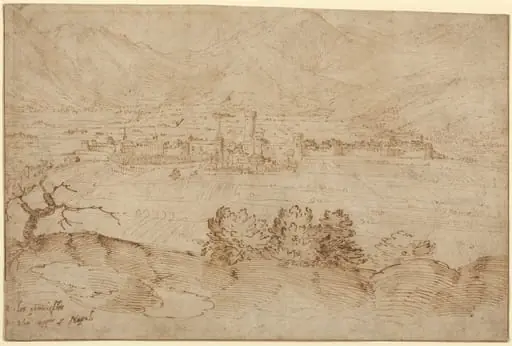 View of Fondi
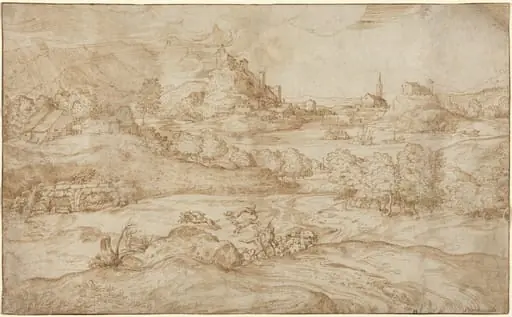 Landscape with Shepherds Driving Away a Wolf
![View of the Castle Sant'Angelo and the Ospedale di Santo Spirito [recto], by Étienne Dupérac](https://artifactworldgallery.com/img/etienne-duperac--view-of-the-castle-sant-angelo-and-the-ospedale-di-santo-spi--b09ebaffc1ffa770-w320.webp) View of the Castle Sant'Angelo and the Ospedale di Santo Spirito [recto]
View of the Castle Sant'Angelo and the Ospedale di Santo Spirito [recto]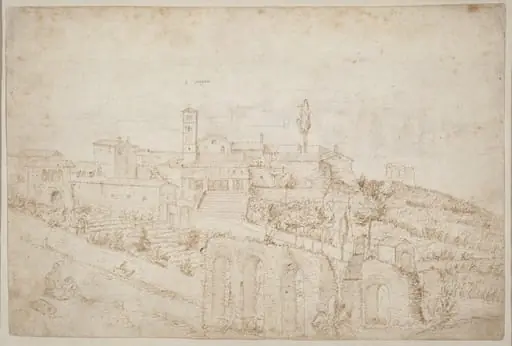 The Church of S. Gregorio Magno on the Celian Hill (verso)
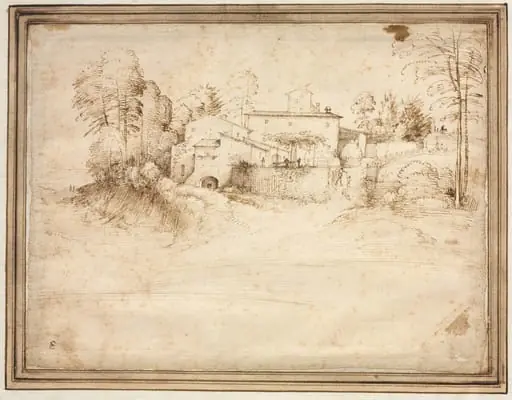 Farmhouse on the Slope of a Hill
![Village atop a River Cliff [recto], by Master of the Blue Landscapes](https://artifactworldgallery.com/img/master-of-the-blue-landscapes--village-atop-a-river-cliff-recto--7884484b10704852-w320.webp) Village atop a River Cliff [recto]
Village atop a River Cliff [recto]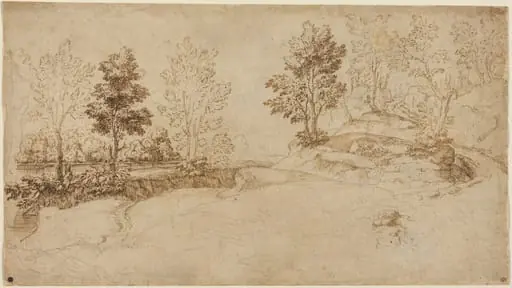 River Landscape
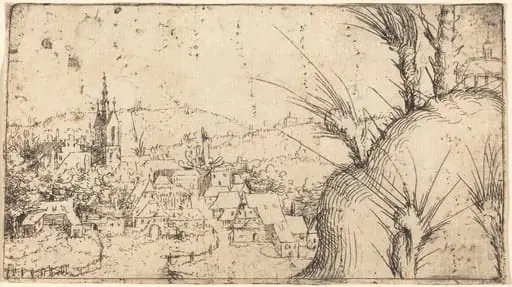 Landscape with a Town at Left
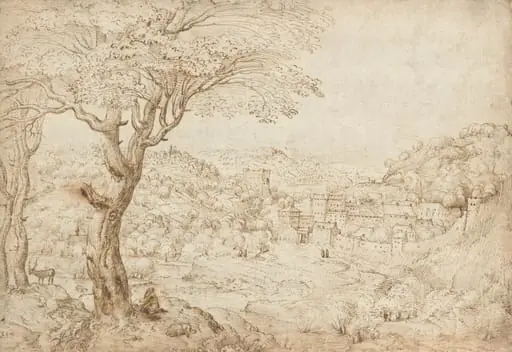 Landscape with the Penitence of Saint Jerome
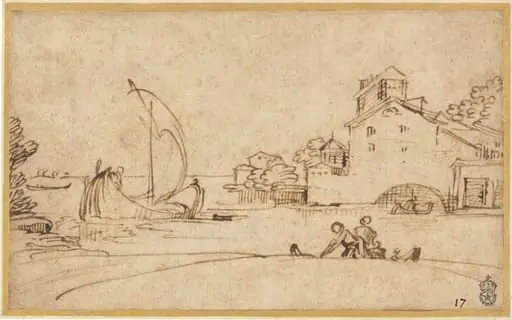 Landscape with Figures by an Estuary with Sailing Boats
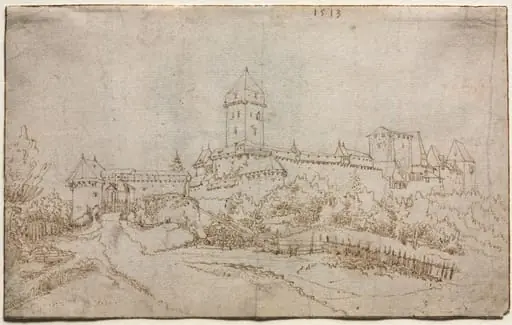 View of a Castle (recto)
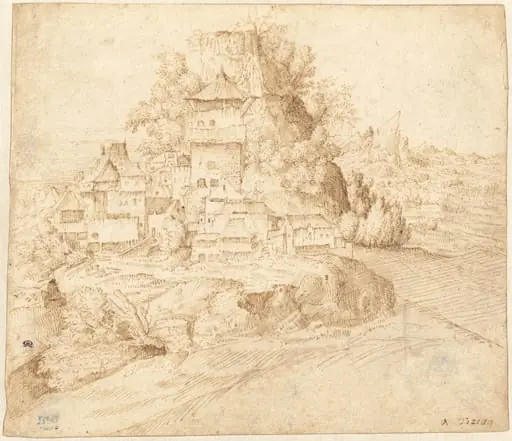 A Village Nestled at the Foot of a Hill (recto)