Artwork
View of a Castle (recto)
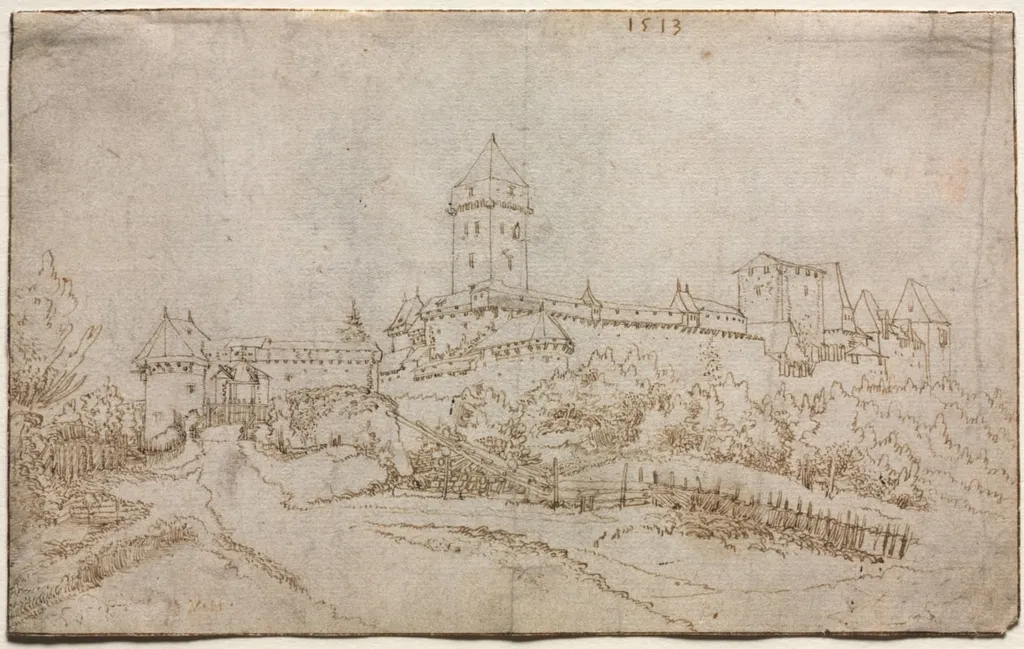
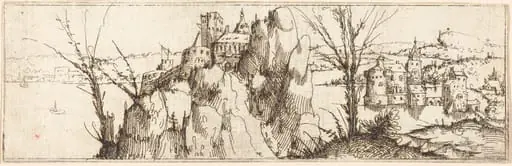
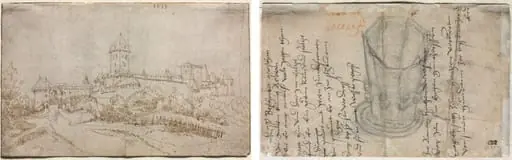
View of a Castle (recto) is a drawing by the Renaissance artist Wolfgang Huber. It dates from 1513 and is held in the collection of the Cleveland Museum of Art. This ink drawing captures a castle nestled among the hills of southern Germany, near the Danube River.
About this work
Overview
The composition emphasizes the middle distance, with minimal foreground detail, conveying a sense of movement and observation rather than polished finish.
This ink drawing captures a castle nestled among the hills of southern Germany, near the Danube River. Executed in rapid, fluid strokes, it reflects an artist sketching en route, likely between Feldkirch and Vienna. The composition emphasizes the middle distance, with minimal foreground detail, conveying a sense of movement and observation rather than polished finish. The work stands as a quiet record of a traveler’s encounter with the landscape.
Subject & Meaning
The castle, perched on a wooded ridge, is not idealized but observed as part of a living terrain. Its placement suggests a focus on the relationship between human architecture and natural topography. The absence of figures or narrative action shifts attention to the environment itself—an unusual emphasis in 1513, when landscapes were typically subordinate to religious or mythological themes.
Technique & Style
Huber employed a loose, continuous pen line to suggest form through rhythm rather than definition. The ink flows in looping strokes that mimic the curves of hills, the density of foliage, and the texture of rock. There is no shading or hatching; volume emerges from the energy and direction of the line, creating a sense of immediacy and spontaneity that reflects the conditions of outdoor sketching.
History & Provenance
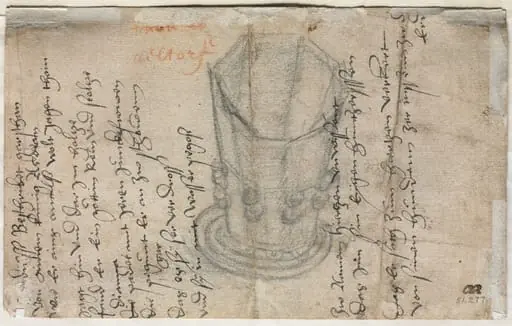
The drawing dates to 1513, a period when Huber was likely traveling along the Danube. The reverse side bears a separate image of a gem-studded cup accompanied by a poem recounting the myth of Actaeon, suggesting the sheet was reused or preserved as a personal notebook page. This dual content hints at the artist’s broader intellectual interests beyond topographical recording.
Context
In early 16th-century Germany, landscape as an independent subject remained rare. Yet artists in the Danube region, including Huber, demonstrated a distinctive attention to natural detail and atmospheric presence. This drawing aligns with a regional tendency to observe terrain with intimacy and without classical framing, anticipating later developments in Northern landscape tradition.
Legacy
Though not widely known in his time, Huber’s work contributes to a quiet shift in artistic priorities—away from symbolic representation toward direct observation. His sketch captures the landscape not as a backdrop but as a presence, offering a precursor to the more deliberate landscape studies that would emerge in the following decades.
Artist & collection

![Village atop a River Cliff [recto], by Master of the Blue Landscapes](https://artifactworldgallery.com/img/master-of-the-blue-landscapes--village-atop-a-river-cliff-recto--7884484b10704852-w320.webp)