Artwork
『欧州管絃楽合奏之図』|Concert of European Music (Ōshū kangengaku gassō no zu)
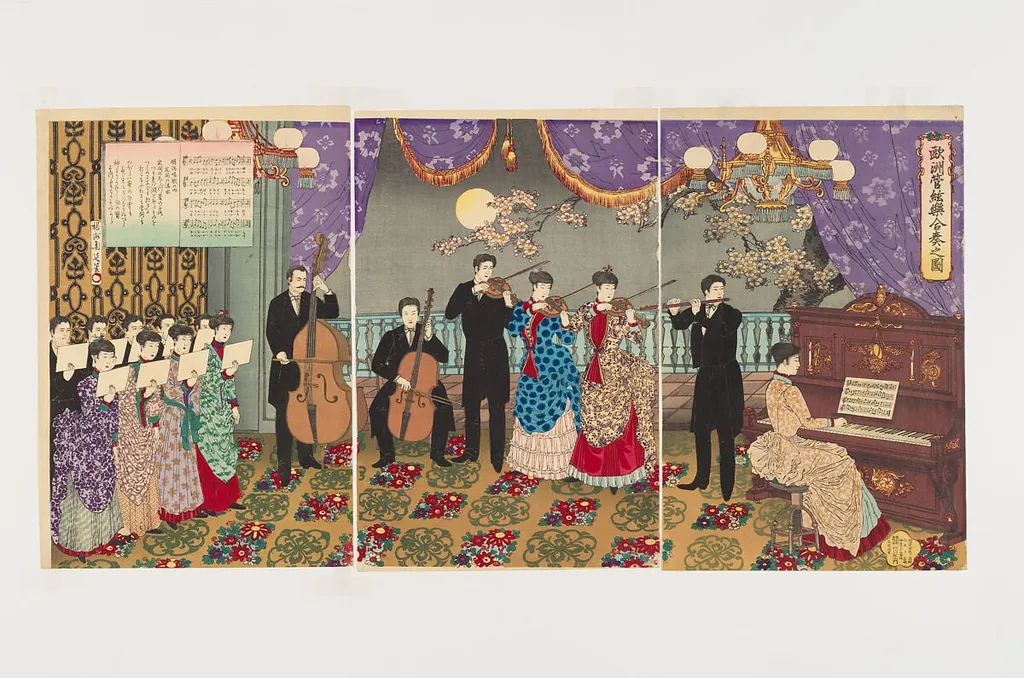
『欧州管絃楽合奏之図』|Concert of European Music (Ōshū kangengaku gassō no zu) is an ink print by the Impressionist artist Yōshū (Hashimoto) Chikanobu. It dates from 1889 and is held in the collection of the Metropolitan Museum of Art. Created in 1889 by Yōshū Chikanobu, this triptych depicts a domestic musical gathering blending European and Japanese elements.
About this work
Overview
The work is part of The Metropolitan Museum of Art’s collection and reflects late 19th-century Japan’s engagement with Western cultural forms.
Created in 1889 by Yōshū Chikanobu, this triptych depicts a domestic musical gathering blending European and Japanese elements. Printed in ink and color on paper, it consists of three panels arranged side by side, each capturing a different aspect of the performance. The work is part of The Metropolitan Museum of Art’s collection and reflects late 19th-century Japan’s engagement with Western cultural forms.
Subject & Meaning
The left panel shows women singing from sheet music, dressed in patterned kimono; the center displays musicians with Western instruments—cello, violin, flute—while the right features a woman playing a piano. The scene suggests a private, refined performance, not a public concert. The fusion of attire, setting, and instruments signals an aspiration toward Western cultural refinement, framed within a Japanese domestic context.
Technique & Style
Chikanobu employed traditional ukiyo-e woodblock techniques to render fine details in fabric, instrument shapes, and architectural elements. The color palette is rich but restrained, with purple drapes and floral rugs anchoring the composition. Linear perspective and spatial depth are subtly suggested, though the overall aesthetic remains rooted in Japanese print conventions, balancing realism with decorative patterning.
History & Provenance
Produced during the Meiji era, the triptych emerged as Japan actively adopted Western customs while preserving native aesthetics. It was likely commissioned for private collectors interested in cultural hybridity. The work entered The Metropolitan Museum of Art’s collection in the 20th century, where it remains as a rare example of Meiji-era printmaking addressing Western music in a Japanese setting.
Context
In late 19th-century Japan, Western music was introduced through education and diplomacy, becoming a symbol of modernization. Private salons hosted performances by women trained in both Japanese and Western traditions. This print captures that social shift—not as spectacle, but as intimate ritual—reflecting how elite households negotiated identity through cultural performance.
Legacy
The triptych stands as a quiet testament to Japan’s selective assimilation of Western culture during the Meiji period. Unlike overtly propagandistic works, it presents cultural exchange as natural and domestic. Its preservation in major institutions underscores its value as a visual record of how tradition and modernity coexisted in everyday life, without romanticization or exaggeration.
Artist & collection


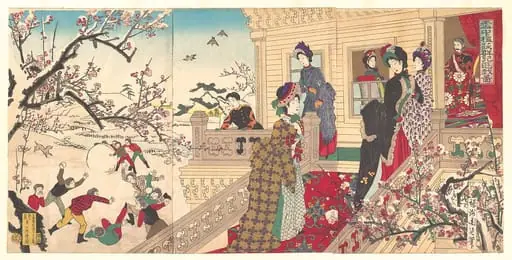 『雪中梅荘群児遊戯 図』|Children Playing in the Snow under Plum Trees in Bloom (Secchū baisō gunji yūgi zu)
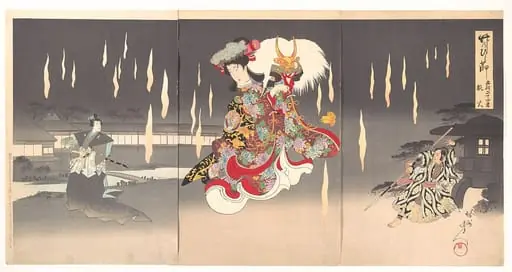 Untitled
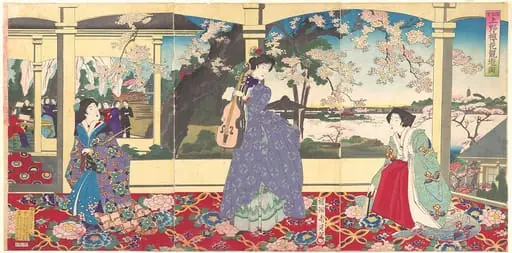 『踏舞会 上野桜花観 遊ノ図』|A Dance Party: Enjoying Cherry Blossom Viewing at Ueno (Tōbukai Ueno ōka yūran no zu)
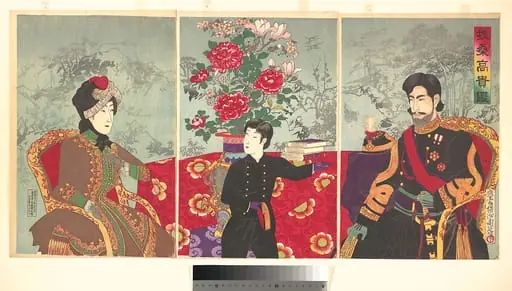 『扶桑高貴鑑』|A Mirror of Japan’s Nobility: The Emperor Meiji, His Wife, and Prince Haru (Fūsō kōki kagami)
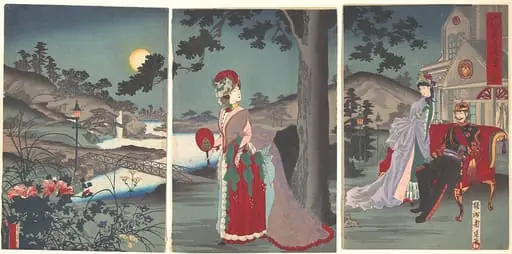 『高貴納涼ノ図』|Nobility in the Evening Cool (Koki nōryō no zu)
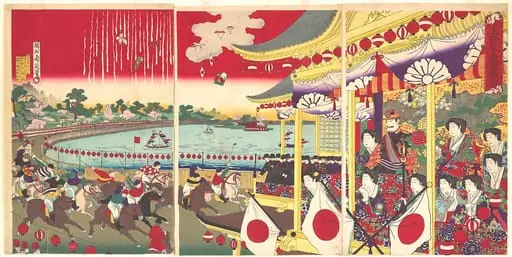 『上野不忍競馬図』|View of the Horse Track at Shinobazu in Ueno Park (Ueno shinobazu keiba zu)
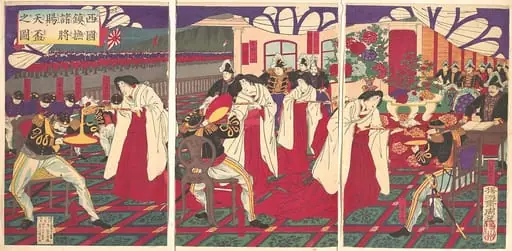 西国鎮静撫諸将天杯賜之図|Illustration of the Commanders who Pacified Western Japan, Receiving the Emperor's Gift Cups (Saigoku chinbu shoshō tenpai o tamau no zu)
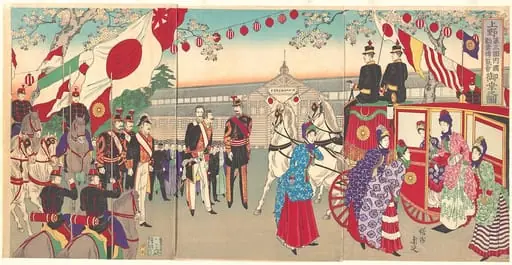 『上野第三回内国勧業 博覧会御幸之図』|Visit of the Empress to the Third National Industrial Promotional Exhibition at Ueno Park (Ueno dai sankai naikoku kangyō hakuran kai gyokō no zu)
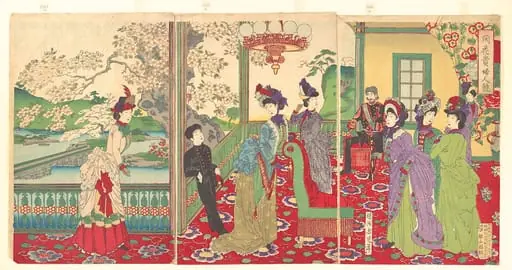 楊洲周延画 『開花貴婦人競』|A Contest of Elegant Ladies among the Cherry Blossoms (Kaika kifujin kisoi)
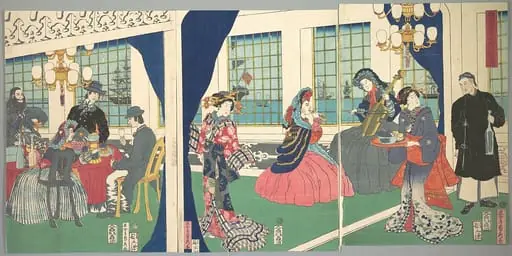 Untitled
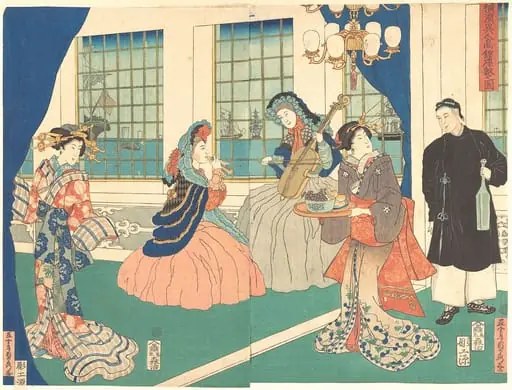 『横浜異 人商館座敷之図』|Drawing Room of a Foreign Business Establishment in Yokohama
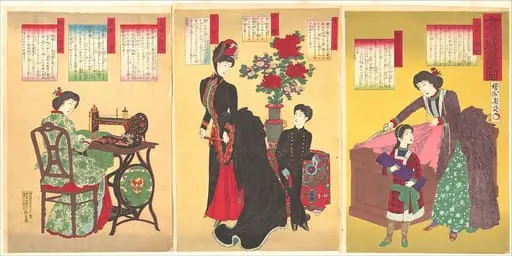 楊洲周延画 『女官洋服裁縫之図』|Court Ladies Sewing Western Clothing (Jokan yōfuku saihō no zu)
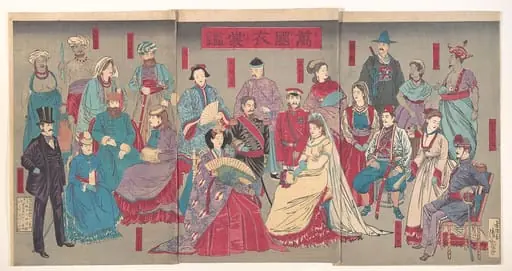 『万国衣装鑑』|Mirror of National Costumes of All Nations (Bankoku ishō kagami)
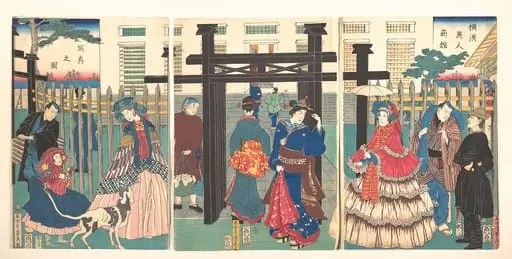 歌川五雲亭貞秀画 『横浜異人商館 写真之図』|Foreign Business Establishment in Yokohama (Yokohama ijin shōkan shashin no zu)
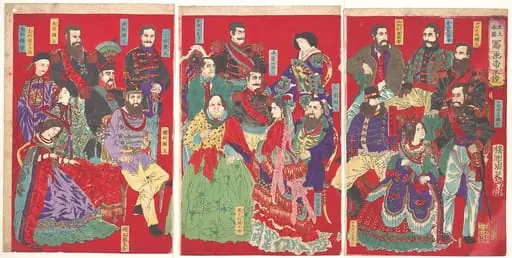 世上各国写画帝王鏡|Mirror of Portraits of All Sovereigns in the World (Sejō kakkoku shaga teiō kagami)
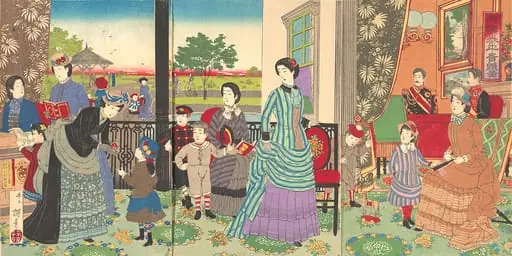 井上安治画 『共楽泰平貴顕図』|Peaceful Pleasures of the Highest Nobility (Kyōraku taihei kiken zu)
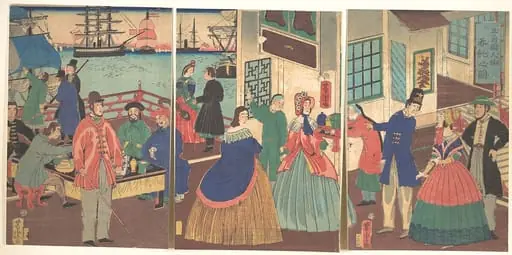 歌川芳虎画 『五箇国人物 呑飥之図』|People of the Five Nations Drinking and Eating (Gokakoku jinbutsu dontaku no zu)
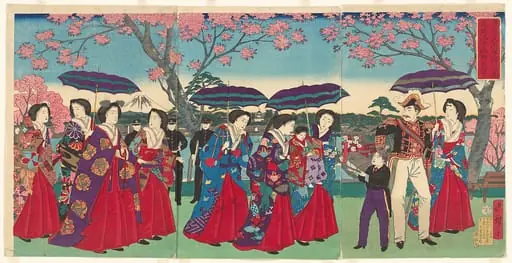 三代歌川広重画 『東京名所 従上野公園 不忍池中嶋弁天之景』|View of Benten Shrine on Nakanoshima Island in Shinobazu Pond, Ueno Park, from the series Famous Views of Tokyo (Tōkyō Tokyo meisho yori Ueno kōen Shinobazu no ike Nakanoshima Benten no kei)
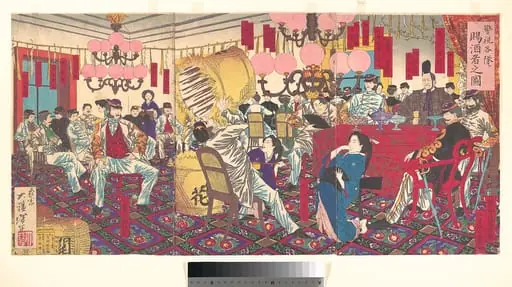 Untitled