Artwork
井上安治画 『共楽泰平貴顕図』|Peaceful Pleasures of the Highest Nobility (Kyōraku taihei kiken zu)
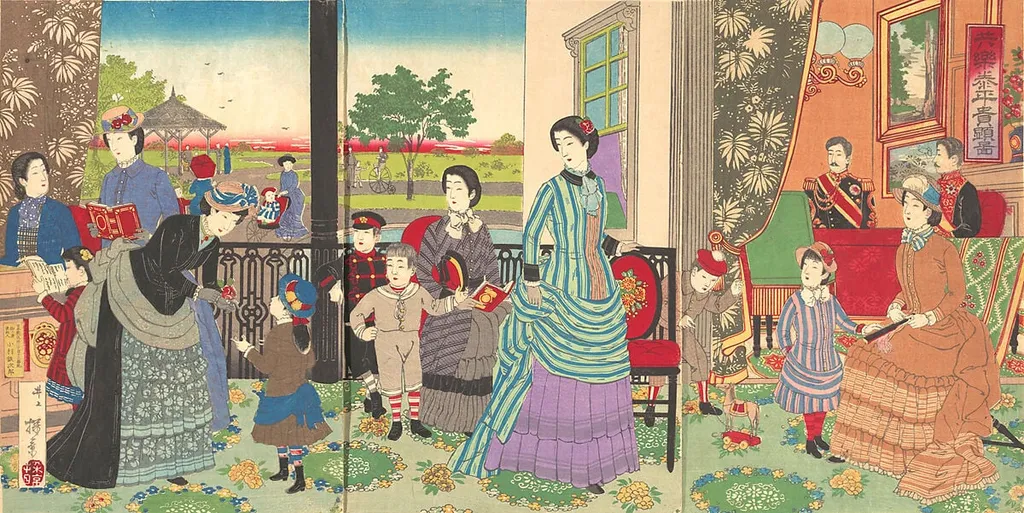
井上安治画 『共楽泰平貴顕図』|Peaceful Pleasures of the Highest Nobility (Kyōraku taihei kiken zu) is an ink print by the Impressionist artist Inoue Yasuji. It dates from 1887 and is held in the collection of the Metropolitan Museum of Art.
About this work
Overview
Created in 1887 by Inoue Yasuji, this triptych woodblock print captures a domestic scene of upper-class Japanese life during the Meiji era.
Created in 1887 by Inoue Yasuji, this triptych woodblock print captures a domestic scene of upper-class Japanese life during the Meiji era. Composed of three panels, it presents interior spaces filled with figures in Western-style attire, reflecting the era’s cultural blending. The work is rendered in nishiki-e, a polychrome printing technique, and is held in the collection of The Metropolitan Museum of Art.
Subject & Meaning
The print depicts affluent families in domestic settings, engaging in leisurely activities such as reading, playing, and conversing. The presence of Western clothing, furniture, and children at play suggests an idealized vision of modern, refined household life. Rather than documenting a specific event, it conveys a vision of harmony and prosperity aligned with Meiji-era aspirations for cultural sophistication.
Technique & Style
Inoue employed traditional Japanese woodblock printing to achieve intricate detail and vibrant color. Each panel features fine linework and layered pigments, characteristic of nishiki-e. The composition is densely populated yet carefully balanced, with spatial depth suggested through window views and overlapping figures. The style merges Japanese print traditions with Western-inspired subject matter and perspective.
History & Provenance
Produced in 1887, the triptych emerged during a period of rapid modernization in Japan. It was likely commissioned for private collectors interested in contemporary social themes. The work entered The Metropolitan Museum of Art’s collection through documented acquisition, preserving its place in the historical record of Meiji-period printmaking and domestic representation.
Context
In the late 19th century, Japan’s elite increasingly adopted Western customs in dress, interior design, and social behavior. This print reflects that transition, portraying a domestic sphere where traditional Japanese printmaking met new cultural norms. Unlike earlier ukiyo-e scenes of entertainment, it focuses on quiet, orderly family life, signaling a shift in artistic priorities during the Meiji Restoration.
Legacy
Inoue Yasuji’s triptych stands as a documented example of how Japanese artists navigated modernization through visual culture. While not widely replicated, it contributes to the understanding of how printmakers recorded societal change without overt political commentary. Its preservation in a major museum underscores its value as a cultural artifact of Japan’s transition into modernity.
Artist & collection

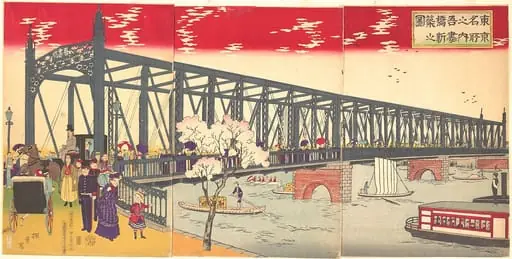 東京名所之内吾妻橋新築之図|Illustration of the Opening of Azuma Bridge in Tokyo (Tokyo meisho no uchi azuma bashi shinchiku no zu)
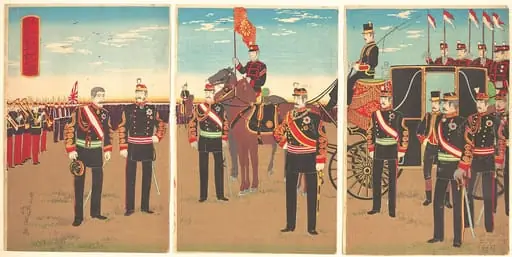 青上練兵場観兵式之図|Illustration of Emperor's Military Review of a Parade Ground at Aoyama (Aoyama renpeijō kanpeishiki no zu)
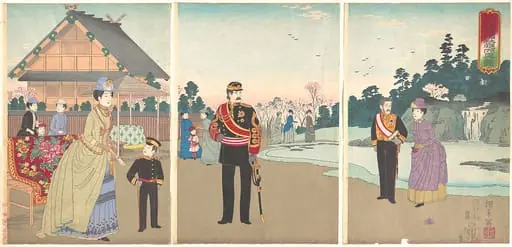 九段坂上靖国神社庭内真図|True View of the Courtyard of Yasukuni Shrine at Kudan Sakaue (Kudan Sakaue Yasukuni jinsha teinai shin zu)
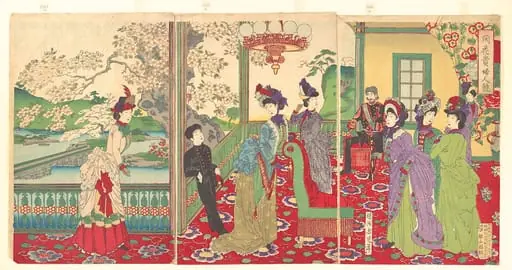 楊洲周延画 『開花貴婦人競』|A Contest of Elegant Ladies among the Cherry Blossoms (Kaika kifujin kisoi)
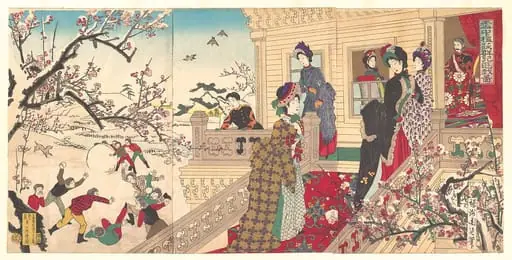 『雪中梅荘群児遊戯 図』|Children Playing in the Snow under Plum Trees in Bloom (Secchū baisō gunji yūgi zu)
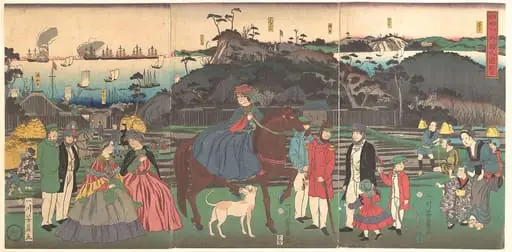 Kanagawa Gongenyama Gaikokujin yūran|Foreigners Visiting the Famous Site of Mt. Gongen in Kanagawa
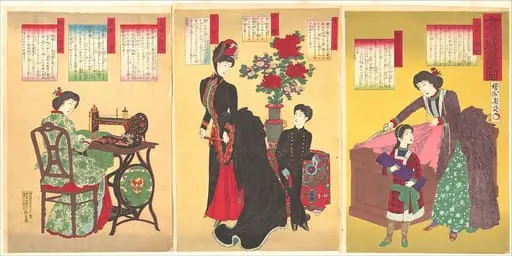 楊洲周延画 『女官洋服裁縫之図』|Court Ladies Sewing Western Clothing (Jokan yōfuku saihō no zu)
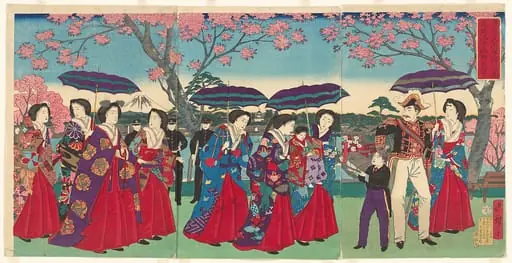 三代歌川広重画 『東京名所 従上野公園 不忍池中嶋弁天之景』|View of Benten Shrine on Nakanoshima Island in Shinobazu Pond, Ueno Park, from the series Famous Views of Tokyo (Tōkyō Tokyo meisho yori Ueno kōen Shinobazu no ike Nakanoshima Benten no kei)
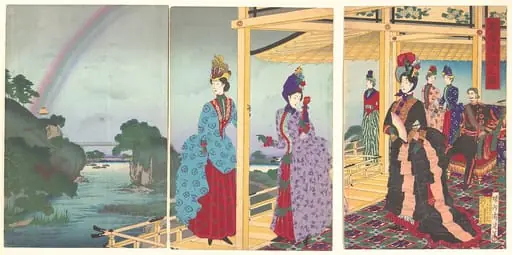 『雨過洗庭之図』|A Garden Refreshed by the Passing Rain (Ukasentei no zu)
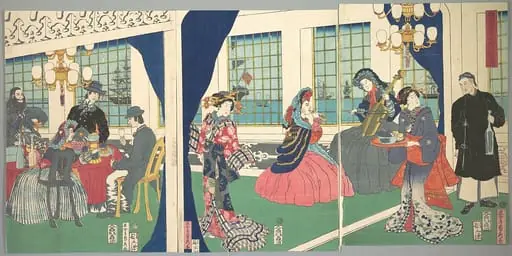 Untitled
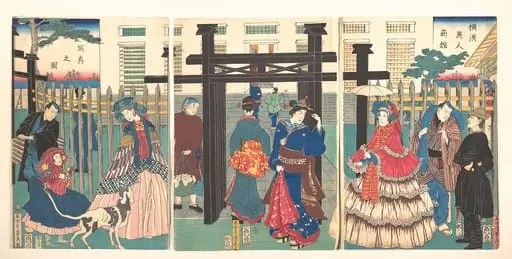 歌川五雲亭貞秀画 『横浜異人商館 写真之図』|Foreign Business Establishment in Yokohama (Yokohama ijin shōkan shashin no zu)
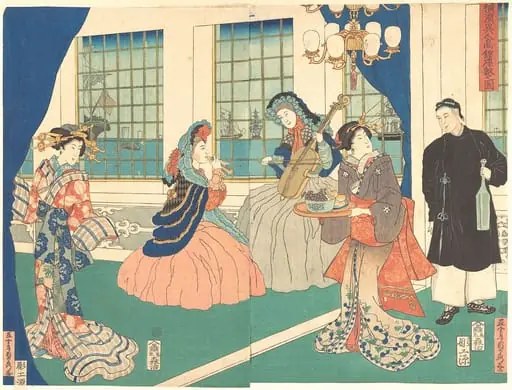 『横浜異 人商館座敷之図』|Drawing Room of a Foreign Business Establishment in Yokohama
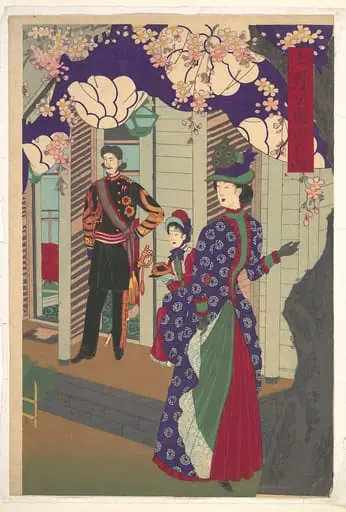 『上野公園開花図』|Blossoming Cherry Trees in Ueno Park (Ueno kōen kaika zu)
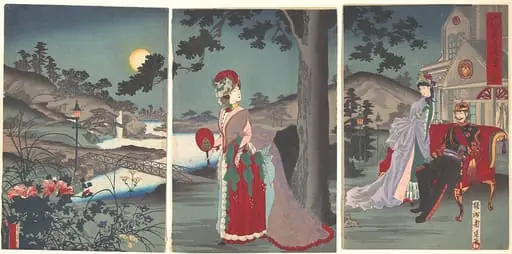 『高貴納涼ノ図』|Nobility in the Evening Cool (Koki nōryō no zu)