Artwork
Untitled
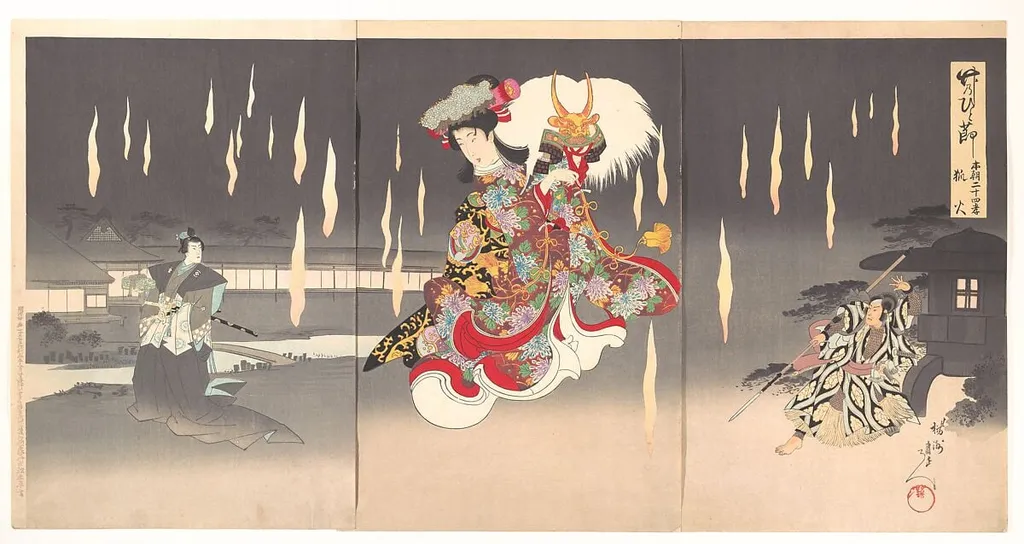
Untitled is an ink print by the Impressionist artist Yōshū (Hashimoto) Chikanobu. It dates from 1898 and is held in the collection of the Metropolitan Museum of Art. Created in 1898, this triptych by Yōshū Chikanobu combines traditional Japanese woodblock printing with emerging visual techniques.
About this work
Overview
Created in 1898, this triptych by Yōshū Chikanobu combines traditional Japanese woodblock printing with emerging visual techniques.
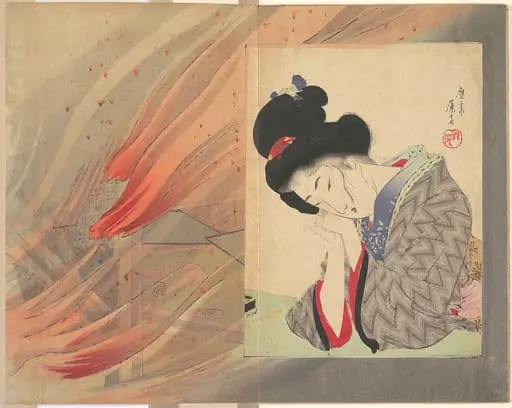
Created in 1898, this triptych by Yōshū Chikanobu combines traditional Japanese woodblock printing with emerging visual techniques. It presents three figures in vividly colored kimonos illuminated by an unnatural orange glow, set against a dark urban street. A figure in armor stands silently in the background, observing. The scene draws from folklore rather than historical fact, using light as both atmosphere and narrative device.
Subject & Meaning
The glowing flames are kitsunebi—mythical foxfire spirits said to emanate from foxes, often linked to deception or the supernatural. The women, though dressed in contemporary fashion, are not merely bystanders; their stillness and the eerie light suggest they are caught in a moment between worlds. The armored figure, likely Takeda Katsuyori, watches from the periphery, evoking a ghostly presence tied to Japan’s warring past.
Technique & Style
Chikanobu employed fine dot patterning to render the flames, a method borrowed from Western printmaking that mimicked tonal gradation. The kimonos display bold, flat colors typical of ukiyo-e, yet the composition’s asymmetry and cropped figures echo photographic framing. The contrast between the luminous fire and deep shadows heightens the scene’s tension, blending realism with the uncanny.
History & Provenance
Produced during the Meiji era, this work reflects a period when Japanese artists actively engaged with Western aesthetics while preserving indigenous themes. Chikanobu, known for historical and theatrical subjects, here shifted toward atmospheric storytelling. The triptych format, traditionally used for dramatic narratives, was repurposed to evoke mood rather than action, signaling evolving tastes in print culture.
Context
In late 19th-century Japan, urbanization and modernization reshaped cultural expression. Folklore like kitsunebi persisted in popular imagination, even as technology transformed daily life. Chikanobu’s fusion of myth with contemporary dress and composition mirrored this duality—ancient spirits inhabiting modern streets, their presence felt through subtle visual cues rather than overt depiction.
Legacy
This print exemplifies how Meiji-era artists negotiated tradition and innovation without abandoning cultural memory. Chikanobu’s use of dot shading and cinematic framing influenced later printmakers exploring psychological depth. The work remains a quiet testament to the persistence of myth in a rapidly changing society, where the supernatural lingered just beyond the edge of the visible.
Artist & collection


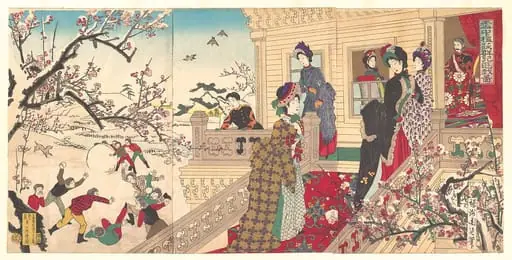 『雪中梅荘群児遊戯 図』|Children Playing in the Snow under Plum Trees in Bloom (Secchū baisō gunji yūgi zu)
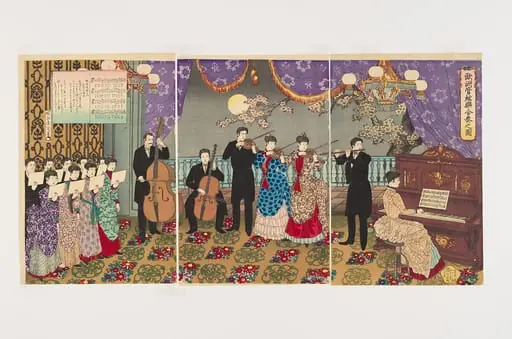 『欧州管絃楽合奏之図』|Concert of European Music (Ōshū kangengaku gassō no zu)
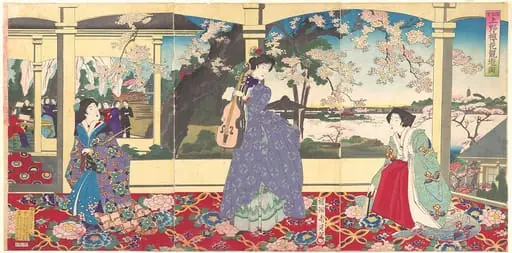 『踏舞会 上野桜花観 遊ノ図』|A Dance Party: Enjoying Cherry Blossom Viewing at Ueno (Tōbukai Ueno ōka yūran no zu)
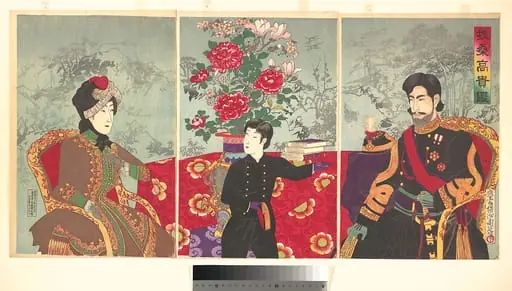 『扶桑高貴鑑』|A Mirror of Japan’s Nobility: The Emperor Meiji, His Wife, and Prince Haru (Fūsō kōki kagami)
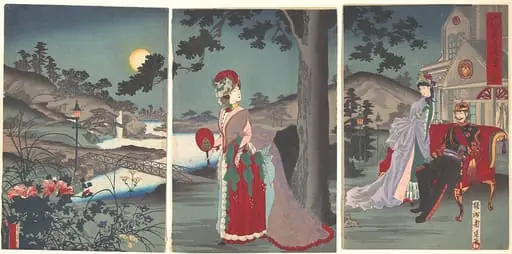 『高貴納涼ノ図』|Nobility in the Evening Cool (Koki nōryō no zu)
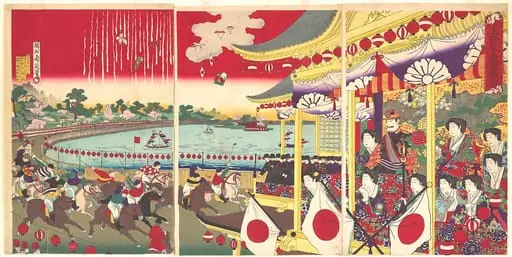 『上野不忍競馬図』|View of the Horse Track at Shinobazu in Ueno Park (Ueno shinobazu keiba zu)
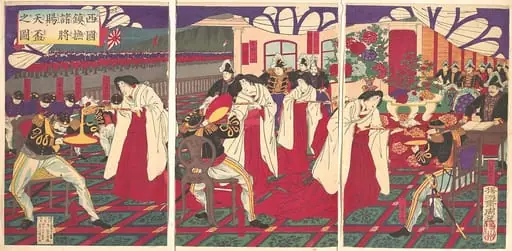 西国鎮静撫諸将天杯賜之図|Illustration of the Commanders who Pacified Western Japan, Receiving the Emperor's Gift Cups (Saigoku chinbu shoshō tenpai o tamau no zu)
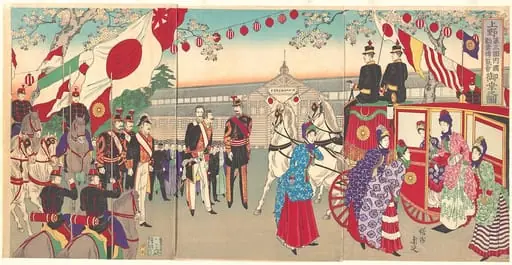 『上野第三回内国勧業 博覧会御幸之図』|Visit of the Empress to the Third National Industrial Promotional Exhibition at Ueno Park (Ueno dai sankai naikoku kangyō hakuran kai gyokō no zu)
 Untitled
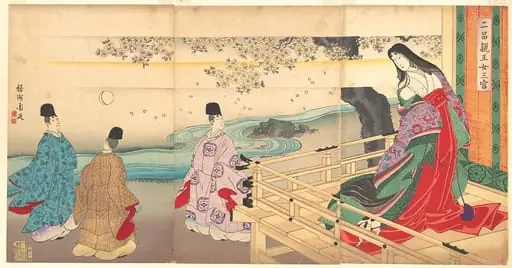 二品親王女三宮|The Third Princess and Kashiwagi, from Chapter 34, “New Herbs I (Wakana I)” (Nihon shinnō onna sannomiya)
 Untitled
 Untitled
 Untitled
 Untitled
 Scene Adapted from the play The Treasury of Loyal Retainers (Chushingura)
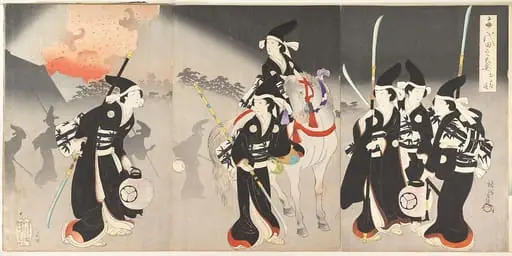 楊洲周延画 「千代田之大奥 おたち退」|“Evacuation of the Ladies,” from the series The Inner Precincts of Chiyoda Castle (Chiyoda no Ōoku, Otachinoki)
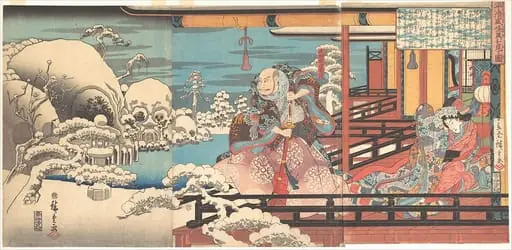 歌川広重画 「平清盛怪異を見る図」|Taira no Kiyomori's Spectral Vision
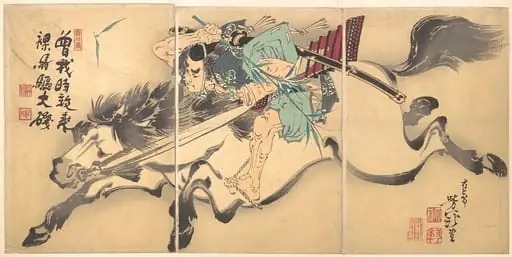 Untitled
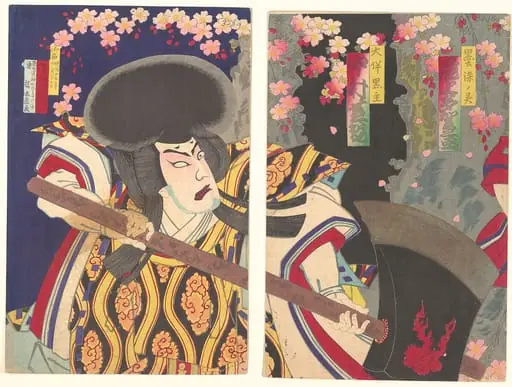 Untitled
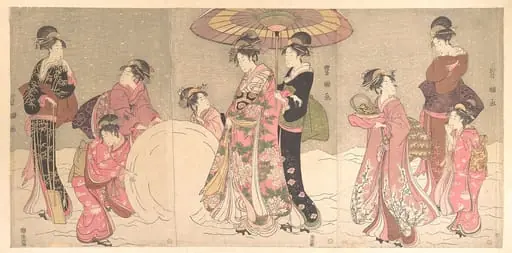 歌川豊国画 雪こかし|Courtesans and Attendants Making a Giant Snowball