Artwork
『雪中梅荘群児遊戯 図』|Children Playing in the Snow under Plum Trees in Bloom (Secchū baisō gunji yūgi zu)
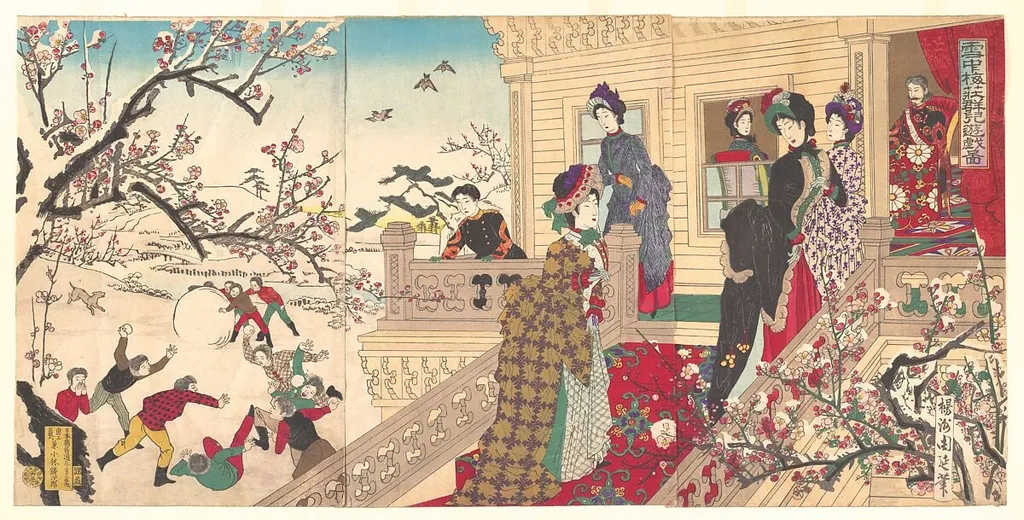
『雪中梅荘群児遊戯 図』|Children Playing in the Snow under Plum Trees in Bloom (Secchū baisō gunji yūgi zu) is an ink print by the Impressionist artist Yōshū (Hashimoto) Chikanobu. It dates from 1887 and is held in the collection of the Metropolitan Museum of Art.
About this work
Overview
Yōshū Chikanobu’s triptych, titled *Children Playing in the Snow under Plum Trees in Bloom* (Secchū baisō gunji yūgi zu), was produced in 1887. Executed as woodblock prints on paper, the work combines ink and color to portray a winter scene enlivened by the presence of blooming plum trees.
Subject & Meaning
The three panels show children dressed in vivid kimonos engaged in playful activity on a snow‑covered ground. Pink plum blossoms frame the scene, juxtaposing the cold of winter with the fresh promise of spring, suggesting an idealized moment of joy rather than a literal observation of nature.
Technique & Style
Chikanobu employed traditional ukiyo‑e woodblock methods, carving separate blocks for each color and ink layer. The composition balances delicate line work for the blossoms with broader washes that convey the depth of snow, while the bright costumes provide focal points that guide the viewer’s eye across the triptych.
History & Provenance
Created during the Meiji period, the print reflects the era’s fascination with everyday life and seasonal themes. It was likely issued as part of a series depicting children at play, a popular subject in late‑19th‑century Japanese printmaking, and has since been collected by institutions focusing on Meiji‑era visual culture.
Artist & collection


 Untitled
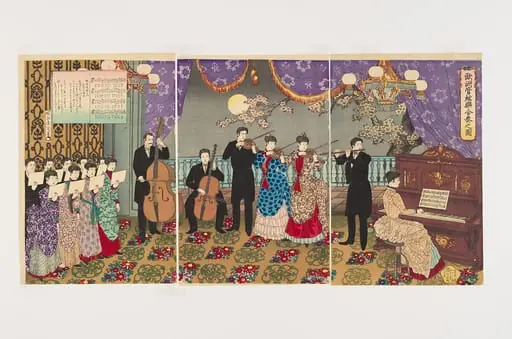 『欧州管絃楽合奏之図』|Concert of European Music (Ōshū kangengaku gassō no zu)
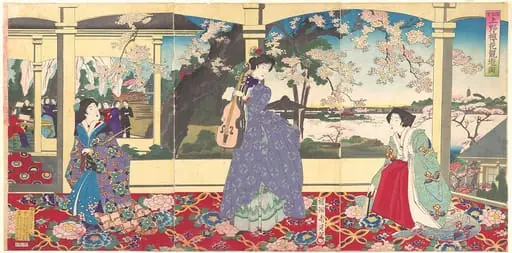 『踏舞会 上野桜花観 遊ノ図』|A Dance Party: Enjoying Cherry Blossom Viewing at Ueno (Tōbukai Ueno ōka yūran no zu)
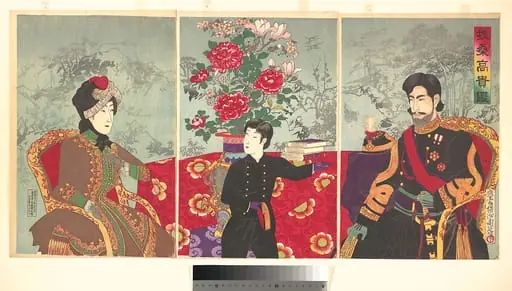 『扶桑高貴鑑』|A Mirror of Japan’s Nobility: The Emperor Meiji, His Wife, and Prince Haru (Fūsō kōki kagami)
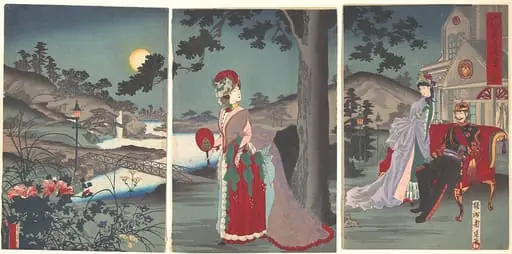 『高貴納涼ノ図』|Nobility in the Evening Cool (Koki nōryō no zu)
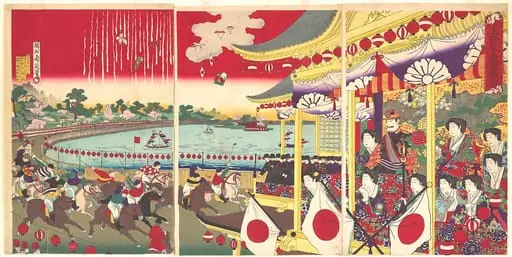 『上野不忍競馬図』|View of the Horse Track at Shinobazu in Ueno Park (Ueno shinobazu keiba zu)
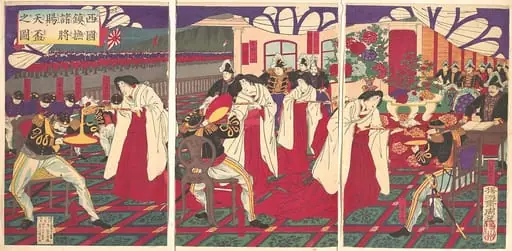 西国鎮静撫諸将天杯賜之図|Illustration of the Commanders who Pacified Western Japan, Receiving the Emperor's Gift Cups (Saigoku chinbu shoshō tenpai o tamau no zu)
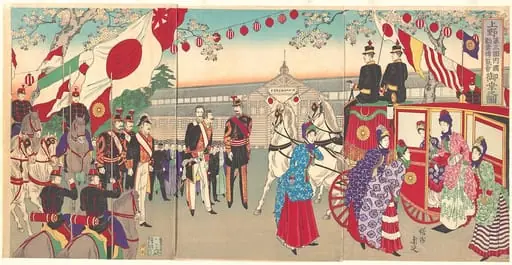 『上野第三回内国勧業 博覧会御幸之図』|Visit of the Empress to the Third National Industrial Promotional Exhibition at Ueno Park (Ueno dai sankai naikoku kangyō hakuran kai gyokō no zu)
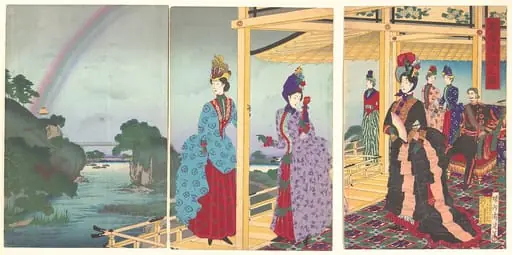 『雨過洗庭之図』|A Garden Refreshed by the Passing Rain (Ukasentei no zu)
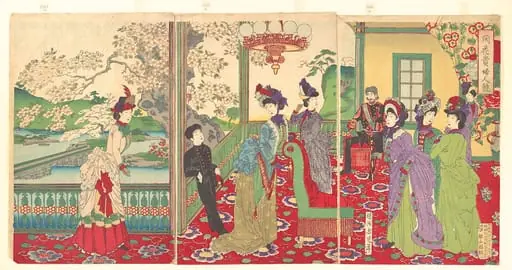 楊洲周延画 『開花貴婦人競』|A Contest of Elegant Ladies among the Cherry Blossoms (Kaika kifujin kisoi)
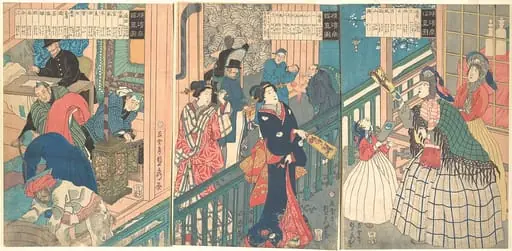 歌川(五雲亭)貞秀画 「横濱商館真圖」|A True View of a Trading House of a Yokohama Merchant
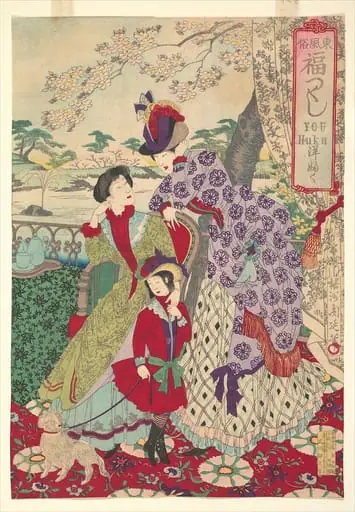 『東風俗福づくし 洋 ふく』|Western Clothing from the series An Array of Auspicious Customs of Eastern Japan (Azuma fūzoku, fukuzukushi-Yōfuku)
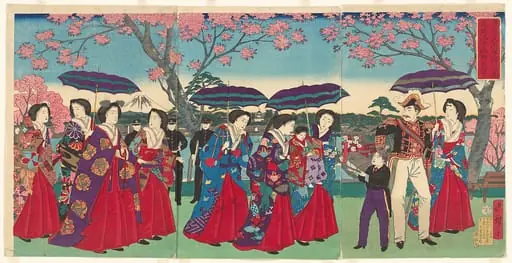 三代歌川広重画 『東京名所 従上野公園 不忍池中嶋弁天之景』|View of Benten Shrine on Nakanoshima Island in Shinobazu Pond, Ueno Park, from the series Famous Views of Tokyo (Tōkyō Tokyo meisho yori Ueno kōen Shinobazu no ike Nakanoshima Benten no kei)
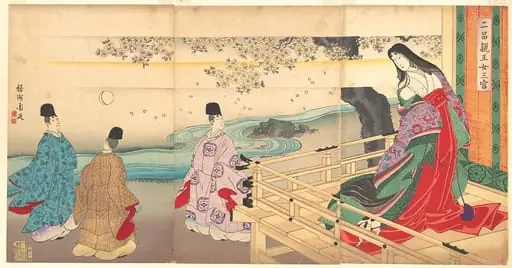 二品親王女三宮|The Third Princess and Kashiwagi, from Chapter 34, “New Herbs I (Wakana I)” (Nihon shinnō onna sannomiya)
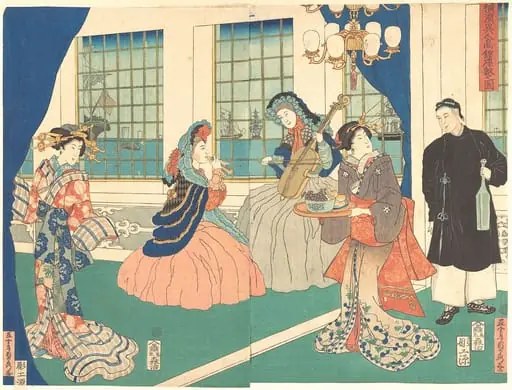 『横浜異 人商館座敷之図』|Drawing Room of a Foreign Business Establishment in Yokohama
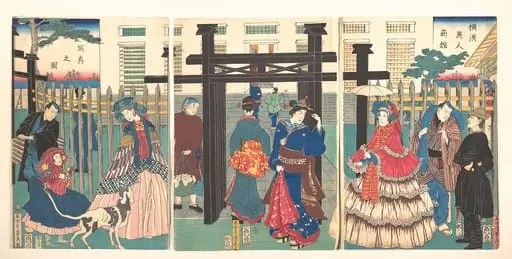 歌川五雲亭貞秀画 『横浜異人商館 写真之図』|Foreign Business Establishment in Yokohama (Yokohama ijin shōkan shashin no zu)
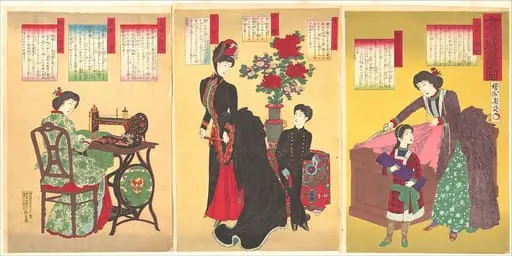 楊洲周延画 『女官洋服裁縫之図』|Court Ladies Sewing Western Clothing (Jokan yōfuku saihō no zu)
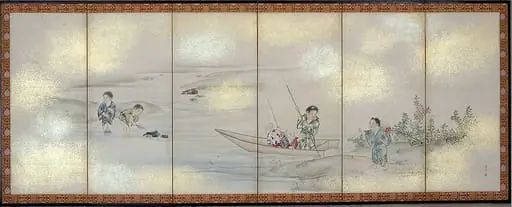 円山応震筆 子供遊び図屏風|Children Playing in Summer and Winter
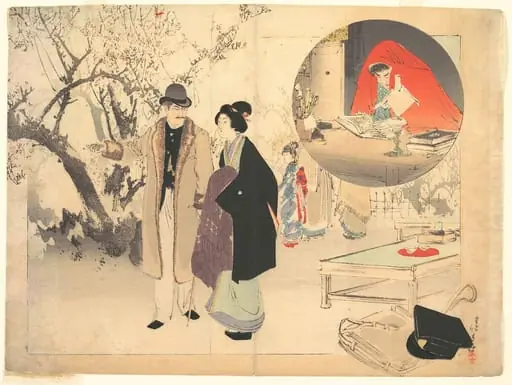 Untitled