Artwork
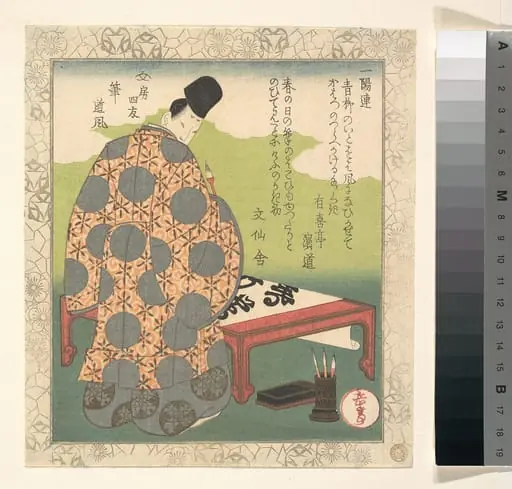
「一陽連文房四友 筆 道風」『春雨集』 摺物帖|The Heian Court Calligrapher Ono no Tōfū (894–966); “Calligraphy Brush” (Fude), from Four Friends of the Writing Table for the Ichiyō Poetry Circle (Ichiyō-ren Bunbō shiyū)From the Spring Rain Collection (Harusame shū), vol. 1
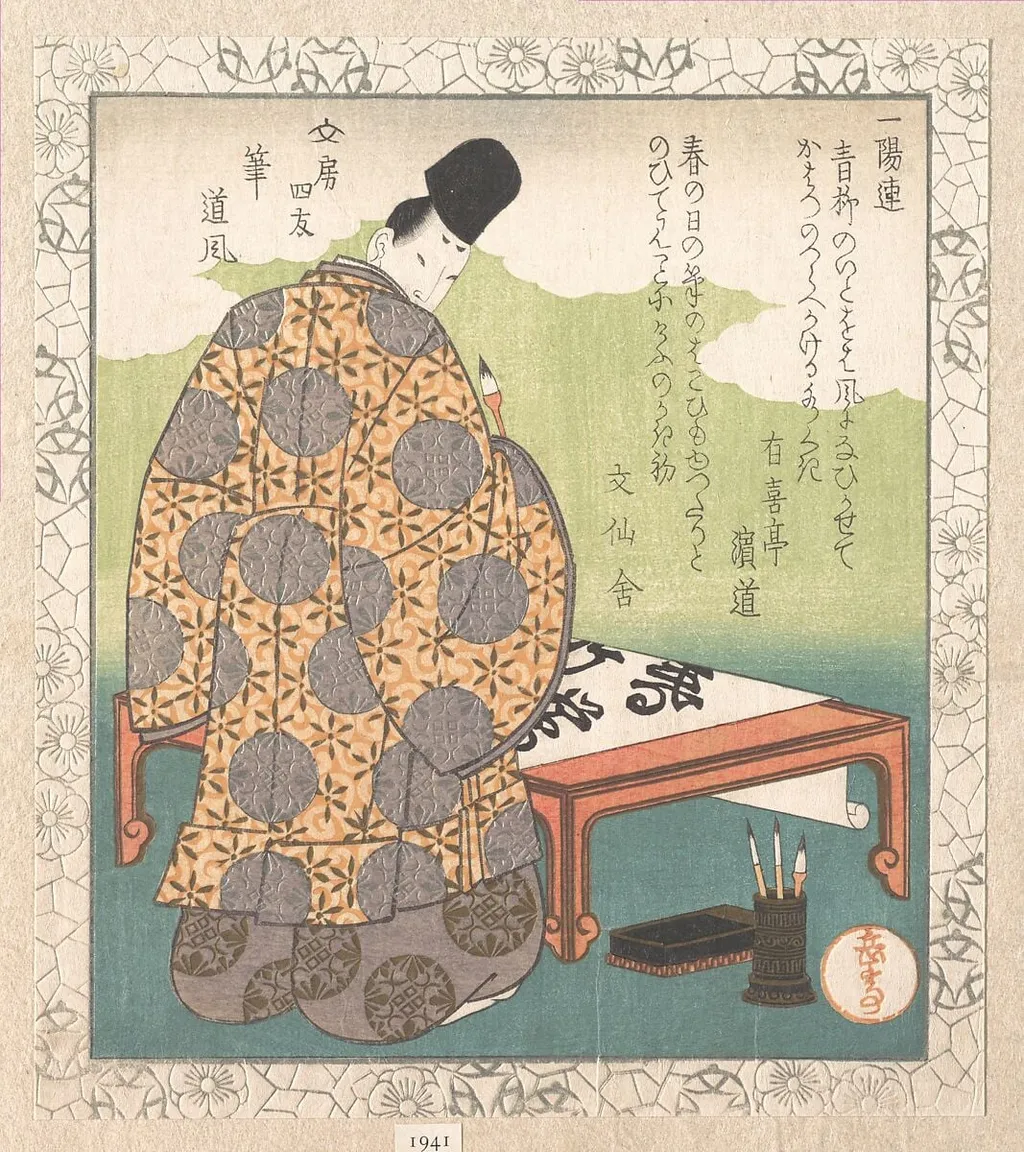
「一陽連文房四友 筆 道風」『春雨集』 摺物帖|The Heian Court Calligrapher Ono no Tōfū (894–966); “Calligraphy Brush” (Fude), from Four Friends of the Writing Table for the Ichiyō Poetry Circle (Ichiyō-ren Bunbō shiyū)From the Spring Rain Collection (Harusame shū), vol. 1 is an ink print by the Romanticist artist Yashima Gakutei. It dates from 1827 and is held in the collection of the Metropolitan Museum of Art.
About this work
Overview
Around 1827, Yashima Gakutei produced a surimono woodblock print titled “Calligraphy Brush,” portraying the Heian‑period court calligrapher Ono no Tōfū. The image forms part of a quartet called Four Friends of the Writing Table, created for the Ichiyō Poetry Circle and included in the first volume of the Spring Rain Collection. The print is held by the Metropolitan Museum of Art.
Subject & Meaning
The figure, shown from behind, is seated at a low writing desk, grasping a brush and surrounded by traditional tools—a brush holder, two brushes, and an ink box. The composition alludes to the disciplined practice of calligraphy, a cultivated art in Japanese court culture, while the surrounding poetry reinforces the link between writing and poetic expression.
Technique & Style
Executed as a surimono, the work combines fine woodblock carving with delicate ink and color application on paper. Gakutei’s mastery of line and subtle coloration renders the patterned robe, the modest landscape background, and the ornamental border with a refined, almost lyrical quality characteristic of early‑19th‑century ukiyo‑e prints.
History & Provenance
Gakutei, a disciple of Totoya Hokkei and Katsushika Hokusai, was active in the early to mid‑nineteenth century and known for his kyōka poetry and elegant prints. The “Calligraphy Brush” print was produced for the Ichiyō Poetry Circle’s Spring Rain Collection, a private anthology circulated among literati. It later entered the collection of the Metropolitan Museum of Art, where it remains on view.
Context
The Four Friends of the Writing Table series celebrated the essential implements of scholarly work—brush, ink, paper, and desk—reflecting the Edo period’s reverence for literary pursuits. By depicting Ono no Tōfū, a celebrated Heian calligrapher, Gakutei linked contemporary poetic societies with a historic ideal of cultured refinement.
Artist & collection
Artist
Yashima Gakutei (Japanese: 八島岳亭; c. 1786 – 1868) was a Japanese artist and poet who was a pupil of both Totoya Hokkei and Hokusai. Gakutei is best known for his kyōka poetry and surimono works.

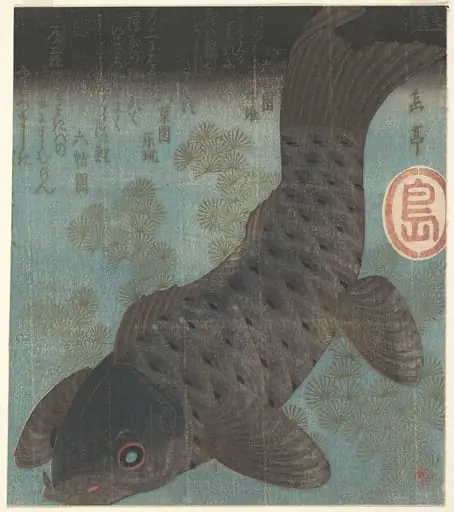 Untitled
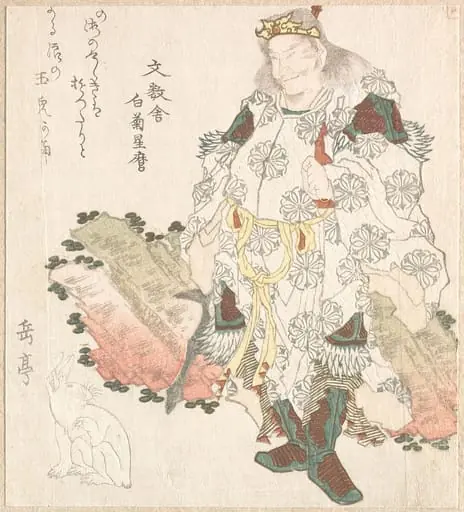
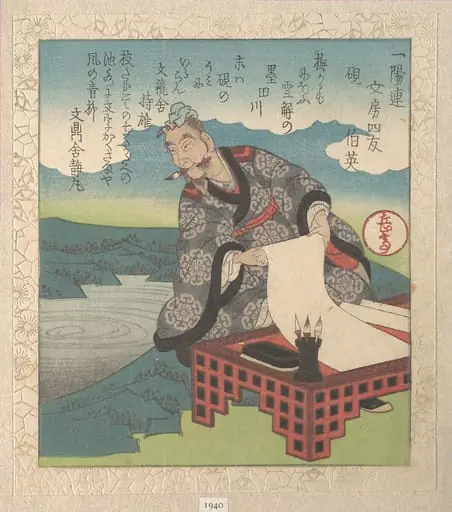 「一陽連文房四友 硯 伯英」『春雨集』 摺物帖|The Chinese Calligrapher Boying (Japanese: Hakuei; also known as the “Sage of Cursive Script”); “Inkstone” (Suzuri), from Four Friends of the Writing Table for the Ichiyō Poetry Circle (Ichiyō-ren Bunbō shiyū) From the Spring Rain Collection (Harusame shū), vol. 1
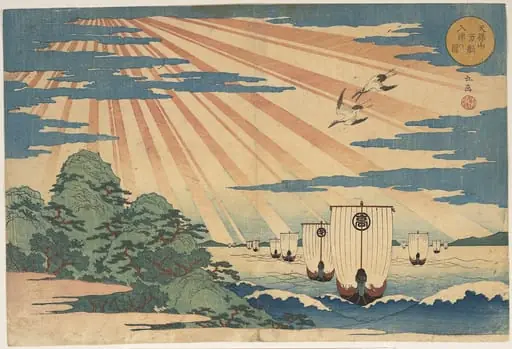 Untitled
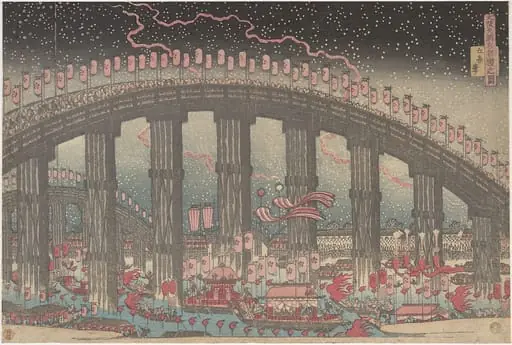 Osaka Tenmangu sairei no zu|The Tenmangu Festival at Osaka
 Untitled
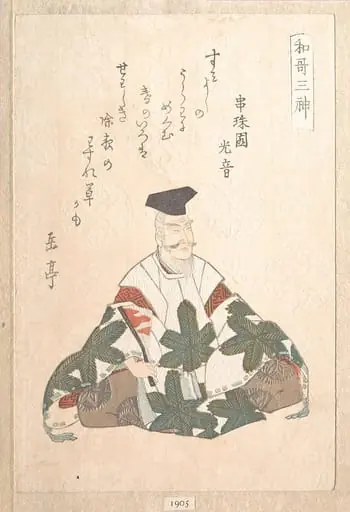
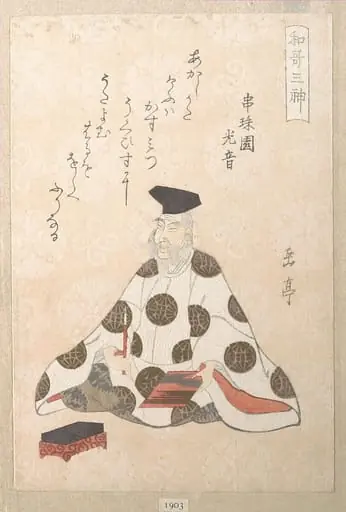 『和歌三神』 柿本人麻呂|Kakinomoto no Hitomaro (ca. 662–710), One of the Three Gods of PoetryFrom the Spring Rain Collection (Harusame shū), vol. 1
 Untitled
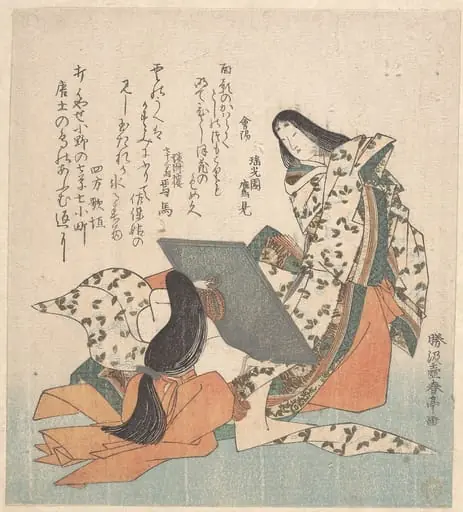
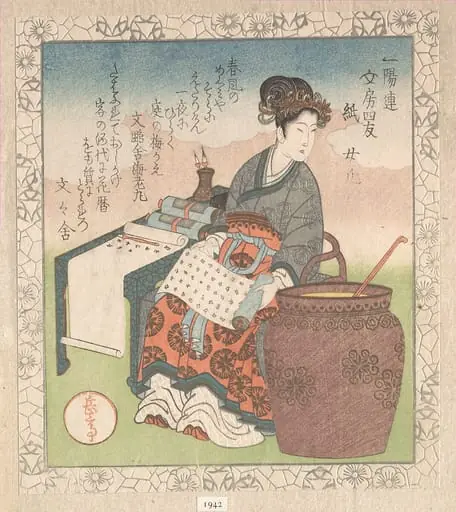 「一陽連文房四友 紙 女凢」『春雨集』 摺物帖 |Nuji (Japanese: Joki; female attendant who compiled writings by Daoist sages); “Paper” (Kami), from Four Friends of the Writing Table for the Ichiyō Poetry Circle (Ichiyō-ren Bunbō shiyū)From the Spring Rain Collection (Harusame shū), vol. 1