Artwork
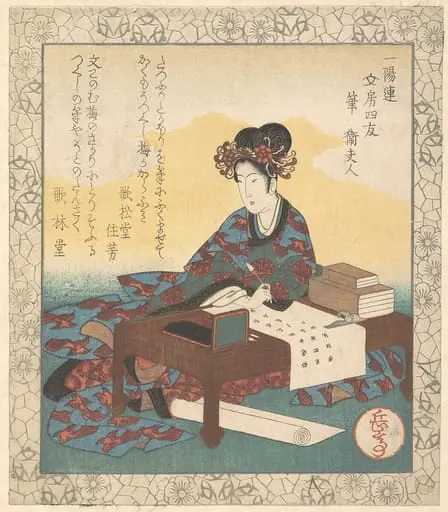
「一陽連文房四友 紙 女凢」『春雨集』 摺物帖 |Nuji (Japanese: Joki; female attendant who compiled writings by Daoist sages); “Paper” (Kami), from Four Friends of the Writing Table for the Ichiyō Poetry Circle (Ichiyō-ren Bunbō shiyū)From the Spring Rain Collection (Harusame shū), vol. 1
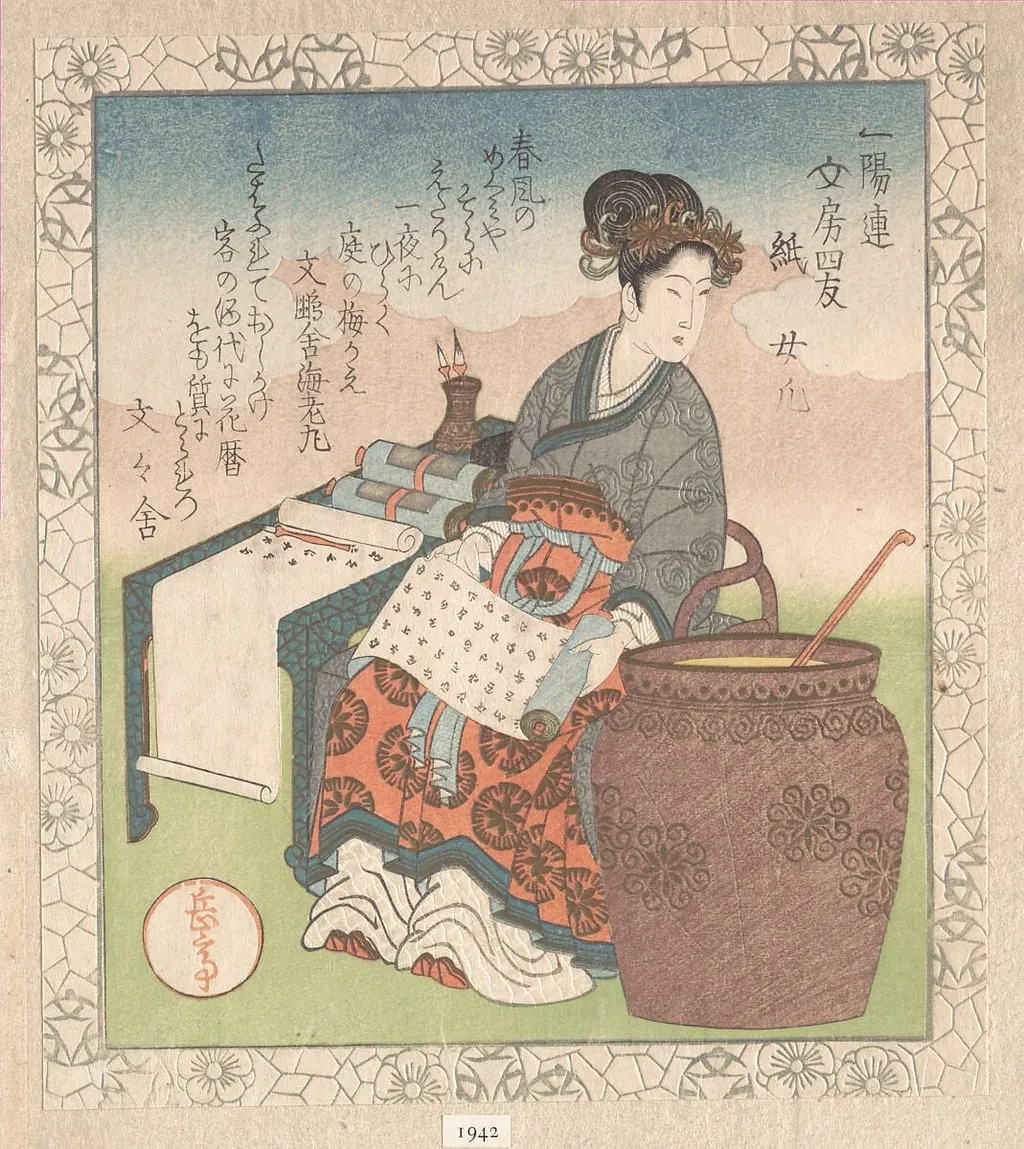
「一陽連文房四友 紙 女凢」『春雨集』 摺物帖 |Nuji (Japanese: Joki; female attendant who compiled writings by Daoist sages); “Paper” (Kami), from Four Friends of the Writing Table for the Ichiyō Poetry Circle (Ichiyō-ren Bunbō shiyū)From the Spring Rain Collection (Harusame shū), vol. 1 is an ink print by the Romanticist artist Yashima Gakutei. It dates from 1827 and is held in the collection of the Metropolitan Museum of Art.
About this work
Overview
Executed in ink and color on paper, the work belongs to the *Spring Rain Collection*, a private publication circulated among literary patrons.
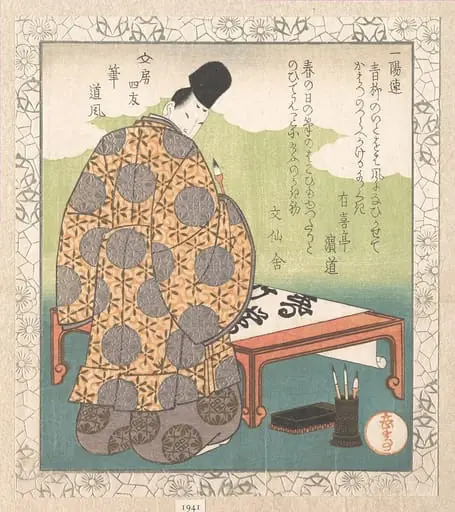
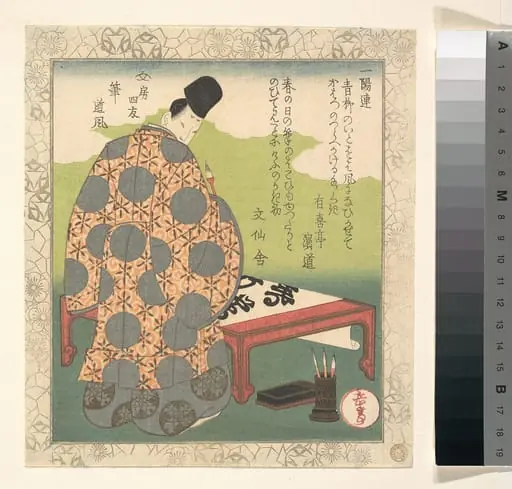
Created around 1827 by Yashima Gakutei, this surimono print is one of four in the series commissioned by the Ichiyō Poetry Circle. It depicts the concept of 'Paper' as a personified female attendant, Joki, who compiled Daoist texts. Executed in ink and color on paper, the work belongs to the *Spring Rain Collection*, a private publication circulated among literary patrons. Unlike mass-produced prints, surimono were luxury items, often gifted to members of poetic circles as tokens of refined taste.
Subject & Meaning
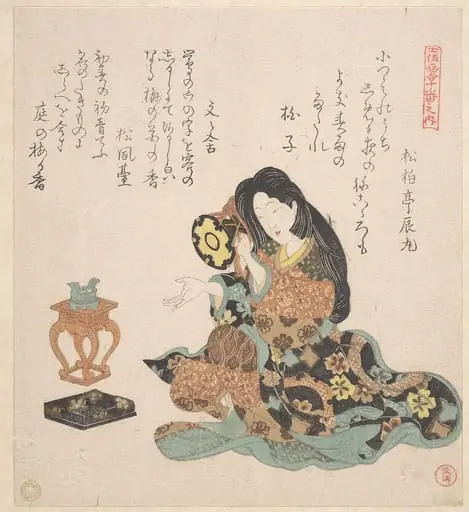
The figure represents 'Paper' not as a material, but as a poetic personification—Joki, a historical female scribe associated with Daoist scholarship. Her quiet focus, brush hovering above the sheet, evokes the act of creation as a meditative ritual. The surrounding poetry, written in kyōka style, reinforces the connection between literary tradition and the tools of writing. The image transforms an everyday object into a symbol of intellectual and spiritual refinement, honoring the quiet labor behind poetic composition.
Technique & Style
Gakutei employed fine woodblock carving to achieve delicate linework and subtle color gradations, typical of surimono. The robe’s intricate patterns and the geometric border along the page’s edge were printed with multiple blocks, each requiring precise alignment. Ink was applied with varying pressure to suggest texture, while metallic pigments may have been used sparingly for highlights. The composition balances emptiness and detail, directing attention to the figure’s poised gesture and the intimate scale of the writing surface.
History & Provenance
The print was produced as part of a limited series for the Ichiyō Poetry Circle, a group of literati who exchanged surimono as New Year or seasonal gifts. These prints were not sold publicly but circulated privately among poets, patrons, and artists. Gakutei, trained under Hokkei and Hokusai, contributed to this tradition by blending poetic imagery with technical precision. The *Spring Rain Collection* survives in only a few institutional holdings, making this print a rare artifact of early 19th-century literary culture.
Context
In early 19th-century Japan, surimono emerged as a niche art form within elite literary circles, where poetry, calligraphy, and printmaking intersected. The Four Friends—Paper, Ink, Brush, and Inkstone—were traditional symbols of scholarly life, often invoked in Daoist and Confucian texts. Gakutei’s series reimagined these objects as human figures, reflecting a broader trend of anthropomorphizing tools of art. This approach honored both classical learning and the personal, intimate nature of poetic exchange among friends.
Legacy
Though not widely known outside scholarly circles, Gakutei’s surimono helped define the aesthetic of late Edo-period literary prints. His integration of kyōka poetry with visual symbolism influenced later artists who sought to merge text and image. Surviving examples like this one are studied for their craftsmanship and their insight into the private, ritualized world of Edo-era poets. The print endures not as popular art, but as a quiet testament to the cultural value placed on literary contemplation.
Artist & collection
Artist
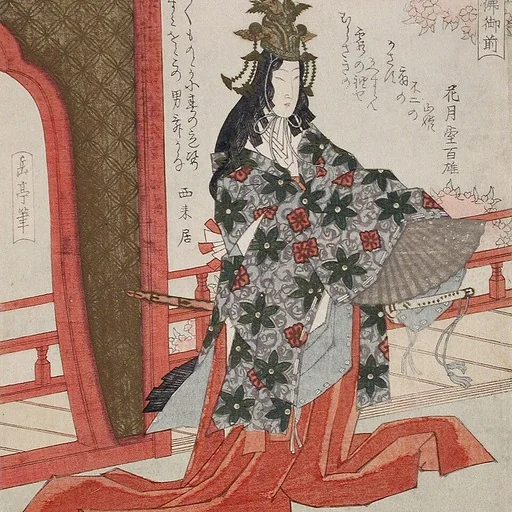
Yashima Gakutei (Japanese: 八島岳亭; c. 1786 – 1868) was a Japanese artist and poet who was a pupil of both Totoya Hokkei and Hokusai. Gakutei is best known for his kyōka poetry and surimono works.

 Untitled
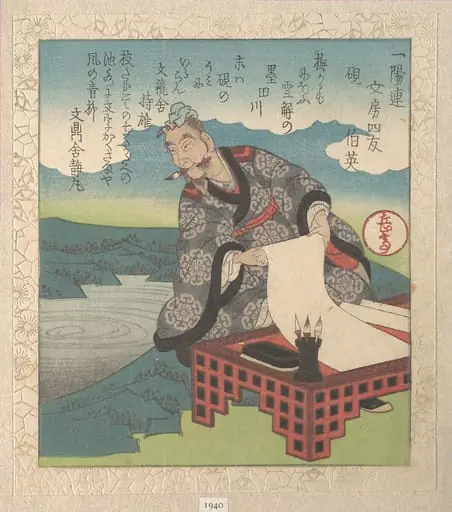 「一陽連文房四友 硯 伯英」『春雨集』 摺物帖|The Chinese Calligrapher Boying (Japanese: Hakuei; also known as the “Sage of Cursive Script”); “Inkstone” (Suzuri), from Four Friends of the Writing Table for the Ichiyō Poetry Circle (Ichiyō-ren Bunbō shiyū) From the Spring Rain Collection (Harusame shū), vol. 1
 Untitled
 Osaka Tenmangu sairei no zu|The Tenmangu Festival at Osaka
 「一陽連文房四友 筆 道風」『春雨集』 摺物帖|The Heian Court Calligrapher Ono no Tōfū (894–966); “Calligraphy Brush” (Fude), from Four Friends of the Writing Table for the Ichiyō Poetry Circle (Ichiyō-ren Bunbō shiyū)From the Spring Rain Collection (Harusame shū), vol. 1
 Untitled
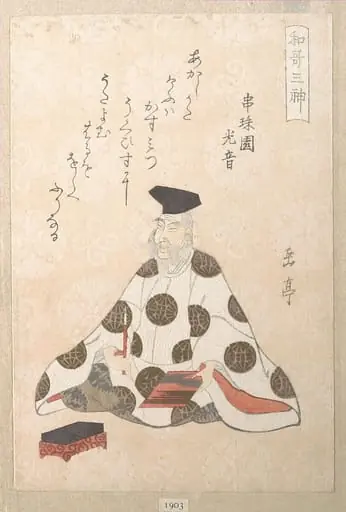 『和歌三神』 柿本人麻呂|Kakinomoto no Hitomaro (ca. 662–710), One of the Three Gods of PoetryFrom the Spring Rain Collection (Harusame shū), vol. 1
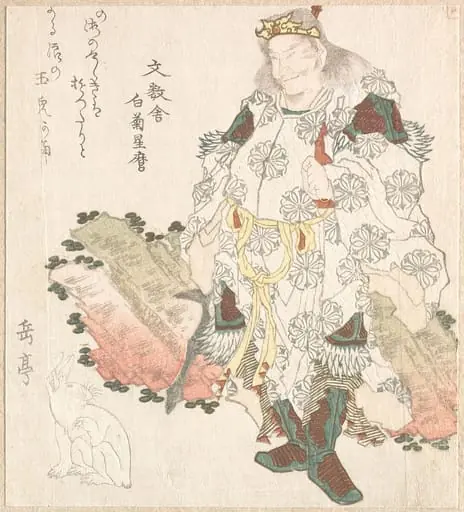 Untitled
 Untitled
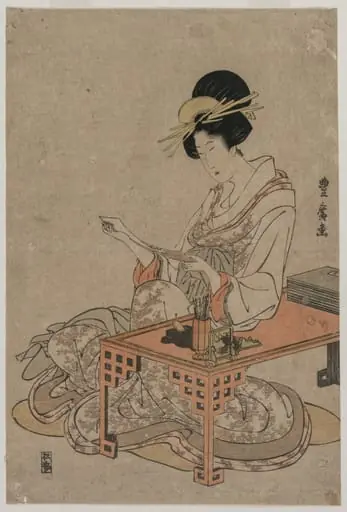 Courtesan Seated at a Writing Table
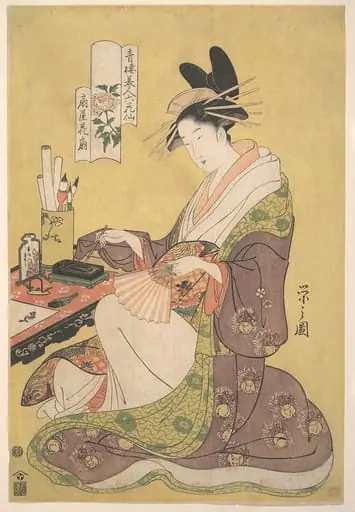 「青楼美人六花仙 扇屋花扇」|The Courtesan Hanaōgi of the Ōgiya Brothel (Ōgiya Hanaōgi), from the series Beauties of the Pleasure Quarters as Six Floral Immortals (Seirō bijin rokkasen)
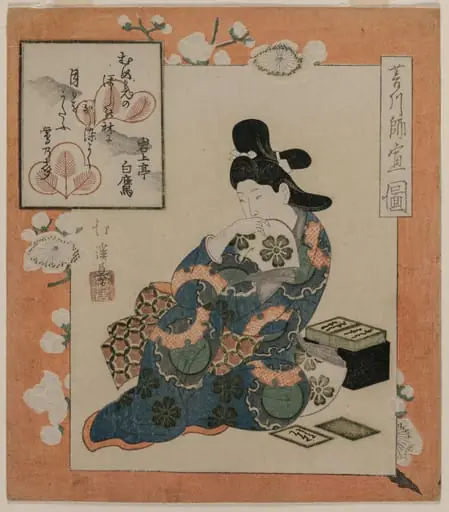 A Picture by Hishikawa Moronobu: Woman with a Set of Poem Cards
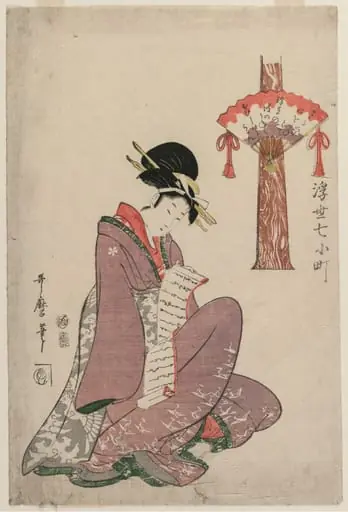 Woman Reading a Letter (from the series Seven Episodes in the Life of Komachi in the Floating World)
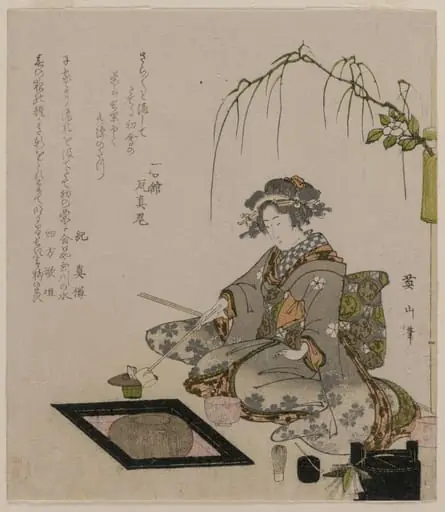 Woman Performing the Tea Ceremony
 Untitled
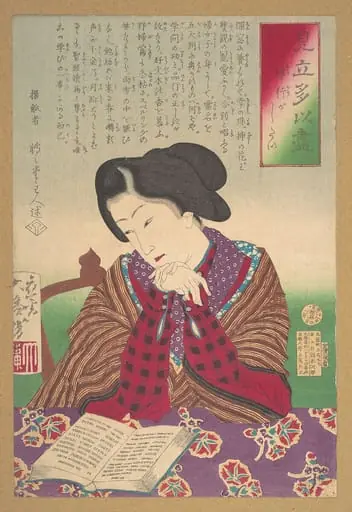 見立多以尽 - 洋行がしたい|Collection of Desires, Wish for Foreign Travel (Mitate Tai zukushi-yōkō ga shitai)
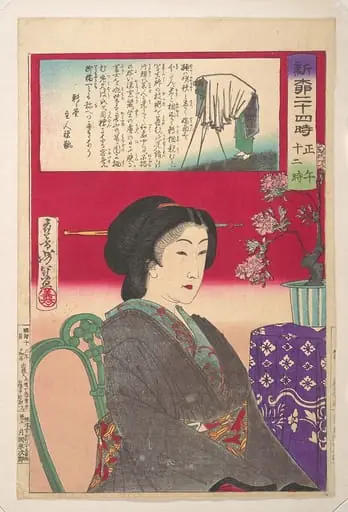 新柳二十四時 午前十二時|Twenty-Four Hours at Shinbashi/Yanagibashi: 12 Noon. (Shinyanagi nijūyo-ji, gozen jūni-ji)
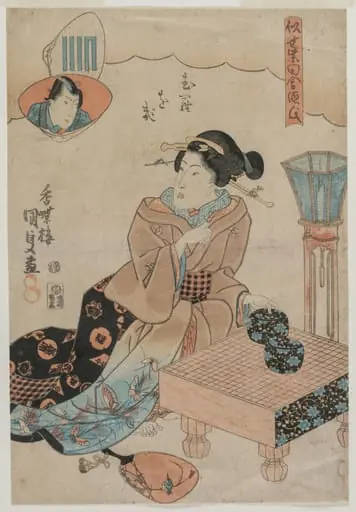 Muraogi, from the series The False Murasaki's Rustic Genji (Nise Murasaki Inaka Genji)