Artwork
Osaka Tenmangu sairei no zu|The Tenmangu Festival at Osaka
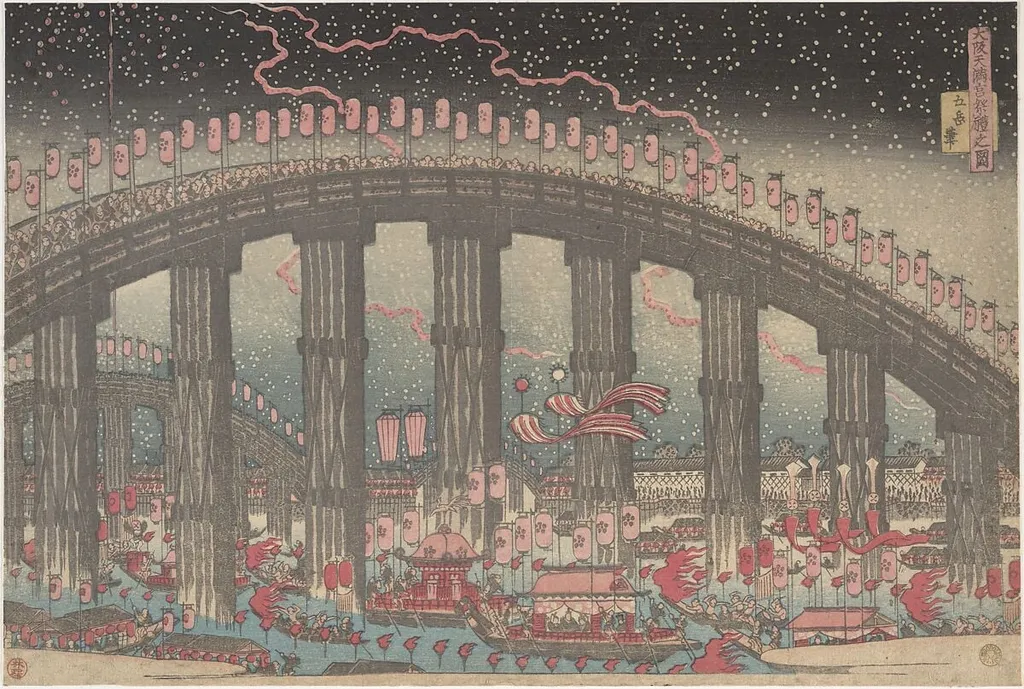
Osaka Tenmangu sairei no zu|The Tenmangu Festival at Osaka is an ink print by the Baroque artist Yashima Gakutei. It dates from 1834 and is held in the collection of the Metropolitan Museum of Art.
About this work
Overview
Created in 1834 by Yashima Gakutei, this woodblock print captures the nighttime atmosphere of the Tenmangu Festival in Osaka.
Created in 1834 by Yashima Gakutei, this woodblock print captures the nighttime atmosphere of the Tenmangu Festival in Osaka. Executed in ink and color on paper, it belongs to a tradition of ukiyo-e prints that documented public celebrations. Gakutei, trained in the circles of Hokkei and Hokusai, combined poetic sensibility with precise visual storytelling, rendering a crowded, luminous scene that reflects both communal ritual and artistic refinement.
Subject & Meaning
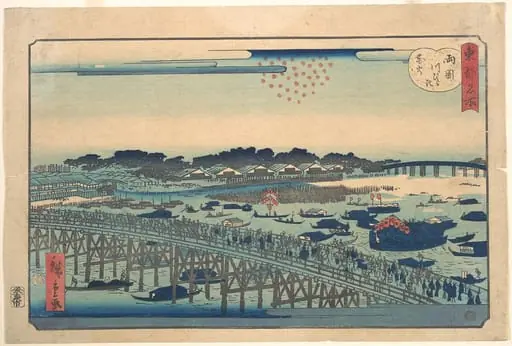
The print portrays the annual festival honoring Sugawara no Michizane, the deified scholar of Tenmangu Shrine. Crowds line a long arched bridge, carrying red lanterns, while boats adorned with flags drift along the river below. The scene conveys devotion and civic pride, with the illuminated structures in the distance suggesting the shrine’s spiritual presence. The nocturnal setting elevates the event from mere procession to a sacred, almost dreamlike gathering.
Technique & Style
Gakutei employed fine linework and layered color to suggest movement and depth. Lanterns cast subtle glows, their reflections ripple in the water, and distant buildings are rendered with minimal detail to imply scale. Cross-hatching and delicate shading define architectural forms without heavy outlines, characteristic of late Edo-period printmaking. The composition balances chaos and order, guiding the eye along the bridge’s curve into the hazy horizon.
History & Provenance
The print was produced during a period of flourishing urban culture in Osaka, when festivals were popular subjects for commercial prints. Gakutei, known also for kyōka poetry and surimono, likely created this as part of a series documenting regional events. Its survival in multiple collections suggests it was widely circulated, though few original impressions remain due to the fragility of paper and the ephemeral nature of festival imagery.
Context
In early 19th-century Osaka, public festivals were central to civic identity and religious life. The Tenmangu Festival, honoring a revered scholar-official, blended Shinto ritual with popular entertainment. Woodblock prints like this one served as both souvenirs and cultural records, bridging elite artistic traditions with mass appeal. Gakutei’s attention to detail reflects a broader trend of documenting everyday life with increasing realism.
Legacy
Though not among the most widely reproduced prints of its era, this work exemplifies the quiet sophistication of regional ukiyo-e artists beyond the dominant Tokyo-centered schools. Gakutei’s integration of poetic mood with topographical accuracy influenced later depictions of urban festivals. Today, it stands as a testament to the quiet dignity of communal rituals captured through the medium of print.
Artist & collection
Artist
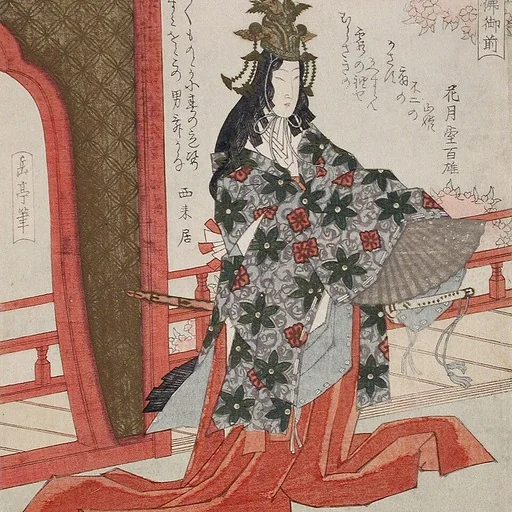
Yashima Gakutei (Japanese: 八島岳亭; c. 1786 – 1868) was a Japanese artist and poet who was a pupil of both Totoya Hokkei and Hokusai. Gakutei is best known for his kyōka poetry and surimono works.

 Untitled
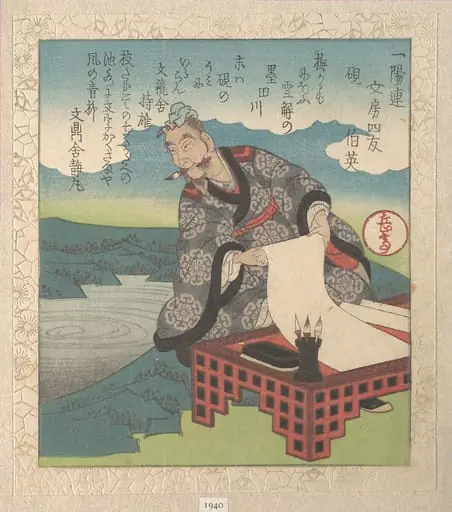 「一陽連文房四友 硯 伯英」『春雨集』 摺物帖|The Chinese Calligrapher Boying (Japanese: Hakuei; also known as the “Sage of Cursive Script”); “Inkstone” (Suzuri), from Four Friends of the Writing Table for the Ichiyō Poetry Circle (Ichiyō-ren Bunbō shiyū) From the Spring Rain Collection (Harusame shū), vol. 1
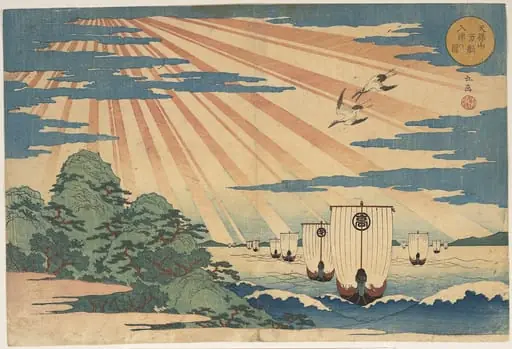 Untitled
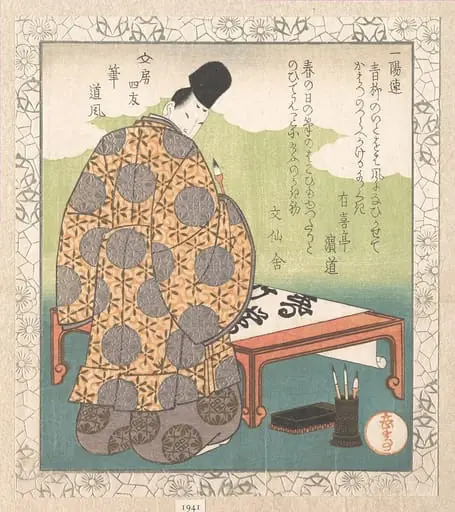 「一陽連文房四友 筆 道風」『春雨集』 摺物帖|The Heian Court Calligrapher Ono no Tōfū (894–966); “Calligraphy Brush” (Fude), from Four Friends of the Writing Table for the Ichiyō Poetry Circle (Ichiyō-ren Bunbō shiyū)From the Spring Rain Collection (Harusame shū), vol. 1
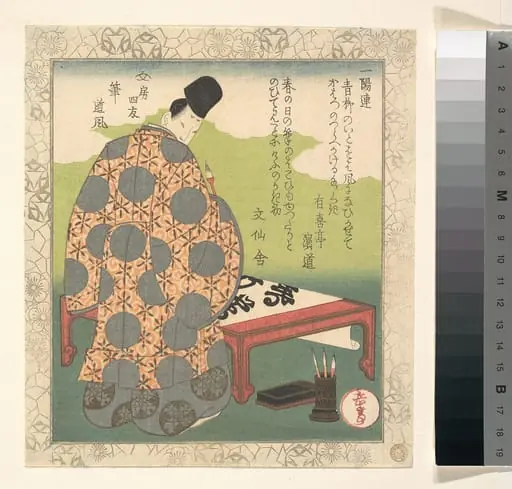 Untitled
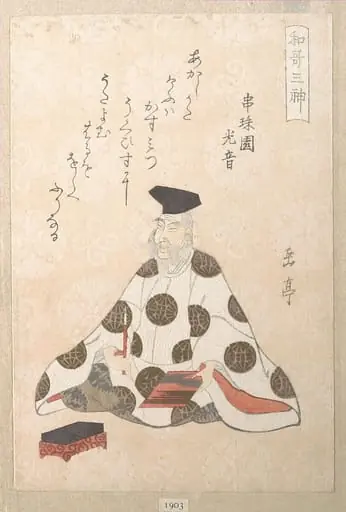 『和歌三神』 柿本人麻呂|Kakinomoto no Hitomaro (ca. 662–710), One of the Three Gods of PoetryFrom the Spring Rain Collection (Harusame shū), vol. 1
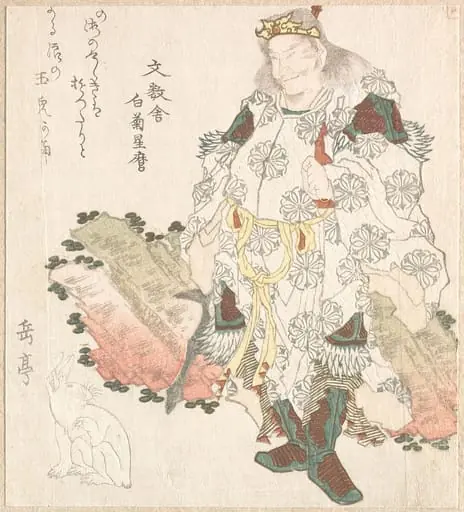 Untitled
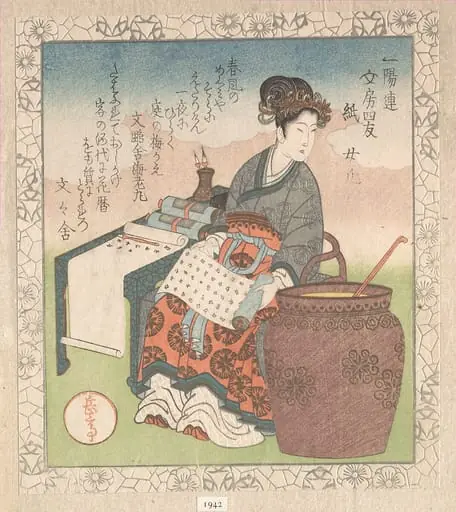 「一陽連文房四友 紙 女凢」『春雨集』 摺物帖 |Nuji (Japanese: Joki; female attendant who compiled writings by Daoist sages); “Paper” (Kami), from Four Friends of the Writing Table for the Ichiyō Poetry Circle (Ichiyō-ren Bunbō shiyū)From the Spring Rain Collection (Harusame shū), vol. 1
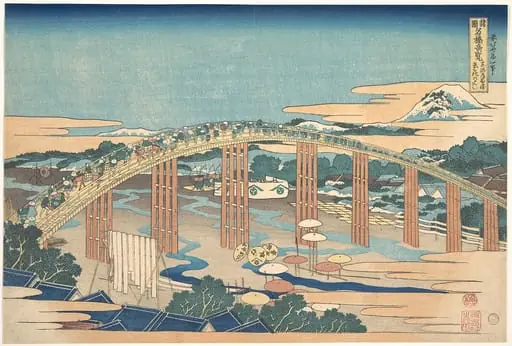 諸國名橋奇覧 東海道岡崎矢はぎのはし|Yahagi Bridge at Okazaki on the Tōkaidō (Tōkaidō Okazaki Yahagi no hashi), from the series Remarkable Views of Bridges in Various Provinces (Shokoku meikyō kiran)
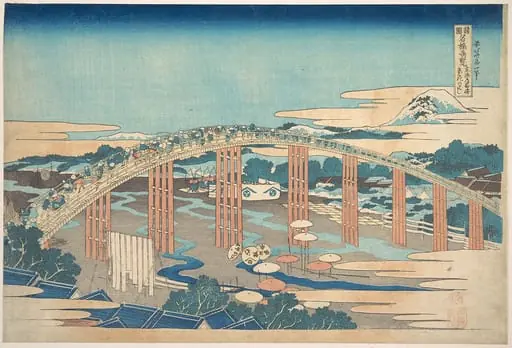 「諸國名橋寄覧 東海道岡崎 矢はぎのはし」|Yahagi Bridge at Okazaki on the Tōkaidō (Tōkaidō Okazaki Yahagi no hashi), from the series Remarkable Views of Bridges in Various Provinces (Shokoku meikyō kiran)
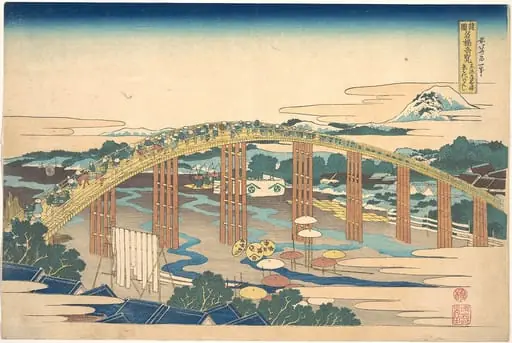 諸國名橋奇覧 東海道岡崎矢はぎのはし|Yahagi Bridge at Okazaki on the Tōkaidō (Tōkaidō Okazaki Yahagi no hashi), from the series Remarkable Views of Bridges in Various Provinces (Shokoku meikyō kiran)
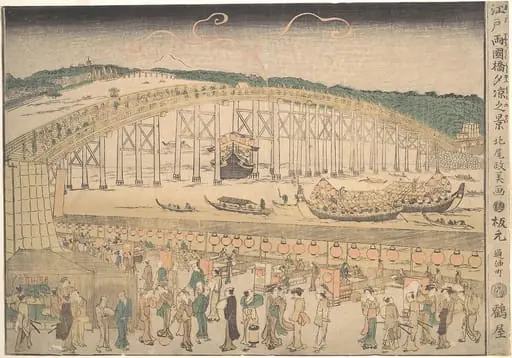 Untitled
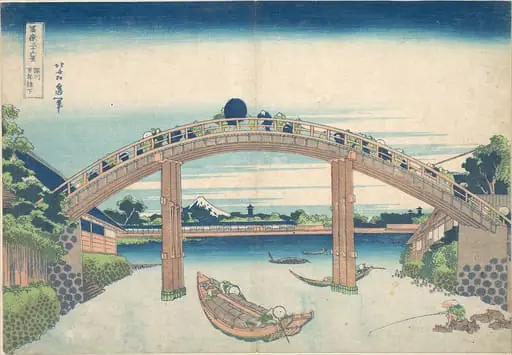 冨嶽三十六景 深川万年橋下|Under the Mannen Bridge at Fukagawa (Fukagawa Mannenbashi shita), from the series Thirty-six Views of Mount Fuji (Fugaku sanjūrokkei)
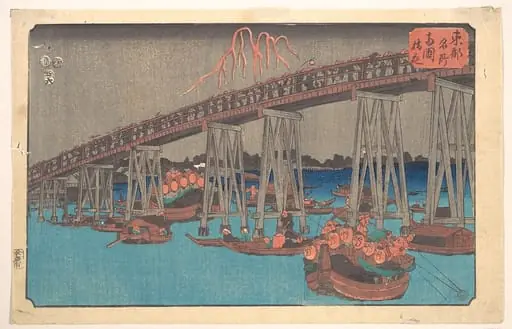 Untitled
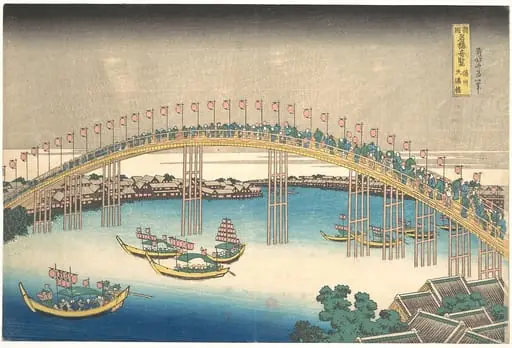 諸國名橋奇覧 摂洲天満橋|Tenman Bridge at Settsu Province (Sesshū Tenmanbashi), from the series Remarkable Views of Bridges in Various Provinces (Shokoku meikyō kiran)
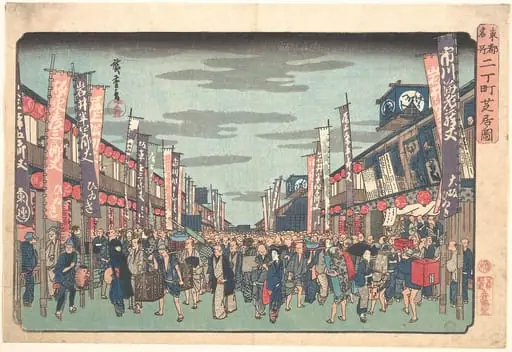
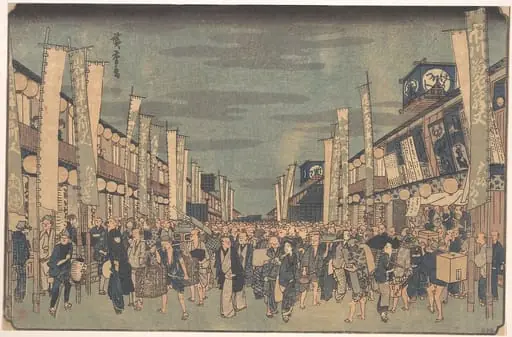 東都名所 猿若町芝居の図|Picture of the Theatres in Sakai Cho
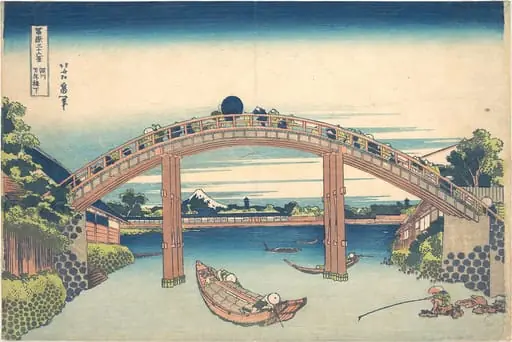 葛飾北斎画 冨嶽三十六景 深川万年橋下|Under the Mannen Bridge at Fukagawa (Fukagawa Mannenbashi shita), from the series Thirty-six Views of Mount Fuji (Fugaku sanjūrokkei)
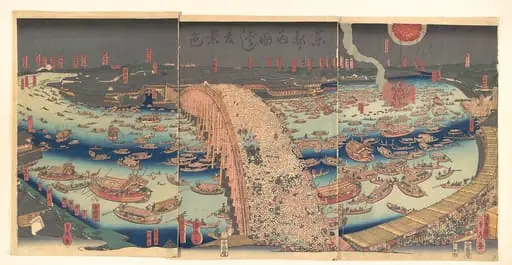 Tōtō Ryōgokubashi natsu keshiki|Panoramic View of Ryōgoku Bridge in the Summer
 Untitled
 東都名所 二丁町芝居の図|View of the Kabuki Theaters at Sakai-cho on Opening Day of the New Season (Sakai-cho Shibai no Zu), from the series, "Toto Meisho"