Artwork
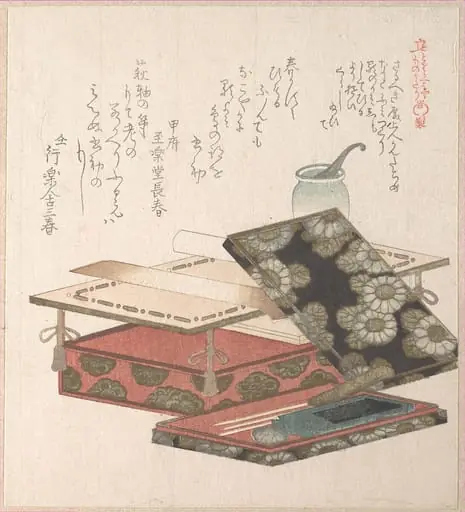
『浅草側いせ暦』 文房具と梅熨斗『春雨集』 摺物帖 |“Desk with Writing Set and Plum Flowers,” from the series Ise Calendars for the Asakusa Group (Asakusa-gawa Ise goyomi)From the Spring Rain Collection (Harusame shū), vol. 2
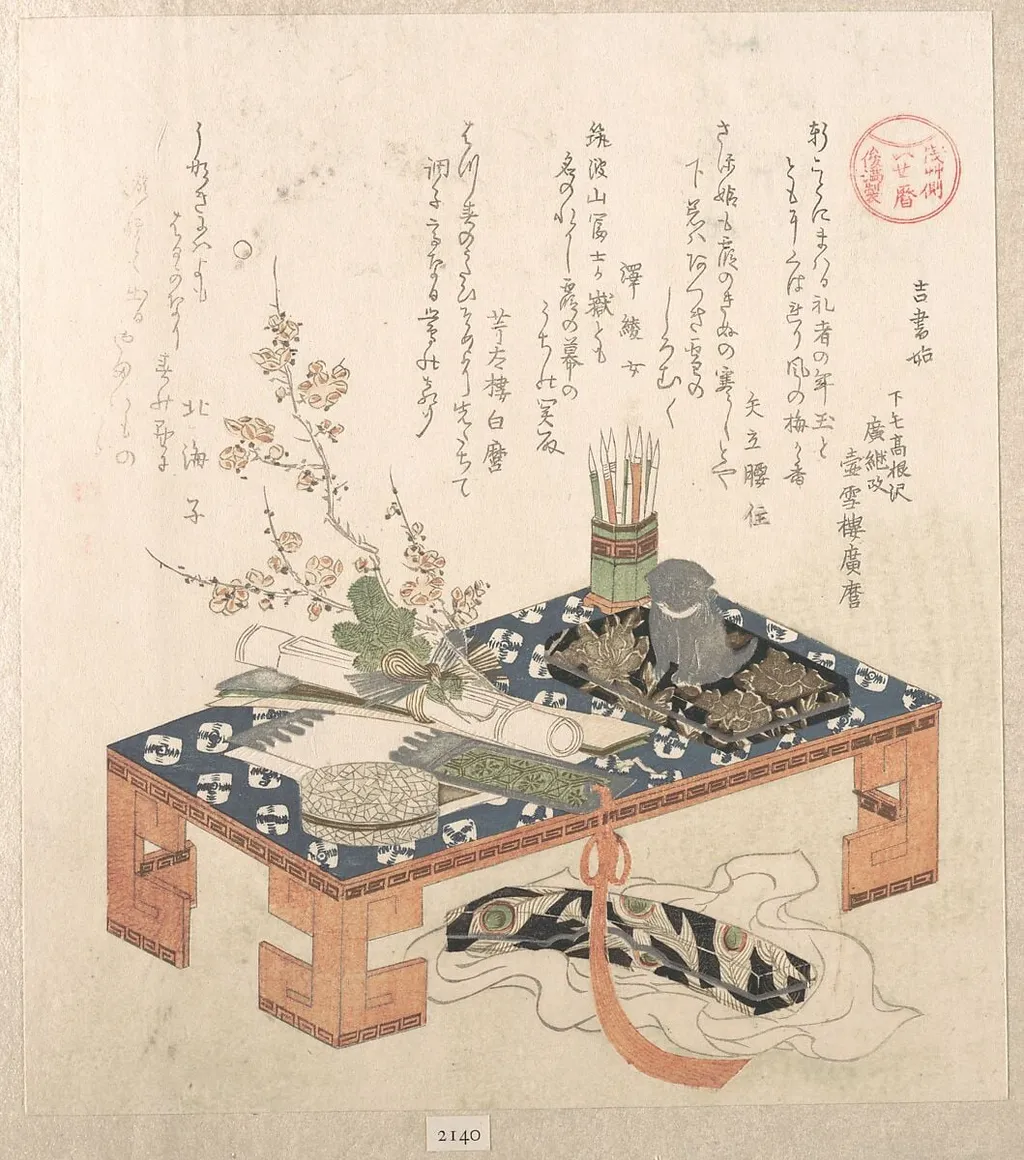
『浅草側いせ暦』 文房具と梅熨斗『春雨集』 摺物帖 |“Desk with Writing Set and Plum Flowers,” from the series Ise Calendars for the Asakusa Group (Asakusa-gawa Ise goyomi)From the Spring Rain Collection (Harusame shū), vol. 2 is an ink print by the Romanticist artist Kubo Shunman. It dates from 1814 and is held in the collection of the Metropolitan Museum of Art.
About this work
Overview
This woodblock print, created around 1814 by Kubo Shunman, features a serene composition centered on a small wooden desk with a writing set, accompanied by symbolic elements such as a plum branch, a turtle, and a bird, set against a backdrop of a red curtain and a distant building.
Subject & Meaning
The subject combines everyday writing utensils with nature (plum branch) and animals (turtle, bird), conveying themes of tranquility and creativity. The plum branch, symbolizing resilience in Japanese art, adds a layer of depth to the otherwise mundane setting.
Technique & Style
Executed as a surimono, a type of woodblock print typically reserved for special, non-mass-market pieces, the work showcases meticulous ink and color application on paper. The artist's use of line work and possibly subtle texture (though not explicitly mentioned, characteristic of the medium) enhances the piece's intimate feel.
History & Provenance
Created circa 1814 for gifting rather than commercial sale, the print is now part of The Metropolitan Museum of Art's collection, highlighting its value beyond its original personal intent.
Context
Part of both the 'Asakusa-gawa Ise goyomi' series and the broader 'Spring Rain Collection (Harusame shū), vol. 2', this print reflects the artistic and cultural practices of early 19th-century Japan, where such pieces were used to commemorate or celebrate special occasions.
Legacy
While specific influence or widespread recognition details are not provided, its preservation in a major museum suggests an enduring appreciation for Kubo Shunman's craftsmanship and the cultural significance of surimono prints in Japanese art history.
Artist & collection


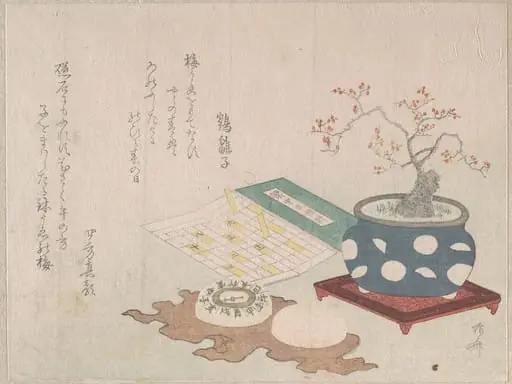 鉢梅、懐中日時計、羅針盤|Bonsai Plum, Compass, and Pocket Sundial with Design of Calendar, from Spring Rain Surimono Album (Harusame surimono-jō, vol. 3)
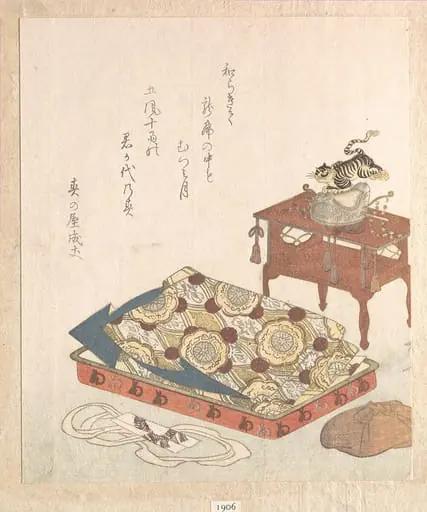 舞楽衣装『春雨集』 摺物帖|Costume for Bugaku Court DanceFrom the Spring Rain Collection (Harusame shū), vol. 1
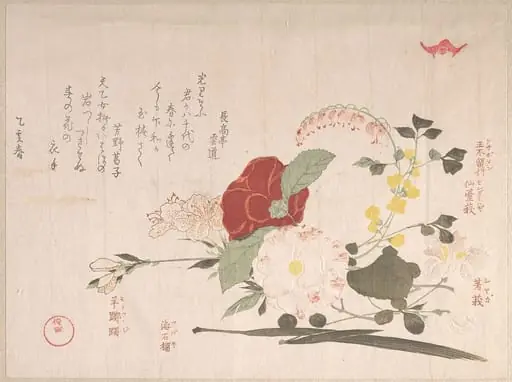 『春雨集』 摺物帖窪俊満画 クサボタン、萩、シャ ガ、ツバキ、モチツバキ|Spring Rain Collection (Harusame shū), vol. 2: Cut Flowers: Clematis, Bush Clover, Iris, Camellia, and Azalea
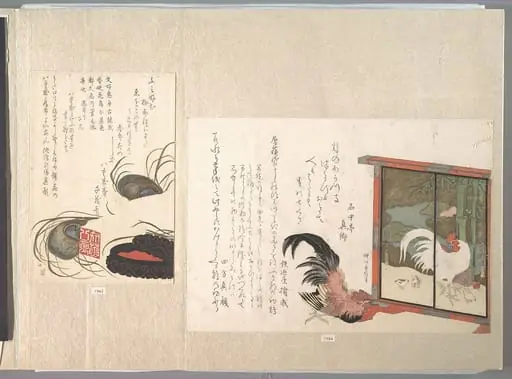 印鑑と朱に孔雀羽根|Seal-stone and Seal-ink with Peacock Feathers, from Spring Rain Surimono Album (Harusame surimono-jō), vol. 1
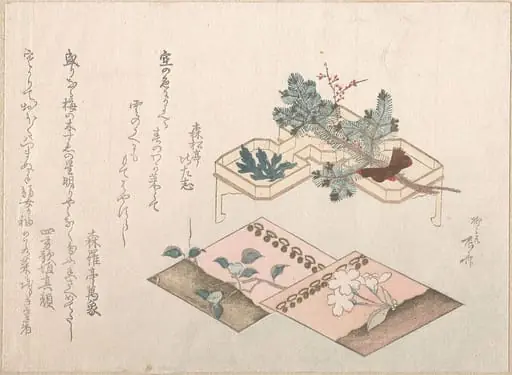 『春雨集』 摺物帖柳々居辰斎画 若松|Spring Rain Collection (Harusame shū), vol. 2: Pine Shoots and Accoutrements for New Year’s Celebrations
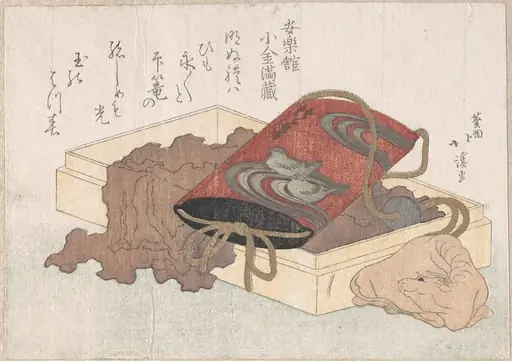 印籠と牛根付『春雨集』 摺物帖|Lacquer Inrō with Waterbirds and Ox-shaped Netsuke in a BoxFrom the Spring Rain Collection (Harusame shū), vol. 3
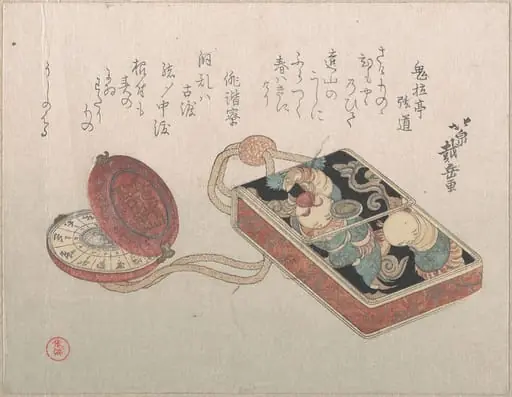 胴乱印籠と懐中時計根付『春雨集』 摺物帖|Dōran (Square Leather Box Used as an Inrō) with a Watch as a NetsukeFrom the Spring Rain Collection (Harusame shū), vol. 3
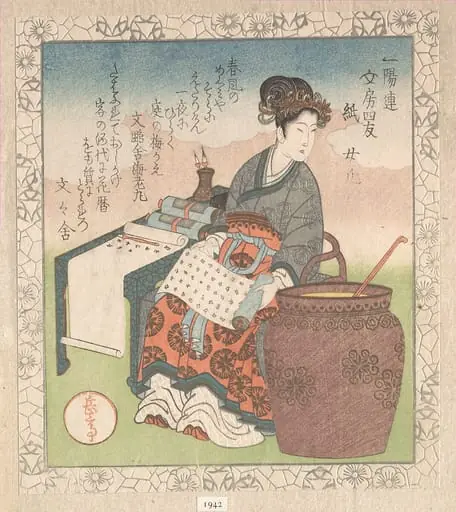 「一陽連文房四友 紙 女凢」『春雨集』 摺物帖 |Nuji (Japanese: Joki; female attendant who compiled writings by Daoist sages); “Paper” (Kami), from Four Friends of the Writing Table for the Ichiyō Poetry Circle (Ichiyō-ren Bunbō shiyū)From the Spring Rain Collection (Harusame shū), vol. 1