Artwork
Untitled
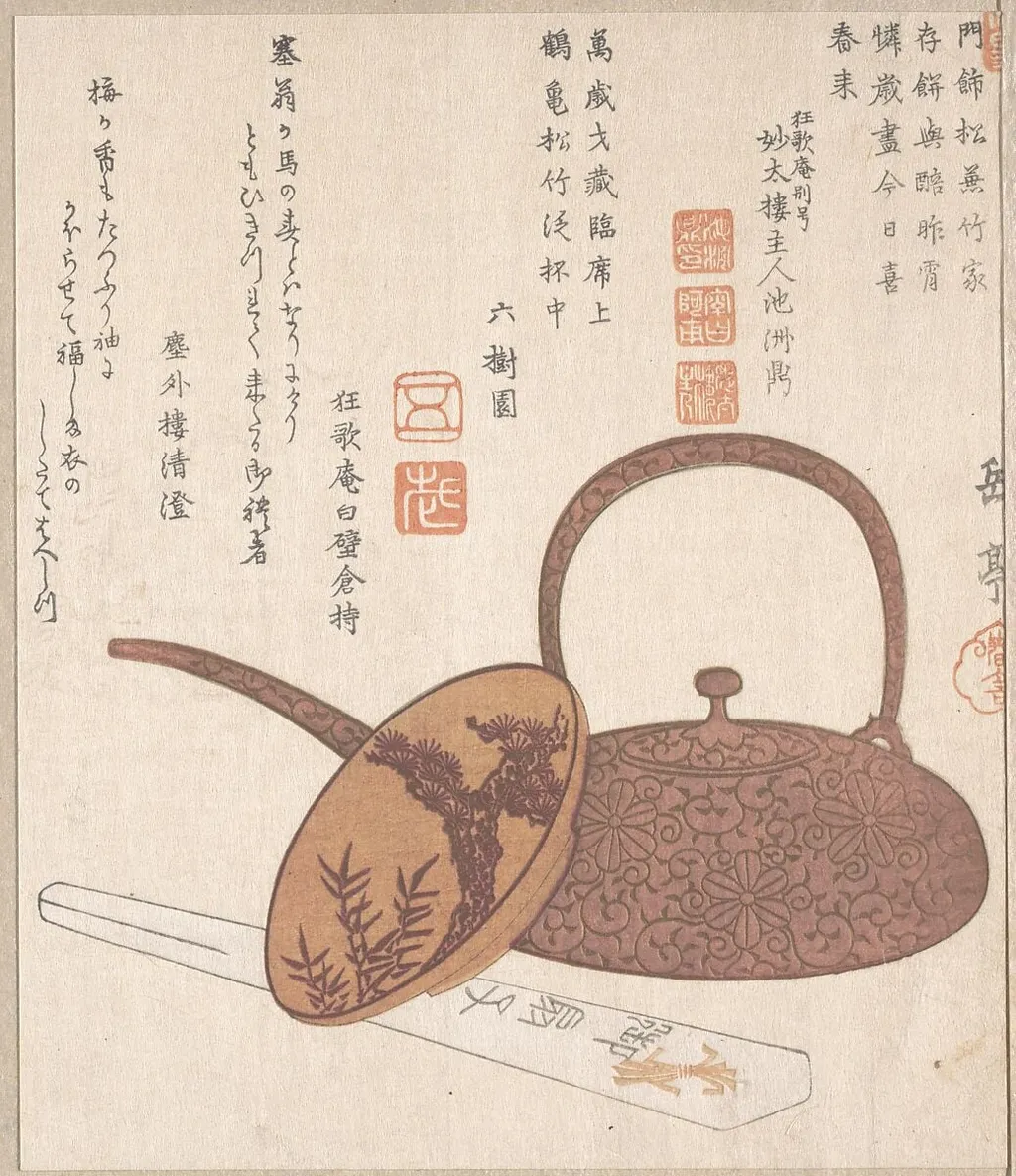
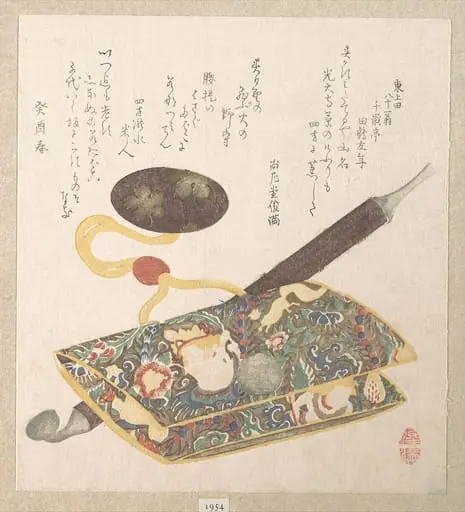
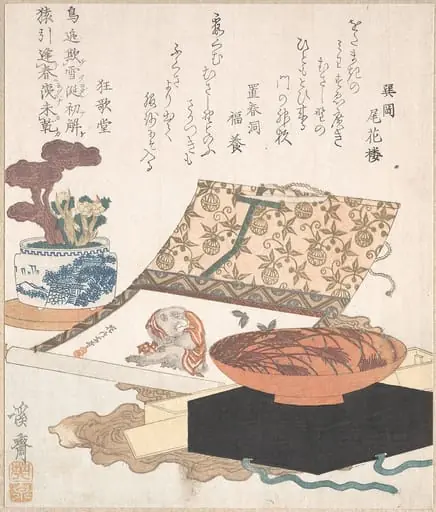
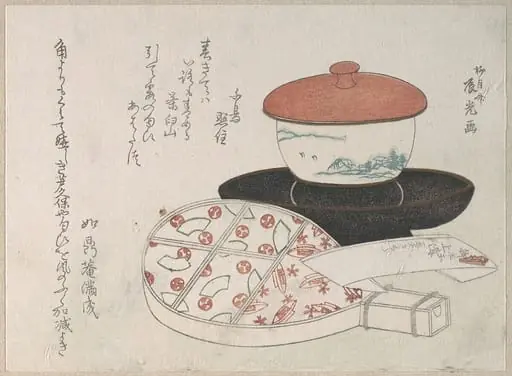
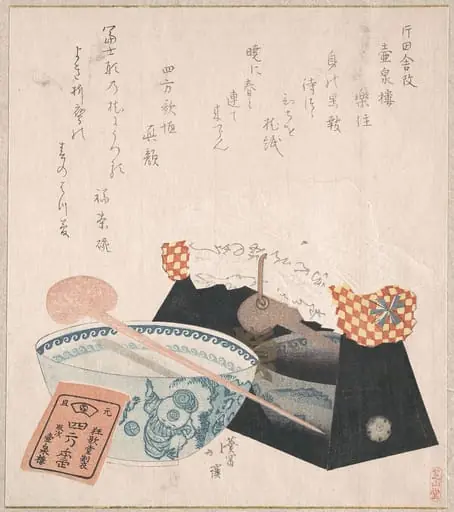
Untitled is an ink print by the Romanticist artist Yashima Gakutei. It dates from 1850 and is held in the collection of the Metropolitan Museum of Art.
About this work
Overview
Unlike mass-produced ukiyo-e, these works emphasized refined craftsmanship and subtle allusion, blending visual art with verse.
This untitled woodblock print is one of several in a surimono album created by Yashima Gakutei in the early 19th century. Executed in ink and color on paper, it exemplifies the intimate, poetical nature of surimono—privately commissioned prints often circulated among literary circles. Unlike mass-produced ukiyo-e, these works emphasized refined craftsmanship and subtle allusion, blending visual art with verse.
Subject & Meaning
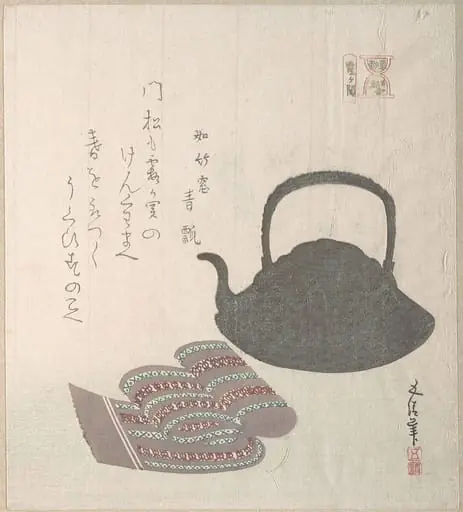
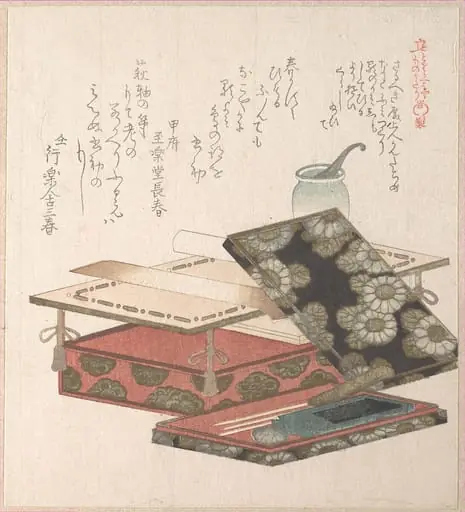
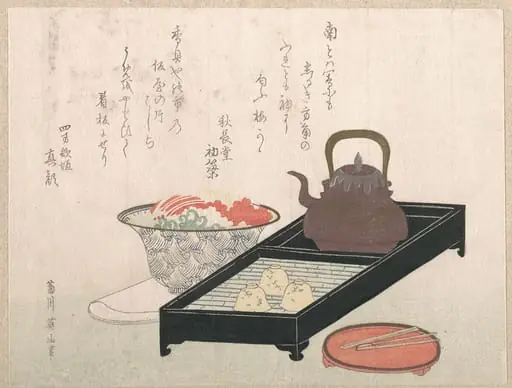
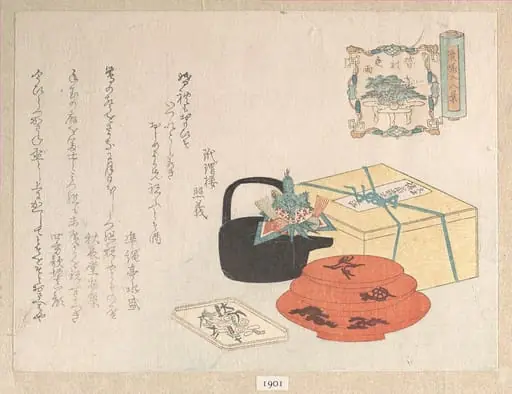
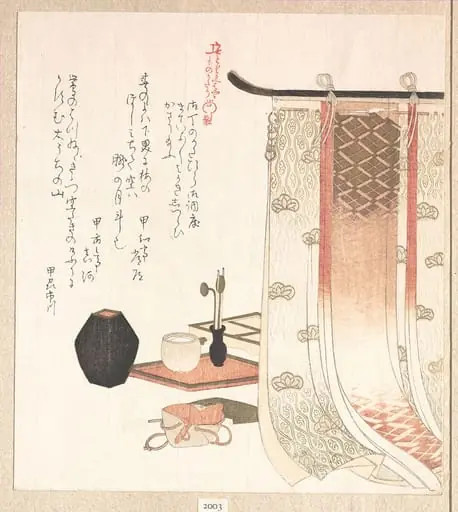
The image depicts a weathered metal teapot and a wooden ladle, rendered with quiet realism. The teapot’s worn surface and carved swirls suggest long use, while faint brushstrokes on the ladle hint at natural elements. Surrounding Japanese poetry evokes transience and quiet contemplation, aligning the objects with seasonal or meditative themes common in kyōka verse. The absence of a detailed background focuses attention on the objects as vessels of mood rather than mere still life.
Technique & Style
Gakutei employed fine linework and restrained color to achieve a delicate balance between precision and spontaneity. The ink washes on the ladle’s surface and the subtle gradations on the teapot reflect mastery of brush control. The composition leaves much of the paper bare, a deliberate choice that enhances the sense of stillness. Calligraphy and small red seals are integrated as compositional elements, not mere signatures, deepening the print’s literary character.
History & Provenance
Created during Gakutei’s mature period, this print likely originated from a private commission, as was typical for surimono. It was produced for a small audience of poets and connoisseurs, not the general public. The presence of multiple seals suggests ownership by collectors or members of literary societies. Its survival as part of an intact album is uncommon, as such prints were often handled frequently and not preserved systematically.
Context
Surimono emerged in the late 18th century as luxury prints for seasonal celebrations and literary gatherings. Gakutei, trained under Hokkei and Hokusai, brought poetic sensibility to his designs, distinguishing his work from commercial prints. This piece reflects the Edo-period fusion of visual art and waka/kyōka poetry, where everyday objects became symbols of impermanence and refined taste, particularly among urban literati.
Legacy
Gakutei’s surimono are valued today for their synthesis of visual restraint and literary depth. While less widely known than his contemporaries, his work exemplifies a niche but influential strand of Edo-period print culture. Surviving albums like this one offer insight into the private, intellectual circles that shaped aesthetic values beyond mainstream ukiyo-e, preserving a quieter, more introspective side of Japanese art.
Artist & collection
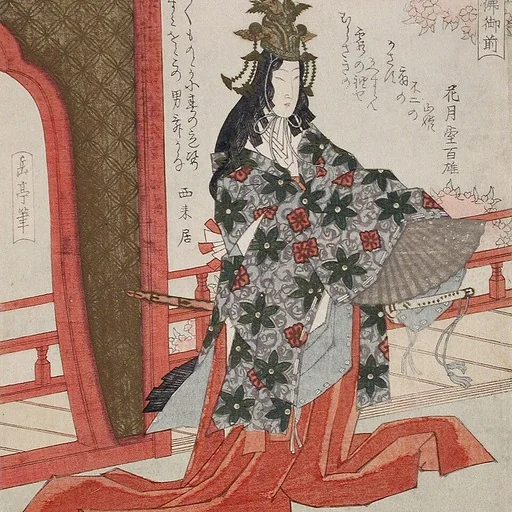
Artist
Yashima Gakutei (Japanese: 八島岳亭; c. 1786 – 1868) was a Japanese artist and poet who was a pupil of both Totoya Hokkei and Hokusai. Gakutei is best known for his kyōka poetry and surimono works.

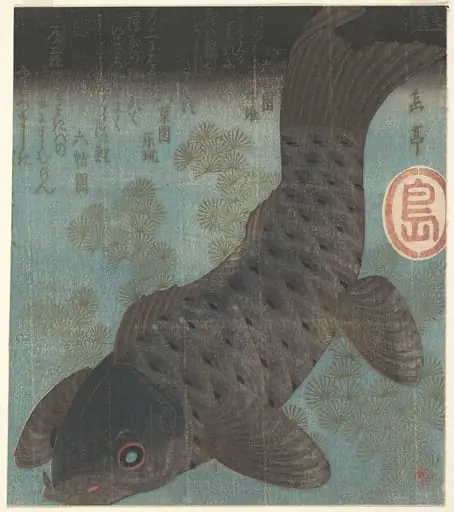 Untitled
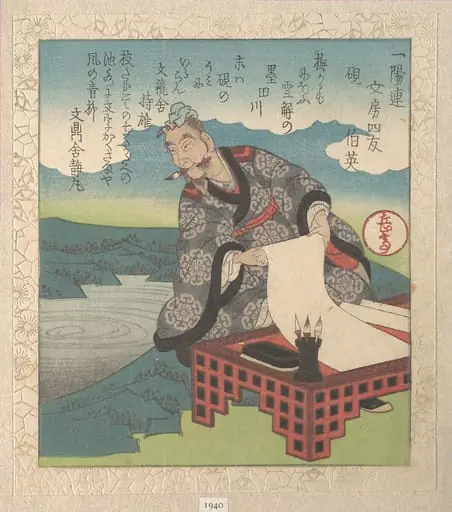 「一陽連文房四友 硯 伯英」『春雨集』 摺物帖|The Chinese Calligrapher Boying (Japanese: Hakuei; also known as the “Sage of Cursive Script”); “Inkstone” (Suzuri), from Four Friends of the Writing Table for the Ichiyō Poetry Circle (Ichiyō-ren Bunbō shiyū) From the Spring Rain Collection (Harusame shū), vol. 1
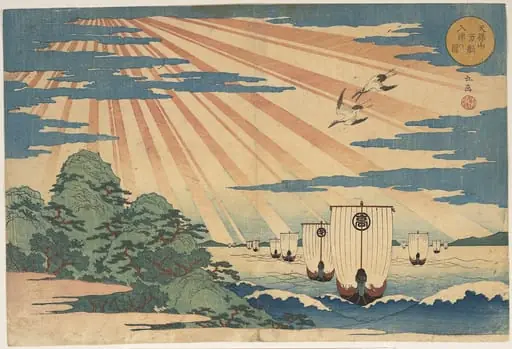 Untitled
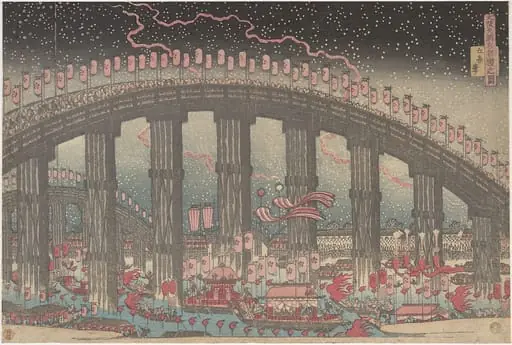 Osaka Tenmangu sairei no zu|The Tenmangu Festival at Osaka
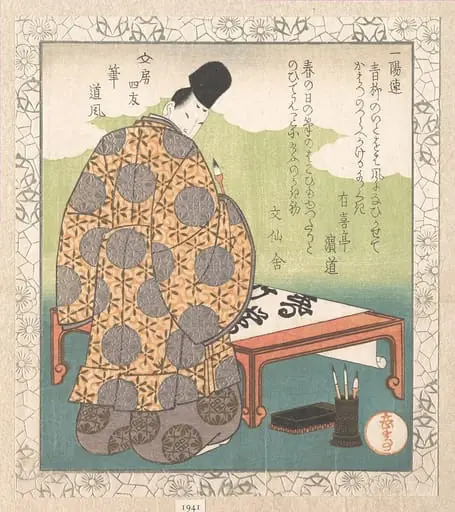 「一陽連文房四友 筆 道風」『春雨集』 摺物帖|The Heian Court Calligrapher Ono no Tōfū (894–966); “Calligraphy Brush” (Fude), from Four Friends of the Writing Table for the Ichiyō Poetry Circle (Ichiyō-ren Bunbō shiyū)From the Spring Rain Collection (Harusame shū), vol. 1
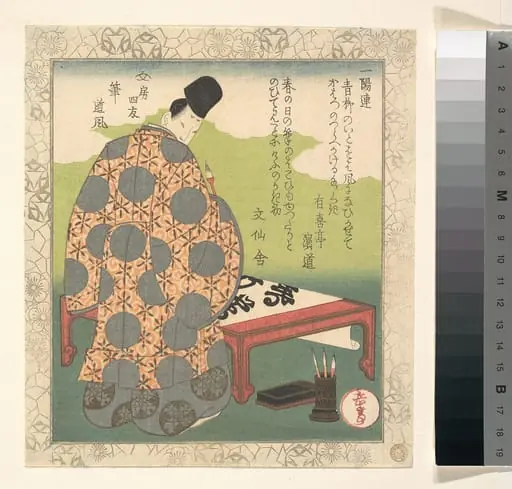 Untitled
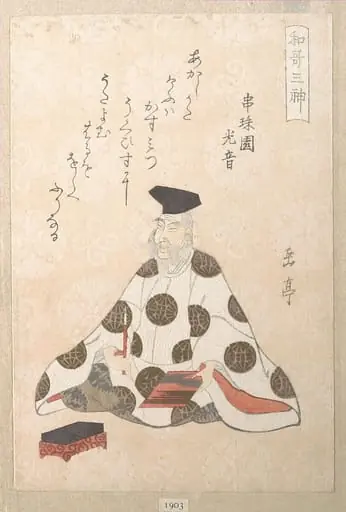 『和歌三神』 柿本人麻呂|Kakinomoto no Hitomaro (ca. 662–710), One of the Three Gods of PoetryFrom the Spring Rain Collection (Harusame shū), vol. 1
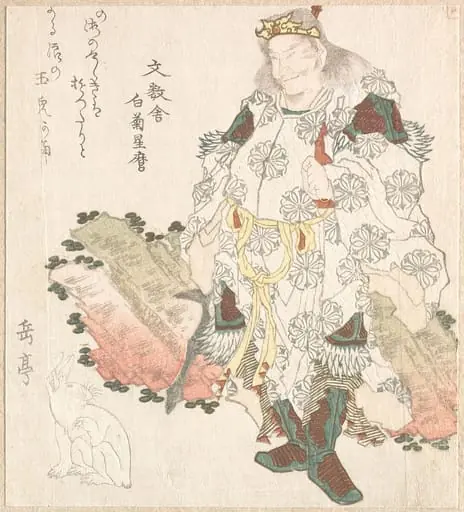 Untitled