Artwork
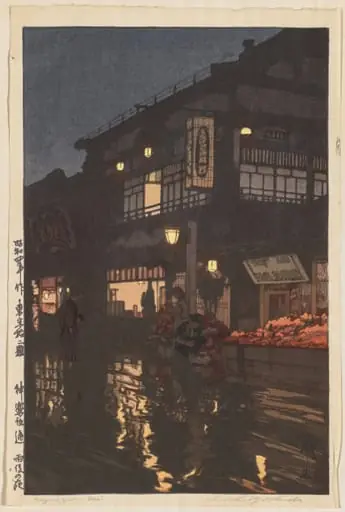
Kagurazaka Street after a Night Rain
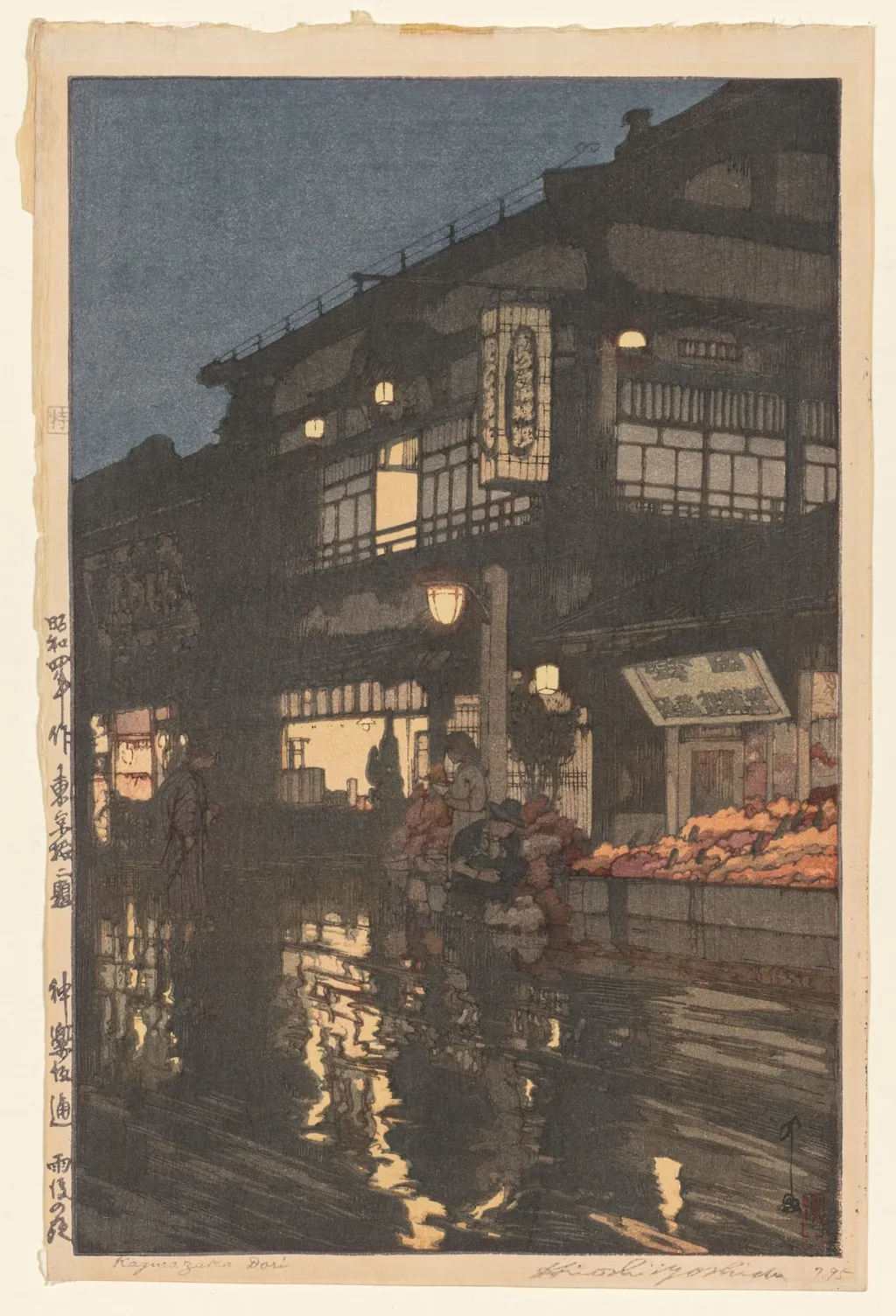
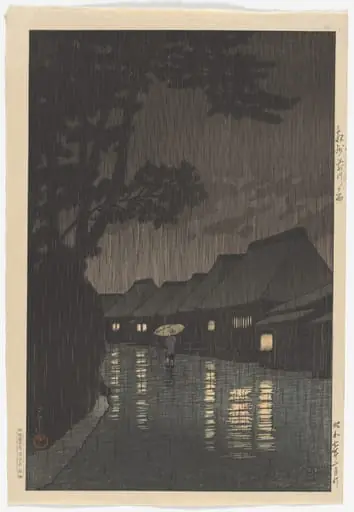
Kagurazaka Street after a Night Rain is a print by Hiroshi Yoshida. It dates from 1929 and is held in the collection of the Cleveland Museum of Art. Created in 1929, this woodblock print by Yoshida Hiroshi captures a quiet urban moment in Tokyo’s Kagurazaka district following a rainstorm.
About this work
Overview
Created in 1929, this woodblock print by Yoshida Hiroshi captures a quiet urban moment in Tokyo’s Kagurazaka district following a rainstorm.
Created in 1929, this woodblock print by Yoshida Hiroshi captures a quiet urban moment in Tokyo’s Kagurazaka district following a rainstorm. As a key figure in the shin-hanga movement, Hiroshi combined traditional Japanese printmaking methods with modern sensibilities, favoring atmospheric landscapes over dramatic narratives. The scene reflects his commitment to observing everyday environments with quiet precision.
Subject & Meaning
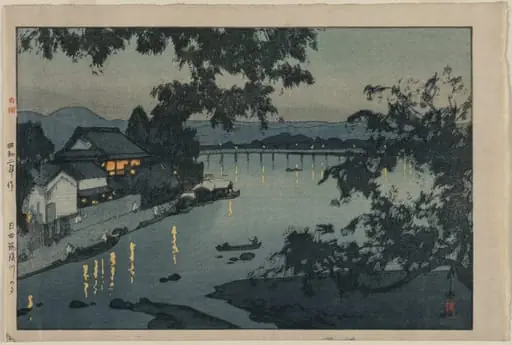
The print portrays a dimly lit street at dusk, where the aftermath of rain lends stillness to the neighborhood. Warm interior lights from wooden houses with shoji screens cast soft glows onto wet pavement, contrasting with the cool blue of the evening sky. A small food stall, its wares glowing in the dim light, suggests daily commerce continuing despite the weather, grounding the scene in ordinary life rather than idealized beauty.
Technique & Style
Hiroshi employed fine woodblock carving and layered printing to achieve subtle gradations of tone and moisture. The wet street is rendered with delicate washes of indigo and gray, while the reflections of light are carefully reserved in the paper’s white surface. The use of chiaroscuro enhances depth without harsh contrast, creating a hushed, immersive atmosphere that aligns with shin-hanga’s emphasis on craftsmanship and mood over bold expression.
History & Provenance
This print was produced during Hiroshi’s mature period, following years of travel across Japan and abroad that shaped his approach to landscape. It was published by Watanabe Shōzaburō, a central patron of the shin-hanga revival, who ensured high-quality production and international distribution. The work entered private and institutional collections in the decades after its creation, reflecting its role in bridging Japanese tradition with early 20th-century aesthetic interests abroad.
Context
In the late 1920s, Japan was undergoing rapid modernization, yet artists like Hiroshi sought to preserve the quiet dignity of traditional urban and rural scenes. Shin-hanga prints responded to this tension by reimagining woodblock printing as a refined, painterly medium. Kagurazaka, then a residential district with lingering Edo-era character, offered a fitting subject—a place where old and new coexisted without overt disruption.
Legacy
Hiroshi’s work contributed to the global appreciation of Japanese prints beyond ukiyo-e’s classical forms. His focus on light, weather, and quiet observation influenced later generations of printmakers and photographers interested in mood over narrative. This print remains a quiet testament to the possibility of finding poetic resonance in the ordinary, preserved through meticulous handcraftsmanship.
Artist & collection
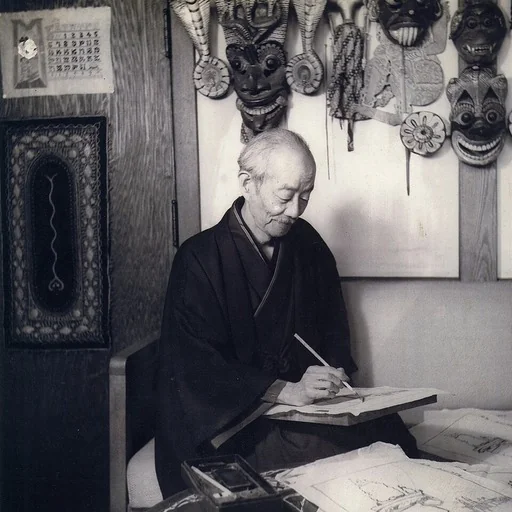
Artist
Hiroshi Yoshida (吉田 博, Yoshida Hiroshi; September 19, 1876 – April 5, 1950) was a 20th-century Japanese painter and woodblock printmaker.