Artwork
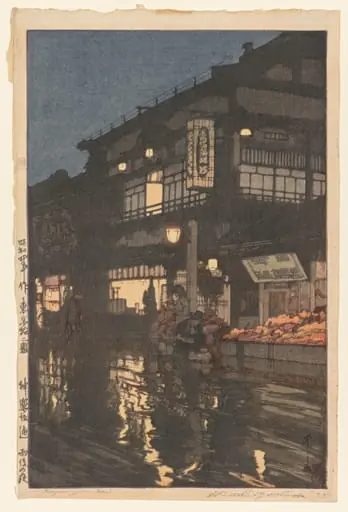
Twelve Scenes of Tokyo: Kagurazaka Street after a Night Rain
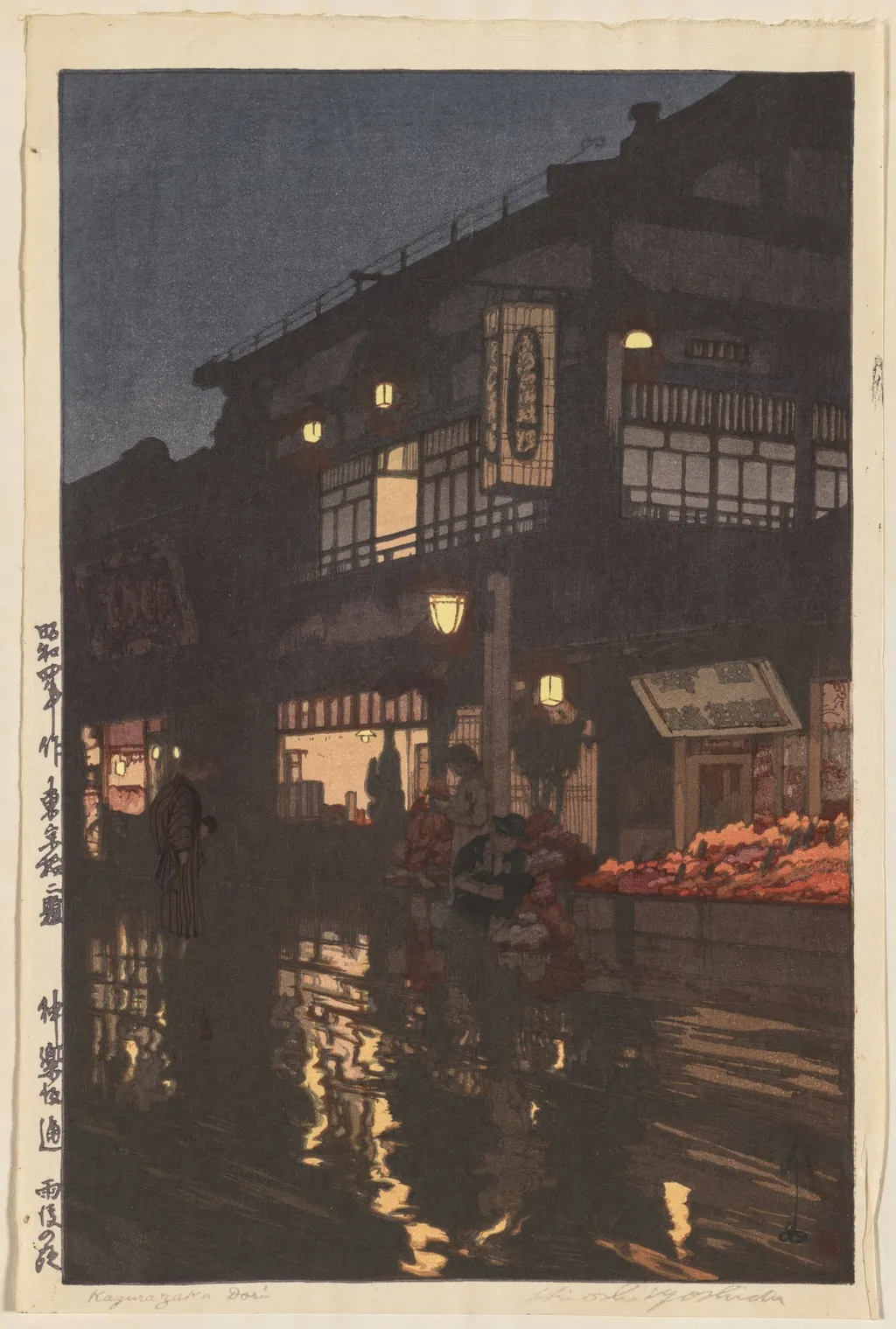
Twelve Scenes of Tokyo: Kagurazaka Street after a Night Rain is a print by Hiroshi Yoshida. It dates from 1929 and is held in the collection of the Cleveland Museum of Art. Created in 1929, this woodblock print is part of Yoshida Hiroshi’s series documenting urban Tokyo through subtle atmospheric shifts.
About this work
Overview
As a central figure in the shin-hanga revival, he reimagined traditional ukiyo-e techniques to capture modern city life with quiet precision.
Created in 1929, this woodblock print is part of Yoshida Hiroshi’s series documenting urban Tokyo through subtle atmospheric shifts. As a central figure in the shin-hanga revival, he reimagined traditional ukiyo-e techniques to capture modern city life with quiet precision. The work reflects his dedication to observing everyday moments, particularly those shaped by weather and light, elevating the ordinary into a contemplative visual experience.
Subject & Meaning
The scene depicts Kagurazaka Street after rain, where wet pavement mirrors the warm glow of paper lanterns and shopfronts. Figures move slowly beneath the light, their forms softened by moisture and shadow. A stall displays grilled food in vivid red-orange, grounding the image in daily commerce. The quiet solitude of the moment suggests a pause in urban rhythm, inviting reflection rather than narrative—a meditation on transience and the dignity of routine.
Technique & Style
Yoshida employed fine-grained woodblock carving and layered printing to achieve nuanced tonal gradations. Wet surfaces shimmer through delicate ink washes, while the contrast between deep shadows and warm lamplight is rendered with precision. Paper screens and wooden architecture are suggested rather than over-detailed, allowing light to define form. The composition favors asymmetry and negative space, enhancing the sense of stillness and atmospheric depth.
History & Provenance
This print was produced during Yoshida’s mature period, when he focused on Japanese urban landscapes after earlier travels abroad. It was published by Watanabe Shōzaburō, a key patron of the shin-hanga movement, and released as part of a limited series. Original impressions are rare, with most held in museum collections or private archives. The print’s survival reflects its significance within early 20th-century Japanese print culture.
Context
In the late 1920s, Tokyo was rapidly modernizing, yet Yoshida chose to emphasize enduring textures: wood, paper, and rain-slicked stone. His work countered the era’s push toward industrial imagery, instead honoring the quiet persistence of traditional materials and rhythms. This print aligns with a broader cultural interest in preserving sensory memories of the city amid change, resonating with literary and artistic circles seeking emotional authenticity.
Legacy
Yoshida’s approach influenced later generations of printmakers who valued mood over spectacle. His ability to convey atmosphere through technical restraint became a benchmark in shin-hanga. While not widely known outside Japan during his lifetime, his works are now studied for their quiet innovation—bridging classical methods with modern perception, and offering a model for capturing urban solitude through print.
Own this work as a print
Artist & collection
Artist
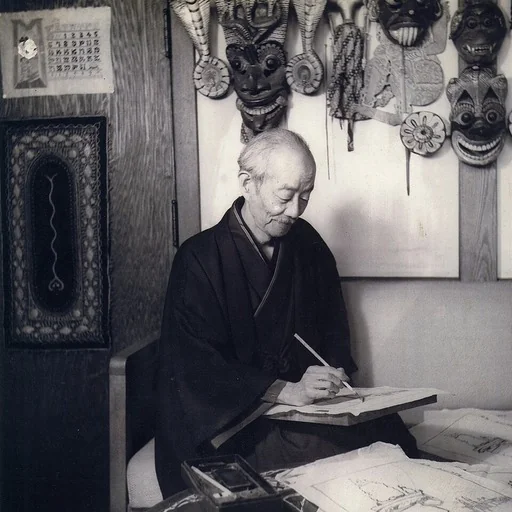
Hiroshi Yoshida (吉田 博, Yoshida Hiroshi; September 19, 1876 – April 5, 1950) was a 20th-century Japanese painter and woodblock printmaker.

 Untitled
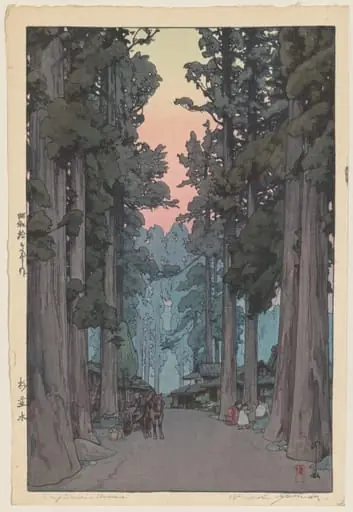 Crytomeria Avenue
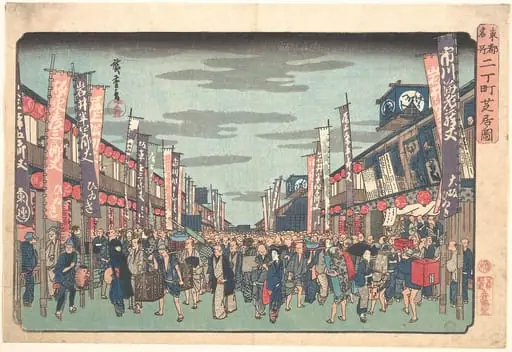 東都名所 二丁町芝居の図|View of the Kabuki Theaters at Sakai-cho on Opening Day of the New Season (Sakai-cho Shibai no Zu), from the series, "Toto Meisho"
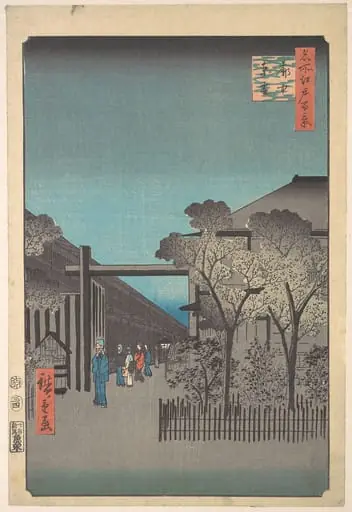 名所江戸百景 廓中東雲|Kakuchu Shinonome
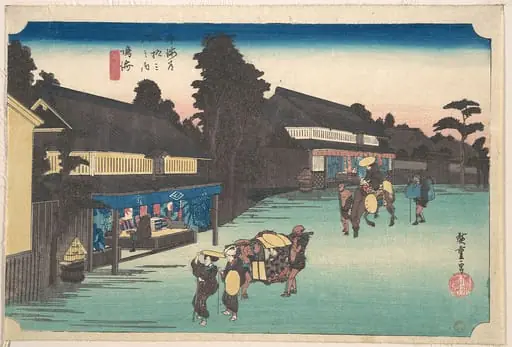 東海道五十三次之内 鳴海 名物有松絞|Narumi, Meibutsu Arimatsu Shibori
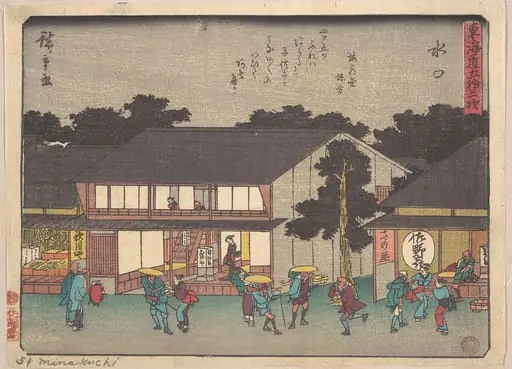 東海道五十三次 水口|Mizukuchi
 Sketches of Famous Places in Japan: Asakusa Kinryūzan Temple