Artwork
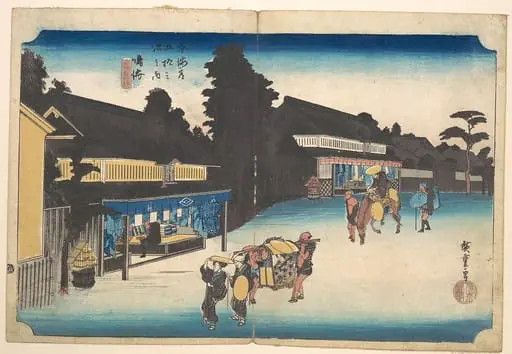
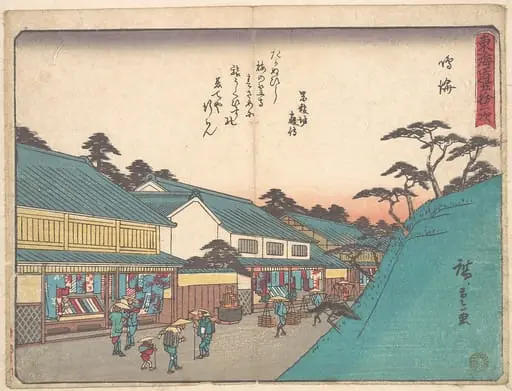
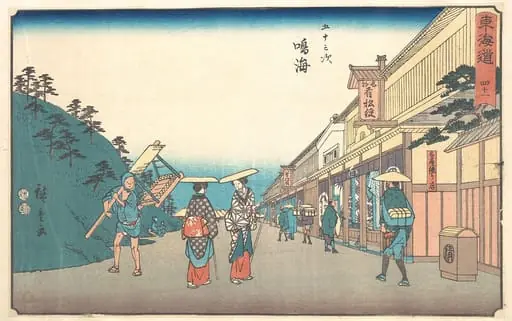
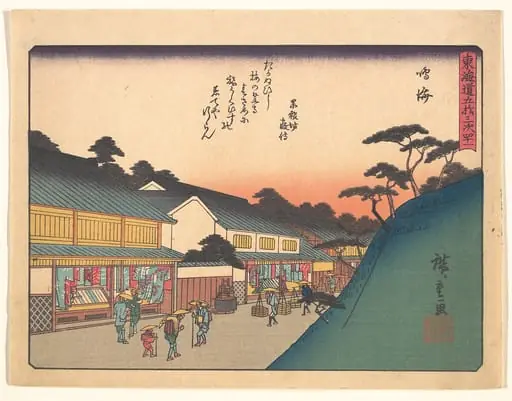
東海道五十三次之内 鳴海 名物有松絞|Narumi, Meibutsu Arimatsu Shibori
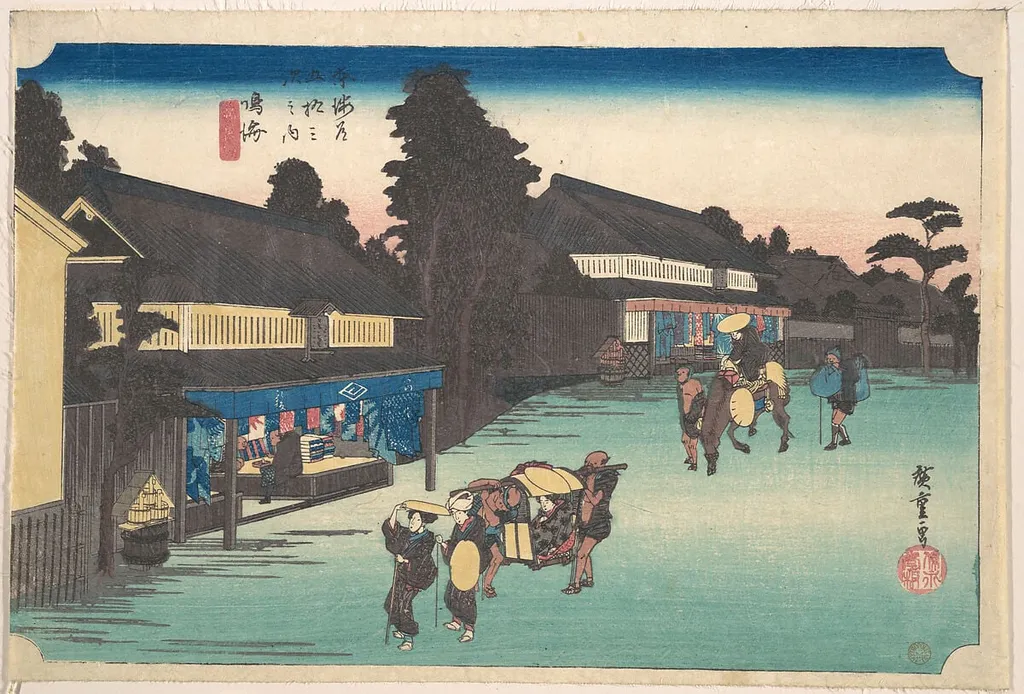
東海道五十三次之内 鳴海 名物有松絞|Narumi, Meibutsu Arimatsu Shibori is an ink print by the Romanticist artist Utagawa Hiroshige. It dates from 1834 and is held in the collection of the Metropolitan Museum of Art.
About this work
Overview
Utagawa Hiroshige’s woodblock print *Narumi, Meibutsu Arimatsu Shibori* dates to circa 1834 and belongs to his celebrated series *The Fifty‑three Stations of the Tōkaidō*. Executed in ink and color on paper, the image records a winter scene at the post‑town of Narumi, one of the way‑stations along the historic road linking Edo and Kyoto.
Subject & Meaning
The composition centers on a snow‑covered street where travelers, bundled against the cold, walk alongside horse‑drawn sleds. A modest stall on the left displays the region’s famed Arimatsu tie‑dyeing craft, known locally as shibori, highlighting the town’s commercial specialty within the broader travel narrative.
Technique & Style
Hiroshige employs his characteristic atmospheric approach, using a limited palette of bright hues to punctuate the white landscape. Delicate line work defines figures and architecture, while subtle gradations of ink suggest wet, reflective ground, creating a sense of depth and seasonal mood typical of his winter vistas.
History & Provenance
Created during the Edo period, the print formed part of a series that departed from the usual ukiyo‑e focus on urban entertainments to document regional scenery and customs. It circulated as a popular hand‑colored print, contributing to Hiroshige’s reputation as a chronicler of Japan’s travel routes.
Context
Narumi’s inclusion underscores the Tōkaidō’s role as a conduit for both people and local industries. The depiction of Arimatsu shibori reflects the Edo‑era practice of promoting regional products to travelers, offering insight into the economic and cultural exchanges that shaped the highway’s communities.
Artist & collection
Artist
Utagawa Hiroshige (歌川 広重) or Andō Hiroshige (安藤 広重), born Andō Tokutarō (安藤 徳太郎; 1797 – 12 October 1858), was a Japanese ukiyo-e artist, considered the last great master of that tradition.