Artwork
Untitled
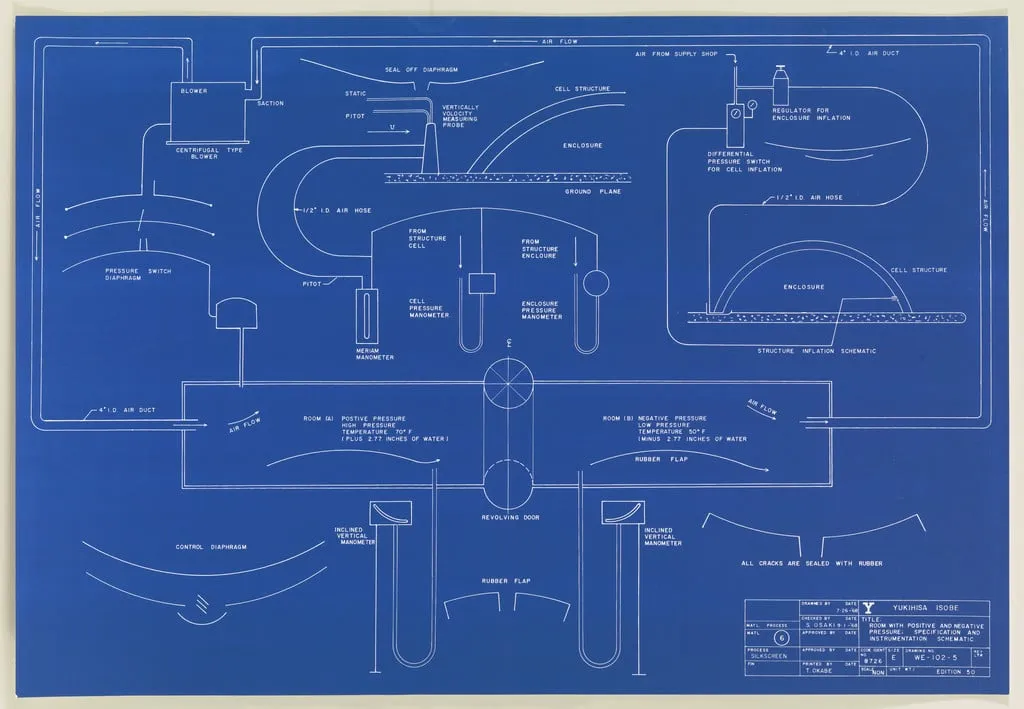
Untitled is an ink print by Yukihisa Isobe. It dates from 1969 and is held in the collection of the Museum of Modern Art.
About this work
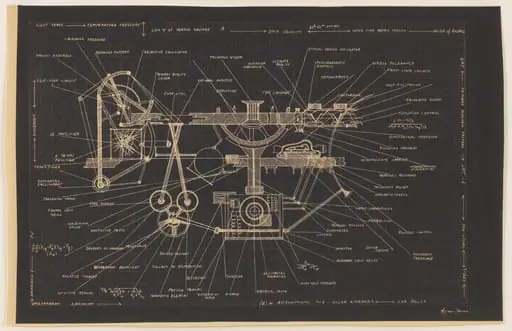
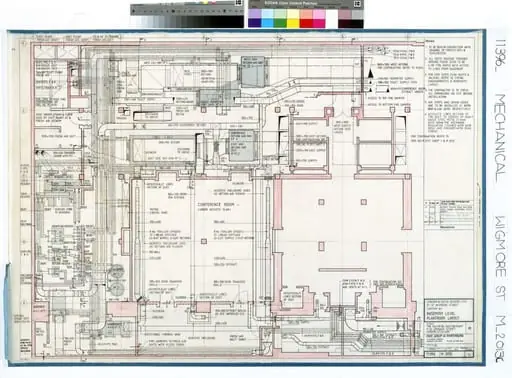
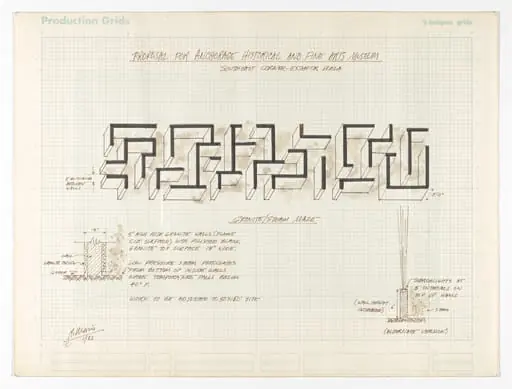
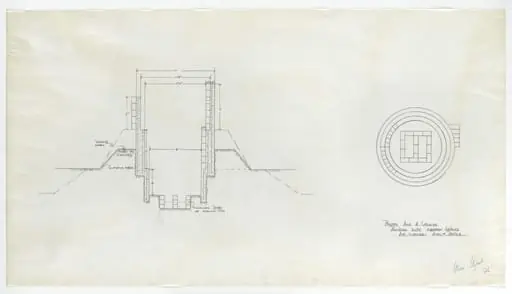
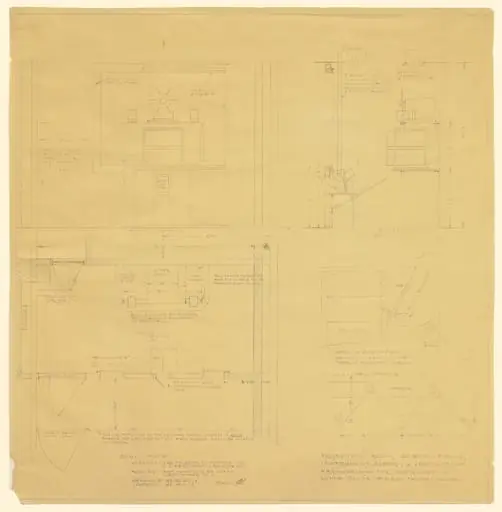
The design looks like a cross-section of a building with parts marked for positive and negative air pressure.
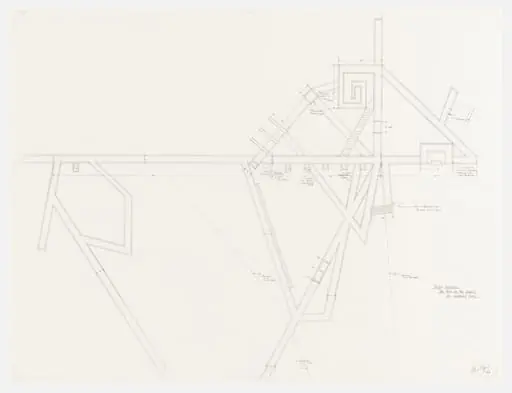
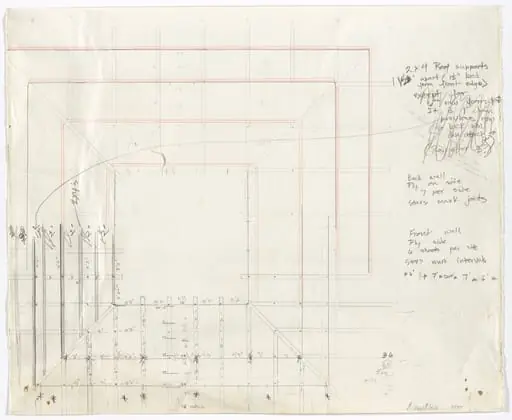
This is a blueprint-style drawing of an inflatable structure. You see air ducts, blowers, pressure gauges, and rubber flaps all labeled clearly. The design looks like a cross-section of a building with parts marked for positive and negative air pressure.
The artist made this in 1969 as a screenprint, which is a printing method. It’s not a painting but a precise diagram—like instructions for building something.
Check out The Museum of Modern Art to see more works like this.
Overview
Yukihisa Isobe, born in 1935, produced this 1969 screenprint during a formative period following his move to New York. The work belongs to a phase of his career marked by interdisciplinary exploration, blending artistic practice with technical schematics. Unlike traditional prints, it functions as a diagrammatic instruction, reflecting Isobe’s interest in systems and structures beyond the canvas.
Subject & Meaning
The image depicts a schematic of an inflatable architectural form, annotated with air ducts, blowers, pressure gauges, and rubber components. Each element is labeled with technical precision, suggesting a functional design rather than an abstract composition. The diagram implies a controlled environment, hinting at Isobe’s early inquiries into human-made ecosystems and the relationship between infrastructure and bodily experience.
Technique & Style
Executed as a screenprint, the work employs sharp, flat planes of ink to render a mechanical blueprint. The style is clinical and detached, prioritizing clarity over expression. Lines are crisp, labels are legible, and composition is organized like an engineering plan. This method aligns with Isobe’s interest in reproducibility and the dematerialization of the art object, distancing the piece from traditional aesthetic concerns.
History & Provenance
Created in 1969, the print emerged from Isobe’s transition from Japan to New York, where he engaged with experimental art and urban theory. It predates his return to two-dimensional work in the 1990s and reflects his mid-career focus on ecological and spatial systems. The piece entered institutional collections as part of broader recognition of Japanese post-war conceptual practices, particularly those intersecting with architecture and environmental thought.
Context
In the late 1960s, artists globally were redefining art’s role through systems-based thinking. Isobe’s work aligns with contemporaneous movements like Archigram and Group Zero, which explored temporary, inflatable, or responsive structures. His diagram reflects a broader cultural interest in alternative living environments, responding to urban density and ecological awareness during a time of rapid technological change.
Legacy
This screenprint remains a key example of Isobe’s early conceptual approach, bridging art, engineering, and environmental ethics. Though he later returned to painting, this work influenced how his practice was understood as a form of speculative design. It continues to be referenced in discussions of Japanese avant-garde art that challenged boundaries between art, science, and civic planning.
Artist & collection
Artist
Yukihisa Isobe (磯辺行久, Isobe Yukihisa) (born 1935) is a Japanese artist whose practice has been shaped by his professional interest for ethical ecology.